How to Land a Plane
Landing an aircraft is the most technically critical and psychologically demanding phase of flight. It is during this final act that precision, training, and aerodynamic discipline converge. Though it might appear effortless when performed by professionals, every successful landing is a product of stepwise execution and strict adherence to airman protocols. In this comprehensive guide, we walk through the full procedure of landing a plane, emphasizing best practices, key physics, and human factors that separate the safe from the fatal.
Understanding the Five Phases of a Normal Landing
A typical landing, conducted on a paved runway under light wind conditions, unfolds in five interdependent phases: Base Leg, Final Approach, Roundout (Flare), Touchdown, and After-Landing Roll. Each one demands situational awareness, control precision, and correct application of aerodynamic principles.
Base Leg: Setting Up Precision
The base leg begins after completing the downwind leg in the traffic pattern. At this point, the aircraft must be configured for descent:
- Ensure landing gear is deployed.
- Complete the GUMPS check (Gas, Undercarriage, Mixture, Propeller, Switches).
- Reduce engine power to initiate a descent, maintaining approximately 1.4 Vso — where Vso represents the stall speed in landing configuration.
- Deploy initial flaps and establish drift correction.
The turn from base to final must be shallow (ideally <30° bank) and perfectly coordinated. Excessive banking or airspeed loss here is a common cause of stall-spin accidents, particularly in training aircraft.
Final Approach: Aligning to Land
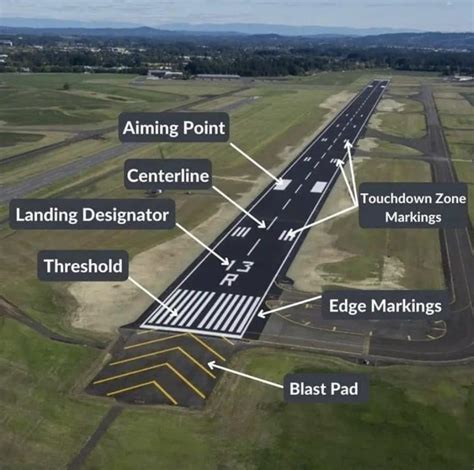
Upon rolling out from base to final, the aircraft should align precisely with the runway centerline. This is not just visual alignment — it requires fine rudder control and drift compensation.
Extend flaps to the full landing setting and adjust pitch attitude to set a stabilized descent. This is typically at 1.3 Vso unless otherwise specified. Descent is controlled via a delicate balance between power (altitude control) and pitch (airspeed control). The objective is to maintain:
- Runway aiming point in constant visual reference.
- Smooth control pressure, with trim adjustments to reduce pilot workload.
- Descending flight path to touch down in the first third of the runway.
Peripheral vision becomes an asset here, providing cues about sink rate and drift that straight-ahead focus may not reveal.
Roundout (Flare): Transition to Ground
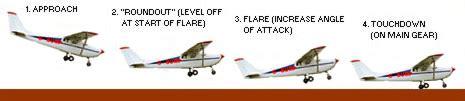
Approximately 10–20 feet AGL (Above Ground Level), initiate the roundout. This involves a progressive pitch-up to arrest the descent rate and prepare for touchdown. It’s essential to increase the Angle of Attack (AOA) at a smooth rate that allows the aircraft to settle without climbing.
The aircraft’s attitude transitions from approach to level flight. Improper control inputs here — especially aggressive elevator pull — can result in ballooning, which may evolve into a bounced landing if not corrected.
Touchdown: Executing Contact
The moment of ground contact should be deliberate, smooth, and under control. The aircraft must touch down:
- With the main wheels first.
- On the centerline, in alignment with runway heading.
- With a positive AOA maintained through continued back-pressure.
Avoid applying forward elevator. This may force the nose wheel onto the ground prematurely, eliminating aerodynamic braking and increasing wear.

After-Landing Roll: Controlling the Exit
Post-touchdown, the pilot’s role shifts to ground directional control and braking. This phase includes:
- Full rudder application for directional control.
- Gentle braking after establishing nose wheel contact.
- Use of ailerons to manage crosswind effects.
Braking should be effective, but smooth enough to avoid skidding, particularly in wet or contaminated runway conditions.
Preventing Common Landing Errors
Mastery of technique means knowing not just what to do — but what not to do. Below are the most prevalent landing mistakes and prevention strategies.
Undershooting the Runway
This error is rooted in poor pattern management. Flying a wide downwind leg or delaying the turn to base increases glideslope distance. Without appropriate power corrections, the aircraft may descend below optimal path.
To prevent undershooting:
- Set a visual reference point on your wing to gauge proper pattern distance.
- Turn from downwind to base when the landing zone is 45° behind the wing.
- Maintain at least 1.4 Vso until final.
Power should be added—not pitch increased—if the approach is too shallow. Pitching alone can induce a stall dangerously close to the ground.
Hard Landings
Hard landings are often caused by:
- High approach speeds.
- Improper flare timing.
- Distractions near touchdown.
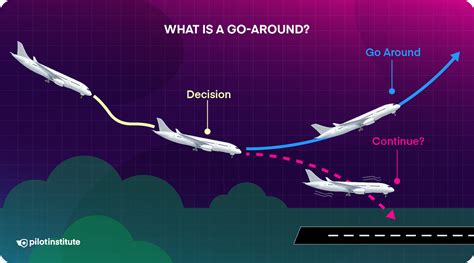
Following a sterile cockpit rule before entering the pattern (as used by ATP pilots) can eliminate late-phase distractions. Additionally, a poor flare followed by a balloon should be corrected by easing the nose gently and adding power, or executing a go-around — a standard and safe option.
Bounced Landings (Porpoising)
These occur when the nose wheel or incorrect pitch attitude initiates a rebound after initial contact. Poor flare timing and excessive airspeed are key contributors.
Recovery protocol:
- Ease the nose down gently.
- Re-establish a proper landing attitude.
- Maintain back pressure to control pitch.
Avoid forcing the aircraft onto the runway — let it settle naturally with decreasing airspeed.
The Cross-Control Stall
A cross-control stall is among the deadliest landing errors. It typically occurs when a pilot attempts to correct an overshoot on final using excessive rudder while holding opposite aileron to stay under a 30° bank. The combination results in uncoordinated flight, a rapid airspeed decay, and a spin near the ground.
Avoidance strategies include:
- Never hesitate to go around if the approach is unstable.
- Avoid excessive rudder inputs during turns.
- Maintain strict pattern discipline and situational awareness, especially in traffic.
The Aerodynamic Discipline of Landing
Landing is not a feel-good maneuver — it’s a test of aerodynamic fundamentals, mental preparedness, and predictive correction. For all the technological sophistication of modern aircraft, it still comes down to the pilot’s hands, eyes, and judgment.
The greatest skill lies not just in touching down smoothly, but in recognizing when conditions demand a go-around or correction. Avoid the psychological trap of a “committed landing” — if the approach is unstable or the pattern is too wide, abort.
Continuous proficiency training, simulated emergency landings, and analysis of accident reports are vital to sharpen decision-making. Above all, knowing when not to land is just as crucial as knowing how.
Frequently Asked Questions
What is Vso and why is it important during landing?
Vso is the calibrated stall speed in landing configuration (typically with full flaps and landing gear down). During landing, maintaining 1.3 Vso on final provides a safe buffer above stall speed while allowing a controlled descent. Lower than that, and you’re risking a stall. Higher, and you increase landing distance and bounce risk.
Why is a go-around considered a safe maneuver, not a failure?
A go-around is a standard safety response when an approach becomes unstable. Whether due to traffic, wind conditions, or improper alignment, executing a go-around preserves aircraft integrity and pilot control. It allows for a fresh, stabilized approach without rushing into a potentially dangerous landing.
How do I improve my landings as a student pilot?
Repetition with instructor feedback, video debriefs, simulated wind conditions, and reading resources like the FAA’s Airplane Flying Handbook can elevate landing skills. Emphasize understanding pattern geometry, trim technique, flare timing, and decision-making for go-arounds.