Gaining real-world instrument experience in actual IMC (Instrument Meteorological Conditions) is an essential step in becoming a safe and confident pilot. For private pilot students, the Federal Aviation Administration (FAA) mandates 3 hours of instrument training under Part 61. While most students fulfill this requirement under the hood, many express a desire to fly in true IMC with a Certified Flight Instructor (CFI) to understand the full scope of instrument flying. This ambition, however, must be approached with deliberate planning, regulatory awareness, and a deep respect for the risks inherent to IMC environments.
For a student with only 0.4 hours of hood time, the eagerness to touch the clouds must be matched with structured readiness. Experiencing real IMC early can build confidence—but only if performed legally, safely, and under expert supervision.
Regulatory and Equipment Considerations
Before touching a single cumulus in IMC, we must address one unavoidable truth: instrument flying under real IMC requires an IFR (Instrument Flight Rules) flight plan. The FAA does not allow casual roaming through clouds; the moment a pilot intends to enter IMC, they must be operating under IFR with a defined route. This restriction ensures airspace separation and radar services from Air Traffic Control (ATC).
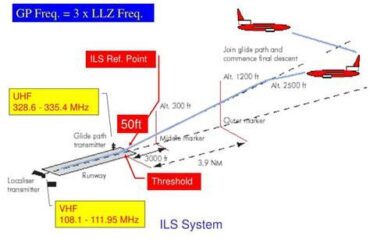
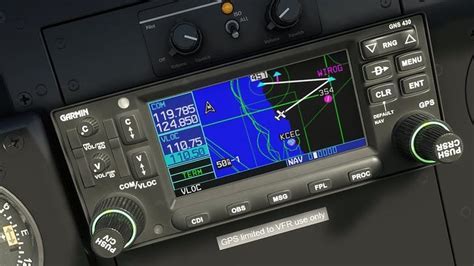
For many student pilots, the immediate hurdle is aircraft capability. Consider a common training aircraft with only a single VOR receiver, no WAAS-capable GPS, and no certified glideslope instrumentation. This configuration does not meet IFR equipment standards, making the aircraft illegal for real IMC.
Therefore, aspiring instrument pilots must either:
- Rent or access an aircraft equipped and certified for IFR, or
- Focus on simulated IMC training with hood or foggles until transitioning to an instrument-rated environment.
Recommended Training Path
The safest and most efficient path forward is structured and incremental:
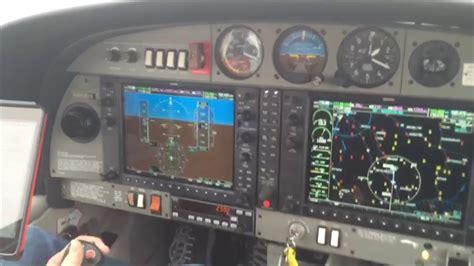
Complete the Private Pilot License (PPL) first. Then, immediately begin structured instrument rating training. During the PPL phase, use every opportunity to practice under the hood to master the instrument cross-check—the disciplined scan of airspeed, attitude, altitude, heading, turn coordinator, and VSI. This scanning pattern is the pilot’s lifeline in IMC.
Simulated IMC can be surprisingly effective when taught rigorously. A CFI will often begin with straight-and-level under the hood, followed by standard-rate turns, climbs, descents, and emergency drills. These core skills must become automatic before entering real clouds, where visual references vanish and the margin for error shrinks dramatically.
The Disorienting Reality of IMC
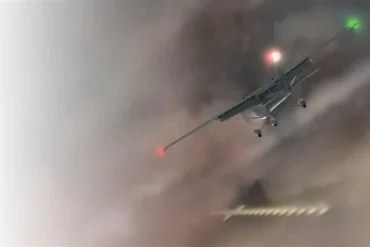
Flying in real IMC is nothing like a smooth simulator session. Clouds are dynamic, uneven, and disorienting. Popping in and out of them creates sudden changes in light and perception. Even instrument-rated pilots have lost control because of a failed cross-check or a brief lapse in scan.
Studies show that inadvertent IMC entry is one of the leading causes of General Aviation (GA) fatalities. This is not due to mechanical failure or turbulence—it’s because the human brain, when deprived of external visual cues, begins to misinterpret motion and orientation. Spatial disorientation sets in rapidly.
For serious preparation, we highly recommend watching case studies by the Air Safety Institute on YouTube. These reconstructions of fatal accidents in IMC illustrate what can go wrong, even for seasoned pilots:
How to Safely Gain Actual IMC Experience
Once legally instrument rated and flying a properly equipped aircraft with a CFII, there are several safe methods to gain real-world IMC time:
Block Altitude or Quadrant Clearance
A smart and flexible way to operate in IMC is by requesting a block altitude or quadrant clearance within a defined area:
- File an IFR flight plan with a specific fix or VOR as the center.
- Request ATC clearance for operations “within 10 miles of FIX at 3,000 to 5,000 feet.”
- Perform turns, climbs, descents, and straight-and-level flight.
- When the session is complete, advise ATC and proceed to the destination or cancel IFR.
This method allows concentrated maneuver training in clouds without complex routing or airspace transitions.
Pop-up IFR Clearance
This approach is useful when departing VFR and entering a known IMC area:
- Fly VFR to a waypoint near or within IMC.
- Request a pop-up IFR clearance with a block or quadrant.
- Conduct maneuvers and training.
- Cancel IFR when returning to VFR conditions.
Pop-up clearances are tactical tools, especially useful when the departure airport is VFR but destination airspace contains clouds. Ensure that both pilot and CFII are ready for a quick transition to instruments, as entering IMC without clearance can lead to enforcement and safety issues.
Practice Approaches in IMC
Nothing sharpens skill like shooting an ILS or RNAV approach through clouds. Once on an IFR flight plan:
- Request practice approaches at nearby airports.
- ATC may vector you or clear you for full procedures.
- Each approach must be flown with discipline: maintain altitudes, intercept glideslopes, and communicate precisely.
While one can log simulated approaches under the hood, actual IMC adds a psychological load—mistakes feel more consequential, and workload intensifies. Practicing here with a CFII is invaluable.
The Role of Simulators and Foggles
When real IMC isn’t possible, we turn to technology. FAA-approved simulators like X‑Plane, full-motion trainers, and Redbird Advanced Aviation Training Devices (AATDs) offer procedural fidelity and scenario depth. These systems simulate ATC communication, failures, weather systems, and cockpit resource management.
Hood and foggle work, meanwhile, remains the gold standard for early instrument skill building. They simulate limited visibility by blocking the student’s external view, forcing reliance on instruments. Instructors can induce realistic stressors and distractions, replicating real-world complexity.
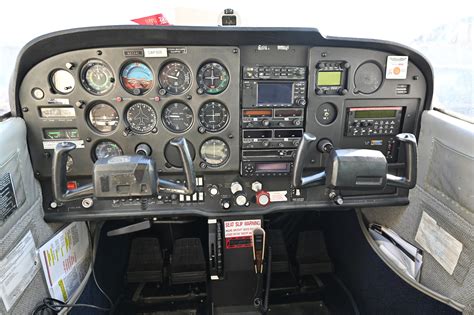
The goal of simulation and foggles is not to replace IMC time, but to build the mental model and reflexes needed when the clouds finally surround the cockpit.
Pilot Anecdotes: Real IMC Success Stories
A CFII flying a Cessna 182 over Lake Erie recounted using block clearance to train in true IMC:
- Cleared for operation within a 10-mile radius of a VOR.
- Performed climbing turns, standard descents, and speed changes.
- Finished the flight with an ILS approach to minimums at a nearby field.
Another pilot used a round-robin IFR flight plan, filing from point A to B and back with time logged in actual clouds. Others report pop-up IFR plans to reach embedded IMC zones and request vectors for practice holds. These scenarios emphasize preparation, coordination with ATC, and respect for changing weather conditions.
Student’s Next Steps: From Hood to Clouds
For the student pilot with limited hood time, the action plan is clear:
- Complete the Private Pilot License (PPL).
- During training, increase hood time to master the scan.
- Begin instrument rating training with a CFII.
- Upgrade or access IFR-certified aircraft.
- Plan with CFII a well-structured IFR flight into marginal IMC.
- Request block altitude or quadrant clearance to safely experience clouds.
- Debrief thoroughly after each session, analyzing scan discipline, workload, and emotional response.
There is no substitute for actual IMC experience, but only when readiness, aircraft, and mindset align. Entering the clouds is a rite of passage—but we must enter them with a practiced scan, disciplined approach, and an instructor who can guide us safely through and out.
Frequently Asked Questions (FAQs)
What are the legal requirements to fly in actual IMC?
To fly in IMC, a pilot must hold an instrument rating and operate an IFR-certified aircraft under an active IFR flight plan. Visual flight into IMC without these requirements is illegal and extremely dangerous.
Can student pilots ever fly in actual IMC?
Student pilots may experience real IMC only under the direct supervision of a CFII, and only if the aircraft is IFR-certified and the flight is conducted under an IFR clearance. However, this is rare during the PPL phase. Most instrument work at this level is done under the hood.
How does actual IMC differ from simulated IMC with foggles?
Actual IMC imposes real cognitive load, as there are no external visual cues, and weather conditions constantly evolve. Simulated IMC with foggles mimics the visual limitation, but lacks the psychological pressure and unpredictability of real clouds. Both are valuable, but actual IMC brings realism that foggles cannot.