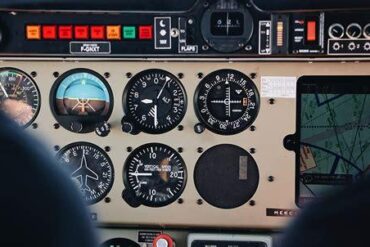
An instrument rating transforms every pilot into a more skilled and safe aviator. With an instrument rating, pilots gain essential decision-making skills, enabling them to think critically before finding themselves in a situation where instrument flying becomes necessary. Flying VFR in IMC (Instrument Meteorological Conditions) is one of the most dangerous decisions in aviation. Weather-related accidents in general aviation often end in tragedy, and when pilots lose visual references, spatial disorientation can set in quickly.
A notable example is John F. Kennedy Jr.’s fatal crash into the Atlantic Ocean on July 16, 1999. Kennedy was not instrument-rated, and the NTSB cited spatial disorientation—exacerbated by haze and a dark night—as the cause. There are few disadvantages to getting an instrument rating, other than the time and cost involved. However, for those pursuing a career in aviation, it’s an essential step. If you plan to rent aircraft regularly or purchase one, an instrument rating often leads to lower insurance premiums.
What You Can Do with an Instrument Rating
With an instrument rating, you can legally fly without needing to see the ground or the horizon. You’ll be able to fly from point A to point B without looking outside the aircraft (aside from takeoff and landing). The rating trains you to stay ahead of the aircraft, managing tasks like switching radio frequencies, setting navigation equipment, and briefing and executing approaches—all while continuously monitoring your instruments.
Flight Training Requirements for Instrument Rating
Before you can take the checkride for your instrument rating, you must meet certain prerequisites and log specific training hours. One of the first questions you’ll face on your instrument checkride will be about flight training requirements. The examiner will want to know that you not only met these requirements but also understand them. The full requirements are detailed in 14 CFR § 61.65. In summary, to apply for an instrument rating, you must:
- Hold a private pilot certificate or be applying for a private certificate alongside your instrument rating.
- Be able to read, speak, write, and understand the English language.
- Complete and log ground training with an authorized instructor (IGI or CFII), or take a ground school home-study course.
- Have a logbook endorsement from an authorized instructor certifying you’re prepared to take the knowledge test.
- Complete flight training in an aircraft, full flight simulator, or flight training device, including:
- 50 hours of cross-country flight time as pilot in command.
- 40 hours of actual or simulated instrument time, with 15 hours of that from an authorized instructor.
- 3 hours of instrument flight training within the two calendar months leading up to the check ride.
- A cross-country flight of 250 nautical miles that includes instrument approaches at each airport, with three different types of approaches (e.g., VOR, ILS, GPS).
- Receive a logbook endorsement from an authorized instructor certifying your readiness for the practical test.
- Pass the knowledge test (unless you hold another instrument rating from a different category, such as for helicopters).
- Pass the required practical test.
Which Is Harder: Private Pilot Certificate or Instrument Rating?
Veteran instructors, airline pilots, and corporate pilots may have varying opinions on whether the instrument rating was the hardest part of their training. Some consider it the most challenging, while others find it easier. Instrument flying requires unique skills like multitasking, problem-solving, and quick decision-making. Pilots must think on their feet and remain confident under pressure. Some individuals may find it easier to adapt to instrument flying than others. Instrument flying is more about intellectual skills and managing systems, whereas VFR flying leans more on physical flying skills.
Instrument Rating Ground School
Ground school for the instrument rating is essential preparation for the flight training ahead. It equips you with the knowledge needed to plan flights and operate effectively under instrument conditions. Some of the key topics covered include:
- Approach Plates: These official procedures guide pilots in transitioning from flight to landing under IFR. They outline details like airport lighting, flight headings, equipment to use, and specific speeds, while also marking topographic features, hazards, and obstructions. Ground school teaches you how to read and interpret approach plates.
- Departures & Arrival Procedures: Pilots must familiarize themselves with Standard Instrument Departures (SIDs) and Standard Terminal Arrival Routes (STARs), which are often part of a clearance. You will learn how to find, brief, and fly them.
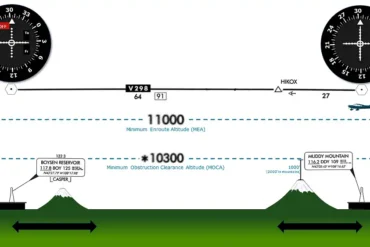
- En Route Charts: After learning VFR sectional charts for your private pilot checkride, you’ll now focus on IFR en route charts. These charts show point-to-point distances, minimum altitudes, and clearance requirements. One tip: IFR charts are updated every 56 days, so always ensure yours are current.
- Flight Instruments: You will become familiar with the flight instruments required to legally operate under IFR and how they function. You’ll also learn procedures for handling instrument failures in flight.
- Flight Planning: You’ll understand the considerations that go into planning an IFR flight, like altitude selection and assessing whether the weather will allow safe flight. You’ll also learn about AIRMETs (e.g., Zulu for icing, Tango for turbulence) and SIGMETs (e.g., for dust storms or volcanic ash), and their potential hazards.
- Holding Patterns: Ground school will teach you how to manage holding patterns, including entry procedures, airspeeds, and timing.
- Weather: Understanding meteorology is critical for IFR flight planning. You’ll study how to identify and mitigate weather risks, using reports and forecasts to guide your decisions.
Choosing a good ground school is key. Taking the time to fully understand these concepts will pay off during flight training.
The Instrument Rating Knowledge Test
Like the private pilot certification, the instrument rating involves a knowledge test—a computerized exam that can be tough. The Instrument Rating Airplane (IRA) knowledge test is historically more difficult than other FAA exams, with a lower pass rate. The test consists of 60 questions, and you have 2 hours and 30 minutes to complete it. While a score of 70% is required to pass, it’s advisable to aim for a higher score. The FAA places emphasis on asking about questions from the knowledge test during the checkride. Unlike other FAA exams (such as the Fundamentals of Instructing), you need an endorsement from a CFII or IGI to sit the instrument rating knowledge test.
Instrument students are encouraged to take the multiple-choice knowledge test as early as possible. Once it’s out of the way, you can focus on flight training and preparing for your checkride. Many students prefer to tackle the knowledge test before they begin actual flight training. Your CFII can give you the endorsement to take the test, or you may receive it after completing an instrument rating ground school course.
Preparing for an Instrument Rating Checkride
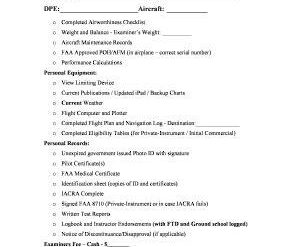
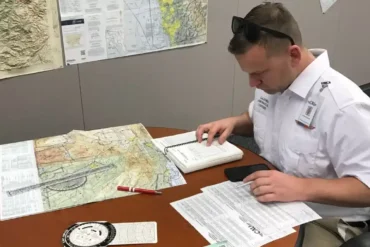
Before your checkride, it’s helpful to do at least one mock checkride and watch others. Going through a full-length oral exam will prepare you for any question the examiner might ask. You’ll likely learn acronyms in ground school, like 6-6-HIT (currency), GRABCARD (equipment), and AVEF MEA (lost communications), but practicing with mock checkrides helps you anticipate questions, making the checkride feel like a breeze rather than a struggle.
Breaking Down The Instrument Rating Airman Certification Standards (ACS)
The Airman Certification Standards (ACS) outline the aeronautical knowledge, risk management, and skills you must demonstrate for your instrument rating. It also lists the resources to help you prepare, such as the FAA Risk Management Handbook, the Airplane Flying Handbook, the Instrument Procedures Handbook, and the Pilot’s Handbook of Aeronautical Knowledge. The examiner can only ask questions based on what’s covered in the ACS. Your checkride will test you on eight different areas:
- Preflight Preparation: The examiner will ask about pilot qualifications, weather information, and cross-country flight planning.
- Preflight Procedures: The examiner will quiz you on airplane systems relevant to IFR operations, flight instruments, navigation equipment, and how to check your instruments.
- Air Traffic Control Clearances and Procedures: Expect questions on ATC clearances, lost communication procedures for flights outside radar coverage, and holding procedures.
- Flight by Reference to Instruments: You’ll be asked to demonstrate attitude instrument flying, maintaining altitude, and using the proper cross-checking technique. You’ll also show how to recover from unusual flight attitudes.
- Navigation Systems: The examiner will assess your understanding of ATC routes, intercepting courses, radials, and bearings relevant to a procedure, route, or clearance.
- Instrument Approach Procedures: Expect questions on non-precision approaches, precision approaches, missed approaches, and circling approaches.
- Emergency Operations: You’ll be asked to demonstrate how to handle a simulated loss of communication and how to fly an approach with faulty flight indicators.
- Postflight Procedures: The examiner will review procedures for checking the functionality of flight instruments and navigation equipment.
The ACS is more than just a testing document—it’s a valuable study tool. For example, Appendix 10 lists abbreviations and acronyms that you’ll need to understand for your checkride.
Sample IFR Checkride Questions
Can you answer these ten sample checkride questions?
- How much cross-country flight time as PIC must an applicant for an instrument rating have logged?
- What are the recency requirements to be PIC of a flight under IFR?
- What is a composite flight plan?
- How do the altimeter, airspeed indicator, and vertical speed indicator work?
- What equipment is required in your aircraft to fly under IFR?
- What are the limitations of electronic flight bags?
- How long is an AIRMET valid for?
- When is an Instrument Proficiency Check necessary?
- What’s the difference between Decision Height and Decision Altitude?
- What is a Minimum Descent Altitude?
What is an Instrument Proficiency Check?
To maintain instrument currency, you must have logged six instrument approaches in the last six months. This includes holding procedures, intercepting and tracking courses using navigational electronics. If you haven’t maintained currency, you need to complete an Instrument Proficiency Check (IPC) before you can fly under IFR again. This can be done by a CFI-I, a DPE, or an FAA inspector. Unlike flight reviews, the IPC is only required if you’ve lapsed in your proficiency, as outlined in 14 CFR 61.57. The FAA encourages using the IACRA Form 8710-1 for the IPC, but it’s optional. The IACRA system updates your FAA records, though you still need to ensure your logbook is updated.
What’s Next After the Instrument Rating?
For those pursuing careers as flight instructors, corporate pilots, or airline pilots, the commercial pilot certificate is the usual next step after obtaining an instrument rating. Some pilots opt to train for their commercial certificate in a multi-engine aircraft, like a Piper Seneca or Seminole. Others might earn their commercial certificate in a single-engine aircraft first and then add a multi-engine rating later.