Cabin design has become an arms race. Airlines compete over lie-flat seats, sliding privacy doors, chef-designed menus, and mood lighting engineered to mimic sunsets at 35,000 feet. Yet amid all this innovation, one of the simplest passenger comfort features remains strangely inconsistent across fleets: individual air nozzles on airplanes.
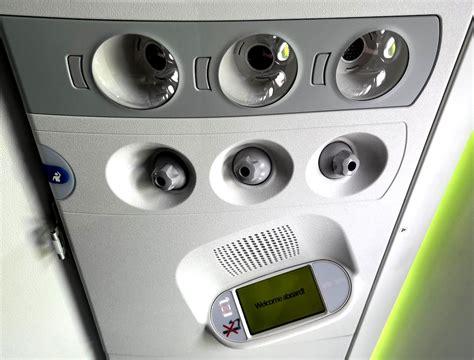
It sounds minor. A small adjustable vent above your seat. A twistable dial. A stream of cool air aimed directly at your face. But for many frequent flyers, this humble component of the passenger service unit can make the difference between restful sleep and a sticky, restless flight. So why don’t all airlines install them?
The answer sits at the intersection of engineering, economics, climate psychology, and airline philosophy.
Why Individual Air Nozzles Matter More Than Airlines Admit
Commercial aircraft cabins are pressurized and ventilated with impressive sophistication. Modern jets use HEPA filtration systems (High Efficiency Particulate Air filters) that remove over 99% of airborne particles. Cabin air is refreshed frequently and is often cleaner than typical office environments. From a technical standpoint, the system works beautifully.
But temperature perception is not purely about air quality. It’s about sensation.
An individual air nozzle doesn’t change the cabin’s thermostat setting. It doesn’t lower the ambient temperature. What it does is create localized airflow, which increases evaporative cooling on your skin. That subtle airflow can dramatically change how warm or cool you feel. Human comfort is deeply subjective, and even small changes in airflow alter our thermal perception.
For travelers who prefer sleeping in cooler conditions—especially on long-haul flights—that directed airflow can be transformative. Without it, many wake up overheated, particularly in modern premium cabins where enclosed seat designs reduce ambient circulation.
After three hours inside a privacy shell with a duvet and minimal airflow, the difference becomes undeniable.
The Premium Cabin Paradox
Ironically, some of the world’s most luxurious airlines omit individual air nozzles entirely. That feels counterintuitive. If an airline invests millions into bespoke seats, gourmet catering, and custom lighting schemes, why skip something so visibly useful?
Consider the contrast between carriers operating the same aircraft type. One airline’s Airbus A350 might include fully adjustable air vents in every seat. Another airline’s A350 cabin—seemingly identical from afar—may omit them completely. The choice is not dictated by Airbus or Boeing. It’s an airline configuration decision.
In fact, virtually all major aircraft manufacturers offer individual air nozzles as an optional feature in the passenger service unit. That means airlines actively choose whether to include them during the ordering process.
And that choice says something about priorities.
The Real Reasons Some Airlines Skip Air Nozzles
Airlines operate on razor-thin margins. Every design decision is weighed against cost, weight, maintenance, and operational complexity.
Installing individual air nozzles involves:
- Additional ducting components
- Extra wiring integration
- Slightly increased aircraft weight
- Ongoing maintenance of adjustable mechanisms
The cost per aircraft is small relative to the multi-million-dollar sticker price of a widebody jet. But airlines think in terms of fleets, not single airplanes. Multiply any optional feature across dozens—or hundreds—of aircraft, and the investment grows.
Weight also matters. Even minor increases affect fuel burn over an aircraft’s lifespan. While air nozzles add only marginal weight, airline planners scrutinize every kilogram. Over thousands of flight hours, marginal becomes measurable.
Maintenance adds another layer. Adjustable air nozzles contain moving parts. Moving parts break. Broken components require labor hours, replacement parts, and downtime.
Yet cost alone doesn’t fully explain the global inconsistency.
Regional Climate Preferences and Cultural Bias
Temperature tolerance varies significantly by geography. In parts of Asia and Europe, passengers may be more accustomed to warmer indoor environments compared to travelers from North America. Cabin climate expectations are shaped by cultural norms, infrastructure standards, and even building design traditions.
Airline executives, like all humans, are influenced by their own comfort baselines. If leadership teams do not personally perceive overheating as a problem, they may underestimate its impact on certain passenger segments.
This is not negligence. It is confirmation bias in action—the human tendency to prioritize information aligned with personal experience. When ordering aircraft worth billions, subjective comfort perceptions can subtly influence configuration choices.
Meanwhile, ultra-low-cost carriers in some markets do include individual air nozzles. That fact alone suggests the feature is not exclusively tied to luxury positioning. It is a deliberate design decision rather than a purely financial constraint.
Boxed-In Seats and the Modern Airflow Challenge
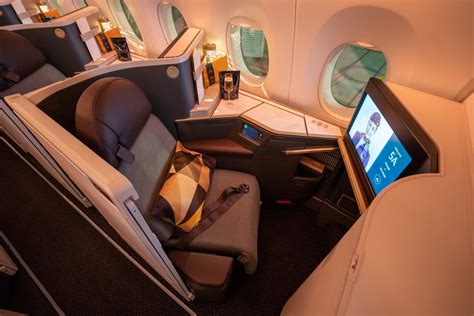
Aircraft cabins have evolved dramatically over the past decade. Premium seats increasingly resemble private suites. High walls, sliding doors, enclosed footwells. These designs enhance privacy but inadvertently reduce natural airflow circulation.
When you enclose a passenger within a structured shell, you create microclimates. Warm air lingers. Blankets trap heat. Even mild cabin temperatures can feel warmer inside these pods.
In such environments, individual air nozzles serve a functional counterbalance. They reintroduce control. They restore airflow agency.
Without them, passengers rely entirely on cabin-wide temperature settings controlled by flight crews—settings designed to balance comfort across hundreds of people with vastly different thermal preferences.
Thermal comfort is one of the most variable human experiences. What feels perfect to one traveler feels stifling to another.
The Economics vs. Experience Equation
Airlines constantly balance capital expenditure with passenger satisfaction. Some features visibly drive bookings: seat pitch, lie-flat beds, onboard Wi-Fi, branded partnerships. Others operate quietly in the background.
Individual air nozzles fall into the second category. They rarely appear in marketing materials. They don’t headline press releases. They don’t photograph as dramatically as a champagne flute in first class.
Yet for many frequent flyers, they significantly affect sleep quality on overnight flights. And sleep quality directly impacts overall trip perception.
A passenger who lands refreshed associates that comfort with the airline brand. A passenger who lands overheated and restless remembers that too.
From a behavioral standpoint, small comfort details accumulate into powerful brand impressions.
The Future of Cabin Personalization
Aircraft cabins are slowly moving toward increased personalization. Some airlines experiment with individual temperature controls in first class. Others integrate smart lighting, adjustable seat firmness, and noise-reduction technology.
Personal airflow control fits naturally into this personalization trend. It is simple, mechanical, and intuitive. No touchscreen required. No app integration necessary.
As airlines invest heavily in premium differentiation, the absence of air nozzles becomes more noticeable, not less. The more enclosed and private cabins become, the more airflow autonomy matters.
The industry often debates billion-dollar fleet strategies, sustainable aviation fuels, and next-generation engines. Meanwhile, a small adjustable vent continues to influence real passenger comfort in ways disproportionate to its size.
A Small Feature with Outsized Impact
Individual air nozzles are not glamorous. They are not revolutionary. But they are practical, effective, and deeply appreciated by a segment of travelers who value thermal control above decorative luxury.
Air travel is a controlled environment inside a metal tube traveling at 500 miles per hour. Within that artificial ecosystem, minor adjustments can profoundly affect comfort perception.
Airlines that include individual air nozzles signal attention to detail. Airlines that exclude them reveal a different calculation—one where marginal cost, weight, and perceived demand outweigh the comfort benefits.
In the end, the debate over individual air nozzles on airplanes reflects a broader truth about aviation design: the smallest engineering decisions often carry the most human consequences.
And at 35,000 feet, sometimes the difference between a good flight and a great one is nothing more than a stream of cool air aimed exactly where you want it.