America’s aviation construction boom is no longer centered exclusively on coastal giants such as New York’s JFK, Los Angeles International, or Chicago O’Hare. Across the country, a quieter transformation is unfolding as secondary airports invest billions of dollars to modernize terminals, expand gate capacity, improve passenger experience, and prepare for decades of growth. These projects are changing the competitive landscape of domestic aviation by allowing regional airports to accommodate more passengers, attract additional airlines, and serve as economic engines for rapidly expanding metropolitan areas.
For decades, the largest airport redevelopment projects were almost exclusively reserved for the nation’s biggest international gateways. Today, however, demographic shifts, population migration, business investment, and record passenger demand have fundamentally altered airport planning priorities. Cities once considered secondary aviation markets are committing infrastructure budgets that rival some of the country’s most recognizable airport developments.
The urgency is amplified by America’s estimated $151 billion airport infrastructure funding gap, forcing airport authorities to replace aging facilities rather than simply renovate them. Instead of cosmetic improvements, these airports are constructing entirely new terminals, introducing advanced baggage systems, expanding aircraft parking positions, improving sustainability, and redesigning passenger circulation for the next generation of air travel.
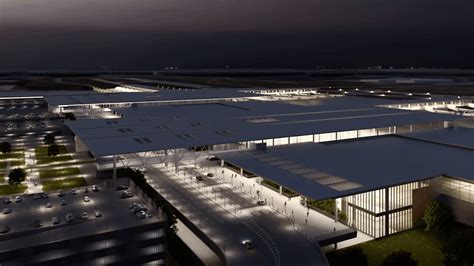
Rather than chasing prestige, these airports are investing with a clear objective: increasing operational efficiency while positioning themselves as attractive alternatives to increasingly congested coastal hubs. The result is a nationwide shift in aviation infrastructure that could reshape domestic travel throughout the coming decade.
Why America’s Secondary Airports Are Investing Billions
Several powerful trends are driving these unprecedented investments. Population growth across the South and Midwest has dramatically increased travel demand, while businesses continue relocating headquarters and expanding operations away from traditional coastal cities. Airlines are responding by adding routes, increasing frequencies, and establishing larger operational bases in markets that once received relatively modest investment.
Airport operators also recognize that passenger expectations have changed. Travelers increasingly expect spacious terminals, intuitive layouts, shorter security lines, faster baggage delivery, improved dining options, premium lounges, and convenient ground transportation. Facilities built during the 1960s through the 1990s struggle to meet those expectations without complete reconstruction.
Equally important is operational resilience. Modern airports are designed to reduce bottlenecks, improve accessibility, incorporate digital technologies, and create infrastructure capable of supporting decades of future passenger growth. Many projects also prioritize sustainability through energy-efficient buildings, renewable power generation, and environmentally responsible construction methods.
Sacramento International Airport Is Reinventing Northern California Travel
Sacramento International Airport (SMF) has embarked on one of California’s most ambitious airport modernization programs through its $1.3 billion SMForward initiative. Designed as a multi-year transformation, the project addresses infrastructure that has struggled to keep pace with rapidly growing passenger volumes throughout Northern California.
The modernization emphasizes passenger convenience from arrival to departure. One of its most recognizable additions is a new elevated pedestrian skybridge spanning approximately 87,400 square feet. Equipped with moving walkways, the bridge creates a reliable connection between Terminal B and Concourse B while providing a fully accessible alternative whenever the airport’s automated people mover undergoes maintenance.
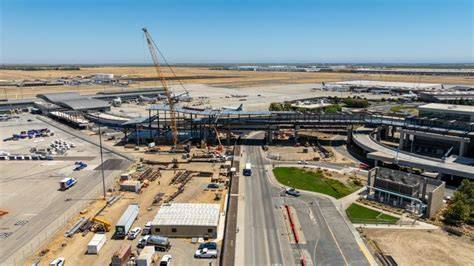
Beyond the skybridge, Sacramento is expanding Concourse B with six additional gates capable of supporting increasing airline operations. The terminal expansion includes upgraded baggage handling technology, larger ticketing facilities, and infrastructure capable of accommodating future airline growth.
Landside improvements are equally significant. A six-story parking structure will add approximately 5,500 parking spaces while incorporating electric vehicle charging infrastructure. Meanwhile, a consolidated rental car center will eliminate the need for traditional shuttle bus operations, simplifying passenger transfers and reducing congestion throughout the airport campus.
Collectively, these improvements demonstrate how mid-sized airports are prioritizing seamless passenger movement instead of merely increasing square footage.
Tampa International Airport Expands for Global Growth
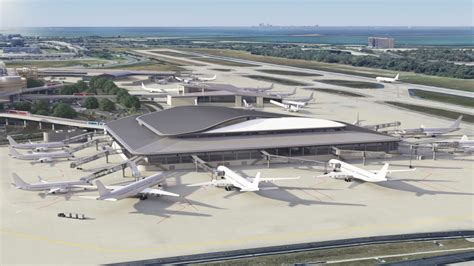
Tampa International Airport (TPA) is investing $1.5 billion in Airside D, the centerpiece of its long-term expansion strategy. The project reflects the remarkable economic and population growth occurring throughout Florida’s Gulf Coast region.
The new 600,000-square-foot facility introduces 16 flexible aircraft gates capable of handling both domestic narrowbody aircraft and long-haul international widebody operations. This flexibility gives airlines greater scheduling options while supporting future international expansion.
Passengers will encounter a thoughtfully designed terminal featuring premium airline lounges, expanded dining options highlighting local cuisine, and an integrated customs and border protection facility that streamlines international arrivals.
Rather than simply adding gates, Airside D positions Tampa as a larger international gateway capable of accommodating an expected 35 million annual passengers by 2037. The investment reflects confidence that Florida’s continued economic expansion will translate directly into sustained aviation demand.
Pittsburgh International Airport Has Already Completed Its Transformation
Unlike many airports still under construction, Pittsburgh International Airport (PIT) has already completed its remarkable $1.7 billion terminal modernization, opening the facility in November 2025.
Instead of renovating outdated infrastructure, Pittsburgh fundamentally reimagined the passenger journey. The airport replaced its aging landside terminal with an 811,000-square-foot consolidated facility that eliminates the need for the airport’s obsolete automated people mover system.
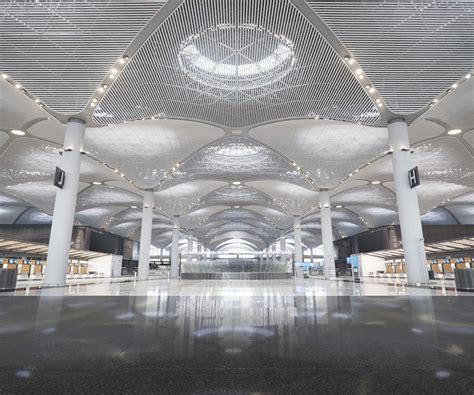
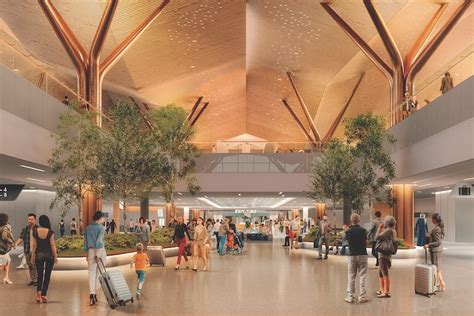
Architecturally, the terminal combines efficiency with regional identity. Tree-inspired structural columns support expansive interior spaces, while thousands of integrated lighting elements recreate the appearance of western Pennsylvania’s night sky. These distinctive design choices helped the terminal achieve LEED Gold certification.
Operational improvements are equally meaningful. A consolidated twelve-lane security checkpoint significantly reduces passenger waiting times, while a 1,300-foot pedestrian bridge creates a direct connection between landside facilities and departure gates.
Perhaps most impressive is the airport’s independent energy strategy. The terminal operates using a combination of solar generation and natural gas microgrid technology, improving resilience while reducing dependence on traditional electrical infrastructure.
John Glenn Columbus International Airport Is Building for Its Second Century
John Glenn Columbus International Airport (CMH) is replacing its aging 1958 terminal with a completely new $2 billion passenger facility scheduled for completion in 2029, coinciding with the airport’s centennial.
The one-million-square-foot terminal represents one of the most dramatic airport replacements currently underway in the United States. Rather than expanding an outdated building, airport planners chose to design an entirely modern facility capable of serving future passenger demand.
A striking 74-foot cantilevered canopy will welcome travelers while providing weather protection across multiple traffic lanes. Inside, three separate security checkpoints will be replaced with a single centralized screening area that efficiently channels passengers into a spacious marketplace overlooking the airfield.
The airport will feature 36 standardized gates designed primarily for modern narrowbody aircraft alongside a new 5,000-space parking garage connected by a covered pedestrian bridge.
Notably, airport officials have emphasized that the project relies on federal funding and previously accumulated operational reserves rather than local tax increases, illustrating how creative financing strategies are supporting many of America’s largest airport investments.
San Antonio International Airport Pursues a New Aviation Identity
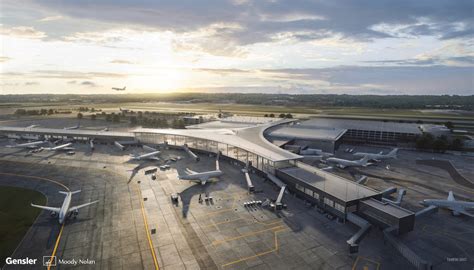
San Antonio International Airport (SAT) is undertaking the largest infrastructure investment in its history through a $2.5 billion expansion centered on the construction of Terminal C.
For years, San Antonio has experienced strong population growth alongside expanding corporate investment throughout South Texas. Airport leaders view Terminal C as the missing component needed to transform the airport from a predominantly domestic facility into a stronger international gateway.
The project introduces 17 high-capacity aircraft gates, expanded check-in facilities, advanced baggage handling technology, and significantly larger passenger processing areas capable of supporting sustained long-term growth.
One particularly noteworthy comparison illustrates the project’s scale. Terminal C’s 17 new gates exceed the gate count associated with New York JFK’s multibillion-dollar Terminal 6 development despite costing substantially less overall. That comparison underscores how regional airports are achieving enormous operational gains through carefully targeted investments.
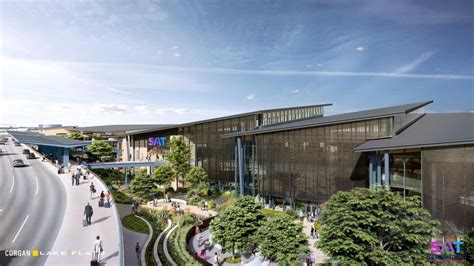
The expansion aims to increase airline interest while strengthening San Antonio’s position as a business destination and international travel gateway throughout Texas.
Nashville International Airport Leads the Regional Airport Investment Race
Topping the list is Nashville International Airport (BNA), whose sweeping $3 billion New Horizon program represents one of the most ambitious airport redevelopment efforts currently underway in North America.
Since 2017, Nashville has experienced extraordinary passenger growth driven by booming tourism, corporate relocations, and rapid metropolitan expansion. Rather than slowing investment after previous upgrades, airport executives launched another massive construction campaign designed to support approximately 40 million annual passengers.
The centerpiece is the complete demolition and reconstruction of Concourse A, creating a new 374,000-square-foot facility while simultaneously expanding Concourse D to maximize aircraft utilization.
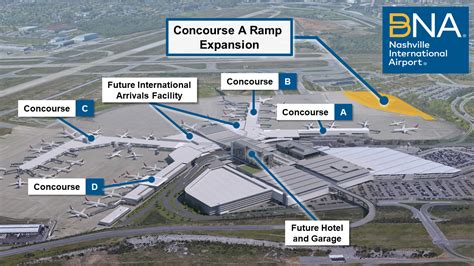
Behind the scenes, equally transformative investments are modernizing airport operations. Approximately three miles of automated baggage conveyors will dramatically improve luggage processing speeds, reducing delays while increasing handling capacity. Landside improvements include a six-story ground transportation center with approximately 3,000 parking spaces, expanded roadway access, and redesigned traffic circulation intended to improve vehicle flow throughout the airport campus.
Airport leadership has even introduced financial incentives encouraging contractors to complete portions of construction ahead of schedule, highlighting the urgency attached to keeping pace with Nashville’s explosive growth.
More Than Construction Projects—A New Competitive Era for American Aviation
These six airports collectively represent more than $12 billion in aviation infrastructure investment, yet their significance extends well beyond impressive construction budgets. They reflect a broader shift in how the United States approaches airport development.
Instead of concentrating resources solely at established coastal mega hubs, airport authorities increasingly recognize that regional cities are becoming national economic centers in their own right. Better airports support business investment, encourage tourism, strengthen airline competition, improve connectivity, and enhance overall quality of life for surrounding communities.
Passengers will ultimately experience shorter walks, faster security screening, more efficient baggage systems, expanded airline choices, improved accessibility, and modern terminals designed around today’s travel expectations rather than yesterday’s operational limitations.
Perhaps the most remarkable aspect of this infrastructure wave is how quietly it has unfolded. While projects at airports like JFK frequently dominate headlines, billions of dollars are simultaneously reshaping airports across California, Florida, Pennsylvania, Ohio, Texas, and Tennessee. These investments demonstrate that the future of American aviation is increasingly being built far from the country’s traditional coastal gateways.
As these terminals open between 2026 and 2029, they will redefine what travelers should expect from regional airports. America’s so-called forgotten hubs are rapidly becoming some of its most advanced aviation facilities, proving that the next chapter of airport innovation is being written well beyond the nation’s largest metropolitan airports.