The United States Air Force is undergoing a monumental transformation as it phases out the legendary F-15C/D Eagle and even some of the venerable F-15E Strike Eagles. This marks the end of an era dominated by a platform that first flew in 1972, renowned for air superiority and tactical versatility. However, the aircraft stepping in are not mere successors—they represent a leap forward in warfare technology, forming a mixed-generation, high-low strategy of unmatched capability.
The replacement of the F-15 is not a singular event. It is a strategic reconfiguration of America’s air combat architecture, composed of multiple platforms, each tailored to address evolving threats, budget realities, and technological innovations. The F-15EX Eagle II, F-35 Lightning II, F-22 Raptor, and F-16 Fighting Falcon form a patchwork fleet where each fighter plays a crucial role, culminating in the most complex airpower orchestration in modern military history.
The Rise of the F-15EX Eagle II: Strength in Familiarity
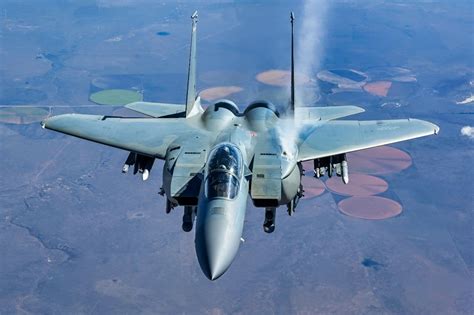
At the core of the modernization program lies the F-15EX, a reinvention of a proven airframe with transformative upgrades. The EX variant is not an experimental departure, but a deliberate evolution built upon the strengths of the original Eagle. It features:
- Advanced fly-by-wire systems for superior maneuverability
- Digital backbone architecture for rapid system integration
- Increased payload capacity with 12 external weapon stations
- Open mission systems to accommodate future upgrades
The F-15EX is uniquely positioned to replace aging F-15C/Ds rapidly due to its compatibility with existing infrastructure and training ecosystems. It is the USAF’s “weapons truck,” able to carry more ordnance than any other fighter in the inventory. Homeland defense, base security, and high-capacity strike missions are its key domains.
Fifth-Gen Firepower: F-22 and F-35 at the Forefront
While the F-15EX offers scale and firepower, fifth-generation fighters bring stealth, sensor fusion, and networked warfare to the front lines. The F-22 Raptor and F-35 Lightning II are the spearhead of air dominance in a world of contested airspace and multi-domain threats.
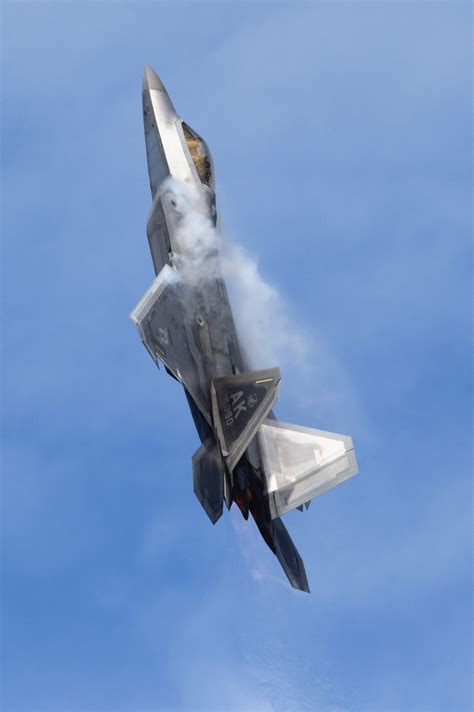
The F-22, though limited in numbers due to early procurement decisions, is unmatched in supercruise capability, stealth, and dogfighting prowess. Its role remains air superiority—especially in the Indo-Pacific and European theaters. Modern upgrades to radar and electronic warfare suites will keep it relevant until the arrival of sixth-gen successors.
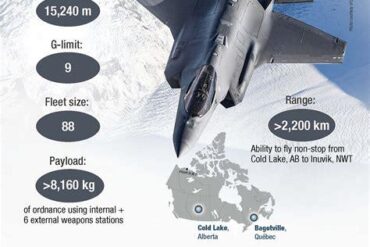
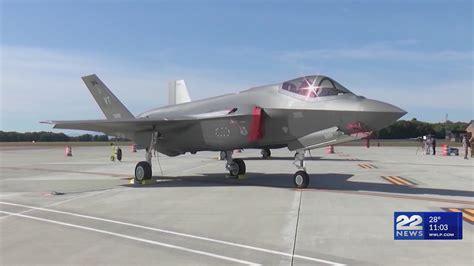
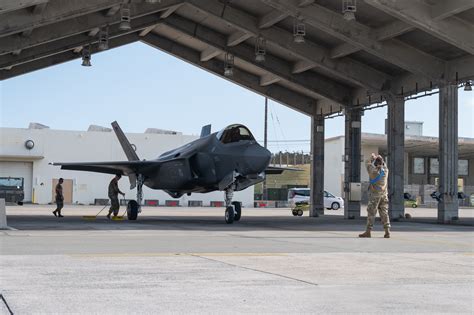
The F-35, with over 400 aircraft in USAF service, is the connective tissue of the modern battlespace. It is designed for joint operations, penetrating enemy defenses, and serving as a force multiplier via real-time data links. With Block 4 and TR-3 upgrades, the F-35 is expected to become even more lethal, albeit these enhancements have faced delays.
F-16s: The Cost-Effective Stopgap with Lasting Value
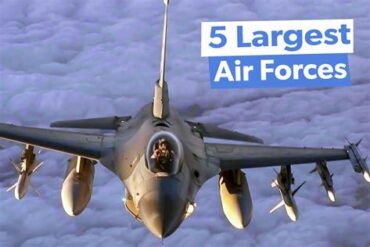
Often overshadowed by more glamorous stealth fighters, the F-16 Fighting Falcon remains a key pillar in the USAF’s fleet. As a low-cost multirole platform, it fills critical gaps left by the retiring F-15s. Agile, reliable, and versatile, the F-16 is being upgraded with AESA radar, improved avionics, and new weapons integrations to extend its service life well into the 2030s.
In key locations such as Kadena Air Base in Japan, F-16s have been rotated in to maintain air presence while newer aircraft transition in. Their low operational costs and availability make them an ideal stopgap in a period of high demand and limited fighter availability.
NGAD and the F-47: The Sixth Generation Awakens
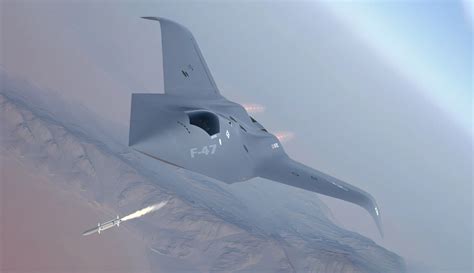
Perhaps the most consequential development in American airpower is the Next Generation Air Dominance (NGAD) program. At the heart of NGAD is the recently announced Boeing F-47, a sixth-generation air superiority platform set to replace the F-22 in the 2030s.
The F-47 will push the boundaries of aerial warfare with:
- Adaptive stealth for low observability in dynamic conditions
- Uncrewed teaming capability with Collaborative Combat Aircraft (CCA)
- Modular design for rapid upgrades
- Extended range and improved sustainability
According to the Department of Defense, the F-47 will require less logistical support and fewer personnel to operate, an essential improvement in expeditionary and peer-conflict environments. It is being designed with adaptability at its core, enabling swift technological integration and capability expansion over time.
The High-Low Mix: More Than Budget
Much has been debated about the high-low mix—a term that traditionally assigned aircraft like the F-15 or F-22 as “high” and F-16 or A-10 as “low.” But experts increasingly argue that this binary distinction is outdated. The more accurate assessment revolves around mission versatility and generational capability.
For instance, while the A-10 is extremely effective in close air support, its single-mission focus limits its broader utility. In contrast, multi-role aircraft such as the F-35 and F-15EX can perform a vast range of tasks, from electronic warfare to strategic bombing, making them more relevant to future conflicts that demand rapid adaptability.
As warfare moves toward joint, multi-domain operations, defining aircraft by generation—fourth, 4.5, and fifth—is a more functional methodology. The arrival of sixth-gen fighters like the F-47 will add another layer to this classification, emphasizing cooperative combat between manned and unmanned systems.
Kadena Air Base and the Indo-Pacific Pivot
Strategic deployments tell the real story of the transition. Since 2022, the USAF has been rotating F-35s and F-16s into Kadena Air Base, Japan, phasing out F-15C/D units. The long-term plan is to base F-15EX Eagles at Kadena beginning in 2026, forming a powerful frontline deterrent in the Indo-Pacific.
Major Chris Burson, commander of the 336th Fighter Generation Squadron, described the deployment as a proving ground for integrating multiple generation fighters. The rotation of fourth- and fifth-gen jets is seen as an essential step in maintaining operational readiness and projecting deterrence in one of the world’s most geopolitically volatile regions.
Capacity Crisis: Fighter Shortfalls and Congressional Alarm
While capability is increasing, fighter quantity is another story. The USAF currently has less than half the fighter fleet it possessed in 1990, while global mission demand has only intensified. Even new F-15Es are over 30 years old, and aging airframes are increasingly sidelined by maintenance and structural fatigue.
Congressional leaders have raised alarm over the mismatch between retirements and acquisitions. Over 600 fighters are set to retire by 2030, but fewer than 250 replacements have been funded. This results in a widening shortfall that will persist until NGAD is fielded, and even then, the cost of sixth-gen fighters will limit fleet size.
What Comes Next: The Future of USAF Air Dominance
The retirement of the F-15C/D marks more than just the end of a storied fighter. It is a pivot toward an integrated force structure built on advanced capability, networked operations, and rapid adaptability. The USAF is no longer buying jets to win the last war—it’s acquiring tools to deter and win the next war, in environments where stealth, data dominance, and cooperative AI-driven combat are the new norms.
The F-15EX, F-35, F-22, and soon the F-47 will not compete against one another, but operate synergistically. They will blend brute force with digital warfare, legacy reliability with next-gen innovation, and cost-effective mass with high-end lethality.
Together, they form the new tip of the spear—a force evolving beyond the Eagle’s shadow, but forever shaped by its legacy.