In the world of commercial aviation, legacy carriers hold a distinctive place shaped by decades of regulatory control, economic turbulence, and strategic adaptation. These airlines, primarily rooted in the United States’ regulated era under the Civil Aeronautics Board (CAB) from 1938 to 1978, have navigated a unique trajectory that continues to influence the modern airline landscape.
What Defines a Legacy Carrier?
A legacy carrier in the United States is an airline that was either directly regulated by the CAB during its tenure or can trace its operational lineage back to one that was. The CAB wielded comprehensive authority over commercial aviation: setting fares, allocating routes, and limiting competition. The intention was stability, but the consequence was a system of high fares and inefficiencies, particularly compared to intrastate carriers which evaded federal oversight.

This definition excludes carriers like JetBlue, Spirit, Virgin America, and America West—all founded post-1978 deregulation. It also excludes Southwest Airlines, despite its 1971 founding, due to its original intrastate focus which insulated it from CAB control. Similarly, regional and commuter airlines such as SkyWest and Empire Airlines were never regulated under the CAB.
Interestingly, Hawaiian Airlines and Aloha Airlines—despite operating only within the Hawaiian Islands—were considered interstate carriers because flights traversed federally regulated oceanic waters. Thus, they too were subject to CAB oversight and qualify as legacy carriers.
The International Parallel: Global Legacy Airlines
While the term is American in origin, its conceptual application stretches worldwide. In Europe, national flag carriers like British Airways, Lufthansa, Air France, and Iberia embody legacy status due to their pre-liberalization roots and government-backed growth. These contrast sharply with newer, nimble low-cost carriers like Ryanair and Wizz Air, which emerged in a deregulated, price-competitive market.
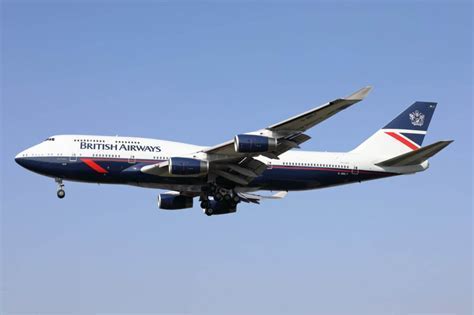
These global legacy carriers share common features: expansive international networks, extensive alliances, higher-cost structures, and brand prestige born from decades of operation under strict regulatory regimes.
The CAB Era: A Monopolized Sky
Under CAB oversight, U.S. commercial aviation resembled a state-sanctioned cartel. Airlines did not compete on price—fares were fixed and often artificially high. Routes were assigned rather than earned, and innovation was stifled by bureaucratic inertia. For instance, low-cost intrastate carriers such as Pacific Southwest Airlines and Air California offered fares significantly below those set by the CAB, underscoring the inflationary impact of regulation.
By 1978, 23 scheduled U.S. airlines were flying jets under CAB authority. These included ten major domestic trunks—such as American, United, Delta, and TWA—and eight local service airlines like Piedmont, Ozark, and Texas International. Hawaiian and Aloha represented the islands, while Alaska Airlines and Wien Air Alaska flew northern routes.
Deregulation and the Fallout: 1979–1991
The Airline Deregulation Act of 1978 abruptly dismantled the protective framework of the CAB. Overnight, airlines faced unrestricted competition. What followed was a chaotic period of consolidation, failure, and innovation as legacy carriers struggled to adapt.
By 1991, 13 of the original 23 legacy jet carriers had disappeared—either through mergers or collapse. Survivors had adopted aggressive, often painful strategies to stay afloat:
- Mergers reshaped the industry map. National merged into Pan Am, Western into Delta, Frontier and Texas International into Continental, and Piedmont into USAir. Consolidation was sometimes opposed by the Department of Justice but approved by the Department of Transportation for broader industry stability.
- Expansion strategies varied in success. Piedmont’s East Coast network flourished, sustaining profitability until its 1989 acquisition. In contrast, Braniff’s overambitious growth led to its demise in 1982—the first major jet operator to collapse.
- Labor restructuring became essential. Continental Airlines’ 1983 bankruptcy allowed it to void labor agreements and lower wages. American Airlines introduced a two-tier wage system that retained legacy salaries for existing staff while offering lower pay to new hires.
- Customer loyalty programs debuted. American Advantage, launched in 1981, revolutionized airline marketing and created a competitive edge for larger carriers with broader route networks.
- Revenue management systems, pioneered by American in 1985, introduced sophisticated fare discrimination models. Rules like Saturday night stays and roundtrip bookings became tools for extracting maximum revenue from business travelers while filling seats with leisure demand.
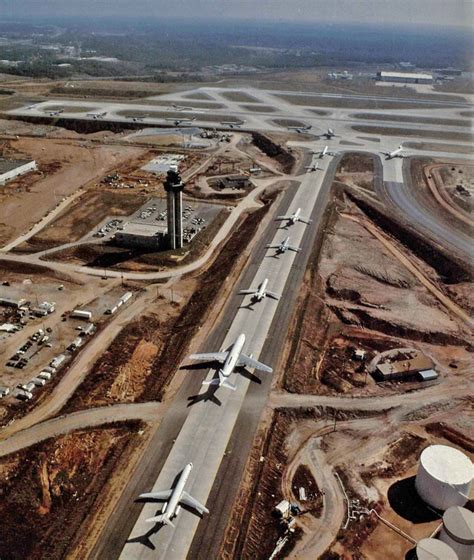
- Hub-and-spoke systems took hold. Though Delta’s Atlanta hub predated deregulation, the removal of route restrictions allowed other carriers to emulate this efficient model, concentrating operations to maximize aircraft and crew utilization.
- International expansion accelerated. With international routes still regulated but more open to transfer, United acquired Pan Am’s Pacific operations, American took over Eastern’s Latin American routes, and Delta absorbed Pan Am’s European network.
- Regional alignment flourished under new code-sharing regulations. Carriers like Allegheny had pioneered this model pre-deregulation, but post-1985, commuter airlines operated as branded extensions of legacy networks. American Eagle and Continental Express exemplified this integration.
From Dozens to Four: Consolidation and Survival
By the early 1990s, only ten jet-operating legacy carriers remained, including Alaska, Aloha, American, Continental, Delta, Hawaiian, Northwest, TWA, United, and USAir. The ensuing decades would reduce this list further:
- In 2001, TWA collapsed and was absorbed into American Airlines.
- In 2005, US Airways, itself the product of legacy mergers, was acquired by America West but retained the US Airways brand and legacy classification.
- Aloha Airlines ceased operations in 2008.
- Northwest merged with Delta in 2008, reinforcing Delta’s global reach.
- Continental and United merged in 2010, forming the world’s largest airline at the time.
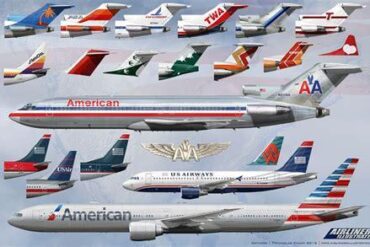
- In 2013, US Airways and American Airlines finalized their merger, consolidating legacy strength under the American name.
- Most recently, Alaska Airlines acquired Hawaiian Airlines in 2024, maintaining both brands but unifying operations under a common parent.
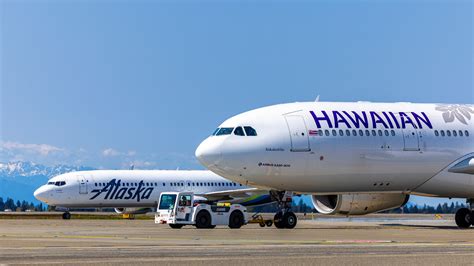
Today, only four U.S. legacy carriers remain:
- Alaska Airlines / Hawaiian Airlines (merged)
- American Airlines
- Delta Air Lines
- United Airlines
Each of these carriers embodies decades of adaptation, consolidation, and resilience. They continue to face challenges from ultra-low-cost carriers (ULCCs), fluctuating fuel prices, and global uncertainty—but their heritage grants them unmatched scale, loyalty infrastructure, and global reach.
The Legacy Model in a Low-Cost Era
In a landscape now dominated by cost efficiency and dynamic pricing, legacy carriers remain differentiated by their historical baggage and strategic advantages. Their high labor costs and unionized workforces can be burdens—but these airlines also enjoy robust international route authorities, lucrative corporate contracts, and entrenched global alliances such as Oneworld, SkyTeam, and Star Alliance.
Despite structural disadvantages, legacy carriers retain their stature by continuously evolving. Investments in fleet modernization, digital transformation, and personalized travel experiences keep them competitive even as ULCCs like Spirit and Frontier push fares to rock bottom.
Their survival has hinged not on preserving the past but on repurposing their historical depth into modern relevance.
Conclusion
The history of legacy carriers in the U.S. is a chronicle of endurance and transformation. Born under regulation, they entered a free market weighted by costs and constrained by expectations. Some disappeared, some merged, but a few adapted and now thrive in a radically changed environment. As of 2024, the remaining legacy carriers are the product of almost a century of aviation evolution—bearing the legacy not only of regulation but of resilience.