In the days leading up to the Thanksgiving holiday rush—a time when airports across the United States thrum with millions of travelers—an unseen, digital fault nearly grounded a significant portion of the global fleet of Airbus A320 aircraft. What unfolded was not only a remarkable technical and operational feat but also a demonstration of how strategic agility, engineering resilience, and inter-agency coordination can prevent disaster in the modern aviation age.
The Software Fault That Shook the Skies
On October 30, 2025, JetBlue Flight 1230, operating an Airbus A320 from Cancún to Newark, experienced a violent, uncommanded nose-down movement at cruising altitude. Within seconds, the aircraft dropped roughly 100 feet before autopilot systems regained control. The sudden jolt left 15 passengers injured and led to an emergency diversion to Tampa.
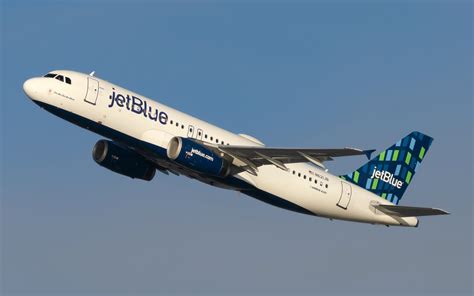
The event set off alarm bells across the aviation world. Investigators, alongside Airbus and global regulators, traced the incident to a subtle yet dangerous phenomenon known as a “bit flip”—caused by high-energy particles from cosmic rays altering a data bit in the aircraft’s Elevator and Aileron Computer (ELAC) system. At cruising altitudes, where exposure to cosmic radiation is exponentially higher than at sea level, avionics become especially vulnerable. And while these events are rare, the software running on the ELAC—version L104—was found to be particularly susceptible.
This revelation would cascade into a global crisis.
Airbus Acts: An Emergency Recall of Unprecedented Scale
By November 28, Airbus CEO Guillaume Faury publicly acknowledged the severity of the issue. He issued an Alert Operators Transmission (AOT)—an emergency directive calling for the immediate software rollback on over 6,000 A320-family aircraft worldwide. This was a recall in all but name.
Aviation authorities from both sides of the Atlantic—the European Union Aviation Safety Agency (EASA) and the U.S. Federal Aviation Administration (FAA)—mandated that no affected aircraft could operate passenger flights until the corrective measure was implemented. For airlines, this meant grounding portions of their fleets in the middle of the busiest travel period of the year.
American Airlines: Leadership Through Readiness
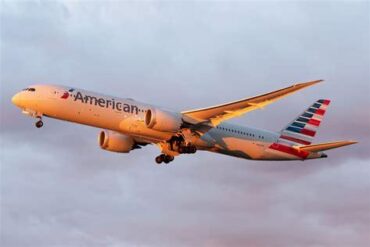
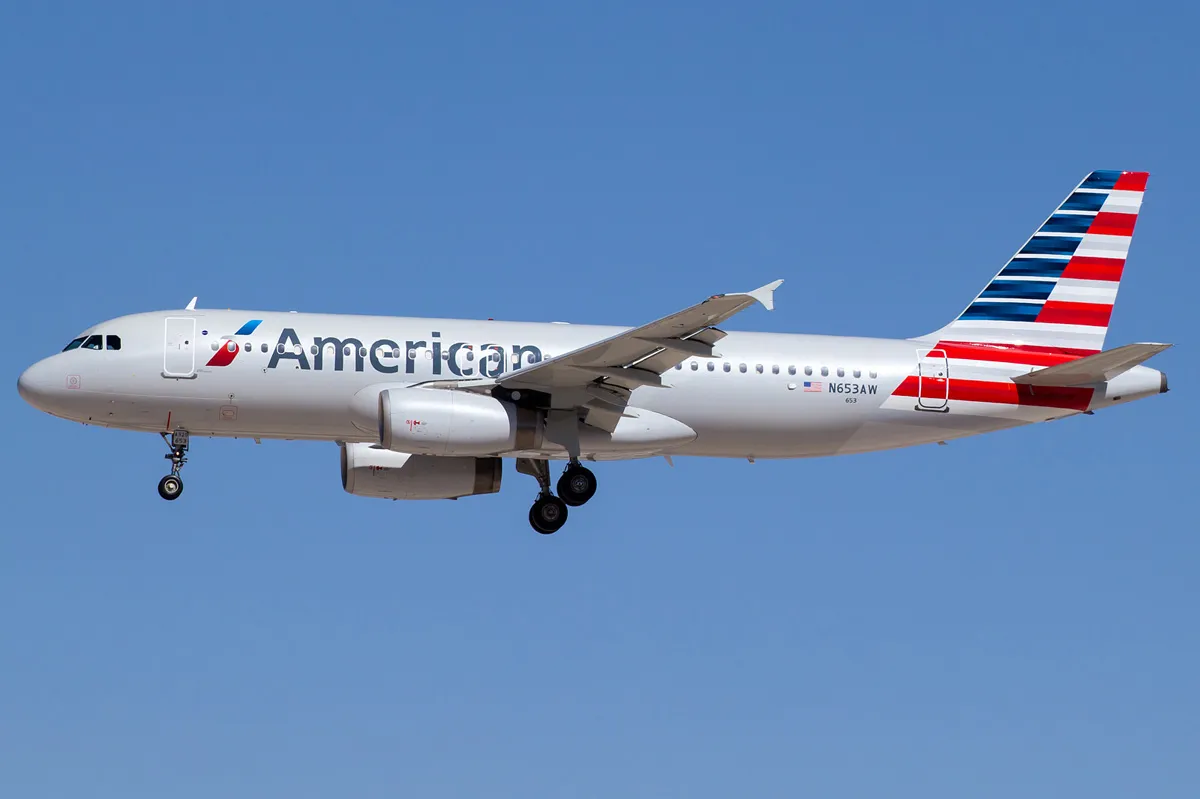
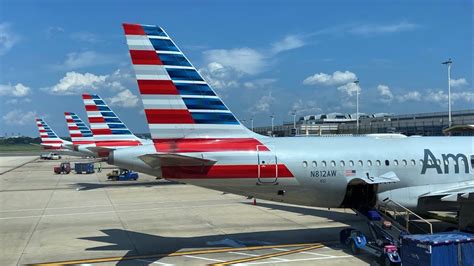
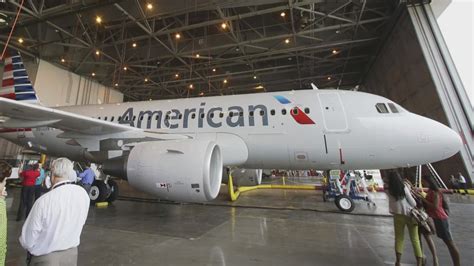
Among the carriers, American Airlines emerged as the most prepared and agile. With a fleet of 483 Airbus A320-family jets—making it the world’s largest narrowbody Airbus operator—the potential disruption was staggering. However, American’s Technical Operations (Tech Ops) teams mobilized at an astonishing pace.
Even before the FAA’s mandate was formalized, American Airlines began identifying aircraft running the compromised L104 software. Initially pegging 340 aircraft as potentially affected, the number was later narrowed to 209. Teams worked through the night, leveraging brief layovers and overnight shifts to execute a software rollback to the more robust L103+ version.
By the very next day, American had updated virtually all of its affected jets, preventing widespread cancellations and maintaining its schedule integrity during the Thanksgiving weekend.
The Global Response: A Race Against the Clock
While American’s rapid response stood out, other carriers across the globe scrambled to do the same. JetBlue, despite operating an exclusively Airbus fleet, lagged in implementing the fix. Reports noted delays in its rollout, potentially due to logistical bottlenecks or internal triage systems.
Conversely, European budget giants EasyJet and Wizz Air completed their updates with almost no disruptions. All Nippon Airways (ANA) in Japan, however, had to cancel 95 domestic flights on November 29 alone, affecting over 13,000 passengers.
The scope of the operation was staggering:
- Each software rollback took approximately 2–3 hours per aircraft.
- Over 5,900 aircraft were updated within 48 hours.
- Fewer than 100 aircraft remained grounded post-operation, primarily due to hardware dependencies.
Pinpointing the Root Cause: A Technical Detective Story
What made this crisis particularly insidious was the elusiveness of the failure mechanism. Unlike mechanical breakdowns that leave physical traces, a bit flip caused by space weather offers no visual clues. The compromised L104 software included new features that—while designed to enhance safety—may have inadvertently weakened its resilience to single-event upsets (SEUs) from cosmic rays.
Engineers and software investigators had to rule out mechanical causes, pilot error, and internal system malfunctions before concluding that solar radiation at high altitudes was the trigger. This required correlating the time and position of Flight 1230 with global cosmic ray flux data—a painstaking process made possible only by digital telemetry and deep avionics diagnostics.
Space Weather: The Invisible Threat to Modern Aviation
Aircraft cruise at altitudes of 35,000–40,000 feet, where the Earth’s protective atmosphere thins significantly. At these heights, cosmic radiation is up to 300 times stronger than at sea level. Energetic particles from solar flares and deep space bombard microelectronic components, occasionally causing transient faults like bit flips.
In older analog systems, such upsets were unlikely to cascade into major problems. But today’s fly-by-wire aircraft rely entirely on digital logic, which can issue incorrect commands if data is corrupted—even for milliseconds. That was enough to throw JetBlue Flight 1230 into a brief but dangerous dive.
Fortifying The Digital Defenses: Lessons in Redundancy and Software Design
While Airbus has not released technical details differentiating L104 from its predecessor, industry experts suggest the rollback version likely employed stronger error detection protocols, such as memory scrubbing and more aggressive error-correcting code (ECC) management.
Modern Airbus aircraft use redundant flight computers that cross-check each other’s outputs. If one ELAC experiences a bit flip, its data is ignored if two others disagree—a system known as voting logic. But the compromised software may have introduced logic pathways where even minor corruptions were passed along without sufficient suppression, making the system vulnerable.
The incident reaffirms the importance of not just redundancy, but resilient software architecture, especially in the context of growing environmental pressures from space weather.
Built for Speed: Airbus’s Design Philosophy Enables Rapid Response
One of Airbus’s greatest strengths—fleet commonality—proved critical during this crisis. The A319, A320, and A321 all share key flight control components, meaning a single patch could be applied across thousands of aircraft. No re-engineering was necessary for airline-specific customizations.
Further, Airbus’s digital-first design philosophy meant that maintenance crews could plug in update devices via standardized ports, upload the rollback, verify system status, and return aircraft to service rapidly. For the majority of the fleet, no manual hardware adjustments were required.
The Role of Predictive Maintenance Platforms
Airbus’s data-sharing platform, Skywise, allowed for instant fleet-wide visibility. Airlines could query their systems and identify which aircraft were running L104. This kind of real-time configuration management, enabled by predictive analytics and IoT infrastructure, allowed for targeted interventions instead of blanket groundings.
Such digital ecosystems offer a glimpse into the future of airline maintenance—proactive, data-driven, and fleet-aware. The crisis also validated the investment Airbus and its airline partners have made in cloud-based service layers, where information and directives can be disseminated globally in seconds.
Avoiding the Avalanche: What Made the Difference
The difference between disaster and disruption came down to preparation, agility, and systems thinking. American Airlines did not wait for regulatory prodding. Its internal procedures enabled quick triage, resource allocation, and technical execution. Meanwhile, the standardized nature of Airbus’s aircraft allowed for a one-size-fits-all response.
Key takeaways from the incident include:
- Speed of acknowledgment: Airbus moved fast, issuing a global AOT within days of confirming the vulnerability.
- Airline autonomy: American Airlines acted before EASA and FAA directives, highlighting the value of internal engineering authority.
- Design standardization: A single patch worked across most of the A320 fleet, thanks to ELAC commonality.
- Digital infrastructure: Systems like Skywise provided instant intelligence on fleet configuration and software baselines.
A Crisis Averted, But A Warning Sounded
The Airbus ELAC incident wasn’t just a technical failure. It was a test of resilience in an industry where even a brief disruption can ripple through global networks. The rapid containment of the threat averted what could have been the largest grounding of modern jetliners during a peak travel period.
But as aircraft become smarter, more autonomous, and deeply reliant on microelectronics, the aviation world must rethink its assumptions about environmental threats. Space weather is no longer a theoretical risk—it is a tangible, operational hazard. Building more robust, radiation-hardened systems and ensuring software redundancy remains ahead of the curve will be essential as we push the envelope of aerospace technology.
In the end, it wasn’t luck that saved the holiday skies—it was engineering foresight, coordinated leadership, and digital readiness. The skies remained busy, and passengers made it home. But in boardrooms and engineering centers across the globe, the lesson was clear: in the digital era, aviation safety depends as much on bytes as on bolts.