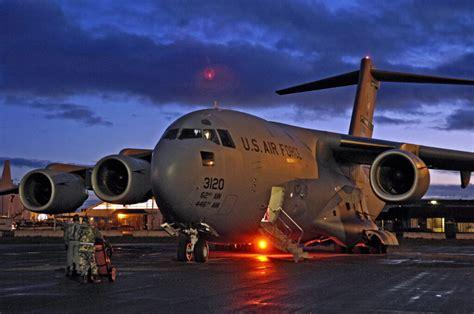
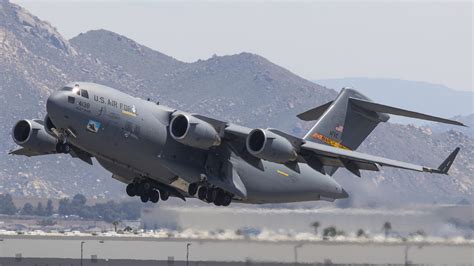
In 2015, one of the most iconic military transport aircraft in aviation history, the Boeing C-17 Globemaster III, saw its production line shut down. The final aircraft left Boeing’s Long Beach, California, factory on November 29, 2015, marking the end of a remarkable era for a plane that had played a vital role in global military logistics for nearly 25 years.
The C-17 program’s termination seemed absolute. The Long Beach manufacturing facility, once a bustling center of aerospace production, was dismantled, sold to an Australian firm for $200 million by 2019, and Boeing’s remaining C-17 operations in the city ceased entirely by 2023. Despite this, Boeing continues to support the 275 C-17s that remain operational globally as of 2025, supplying parts and offering technical expertise to allied nations that rely on the aircraft’s unmatched transport capabilities.
Yet, a decade after production ended, whispers of the C-17’s resurrection are growing louder, fueled by shifting global dynamics and increased military demands.
Global Demand Resurrecting a Legend? The Rumblings from Paris
The spark reigniting hopes for the C-17 Globemaster’s return came during the 2025 Paris Air Show, where Turbo Sjogren, Boeing’s Vice President and General Manager of International Government Services, made headlines. During an interview with European Security and Defence (ESD), Sjogren responded to growing concerns over Europe’s capability to transport heavy military equipment—like main battle tanks and armored vehicles—amid increasing geopolitical tensions, notably the prolonged Russo-Ukrainian conflict.
Rather than proposing a new aircraft design, Sjogren hinted at the possibility of reviving the C-17 program. While he confirmed that Boeing currently has no plans to develop an entirely new heavy transport aircraft, he revealed that several countries had expressed “keen interest” in acquiring new C-17s. He further acknowledged that, should global demand reach a sustainable threshold and the financials align, the C-17 could indeed “come back from the dead.”
Sjogren’s remarks, though cautious, electrified the defense community, especially given the persistent logistical challenges faced by NATO and allied forces in rapidly deploying heavy equipment across theaters of conflict.
The Industrial Hurdles: Rebuilding What Was Dismantled
Despite the optimism, restarting production of the C-17 Globemaster III presents colossal industrial and financial challenges.
The Long Beach facility, the heart of the C-17’s production, no longer exists in its original form. Beyond the physical infrastructure, the specialized machinery and tooling required for assembling a military transport aircraft of this magnitude were custom-made for the program. These assets were either dismantled, repurposed, or scrapped entirely following the production halt.
Even if some tooling had survived in storage, over a decade of dormancy would render much of it obsolete or in dire need of expensive refurbishment. Additionally, aerospace production involves a highly specialized supply chain; re-establishing partnerships with hundreds of suppliers for bespoke parts and materials would be an immense logistical feat.
A study conducted by the RAND Corporation prior to the program’s conclusion estimated that restarting C-17 production after a prolonged hiatus would cost nearly $8 billion. This figure likely underestimates today’s real costs, factoring in inflation, technological advancements, regulatory hurdles, and updated military requirements.
Is There Enough Demand to Justify the C-17’s Return?
The C-17 Globemaster remains one of the most versatile and capable military transport aircraft ever built. With a payload capacity of 77.5 tons, the ability to carry M1 Abrams tanks, helicopters, and large humanitarian relief cargo, and short-field landing capabilities, it fills a critical niche between lighter tactical transports and the massive strategic airlifters like the Lockheed C-5M Super Galaxy.
Today, global conflicts, natural disasters, and geopolitical instability underscore the persistent need for such aircraft. The war in Ukraine, increasing military posturing in the Indo-Pacific, and NATO’s modernization efforts have all exposed gaps in allied heavy-lift capabilities.
Countries such as Germany, Australia, Qatar, India, and several NATO members continue operating C-17 fleets, often pushing their aircraft to high operational tempos. Some of these nations have already expressed dissatisfaction with limited options for replenishing or expanding their fleets.
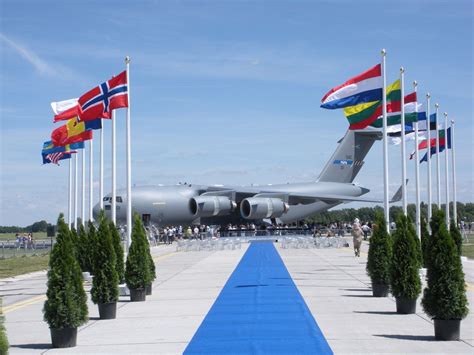
If enough nations commit to purchasing new C-17s, especially given rising global tensions and logistical demands, Boeing might find the business case compelling enough to justify restarting production. However, that would require not just verbal expressions of interest but substantial, binding procurement contracts from multiple governments.
What Would a Modernized C-17 Look Like?
If Boeing proceeds with reviving the C-17, industry experts anticipate an updated variant that incorporates the latest in aerospace technology. Potential upgrades could include:
- Next-generation avionics for enhanced situational awareness
- Improved fuel efficiency through updated engines or aerodynamic refinements
- Advanced defensive systems to counter modern anti-air threats
- Expanded cargo handling automation to streamline loading/unloading operations
A refreshed C-17 variant could also be tailored for new mission profiles, including increased support for humanitarian assistance, rapid disaster relief, or even specialized roles like airborne medical evacuation platforms.
Moreover, as global military doctrines evolve toward multi-domain operations—integrating air, land, sea, cyber, and space assets—the need for agile, strategic transport aircraft like the C-17 becomes more pronounced.
Strategic Implications: Why the C-17’s Comeback Matters
The return of the C-17 Globemaster III would carry profound strategic consequences. It would bolster Western and allied nations’ ability to rapidly deploy forces, equipment, and humanitarian aid across vast distances. With flashpoints ranging from Eastern Europe to the South China Sea, logistical agility is no longer a luxury but a necessity.
The C-17’s short-field landing abilities, combined with its heavy payload capacity, enable it to operate in austere environments, supporting missions that larger aircraft like the C-5M cannot execute. This makes the C-17 indispensable for both conventional warfare and disaster response.
Additionally, reviving C-17 production would have economic ripple effects, potentially creating thousands of jobs across the U.S. aerospace sector, revitalizing supply chains, and reinforcing America’s defense industrial base.
Conclusion: Is the Sky Ready for the Globemaster’s Return?
While Boeing has yet to officially commit to restarting C-17 production, the 2025 Paris Air Show revelations signal serious consideration within the company. Still, significant hurdles—ranging from reestablishing production infrastructure to securing sufficient international orders—remain.
The global defense landscape is rapidly evolving, marked by renewed great power competition, regional conflicts, and complex security challenges. In this environment, proven platforms like the C-17 Globemaster III offer a compelling solution for nations seeking reliable, strategic transport capabilities.
Ultimately, whether the C-17 soars once again depends on a confluence of geopolitical demand, economic viability, and political will. For now, the aviation world watches closely, wondering if the skies will soon echo with the familiar hum of the Globemaster’s engines once more.