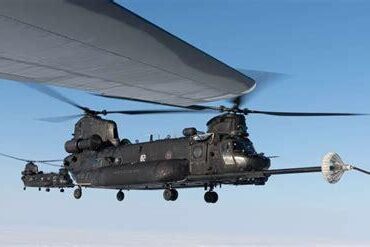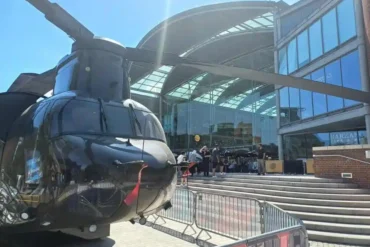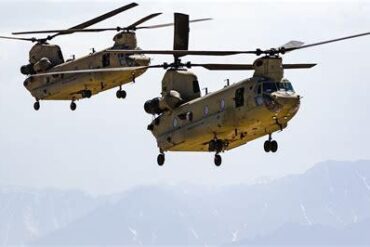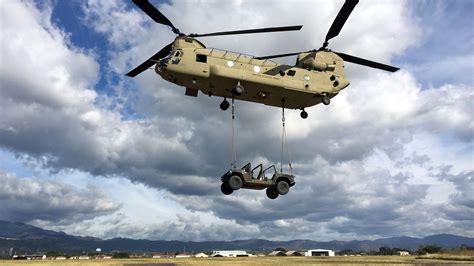
The CH-47 Chinook has stood as a towering symbol of U.S. military power for over 60 years, delivering unmatched heavy-lift capability in operations from Vietnam to Afghanistan. With its distinctive tandem-rotor design and massive payload capacity, the Chinook is one of the few aircraft capable of transporting artillery, vehicles, and dozens of troops in one lift. Yet as warfare evolves and the strategic landscape becomes increasingly contested, questions have begun to emerge: Is the military planning to replace the Chinook with a next-generation heavy-lift platform?
The Chinook’s Legacy: Versatility in Every Era
Introduced in the 1960s, the Chinook was revolutionary for its time. Its twin rotors allowed for stable, high-capacity vertical lift, something traditional single-rotor helicopters couldn’t achieve. Over the decades, it proved its adaptability across diverse theaters—combat zones, humanitarian missions, and disaster relief efforts alike.
Today, over 470 Chinooks remain in service with the U.S. Army, bolstered by modern upgrades such as Block II configurations. These enhancements include increased maximum gross weight (now up to 54,000 pounds), redesigned fuel systems for extended range, and advanced composite rotor blades that improve lift and efficiency.
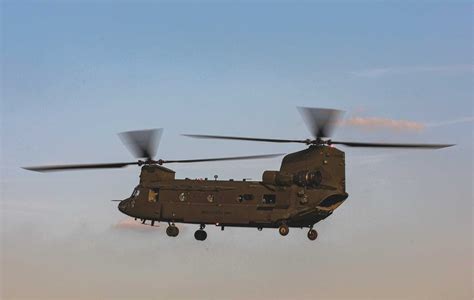
Still, even with upgrades, the underlying airframe design dates back to the Cold War. As global threats shift from low-tech insurgencies to near-peer adversaries like China and Russia, the Chinook’s survivability in heavily defended airspace is a growing concern.
Cape Set Four: The Army’s Quiet Search for a Successor
Under a study initiative called Cape Set Four, the U.S. Army has begun quietly exploring options for a next-generation heavy-lift helicopter. However, this effort is still in its formative stages. Brig. Gen. Cain Baker, head of the Future Vertical Lift (FVL) cross-functional team, has stated that while preliminary analysis has started, the Army has yet to finalize requirements or commit to a specific path.
According to Gen. Baker, the current priority lies with the Future Long Range Assault Aircraft (FLRAA), which is slated to replace the UH-60 Black Hawk. The tiltrotor Bell V-280 Valor, winner of the FLRAA competition, is expected to enter service in the early 2030s. This program is far ahead of any Chinook replacement effort.
Nevertheless, military planners acknowledge that today’s Chinook will not be suitable for all future missions. Especially those involving deep penetration into denied environments or rapid mobility across vast Indo-Pacific distances. The Cape Set Four program, while still conceptual, reflects the Army’s recognition that a paradigm shift in heavy-lift design is inevitable.
Can Tiltrotors Replace Tandem-Rotor Helicopters?
The success of the V-280 Valor has sparked speculation about whether a tiltrotor aircraft could eventually replace the Chinook. Tiltrotors combine the vertical lift capability of a helicopter with the forward speed and range of a fixed-wing aircraft, making them attractive for modern operational demands.
Yet, as of now, no heavy-lift tiltrotor exists that can match the Chinook’s payload capacity. The V-280 itself is tailored for medium-lift missions—not the transport of howitzers, large vehicles, or 40 fully equipped soldiers. Designing a heavy-lift tiltrotor would not only be a technical leap but also an expensive and time-consuming endeavor.
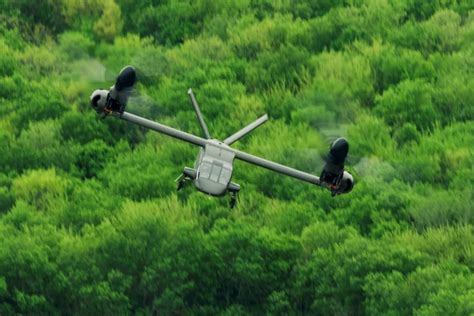
General Baker has acknowledged these limitations, noting that while fuel efficiency and range are key objectives, tiltrotor designs may struggle to deliver on the scale required for future heavy-lift roles. For now, the idea remains on the drawing board—a potential but unrealized vision of next-generation lift.
Block II and Beyond: Keeping the Chinook Competitive
In the short term, the Army remains committed to modernizing the Chinook through Block II upgrades. These enhancements go beyond just weight and range. Honeywell’s development of the T55-714C engines, offering 20% more power and 8% better fuel efficiency, aims to improve performance in “hot-and-high” conditions, such as those encountered in mountainous regions or high-altitude landing zones.
Moreover, the Chinook’s digital backbone is being improved to support better situational awareness, defensive systems, and potentially even autonomous features in the future. These updates are not mere stopgaps—they are strategic moves to keep the aircraft mission-capable until a genuine replacement emerges.
International demand also plays a key role. Countries like the UK, Japan, and Canada continue to operate Chinooks, providing both political support and industrial momentum for continued investment in the platform.
Political Realities vs. Tactical Needs
Even when the Army hasn’t requested new Chinooks, Congress has repeatedly added them to the defense budget. This reflects not only the aircraft’s enduring relevance but also the entrenched interests of the U.S. defense industrial base. Boeing, the primary manufacturer, supports thousands of jobs in key swing states—a factor never far from military spending debates.
However, the Army’s long-term vision is clear. It is pivoting toward a fleet that is faster, longer-ranged, more survivable, and networked. In that future, the Chinook—magnificent as it is—will gradually fall out of alignment with core doctrine.
Operational Gaps and Emerging Threat Environments
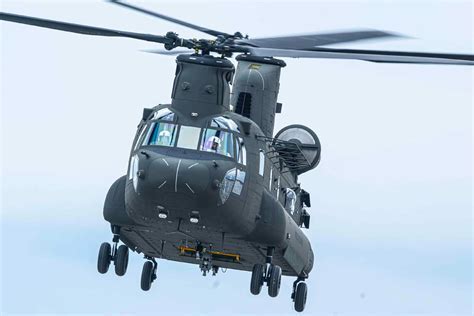
Perhaps the most compelling reason for eventually retiring the Chinook lies in how future conflicts will be fought. In a Pacific scenario, for example, troops and supplies may need to be moved over 1,000 miles across water, often in contested airspace. The Chinook’s relatively short range and large radar cross-section make it vulnerable in such scenarios.
New doctrine such as Multi-Domain Operations (MDO) stresses the need to penetrate anti-access/area denial (A2/AD) zones with minimal exposure. That requires low-observable platforms, extreme range, and the ability to operate independently of large forward bases—capabilities outside the Chinook’s wheelhouse.
This doesn’t mean the aircraft will vanish overnight. But it does mean that planners are already eyeing a new design, potentially one that uses a hybrid or electric propulsion system, stealth shaping, and modular architecture to enable rapid reconfiguration depending on the mission.
What’s Next: Evolution or Revolution?
Replacing the Chinook won’t happen overnight—and possibly not even in the next 15 years. But the seeds are being planted today. Whether through Cape Set Four or a future iteration of FVL, the Army knows it must eventually transition to a new heavy-lift paradigm.
That future may or may not include tiltrotors. It could involve coaxial rotors, hybrid-electric propulsion, or even VTOL drones capable of autonomous lift missions. Whatever form it takes, it will need to reflect the new battlefield: fast-moving, deeply integrated, and lethal.
Until then, the Chinook will continue to serve, upgraded and reliable. But make no mistake: the U.S. military is not standing still. The age of the next-generation heavy-lift helicopter is approaching—quietly, deliberately, and inevitably.