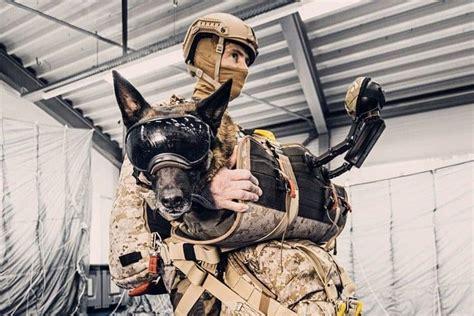
Military working dogs have long stood as vital assets in special operations, often operating alongside elite human units in some of the world’s most hostile environments. Yet for all their training and resilience, transporting these canines into the theater of action—particularly when parachuting into remote or hostile zones—posed a substantial logistical and ethical challenge. The introduction of the K9F Para-Fox harness system by German manufacturer Paratec represents a transformative advancement in how these elite dogs are deployed from the skies.
The K9F Para-Fox, unveiled at the Defense Innovation Forum in Paris, is not merely a harness but a culmination of nearly a decade of experimentation, field testing, and precision engineering. Developed with collaboration from the German and French armed forces, this system ensures military dogs can parachute safely, securely, and comfortably—all without compromising their mission readiness.
From Concept to Airborne Reality: A Decade of Development
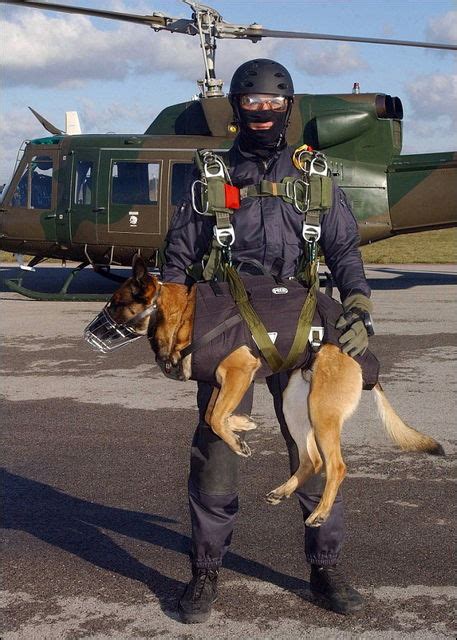
The journey toward the K9F Para-Fox began in 2012, when the German Army approached Paratec with a problem and a challenge: how to parachute with dogs without injury or compromise. Initial solutions involved retrofitting existing vests—basic models that allowed the dog to hang by its midsection beneath the handler. This primitive setup exposed the dogs to injury on landing, especially when their legs remained unprotected.
Over the next two years, Paratec iterated on harness designs, seeking better leg support and control. But real innovation came in 2015, when Captain Jérôme of the French Army’s 132nd dog-handling infantry regiment presented a comprehensive list of operational requirements. This catalyst led to a radical rethink of the design philosophy, culminating in the flight-pod model—compact, expandable, secure, and above all, dog-centric.
Designing for Canine Welfare and Combat Utility
The resulting flight pod, now in its sixth generation, redefines how animals are protected during aerial insertion. Constructed from Cordura, spandex, and military-grade webbing, the pod offers a cushioned, breathable enclosure. Dogs lie in their natural resting posture—fore and hind legs tucked underneath—ensuring minimal stress during flight.
A neoprene-spandex collar, combined with a magnetic safety release, keeps the dog secured yet comfortable. Only the handler can disengage this collar post-landing, preventing the dog from escaping prematurely. Each component is deliberately non-restrictive, allowing space for goggles, a leash, and ballistic vests—a nod to the hostile environments these animals often face upon touchdown.
Pre-Jump Mobility, Post-Jump Precision
One of the breakthrough features of the K9F system is the modular deployment process. Dogs are free to move about the aircraft cabin until minutes before the jump. At that point, two handlers assist in placing the dog into the pod. The pod is then secured onto a pod-tray harness—a rigid, taco-shell-shaped frame attached to the paratrooper’s gear. The tray design distributes weight evenly, preventing stress on the animal or its handler during freefall.
After the team exits via the aircraft ramp, a meticulously engineered recovery system enables rapid deployment on landing. A silicone-coated release wire, threaded through strategically placed seam loops, allows the handler to unzip the entire pod in under 10 seconds. Once the pod opens like a flower, the dog can leap into action without delay.
Real-World Testing and Tactical Reliability
Despite the elegance of its final form, the road to this innovation was anything but simple. Each real-world jump required coordination across nations, access to ramp-equipped aircraft, and availability of trained canine-paratrooper teams. “One jump could take up to six months to organize,” notes Ken Krueger, Paratec’s business development manager.
While stuffed animals served during early prototype testing, live jumps were indispensable for fine-tuning weight distribution, release mechanics, and animal behavior. The French military, in particular, played a critical role by providing dogs, handlers, and logistical support for multi-phase test jumps.
A Tool for Modern Warfare, Tailored for Every Dog
From urban counterterrorism to rural reconnaissance missions, modern warfare increasingly relies on military dogs. These animals detect explosives, subdue enemy combatants, and provide early threat warnings—all without direct orders. In such high-stakes environments, mission-readiness immediately after landing is essential.
Paratec ensured that the K9F pod accommodates dogs of varying sizes. The modularity extends to accessories and armor—vital considerations given the array of breeds deployed in global militaries. Furthermore, ventilation and heat dissipation features reduce thermal stress during high-altitude flights, while durable stitching resists tearing even under extreme deceleration forces.
Beyond Utility: The Unseen Morale Factor
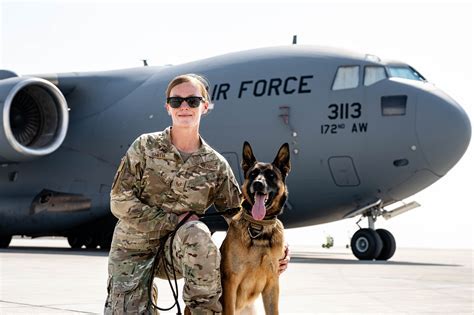
What’s often overlooked is the emotional bond between handlers and their K9 partners. This bond is forged through months of joint training and operational deployment. When both must leap from an aircraft into uncertainty, trust in equipment is non-negotiable.
That trust is well-placed. Handlers report that their dogs now willingly enter the pod, associating it with mission engagement rather than distress. “The dogs come right over and jump in the pod with what looks like a smile on their faces,” Krueger muses. This seemingly small behavioral cue is testament to the careful ergonomic and psychological design underlying the K9F system.
Why Parachuting Dogs Matter More Than Ever
In modern asymmetric warfare and anti-terrorism missions, stealth insertions are a common requirement. Helicopter landings may be too noisy; ground approaches too slow. Parachuting offers the speed and discretion needed to deploy units—both human and canine—into operational hotspots without detection.
Previously, dog deployments via parachute came with risk: injury, psychological trauma, or worse, equipment failure. The K9F system effectively eliminates these vulnerabilities, turning a once-risky necessity into a standardized practice.
Moreover, the system’s interoperability makes it attractive beyond NATO forces. As more nations invest in canine warfare capabilities, demand for purpose-built, field-proven solutions like the K9F Para-Fox will only grow.
Conclusion: A Tactical Edge Woven in Fabric and Trust
What Paratec has achieved with the K9F Para-Fox isn’t simply a technical milestone; it is an embodiment of modern battlefield foresight. By placing animal welfare at the center of design without sacrificing tactical performance, they’ve redefined what it means to deploy alongside our most loyal partners.
The K9F harness allows for safe, repeatable, and scalable parachute deployment of military dogs across combat theaters. It grants militaries a new level of operational flexibility while upholding the humane treatment of their four-legged soldiers. As geopolitical tensions rise and mission complexity grows, innovations like the Para-Fox will be indispensable to tomorrow’s airborne operations.