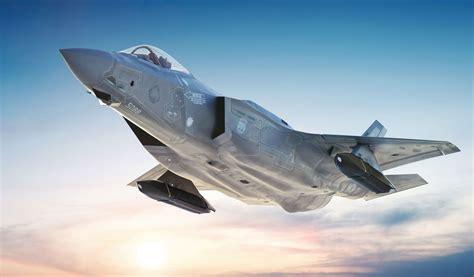
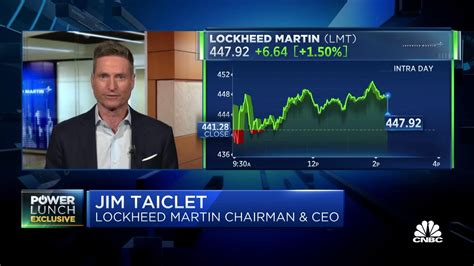
Lockheed Martin is rewriting the rules of fifth-generation fighter evolution with a bold pivot—introducing a 5.5-generation ‘Ferrari’ variant of the F-35 Lightning II, strategically designed to act as the transitional workhorse before the long-awaited sixth-generation F-47 fighter takes flight. The move, announced by CEO Jim Taiclet during Lockheed’s Q2 2025 earnings call, is seen by many as an aggressive counter to Boeing’s F-15EX strategy—and a direct attempt to reclaim air dominance after a significant NGAD program loss.
Lockheed’s Tactical Pivot After NGAD Setback
Losing the Next Generation Air Dominance (NGAD) competition to Boeing was a strategic blow to Lockheed Martin, a company that has long held dominance in the stealth aircraft realm with its F-22 and F-35 platforms. Instead of retreating, Lockheed has doubled down, repurposing its advanced NGAD R&D to upgrade the F-35 into a fifth-plus generation fighter.
Jim Taiclet’s message is clear: Lockheed won’t wait on the sidelines while Boeing builds the future. Instead, it will build a bridge to it, using the F-35 as a chassis for revolutionary upgrades inspired by sixth-generation innovation.
The ‘Ferrari’ F-35: Upgrading Power Without Full Replacement
Describing the upgraded F-35 as a “Ferrari,” Taiclet envisions taking the existing global fleet of over 3,500 F-35s and infusing them with cutting-edge NGAD-derived systems. This approach isn’t about a full replacement—it’s about aggressive transformation. The Ferrari analogy is fitting: a sleek performance upgrade built on a proven frame, optimized for speed, agility, and intelligence.
Among the technologies being ported from NGAD into the F-35 include:
- AI-powered autonomy and crewed-uncrewed teaming
- Advanced command and control architectures
- Next-generation stealth geometries and materials
- Passive infrared sensor enhancements for long-range detection
The Cost Factor: Delivering 80% of NGAD for Half the Price
The rationale behind Lockheed’s strategy lies in its cost-efficiency pitch. According to Taiclet, the fifth-plus gen F-35 will deliver “80% of the capabilities of a sixth-gen platform at 50% of the cost.” With the F-47 estimated to cost upwards of $300 million per unit, this cost-saving proposition becomes Lockheed’s strongest card.
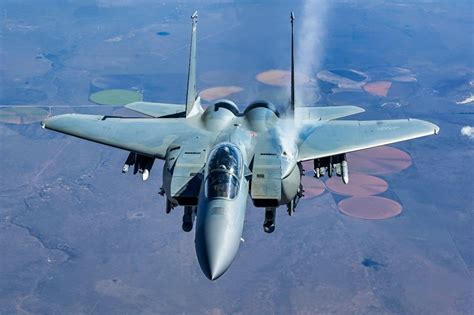
Boeing’s F-15EX: The Blueprint Lockheed Now Uses
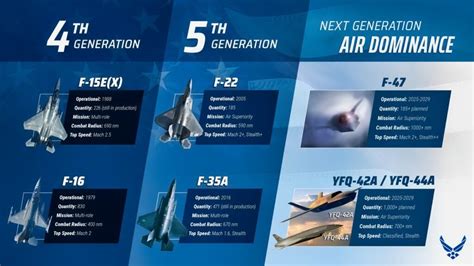
Lockheed’s decision echoes Boeing’s own success with the F-15EX, a 4.5th-generation fighter based on the proven F-15 airframe. By integrating modern avionics, radar, and weapons systems into an older platform, Boeing created a low-risk, high-performance interim solution that the USAF eagerly embraced.
Now Lockheed is mirroring that approach—but with stealth. By building on an already formidable fifth-gen platform, the company hopes to create a “stopgap superiority” solution until the sixth-generation F-47 matures enough for mass production.
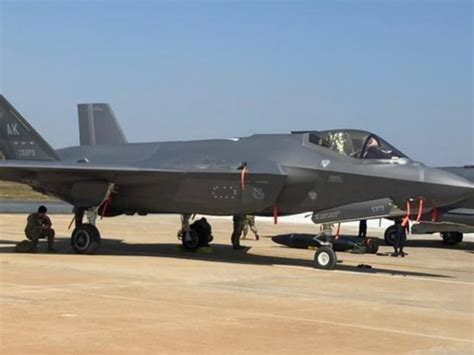
What Will the F-35 ‘Ferrari’ Variant Include?
Though Taiclet has remained tight-lipped on specific capabilities, key tech areas being explored include:
- Autonomous decision-making tools powered by machine learning
- Enhanced stealth materials that resist both radar and infrared detection
- Electronic warfare systems with active decoy capabilities
- Cross-domain coordination with naval, air, and space platforms
A major upgrade is also expected in sensor fusion and network-centric warfare, building on the F-35’s existing capability to coordinate with satellites, drones, and other assets in real-time.
The F-47 Timeline: Still Uncertain
The F-47, developed by Boeing, is expected to become operational sometime between 2025 and 2029, according to a USAF infographic. But insiders acknowledge that the complexity and budget constraints surrounding sixth-generation programs could delay its full-scale fielding well into the 2030s.
This makes Lockheed’s 5.5-gen F-35 not only relevant—but perhaps critical to fill the capability gap in the interim. According to Taiclet, this upgraded platform can be deployed within the next three years, potentially arriving far ahead of the F-47.
Reviving the F-22? Lockheed’s Quiet Plans
In addition to the F-35 upgrades, Lockheed has hinted that the F-22 Raptor—which was once expected to be retired in favor of the F-47—will also receive select sixth-gen enhancements to extend its operational relevance.
No detailed list of upgrades has been published yet, but likely enhancements include:
- Improved stealth coatings
- New electronic warfare capabilities
- Advanced radar and IR tracking
This dual-upgrade path—F-35 and F-22—solidifies Lockheed’s attempt to regain control over the USAF’s stealth roadmap.
Block 4 & TR-3 Delays: A Bottleneck Turned Opportunity?
The Ferrari F-35 strategy also comes at a time when the program’s current iteration—Block 4—has faced delays due to software bottlenecks. The F-35 TF3 architecture, which forms the backbone of Block 4, had fallen behind schedule, leading the government to pause deliveries in 2023.
Deliveries resumed only after developmental testing of the TR-3 configuration was completed in July 2024. Since then, Lockheed has delivered 207 F-35s, with 50 aircraft delivered in Q2 2025 alone.
These setbacks have ironically created a natural inflection point for Lockheed to shift focus to the fifth-plus gen F-35 program. Instead of struggling with incremental upgrades, the company can now bundle significant next-gen enhancements into a comprehensive overhaul.
Operational Proof: Operation Midnight Hammer
The credibility of the F-35 received a massive boost in June 2025 during Operation Midnight Hammer, when USAF bombers targeted Iran’s nuclear infrastructure. The mission, according to Lockheed, was led by F-35s and F-22s operating in highly contested airspace without detection.
Taiclet emphasized that this mission highlighted the relevance of manned stealth fighters in modern warfare, contradicting criticisms—like those from Elon Musk—who labeled the F-35 obsolete in an age of drones.
“Our platforms operated essentially undetected,” Taiclet said, “underscoring the value of advanced stealth, superior EW, and broadband communication.”
Lockheed’s Long Game: Dominance Through Iteration
Rather than betting everything on one next-gen project, Lockheed is now leveraging iteration over reinvention. Its 5.5-gen F-35 vision aligns with military realities—tight budgets, rising global threats, and the need for transitional platforms.
With the F-47 still years away and NGAD lost, Lockheed is fighting to prove that it can still shape the future of U.S. airpower—through calculated innovation, modular upgrades, and cost-effective dominance.
As global rivals like China field advanced platforms like the J-35, and as U.S. allies seek scalable stealth capabilities, Lockheed’s 5.5-gen proposal may just be the Ferrari of air combat that militaries didn’t know they needed—but now can’t afford to ignore.