High-speed photography is the art and science of capturing extremely fast phenomena with frame rates high enough to freeze moments imperceptible to the human eye. According to the Society of Motion Picture and Television Engineers (SMPTE), any imaging system that captures 69 frames per second or more for at least three consecutive frames qualifies as high-speed. But beyond this technical threshold lies a domain where precise optics, powerful sensors, and split-second timing converge to reveal the invisible.
The fundamental challenge lies in achieving both temporal resolution and spatial clarity. High-speed photography demands ultra-fast shutters or strobes, sensors capable of rapid readouts, and optical systems that can handle both high dynamic range and precision focusing. As technology advances, this niche field is expanding into science, defense, art, and even consumer applications.
The Origins of High-Speed Imaging: From Galloping Horses to Supersonic Snapshots
The story of high-speed photography begins with a gallop. In 1878, Eadweard Muybridge revolutionized visual science by capturing sequential images of a horse in motion, proving all four hooves left the ground during a trot. His method, using a tripwire-triggered series of cameras, was rudimentary but visionary.
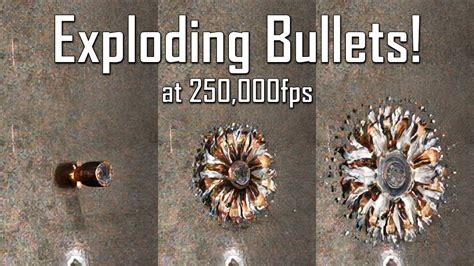
Soon after, in 1886, Ernst Mach and his student Peter Salcher produced the first photograph of a supersonic bullet mid-flight. This breakthrough, revealing shockwaves in motion, laid the foundation for future research into high-velocity projectiles and aerodynamics. By 1916, German scientists were harnessing film cameras to analyze explosive weaponry with unprecedented accuracy.
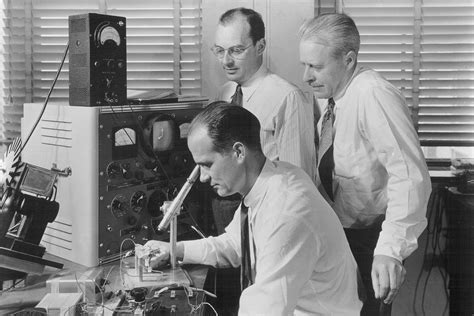
In 1931, Japanese engineers developed a camera capable of capturing 60,000 frames per second, a staggering feat for the era. Over the next three decades, research centers like Bell Labs and companies such as Kodak, Redlake, and Photo-Sonics refined the technique with innovations like rotating prism and intermittent motion cameras, achieving frame rates between 1,000 and 10,000 fps.
Stroboscopic and Laser-Based Imaging: A Flash of Precision
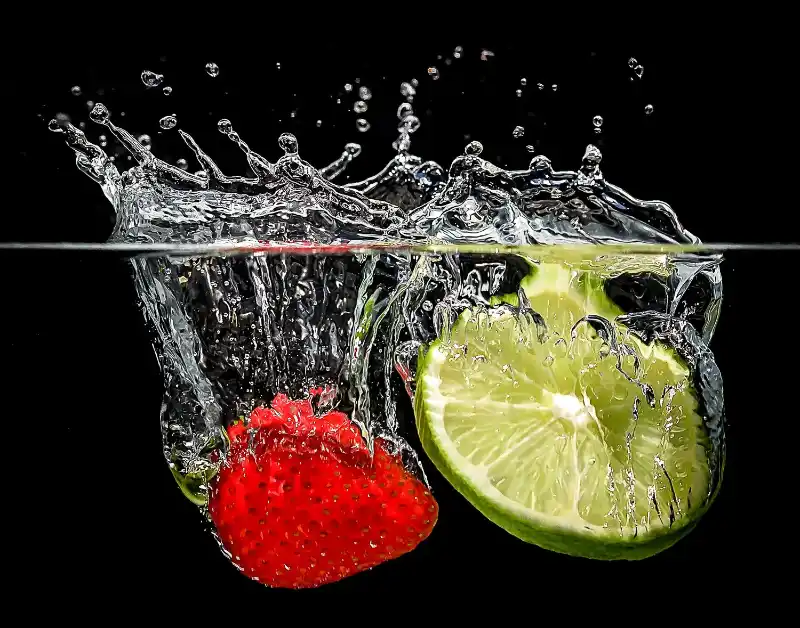
The use of stroboscopic light, pioneered by Harold Edgerton at MIT, marked another turning point. His famous images of bullets piercing apples and milk drops forming crowns were made possible by extremely short, high-intensity light bursts synchronized with a camera shutter. Stroboscopy remains essential in freezing motion with clarity, especially in industrial inspection and fluid dynamics.
The introduction of EG&G Microflash units, air-gap flashes, and rapatronic cameras (used in early nuclear testing) pushed the boundaries further, offering exposure times as short as 10 nanoseconds. With the advent of laser-driven systems, modern techniques such as High Harmonic Generation (HHG) now allow imaging at the attosecond scale, reaching deep into quantum mechanical domains.
Film-Based High-Speed Cameras: Mechanical Mastery
Before digital systems emerged, mechanical ingenuity drove high-speed film imaging. We categorize these systems into five dominant classes:
- Intermittent motion cameras: Using mechanisms like register pins and vacuum platens, these cameras achieved several hundred fps with precise frame registration.
- Rotating prism systems: Cameras like Fastax and Hycam employed synchronized spinning prisms and film reels to reach into the thousands to millions of fps range.
- Rotating mirror systems: By reflecting light onto multiple film surfaces through a spinning mirror, cameras like the Dynafax attained multi-million fps recordings.
- Image dissection: These devices split the image spatially through fiber-optic bundles, isolating frames in linear sequences.
- Raster scan cameras: Operating with slit grid methods, they offered frame rates as high as 1.5 billion fps, albeit with lower image fidelity.
Streak Photography: The Time-Space Continuum in a Single Image
Streak photography transforms the x-axis of an image into time itself. This unique approach uses a narrow vertical slit aligned with a fast-moving object, allowing variations in light or position to be recorded over time on a 2D film strip. Streak cameras excel in projectile studies, shockwave imaging, and finish-line recording in sports.
A notable hybrid is MIT’s trillion-fps imaging technique, combining laser pulses with streak-based detection. Though not truly real-time, this system captures repetitive events (e.g., light traveling through a soda bottle) with unmatched clarity, inching closer to visualizing the behavior of photons.
Tube and Video Cameras: Bridging the Analog-Digital Divide
In the 1970s, Vidicon tube cameras enabled video-rate imaging but suffered from motion blur and ghosting. The introduction of mechanical shutters helped combat these issues, leading to the deployment of Gen-I intensifier tubes. These tubes could gate light at sub-nanosecond intervals, reaching up to 600 million fps with 1 ns exposure windows.
While bulky and expensive, these setups enabled critical research in combustion, ballistics, and nuclear diagnostics. Many designs used phosphor-coated outputs and optical relays to transfer the image onto traditional film or early CCDs for permanent capture.
The Digital Revolution: CCD, CMOS, and Gated Intensification
The rise of Charge-Coupled Devices (CCDs) in the 1980s changed everything. Initially tied to NTSC broadcast standards, specialized CCDs like the Kodak RO, HG2000, and HS4540 offered superior readout speeds, paired with robust digitization. Manufacturers such as Redlake, IDT, and Roper Scientific introduced industrial solutions based on these sensors.
To reach even faster rates, gated intensified CCDs were developed. Using Microchannel Plate (MCP) intensifiers, they allowed ultra-short exposures with high sensitivity, even in low-light or ultrafast events. Systems like those by PCO, Hadland, and DRS Technologies achieved multiplexed imaging up to 100 billion fps.
Meanwhile, ISIS-CCD technology (used in Shimadzu’s HPV series and Kirana cameras) emerged as a standout for capturing up to 10 million fps, storing frames in-situ on a per-pixel basis to eliminate bottlenecks. These are widely used in crash testing, fluid dynamics, and plasma studies.
Rotating mirror CCD systems take this further by aligning multiple single-shot CCD sensors along a mirrored path. Each sensor captures one frame of an ultra-fast sequence, achieving multi-megapixel resolution at millions of fps. Though complex, this method ensures both speed and quality.
Finally, Complementary Metal-Oxide-Semiconductor (CMOS) sensors, patented in the 1990s under the Active Pixel Sensor model, redefined real-time high-speed imaging. Modern systems like the NAC HSV 1000, Phantom series by Vision Research, and FillFactory/CMOSIS-based models now provide full-HD or even 4K resolution at 1,000+ fps, with adjustable trade-offs between resolution and frame rate.
Industrial and Infrared High-Speed Imaging: Vision in Every Spectrum
High-speed photography is now integral to automated manufacturing, quality control, and machine vision. These systems combine smart cameras, high-bandwidth frame grabbers, and real-time processors to detect flaws in milliseconds—key for sectors like semiconductors, pharmaceuticals, and automotive assembly.
Infrared high-speed systems extend capability into non-visible domains. Manufacturers such as FLIR, Telops, Xenics, and Electrophysics provide thermal imaging cameras capable of rapid capture across SWIR, MWIR, and LWIR bands. These systems support material testing, thermal stress analysis, and aerospace diagnostics, providing data crucial to innovation.
Conclusion: Capturing the Fleeting, One Frame at a Time
High-speed photography is more than a technical marvel—it is a gateway into phenomena previously thought unobservable. From galloping horses to quantum-scale laser bursts, it has reshaped how we explore the physical world. As sensor design, optics, and processing power continue to evolve, we stand on the edge of capturing events even closer to the speed of light, revealing truths that exist in fractions of microseconds.
In this realm, precision is not optional. It is the foundation of discovery.