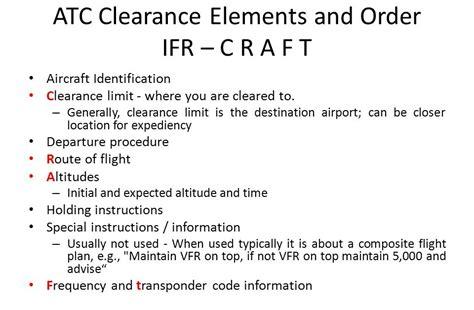
In the high-stakes world of aviation, precision, clarity, and preparation are non-negotiable. For pilots navigating the complexities of Instrument Flight Rules (IFR), mastering the CRAFT method — Clearance Limit, Route, Altitude, Frequency, Transponder Code — stands as a pillar of operational excellence and safety. This structured approach streamlines communication with Air Traffic Control (ATC), minimizes errors, and enhances pilot focus during critical phases of flight.
What is CRAFT in Aviation?
At its core, CRAFT is a mnemonic device designed to help pilots quickly and efficiently absorb and verify IFR clearances. Each component carries specific, crucial information necessary for a safe and compliant departure.
Clearance Limit defines the furthest point a pilot may proceed without further clearance. Typically, this is the destination airport or a designated fix. For instance, a clearance might be issued as, “Cleared to XYZ Airport via ABC Intersection,” meaning that ABC is the hold point until additional directions are provided.
Route dictates the specific path the aircraft must follow, which may include Standard Instrument Departures (SIDs), waypoints, airways, or a direct course. The route must align with broader traffic management strategies to ensure safe, orderly flow.
Altitude encompasses both the initial assigned altitude and any expected altitude changes en route. An instruction like, “Climb and maintain 5,000 feet, expect flight level 200 in ten minutes,” sets clear expectations for vertical navigation.
Frequency refers to the radio channel the pilot must use to maintain communication with the appropriate ATC unit — whether ground, departure, or en-route control.
Transponder Code, or squawk code, is a unique four-digit number assigned for radar identification, crucial for ATC tracking and traffic separation.
How to Apply the CRAFT Method in IFR Clearances
The effective application of CRAFT hinges on a systematic, attentive approach. As clearances are often issued during busy pre-flight phases, a prepared mindset and organized tools are vital.
Listening attentively is the first, indispensable step. Pilots must have a pen and kneeboard ready to capture the clearance as it is given. A sample clearance might sound like: “N123AB, cleared to XYZ via ABC3 departure, direct DEF, climb and maintain 5,000, expect flight level 200 in ten minutes, departure frequency 120.5, squawk 4702.”
Next, decode the clearance using the CRAFT structure. Breaking down the clearance into its five elements ensures every critical instruction is correctly interpreted and followed.
Finally, a precise and complete readback to ATC verifies mutual understanding. This is not a mere formality; an accurate readback is a fundamental safety net that prevents dangerous misunderstandings.
Why CRAFT is Vital for Pilots
In a cockpit saturated with tasks, CRAFT distills complex instructions into an easily digestible sequence. This structured method enhances situational awareness, reduces cognitive overload, and allows pilots to anticipate next steps with greater confidence.
By compartmentalizing information, pilots can plan each stage of their departure more effectively, preparing for climb, navigation, and communication transitions before they even leave the ground. The result is a smoother, safer departure phase and a stronger foundation for the rest of the flight.
Common Challenges When Using CRAFT and How to Overcome Them
Despite its structured nature, pilots often encounter pitfalls when applying the CRAFT method:
- Rushing through note-taking can lead to missing critical elements.
- Skipping steps while decoding can cause misinterpretation.
- Inaccurate readbacks can sow confusion between pilot and controller.
- Feeling overwhelmed by a dense clearance can freeze cognitive processing.
- Poor preparation before receiving the clearance adds unnecessary chaos.
To overcome these challenges, pilots should consistently pre-label note-taking materials with CRAFT headers. This small preparation creates mental “bins” that streamline data capture during the clearance.
Practicing active listening — mentally tracking CRAFT elements even during clearance delivery to other pilots — hones the skill. Pilots should also develop concise, consistent shorthand that captures the essence without sacrificing clarity. Repetition and practice before every IFR departure reinforce the method until it becomes second nature.
Mastering the CRAFT Method Through Consistent Practice
Building CRAFT proficiency requires deliberate, structured practice. One effective technique is running mock clearances before every IFR flight. Pilots can work through the CRAFT sequence using real-world weather and traffic scenarios, decoding and reading back clearances as if live.
Integration into flight training sessions — both in simulators and live flights — further cements CRAFT as a default mental framework. Reviewing recorded ATC audio and analyzing professional pilot readbacks also offers invaluable insight into best practices and common errors.
Practical Example: CRAFT in Action
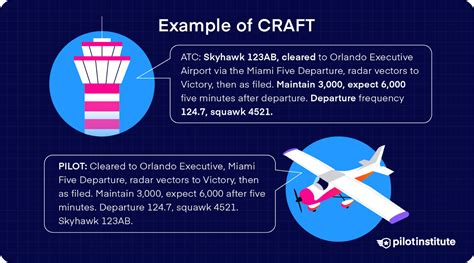
Consider a pilot, call sign Skyhawk 123AB, departing from Miami International (KMIA) en route to Orlando Executive (KORL). ATC issues the following clearance:
“Skyhawk 123AB, cleared to Orlando Executive via the Miami Five Departure, radar vectors to Victory, then as filed. Maintain 3,000; expect 6,000 five minutes after departure. Departure frequency 124.7; squawk 4521.”
Breaking it down:
- Clearance Limit: Orlando Executive Airport (KORL)
- Route: Miami Five Departure, radar vectors to Victory, then as filed
- Altitude: Maintain 3,000 feet, expect 6,000 after five minutes
- Frequency: 124.7 for departure control
- Transponder Code: 4521
The proper readback would be:
“Cleared to Orlando Executive via the Miami Five Departure, radar vectors to Victory, then as filed; maintain 3,000, expect 6,000 in five minutes; departure on 124.7; squawk 4521; Skyhawk 123AB.”
This clear, structured confirmation ensures that both pilot and controller share a precise understanding of the flight’s initial trajectory.
Enhancing Flight Safety and Efficiency Through CRAFT
When integrated effectively, the CRAFT method transforms the often stressful IFR clearance phase into a routine, predictable process. Pilots experience less mental strain, controllers benefit from smoother coordination, and the overall system enjoys enhanced safety and efficiency.
Moreover, familiarity with CRAFT empowers pilots to identify and resolve discrepancies immediately. For instance, if an issued route conflicts with the filed flight plan, pilots are better equipped to catch and clarify the error before taxiing, preventing costly or dangerous misunderstandings later.
In high-density airspace, where every second and every instruction matter, such precision is not optional — it is a professional obligation.
Pro Tips for Becoming a CRAFT Master
Beyond the basic method, pilots aspiring to mastery should cultivate the following habits:
- Use mnemonics creatively: Associate each CRAFT element with visual cues or hand movements to anchor memory.
- Drill under pressure: Simulate clearance receipt during other tasks to build multitasking resilience.
- Audit your performance: Record and review your own readbacks to identify patterns of error or hesitation.
- Benchmark against experts: Listen to seasoned professional pilots to model tone, pace, and phrasing.
Every repetition deepens neural pathways, turning CRAFT from a conscious checklist into an instinctive reflex.
Conclusion: The Enduring Value of CRAFT Mastery
In aviation, systems exist for a reason: to bring order to complexity, to safeguard human life, and to make the extraordinary feat of flight a daily reality. The CRAFT method exemplifies this ethos, translating intricate IFR procedures into manageable, repeatable actions.
By dedicating themselves to mastering CRAFT, pilots not only sharpen their technical skills but also honor the deeper commitment at the heart of aviation — the relentless pursuit of excellence. In every readback, in every clearance received, CRAFT stands as a testament to the discipline, focus, and professionalism that define the true aviator.
Applying CRAFT in Real-World Scenarios
While understanding CRAFT in theory is fundamental, its real power emerges through practical application across a spectrum of flight operations. Whether departing from a small regional airport or a major international hub, the structure and discipline of CRAFT remain constant.
Imagine a scenario where weather conditions rapidly deteriorate just as a flight is preparing to depart. The pilot receives an amended clearance that alters the route and initial altitude due to changing traffic patterns and turbulence forecasts. Under pressure, the pilot’s adherence to the CRAFT format ensures that each change is captured accurately and that the new route and climb profile are fully understood before takeoff.
Such examples illustrate why CRAFT is not merely academic — it is operationally critical.
CRAFT and the Pilot-Controller Relationship
Communication between pilots and controllers is a two-way street built on clarity, efficiency, and mutual respect. Pilots who use CRAFT properly demonstrate professionalism, making the controller’s job easier and reinforcing a culture of safety.
Controllers, for their part, structure IFR clearances with CRAFT in mind, even if they do not explicitly label each segment. Understanding this implicit structure allows pilots to “read between the lines,” ensuring no vital information is missed even during fast-paced or noisy transmissions.
Furthermore, pilots who consistently deliver accurate, confident readbacks enhance their credibility with ATC, which can translate into better service — such as expedited climb clearances or more flexible routing when workload allows.
Advanced Strategies for CRAFT Excellence
For pilots aiming to elevate their CRAFT performance beyond baseline competence, several advanced strategies can be transformative:
- Anticipatory Note-Taking: Before calling for clearance, pilots can pre-fill expected data based on flight plans and airport procedures, leaving blanks for last-minute variables.
- Mental Simulation: Visualizing the clearance flow and imagining potential ATC instructions primes the brain for faster, more accurate capture.
- Buddy Practice: Practicing clearances with another pilot — one acting as ATC — can introduce variability and unpredictability, mimicking real-world stressors.
- Customized Abbreviations: Developing a set of intuitive, flight-specific abbreviations enhances speed without sacrificing clarity in notes.
Each of these strategies compounds over time, producing a pilot who not only handles IFR clearances with grace but also projects calm authority in every cockpit interaction.

Special Situations: Amended Clearances and Re-Routes
A dynamic environment sometimes demands mid-flight changes to a clearance. Whether due to weather, airspace congestion, or military activity, pilots may receive amended instructions that significantly alter their originally planned route.
When an amended clearance arrives, reapplying the CRAFT structure on the fly is crucial. Breaking down the new information systematically avoids confusion, especially when balancing aircraft control, navigation, and communication simultaneously.
For example, a mid-route re-clearance might sound like:
“N123AB, cleared direct DUVAD, then Victor 3 to ZQA, maintain FL180.”
Here, the CRAFT breakdown helps quickly identify the new Route (direct DUVAD, then Victor 3 to ZQA), reaffirm the Altitude (maintain FL180), and anticipate any changes to Frequency or Transponder Code if they are issued.
Remaining methodical under pressure is a hallmark of the CRAFT-savvy pilot.
IFR Clearances in High-Volume Airspace: CRAFT as a Lifeline
In high-density regions like New York, Los Angeles, or London, air traffic volumes stretch controllers to their limits. Pilots must therefore receive, interpret, and act on clearances swiftly and flawlessly.
CRAFT serves as a mental scaffolding in these environments. It allows pilots to instantly categorize information, separating what must be acted on immediately (like an initial climb or a radar vector) from what can be deferred slightly (such as an “expect” altitude after a time interval).
Moreover, in situations where rapid runway changes or SID swaps occur just before takeoff, pilots using CRAFT can pivot smoothly, updating their departure plans without losing situational awareness.
Technology Tools to Support CRAFT Implementation
Modern aviation technology offers several tools that can enhance the application of CRAFT:
- Electronic Flight Bags (EFBs): Apps like ForeFlight and Garmin Pilot allow pilots to record and organize clearances digitally, often integrating directly with filed flight plans.
- ATIS Integration: Many platforms now incorporate ATIS updates, helping pilots anticipate likely clearance parameters before even contacting clearance delivery.
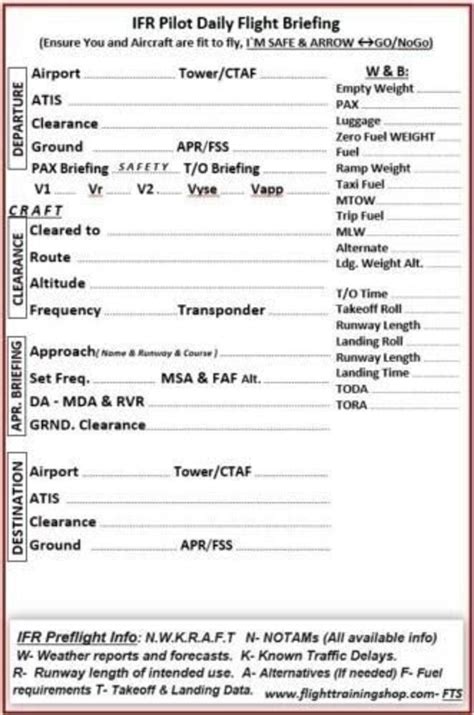
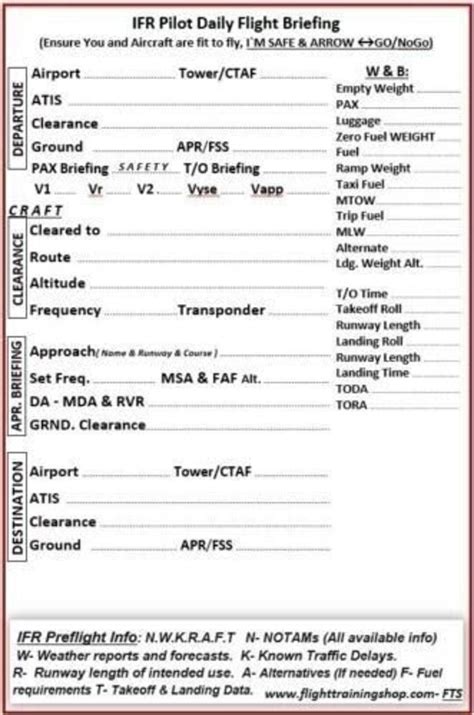
- Customizable Kneeboards: Digital and traditional kneeboards can be formatted specifically with CRAFT fields for rapid entry and review.
However, technology must always be an adjunct to, not a replacement for, mental discipline and verbal verification. Pilots must remain fluent in traditional note-taking and readback methods to safeguard against technical failures.
CRAFT in Pilot Training Curriculums
Flight schools and training programs increasingly recognize the importance of embedding CRAFT methodology early in pilot development. Structured exercises around CRAFT not only prepare students for the IFR environment but also cultivate broader competencies in communication, systems thinking, and workload management.
Simulators offer an ideal venue for such training, allowing instructors to introduce progressive complexity in clearances. By doing so, students build the neural flexibility needed to adapt to diverse real-world scenarios.
Furthermore, testing students on their ability to reconstruct clearances from memory — or to identify errors in hypothetical clearances — sharpens attention to detail and active listening skills.
Real Pilot Testimonials: CRAFT Saves the Day
Many experienced pilots recount moments when disciplined use of CRAFT directly averted potential crises. In interviews, airline captains have cited instances where unexpected route clearances mid-climb led to potential conflicts with other traffic. Because they immediately broke down the instruction using CRAFT, they identified inconsistencies or needed clarifications before proceeding.
General aviation pilots, flying single-engine aircraft in marginal weather, similarly report that CRAFT provided an anchor during IFR departures into low ceilings — ensuring that no element of the clearance was missed even under intense pressure.
Such real-world endorsements speak more powerfully than theory. CRAFT is not just a best practice; it is a life-saving habit.

The Future of CRAFT: Emerging Technologies and Evolving Practices
As aviation technology advances, elements of IFR clearance delivery may become increasingly automated. Systems like CPDLC (Controller–Pilot Data Link Communications) already allow clearances to be sent via text message to aircraft, reducing radio congestion.
Yet even in these environments, the conceptual framework of CRAFT remains relevant. Pilots must still interpret and verify the elements of clearance — just via different mediums. Moreover, hybrid systems, where some clearances are verbal and others digital, demand even greater cognitive flexibility.
Looking ahead, pilots who internalize CRAFT as a mental model will navigate these transitions with ease, leveraging technology without becoming dependent on it.
Final Thoughts: CRAFT as a Professional Mindset
Ultimately, mastering CRAFT is about more than simply organizing a clearance. It reflects a broader commitment to aviation professionalism — the relentless pursuit of clarity, precision, and excellence in every action.
Through disciplined application, continuous practice, and adaptive learning, pilots ensure that each clearance — no matter how routine or complex — is executed with the highest standards of safety and effectiveness.
In the unforgiving environment of IFR flight, CRAFT is not just a method. It is a mindset.