Landing in crosswinds is one of the most challenging aspects of flying, requiring skill, precision, and experience. As pilots, we know that being able to handle crosswind landings effectively is crucial for ensuring safe and smooth operations, especially in adverse weather conditions. The ability to execute a perfect crosswind landing is something that comes with practice, knowledge, and an understanding of the various techniques available to pilots. Whether you’re a beginner or an experienced aviator, mastering this skill is an essential part of becoming a well-rounded pilot.
Understanding Crosswind Landings
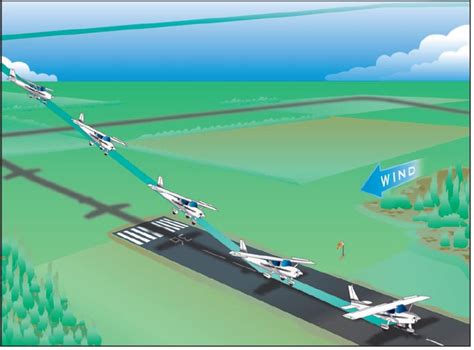
Crosswind landings occur when the wind is blowing across the runway at an angle, making it difficult for pilots to maintain a proper approach path. The primary challenge lies in the wind’s ability to push the aircraft off the runway’s centerline. To compensate for this, pilots must use various techniques to maintain control of the aircraft throughout the approach and landing phases.
Methods for Crosswind Landings
There are two main techniques used to handle crosswind landings: the crab method and the wing-low method. Each technique has its advantages and challenges, and choosing the right one depends on the aircraft type, weather conditions, and the pilot’s comfort level.
The Crab Method: Aligning the Aircraft with the Wind
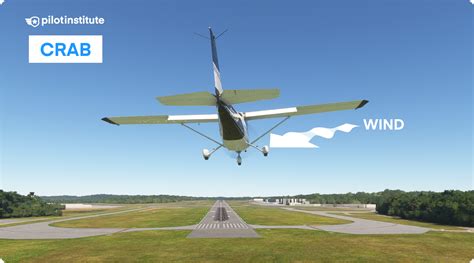
The crab method involves flying the aircraft with a slight angle to the wind, which helps maintain the aircraft’s alignment with the runway. This method requires the pilot to “crab” the aircraft into the wind during the final approach, ensuring that the aircraft does not drift left or right of the centerline. The crab is maintained until just before touchdown, at which point the pilot uses the rudder to align the aircraft with the runway.
The main advantage of the crab method is that it allows the pilot to focus on maintaining the centerline without worrying too much about lateral drift during the approach. However, this method requires precise timing, as the pilot must “kick out” the crab just before touchdown. This can be tricky for pilots flying lighter aircraft, as the aircraft may bounce or veer off the centerline if not perfectly aligned during the transition.
Key Considerations with the Crab Method
- The crab technique is commonly used by larger aircraft, such as commercial airliners.
- Smaller, lighter aircraft may struggle with this method due to their lower inertia, which makes it harder to keep the aircraft straight on touchdown.
- Pilots need to anticipate the moment when to remove the crab and correct the aircraft’s alignment, which requires significant skill and experience.
The Wing-Low Method: A Simpler Approach for Smaller Aircraft
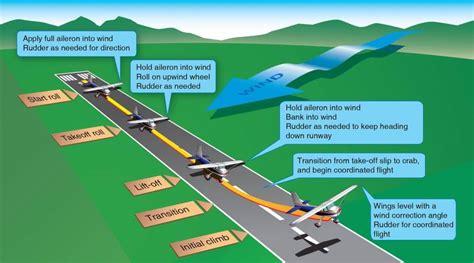
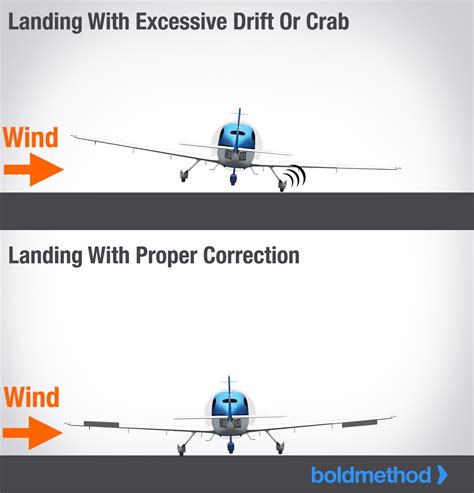
The wing-low method is typically easier to execute in smaller, lighter aircraft, as it involves using the rudder and ailerons to keep the aircraft aligned with the runway. In this technique, the pilot intentionally tilts the wings into the wind to counteract the aircraft’s drift while using the rudder to maintain alignment with the runway.
This method requires the pilot to control the aircraft by cross-controlling the rudder and ailerons. Initially, it can feel awkward to balance the two controls, especially for less experienced pilots. However, with practice, the wing-low method becomes a more natural way to manage a crosswind landing.
Steps for Executing the Wing-Low Method
- Begin by aligning the aircraft with the runway using the rudder.
- As you approach the runway, apply ailerons to prevent lateral drift and keep the aircraft on the centerline.
- As you approach the roundout phase, continue to apply rudder and aileron inputs to keep the aircraft aligned.
- The final step is to touch down with one wheel at a time, starting with the upwind wheel, followed by the downwind wheel, and finally the nosewheel.
Advantages of the Wing-Low Method
- Easier to learn and apply for smaller aircraft.
- Provides better control over the aircraft’s alignment throughout the entire approach and landing.
- Reduces the chances of bouncing or veering off the centerline during touchdown.
Handling the Flare and Touchdown
Once the aircraft is near the runway, the flare and roundout phase requires additional attention when performing a crosswind landing. As the aircraft slows down, the flight controls become less effective, making it necessary to apply more rudder and aileron to maintain proper alignment.
- In crosswind conditions, the upwind wing must be kept low during the flare to prevent the aircraft from veering off the centerline.
- The technique of touching down with one wheel at a time is key to maintaining alignment, starting with the upwind main wheel, followed by the downwind main wheel, and finally the nosewheel.
Post-Landing Control and Rollout
After touchdown, the pilot must focus on maintaining control during the rollout. The wind may continue to try and push the aircraft off the runway, so it’s essential to apply full aileron deflection into the wind. This ensures that the upwind wing remains level, even in gusty conditions. Simultaneously, the rudder is used to keep the aircraft on the runway centerline.
As the aircraft slows, it is important to keep the control inputs smooth and coordinated to prevent any sudden veering or unintentional turns. Pilots should continue to monitor the aircraft’s behavior, making gradual adjustments as needed.
Managing Crosswind Limits
Every aircraft has a specific maximum crosswind limit, often referred to as the “demonstrated crosswind” component. This is the maximum crosswind velocity in which the aircraft can be safely controlled during landing, as demonstrated by the manufacturer.
The FAA requires that aircraft demonstrate controllability in crosswind conditions up to 20% of the aircraft’s stalling speed. For example, a Cessna 172S has a demonstrated crosswind capability of 15 knots with full flaps. However, this does not mean that it is unsafe to land in stronger crosswinds, but pilots will need to exercise a higher level of skill to manage the landing safely.
When to Avoid Crosswind Landings
If crosswind conditions exceed the aircraft’s demonstrated crosswind limits, it is advisable to consider alternative options. These could include:
- Selecting a different runway that offers a more favorable wind direction.
- Diverting to another airport if the crosswind is beyond safe limits for your aircraft.
- Delaying the landing until the wind conditions improve.
Pilots should always err on the side of caution and be prepared to make quick decisions when faced with challenging weather conditions.
Training and Practice for Crosswind Landings
Becoming proficient in crosswind landings requires both practice and a solid understanding of the techniques involved. While flight simulators can help pilots practice these skills in a controlled environment, nothing compares to real-world experience in actual crosswind conditions.
To master crosswind landings, pilots should spend time practicing both the crab and wing-low techniques under various wind conditions. It is also recommended that pilots receive regular feedback from flight instructors to refine their technique and improve their confidence.
Conclusion
Crosswind landings are a necessary skill that all pilots must master in order to ensure safe flight operations. Whether you choose the crab method or the wing-low method, practice is key to perfecting the technique that works best for you and your aircraft. By understanding the challenges involved and preparing thoroughly, pilots can confidently handle crosswind conditions, making smooth and safe landings even in the most challenging wind conditions.