Monitored Approach
The term “monitored approach” refers to a specific way of sharing pilot tasks during landing. This method changes the traditional workload distribution, where one pilot handles all aircraft tasks while the other focuses on monitoring. In a monitored approach, duties are shared differently. One pilot takes charge of overall management, decision-making, and monitoring instruments during approach and go-around phases. The other pilot manages aircraft handling during instrument flight and monitors during visual flight.
In this setup, the co-pilot operates the aircraft based solely on instrument readings, while the pilot oversees the flight. The pilot may either take control for landing or continue to manage if a go-around is necessary. This division of responsibilities has been referred to by various names, including “delegated approach” or “pilot monitored approach.” The different terms stem from a desire to clarify that all duty allocations still require close monitoring, which has led to some confusion in the aviation community.
To avoid ambiguity, we will use the term “Pilot-in-charge Monitored Approach” (PicMA) to indicate that the pilot in charge is also performing monitoring tasks during the approach. This term encompasses all known implementations of the procedure. For simplicity, we will refer to the Pilot in charge as “P1” and the second pilot as “P2.”
Description
This description outlines the most common implementation of PicMA. In traditional operations, the Aircraft Commander decides which pilot will handle the Pilot Flying (PF) tasks and which will take on the Pilot Monitoring (PM) tasks. This decision typically applies throughout the flight. In PicMA operations, the same decision determines who will be P1 and who will be P2.
Before starting the descent and approach, the crew conducts briefings to ensure they are aligned on the plan. For instance, P2 might suggest a descent and approach strategy for P1’s approval. Once agreed upon, P2 assumes the PF role while P1 takes on PM tasks, including communicating with Air Traffic Control.
As the approach progresses, P1 manages the flight and makes necessary callouts. When reaching the Decision Altitude/Height (DA/DH), P1 looks for external visual references to make a clear decision on whether to land or go around. At DH, P2 calls out “Decide.” If P1 chooses to go around, P2 executes the missed approach while P1 continues to monitor. If the decision is to land, P1 takes control as PF, and P2 shifts focus back to monitoring instruments.
In cases where visual reference is lost below DH or a missed approach is needed after P1 takes control, P1 initiates the go-around. P1 may then return control to P2 at a suitable point during the climb to evaluate options for completing the flight.
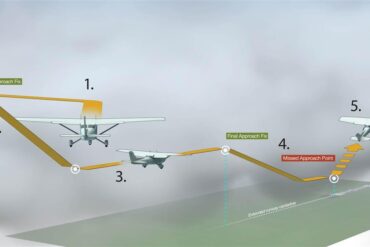
For non-precision approaches, a Continuous Descent Final Approach is usually recommended over a step-down approach, as it enhances safety. However, PicMA procedures can adapt to step-down procedures, ensuring accurate and safe navigation.
When all conditions for a safe landing are met well above DH, P1 may choose to take control with a declaration of “visual, I have control,” while P2 remains focused on monitoring instruments.
Variations
There are no strict ICAO standards for cockpit duty allocations, leading to significant variations in implementation. The PicMA procedure can apply to all types of operations, both under Instrument Meteorological Conditions (IMC) and Visual Meteorological Conditions (VMC). It complements methods like “leg and leg flying” and supports First Officers in gaining necessary flying experience for their licenses.
Operators often set specific weather criteria for using PicMA. Typically, flights begin with traditional PF/PM allocations, and the Captain decides to switch to PicMA based on weather updates received en route. Such criteria usually involve visibility and cloud cover considerations, and may vary based on the pilot’s rank.
In North America, these criteria often mean that First Officers cannot land under certain conditions, making it necessary for them to assume the P2 role during approaches, while the Captain acts as P1. This situation is less common in Europe. Low Visibility Operations may lead authorities to approve variations regarding when to change pilot roles based on operational categories.
Comparisons Between Traditional and PicMA Procedures
Most air transport operations use approach procedures without exchanging PF tasks. Aircraft manufacturers provide task-based operating procedures that describe responsibilities for the Pilot Flying and Pilot Monitoring. PicMA, which involves task exchanges between pilots, may be seen as a departure from these recommendations. However, safety arguments exist for both adopting PicMA and maintaining traditional methods.
While often viewed as a bad-weather solution, key benefits of PicMA include better management of workloads. It addresses common factors leading to crew-caused approach accidents: poor planning, inappropriate transitions from instruments to visual cues, and ineffective monitoring.
Using PicMA improves approach management through better crew interaction and teamwork. With P1 delegating detailed tasks, situational awareness improves, reducing communication issues. A lower routine workload allows for better threat and error management. When flying is assigned to P2 during the approach, the risk of dangerous landing attempts decreases, as does the surprise factor during necessary go-arounds.
Additionally, transferring monitoring responsibilities to the pilot in charge increases effectiveness by reversing the usual authority gradient, addressing cultural issues in traditional monitoring practices. This encourages accountability and reduces risks associated with tactical errors and omissions.
In situations where visual cues are crucial, P1’s command capability enhances situational awareness, allowing for better assessments of visual cues. This minimizes premature transitions to potentially misleading visual references, leading to more reliable monitoring of instruments and improved decision-making.
History
Before World War II, there was little regulation concerning flight operations in poor weather. Early anecdotal evidence shows pilots informally using monitored approaches to aid landings during bad weather. These practices became more common post-war as concerns about weather-related accidents grew.
British European Airways, which later merged into British Airways, began researching workload division in response to serious accidents. By the 1960s, the monitored approach became standard in British Airways’ European operations, even allowing First Officers to land.
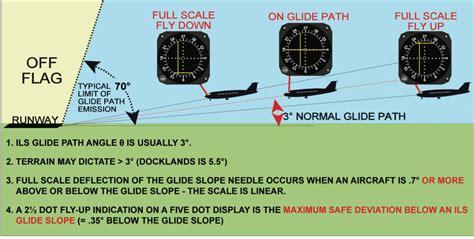
Subsequent research highlighted the need to separate instrument flying from visual cue acquisition. Studies showed that pilots often descended below glide paths when transitioning to visual references, leading to dangerous situations.
In the 1970s, crew workload distribution discussions increased, and NASA trials revealed that delegating flying tasks enhanced decision-making and communication among crews. While these reports did not specifically recommend adopting monitored approaches, they laid the groundwork for its integration into pilot training.
By 1997, British Airways implemented the monitored approach for all approaches, including role reversals at the Captain’s discretion. Research and recommendations continued to support the monitored approach, emphasizing its benefits in improving safety and crew interaction during landings.