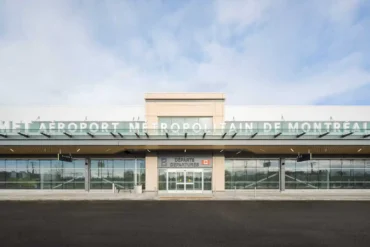
Montréal–Trudeau International Airport (IATA: YUL, ICAO: CYUL), a vital nexus for global air travel, stands as the primary international gateway to Montreal, the province of Quebec, and extensive surrounding regions. Situated in Dorval, Quebec, approximately 20 kilometers west of Downtown Montreal, YUL is more than just an airport; it’s a significant economic driver and a critical piece of Canada’s transportation infrastructure. Officially named in honour of Pierre Elliott Trudeau, the 15th Prime Minister of Canada, the airport is still commonly referred to by its historical name, Montréal–Dorval International Airport. It serves not only Greater Montreal and adjacent areas in Quebec and eastern Ontario but also extends its reach to Vermont and northern New York in the United States. As the busiest airport in Quebec and the third-busiest in Canada by passenger traffic, handling an impressive 22.4 million passengers in 2024, YUL plays an indispensable role in connecting Canada to the world. The airport is owned by Transport Canada and operated under a 60-year lease by Aéroports de Montréal (ADM), a not-for-profit corporation that also manages Montréal–Mirabel International Airport, which now primarily handles cargo and private aviation.
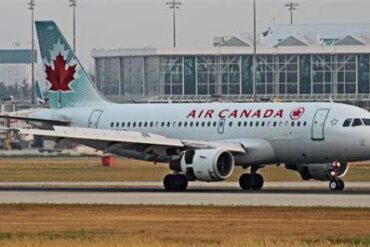
One of YUL’s distinguishing features is its status as one of eight Canadian airports equipped with United States border preclearance facilities, significantly streamlining travel to the U.S. A remarkable 71% of its passengers, amounting to 15.79 million, are on non-domestic flights, the highest proportion among all Canadian airports. This underscores its critical role as an international hub. Furthermore, Montréal–Trudeau has emerged as the fifth busiest transatlantic hub in North America, with the Montreal-Paris route being Canada’s busiest international corridor and the sixth busiest from North America, serving over 1.5 million passengers annually. The airport is a cornerstone for Air Canada, the nation’s flag carrier, which maintains its corporate headquarters on the Saint-Laurent side of the airport and utilizes YUL as one of its three principal hubs, predominantly serving Quebec, the Atlantic Provinces, and Eastern Ontario. On an average day, approximately 58,000 passengers transit through its facilities. Airlines operating from Montréal–Trudeau offer year-round non-stop flights to five continents: Africa, Asia, Europe, North America, and South America, a distinction shared by only one other Canadian airport, Toronto Pearson International Airport. Beyond Air Canada, YUL is the headquarters for Air Inuit and Air Transat, and an operating base for Porter Airlines, Air Wisconsin, PAL Airlines, and Sunwing Airlines (until May 2025). The airport also supports a vibrant general aviation sector, hosting the headquarters of Innotech-Execair, Starlink, and ACASS, alongside Maintenance, Repair & Overhaul (MRO) facilities for Air Transat and Air Inuit. Transport Canada operates a Civil Aviation Maintenance, Repair and Overhaul facility on-site, and Bombardier Aerospace assembles its Global and Challenger business jets at a facility located on airport grounds.
A Rich History: From Dorval Fields to Global Hub
The story of Montréal–Trudeau International Airport began in the early 1940s, a period when Montreal’s original airport, Saint-Hubert Airport (operational since 1927), was increasingly unable to meet the burgeoning demands of the city. Recognizing this, the Minister of Transport acquired land at the Dorval Race Track, chosen for its favorable weather conditions and relative lack of foggy days. Dorval Airport officially opened on September 1, 1941, with three paved runways. Its strategic importance was immediately apparent, particularly during World War II, when thousands of Allied aircraft transited through Dorval en route to England. By 1946, the airport was already handling over a quarter of a million passengers annually, a figure that soared to over a million by the mid-1950s. For a time, Dorval was Canada’s busiest airport and a major transatlantic hub for commercial aviation, welcoming prestigious airlines like British Overseas Airways Corporation (BOAC). Until 1959, it also served a dual role as RCAF Station Lachine, highlighting its military significance during its formative years.
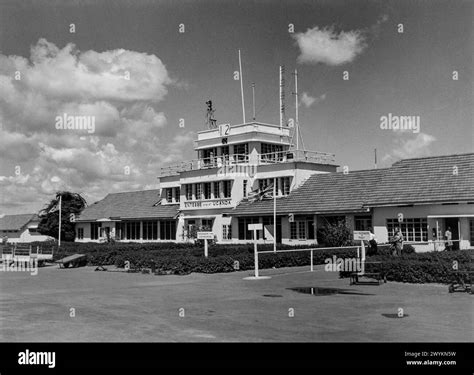
The 1960s marked a period of significant growth and transformation. In November 1960, the airport was officially renamed Montreal–Dorval International Airport. A pivotal moment came on December 15 of that year when the Minister of Transport inaugurated a new, state-of-the-art $30 million terminal. Designed by the architectural firm Illsley, Templeton, Archibald, and Larose, this terminal was, at its zenith, the largest in Canada and one of the most substantial globally. It firmly established Montreal as the primary gateway to Canada for all European air traffic, serving over two million passengers per year. Just eight years later, Montréal–Dorval International Airport underwent another major expansion program to accommodate the relentless rise in air travel. Despite these enhancements, the federal government, under Prime Minister Pierre Elliott Trudeau, foresaw that Dorval would reach saturation by 1985, with projections indicating that 20 million passengers would pass through Montreal’s airports annually. This forecast led to the ambitious decision to construct a new, much larger airport in Sainte-Scholastique, which would become Montréal–Mirabel International Airport.
The Mirabel Interlude and Dorval’s Resurgence
The development of Montréal–Mirabel International Airport (YMX) was a monumental undertaking, intended to handle the anticipated surge in international traffic and, eventually, to replace Dorval entirely. Mirabel opened on November 29, 1975, boasting an enormous operations zone of 70 square kilometers and a buffer zone of 290 square kilometers, making it the largest airport in the world by land area at the time. In line with the government’s plan, all international flights (excluding those to and from the United States) were transferred to Mirabel. Twenty-three international airlines moved their overseas operations to the new facility, and many connecting flights to Canadian centers were also rerouted there. Consequently, Montréal–Dorval was repurposed to serve domestic flights and transborder flights to the United States, with the long-term vision of eventually shifting these operations to Mirabel and closing Dorval for redevelopment.
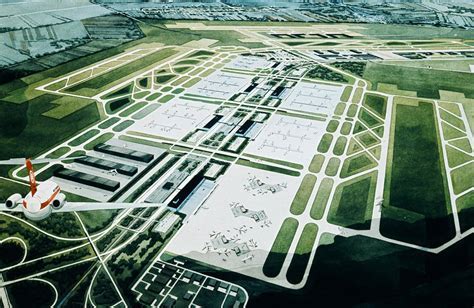
However, the projected boom in traffic never fully materialized for Mirabel. Several factors contributed to its underutilization. The advent of longer-range jets in the 1980s meant that aircraft no longer needed to refuel in Montreal before crossing the Atlantic from major Western North American cities. Montreal’s economic decline in the late 1970s and 1980s also significantly impacted passenger numbers at both airports, rendering Mirabel’s vast additional capacity largely redundant. While this redundancy could have been resolved by decommissioning Dorval as originally planned, strong public pressure favored Dorval’s continued operation due to its much closer proximity to downtown Montreal (20 km for Dorval versus 58 km for Mirabel). Another significant hurdle was Air Canada’s preference to keep its operations at Dorval, given its proximity to its AVEOS maintenance workshops. The dual-airport system, with Mirabel handling international flights and Dorval managing continental flights, made Montreal a less attractive transit hub. Passengers faced long and inconvenient bus rides to connect between domestic and international flights, compounded by partially completed road links and the absence of a rail connection to Mirabel. Montrealers themselves grew to resent Mirabel, as they were forced to travel far out of town for international departures. Faced with the economic impracticality of operating two major international airports in one city, most international airlines chose to bypass Montreal altogether, favoring Toronto Pearson International Airport, which offered a single, consolidated hub for both domestic and international services. Although Dorval resumed handling international flights in 1997, international airlines were slow to return, having already established Toronto Pearson as their primary eastern Canadian gateway.
The return of all international scheduled flights to Montréal–Dorval in 1997, followed by charter flights in 2004, marked a significant turning point. This consolidation of flights led to a substantial increase in passenger traffic at Dorval, allowing it to function once again as a true hub. Passengers on continental flights no longer faced the arduous transfer to Mirabel for international connections. Despite this positive development, wooing back international airlines that had shifted their focus to Toronto proved challenging. On January 1, 2004, the federal government, under the direction of then Minister of Transport David Collenette, renamed the airport Montréal–Pierre Elliott Trudeau International Airport in honor of the former Prime Minister. This decision was met with some controversy, particularly from Quebec sovereigntists who opposed Trudeau’s staunch federalist policies, and from aviation historians who recalled his role in the push to close Dorval in favor of Mirabel. To this day, many Montrealers continue to refer to the airport simply as “Dorval” or “Dorval Airport.” During the September 11 attacks, Dorval Airport participated in Operation Yellow Ribbon, accommodating seven diverted flights bound for the closed U.S. airspace, despite initial security requests for pilots to avoid the airport. Mirabel Airport also received ten diverted flights, bringing the total to 17 in the Montreal area. In 2016, Montréal–Trudeau celebrated its 75th anniversary with various events and exhibitions, including “Travelling Through Time” in partnership with the Canada Aviation and Space Museum.
Decades of Transformation: Expansion and Modernization
Montréal–Trudeau has undergone several phases of extensive expansion and modernization to meet the demands of 21st-century air travel. In February 2000, Aéroports de Montréal (ADM) announced a CAD 716 million expansion plan aimed at elevating the airport to standards comparable with other North American airports of its size. The existing terminal, largely unchanged since its 1960 opening, was struggling to cope with the increased passenger volume following the transfer of international flights from Mirabel in 1997 and Air Canada’s decision to establish YUL as its Eastern Canada hub. The terminal’s original capacity of roughly 7 million passengers per year had been significantly surpassed.
This ambitious program included the construction of several new facilities: a dedicated jetty for flights to the United States (US Preclearance Terminal), another for other international destinations (International Terminal), and a vast international arrivals complex. An 18-gate Transborder Concourse opened in 2003, followed by an 11-gate International Concourse in 2004. A new customs hall and baggage claim area for non-domestic flights, along with an expanded parking garage, were completed in 2005. Furthermore, sections of the domestic area were renovated and expanded in 2007, incorporating additional retail space. The international part of the original Aeroquay satellite was demolished in 2008, leaving the domestic section for regional carriers. This comprehensive CAD 716 million expansion endowed Montréal–Trudeau with the capacity to serve 15 million passengers annually, ironically achieving one of the initial passenger volume goals set for Mirabel in the 1970s. ADM financed these improvements independently, without government grants. By the end of 2007, a total of CAD 1.5 billion had been invested in upgrading the airport. The final phase of this construction wave included modifications to accommodate the Airbus A380, with Gate 55 in the international jetty specifically designed with two air bridges for simultaneous double-deck loading and unloading.
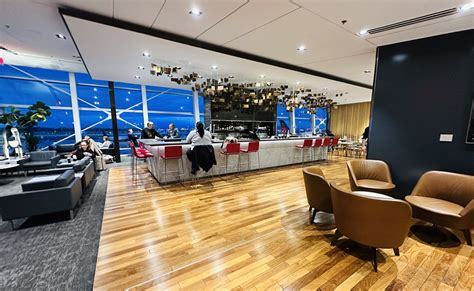
Further enhancements followed. On June 15, 2006, construction commenced on a new four-star Marriott hotel situated directly above the transborder terminal. The 279-room hotel, initially slated for completion in September 2008, opened its doors on August 19, 2009, after delays caused by the economic recession and a downturn in the transborder market. This hotel also features an underground train station, part of a long-term plan to connect the airport with downtown Montreal. Concurrently, the refurbished, expanded, and modernized transborder terminal was unveiled, increasing its area from 9,320 to 18,122 square meters and equipped with a new baggage sorting room allowing U.S. customs officers to retrieve luggage efficiently for secondary inspection.
The international terminal saw another significant expansion between 2011 and 2016. Air France became the first airline to operate the Airbus A380 to Montreal on April 22, 2011, with daily service from Paris, although this was later reduced and then withdrawn in October 2012 due to market factors. In July 2011, ADM CEO James Cherry announced a two-phase expansion of the international terminal, a project with a total cost of approximately $620 million. Phase I, completed on December 20, 2012, at a cost of $270 million, introduced a new boarding lounge capable of accommodating 420 passengers and a new gate (Gate 62), designed for Passenger Transfer Vehicles for remote stand operations. Phase II, inaugurated on May 10, 2016, and operational two days later, added six new contact gates for wide-body jets, including two more A380-capable gates (Gates 63 through 68), bringing the total number of international contact gates to 16. This $350 million expansion added 20,000 square meters of open spaces, restaurants, shops, and a children’s playground. Conceived by Humà Design, it features three massive art installations and four vitrines showcasing Montreal’s museums. In April 2016, ADM also inaugurated a new commercial area between gates 52 and 53, known as Haltes gourmandes (gourmet stops), featuring numerous restaurants operated by SSP Canada Food Service Inc., which invested over $200 million in its airport locations throughout 2016.
Looking ahead, ADM has ambitious plans for future development spanning from 2018 to 2030. In January 2016, a call for tenders was issued for the restoration and upgrade of the main terminal façade’s curtain wall, one of the oldest remaining parts of the original structure. A major $2.5 billion project, unveiled in April 2018, is set to transform the airport significantly. The first phase involves demolishing and rebuilding the multi-level parking lot, incorporating a green roof and the REM (Réseau express métropolitain) station underneath. The drop-off area will be greatly expanded and covered with glass, and a new remote terminal will be constructed on the site of the former runway 10/28. By 2030, this remote terminal is planned to be connected to the main terminal building to accommodate projected growth. Other future developments outlined in the 2013–2033 master plan include increasing curb-side capacity, developing a new air cargo handling area and industrial zone with supporting taxiways, and reconfiguring the international arrivals hall and luggage rooms.
Airport Infrastructure: Runways and Terminals
Montréal–Trudeau International Airport currently operates with two parallel runways aligned in a northeast–southwest direction: 06L/24R (11,000 ft / 3,353 m, Asphalt/Concrete) and 06R/24L (9,890 ft / 3,014 m, Concrete). Runway 06L is equipped with a Category II Instrument Landing System (ILS), while 24R and both ends of 06R/24L have Category I ILS. A third runway, 10/28, which ran east–west, was permanently decommissioned in July 2023 and now serves as a taxiway.
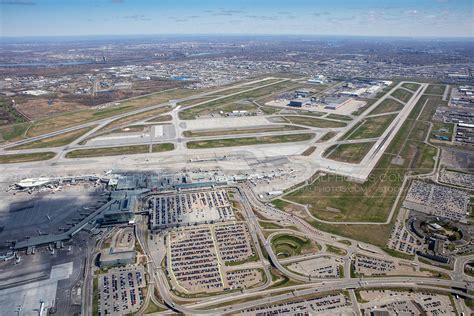
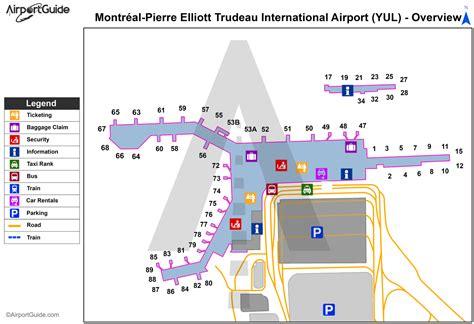
The airport features a single, two-storied terminal building meticulously organized into four distinct zones: the public area (arrivals and departures levels), the domestic jetty, the international jetty, and the transborder jetty. The public departures level is divided into two main sections: one for check-in for domestic and most international flights (excluding U.S. destinations), and another specifically for flights departing to the United States. Both areas are equipped with self-service check-in kiosks, prayer areas, shops, and cafés. Passengers benefit from free Wi-Fi throughout the terminal, luggage trolleys, ATMs, and nursing rooms. Upon arriving from an international destination, passengers enter a spacious and brightly lit arrivals complex, proceed through primary customs inspection, descend to the baggage claim area, and then emerge into the international arrivals public hall. The airport’s Aérogalerie program enhances the passenger experience by showcasing artworks throughout the terminal, reflecting Montreal’s rich artistic and cultural heritage. This includes illuminated columns, temporary exhibitions, and permanent collections by local artists. For aircraft parked at remote hardstands, the airport utilizes eight mobile lounges to shuttle passengers between the terminal and their aircraft.
Domestic Jetty
The Domestic Jetty is accessible via security checkpoint A. It comprises two sections: a satellite jetty connected to the main terminal by an underground tunnel, and a wing directly attached to the main terminal building. The main jetty houses 16 gates (1 through 12, 15, and 47 through 49). The satellite jetty features another 10 gates (17, 19, 21, 23, 25, 27, 28, 30, 32, and 34). Only two gates in the satellite (17 and 21) have boarding bridges, as the others primarily serve propeller aircraft such as the Bombardier Dash 8 series. These sections are the only remaining departure areas from the original 1960 terminal structure.
International Jetty
The International Jetty, also accessed through security checkpoint A, is dedicated to flights with destinations outside of Canada and the United States. It contains 18 gates: 50 through 53 and 55 through 68. Gates 53 and 62 are exclusively used for Passenger Transfer Vehicles. This vibrant area offers travelers a wide array of boutiques, restaurants, cafés, and spa facilities, including one of Canada’s largest airport duty-free shops, “The Loop.” The far end of the jetty is characterized by expansive open spaces, abundant natural light from floor-to-ceiling windows, and a large skylight. A striking centerpiece is the art installation “Veil of Glass” by local artist ATOMIC3, composed of colored glass triangles illuminated by spotlights. Numerous other murals and artworks, including four pieces from various Montréal museums, adorn this jetty. A dedicated relaxation area near gate 57 encourages passengers to unwind, with comfortable seating and an initiative allowing travelers to download the first chapter of books via the airport’s Wi-Fi. Over 1,000 chairs with charging stations and USB ports are available, along with three water bottle-filling stations.
Transborder Jetty
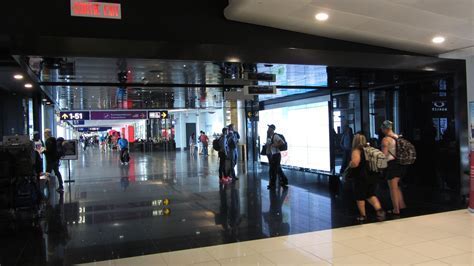
The Transborder Jetty serves all U.S.-bound flights and features 18 gates: 72 through 89. Access to gates 87, 88, and 89 requires passengers to descend one level via an escalator. Additionally, gates 56, 58, and 60 (part of the international jetty) can be converted for U.S. bound flights using movable glass walls known as swing gates. Passengers using this jetty must pass through security checkpoint C, then U.S. Customs and Border Protection (CBP) preclearance, and finally a duty-free shop before reaching their gates. The gate area offers similar amenities to other parts of the airport, including shops, restaurants, and rest zones. If necessary, certain gates can be isolated for additional security screening for flights to sensitive destinations like Washington–National.
Airport Lounges for Enhanced Comfort
Montréal–Trudeau hosts lounges for major airline alliances and pay-per-use options, catering to diverse passenger needs:
-
Air Canada Maple Leaf Lounge (Star Alliance):
- Domestic: Near Gate 5
- International: Near Gate 52
- USA Transborder: Near Gate 73
-
Air Canada Café (Star Alliance):
- Domestic: Near Gate A2
-
Air France KLM Lounge (SkyTeam):
- International: Near Gate 57
-
Desjardins Odyssey Lounge:
- International: Near Gate 63
-
Desjardins Odyssey Lounge – Plaza Premium Lounge:
- USA Transborder: Near Gate 76
-
National Bank Lounge:
- International: Near Gate 53
Airlines and Extensive Destinations Served by YUL
Montréal–Trudeau International Airport is a bustling hub for numerous airlines, connecting Montreal to cities across the globe. The airport offers an extensive network of routes, making it a key gateway for both leisure and business travel. Below is a representative list of airlines and some of their primary destinations from YUL. Please note that destinations and frequencies can change, especially seasonally.
Passenger Airlines:
- Aeroméxico: Mexico City
- Air Algérie: Algiers
- Air Canada: Austin, Barcelona, Bogotá, Boston, Brussels, Calgary, Casablanca, Chicago–O’Hare, Delhi, Denver, Edmonton, Fort-de-France, Fort Lauderdale, Frankfurt, Geneva, Halifax, Houston–Intercontinental, Kelowna, Las Vegas, Lisbon, London–Heathrow, Los Angeles, Lyon, Madrid, Mexico City, Milan–Malpensa, Nassau, Ottawa, Paris–Charles de Gaulle, Pointe-à-Pitre, Providenciales, Rome–Fiumicino, San Francisco, San José (CR), São Paulo–Guarulhos, Tokyo–Narita, Toronto–Pearson, Toulouse, Vancouver, Winnipeg. Seasonal: Numerous destinations including Amsterdam, Athens, Cancún, Copenhagen, Dublin, Nice, Phoenix–Sky Harbor, Puerto Vallarta, Reykjavík–Keflavík, Seoul–Incheon, Tel Aviv, Venice, and many more across North America, the Caribbean, Europe, and South America.
- Air Canada Express: Operates numerous regional routes including Atlanta, Boston, Chicago–O’Hare, New York (JFK & LaGuardia), Philadelphia, Toronto–Billy Bishop, Washington (Dulles & National), and key Canadian cities like Fredericton, Quebec City, and St. John’s.
- Air Canada Rouge: Serves leisure destinations like Cancún, Cayo Coco, Fort Lauderdale, Miami, Orlando, Punta Cana, Tampa, Varadero. Seasonal: Charlottetown, Las Vegas, San Juan.
- Air Creebec: Chibougamau, Chisasibi, Val-d’Or, and other northern Quebec communities.
- Air France: Paris–Charles de Gaulle. Seasonal: Pointe-à-Pitre.
- Air Inuit: Serves Kuujjuaq, Quebec City, and numerous communities in Nunavik.
- Air Saint-Pierre: Saint-Pierre.
- Air Transat: A major leisure carrier with routes to Cancún, Fort Lauderdale, Lisbon, Lyon, Málaga, Marrakesh, Marseille, Paris–Charles de Gaulle, Punta Cana, Toronto–Pearson. Seasonal: Extensive European network including Athens, Barcelona, London–Gatwick, Madrid, Rome–Fiumicino, Venice, and many Caribbean and Mexican destinations.
- American Airlines: Charlotte, Dallas/Fort Worth, Miami.
- American Eagle: Charlotte, Chicago–O’Hare, Philadelphia. Seasonal: New York–LaGuardia.
- Arajet: Punta Cana.
- Austrian Airlines: Vienna.
- Avianca: Bogotá.
- Avianca El Salvador: Seasonal: San Salvador.
- Azores Airlines: Ponta Delgada.
- BermudAir: Bermuda (begins June 12, 2025).
- British Airways: London–Heathrow.
- Canadian North: Iqaluit, Kuujjuaq.
- Copa Airlines: Panama City–Tocumen.
- Delta Air Lines: Atlanta.
- Delta Connection: Detroit, Minneapolis/St. Paul, New York–LaGuardia.
- Emirates: Dubai–International.
- French Bee: Paris–Orly.
- KLM: Amsterdam.
- Lufthansa: Munich. Seasonal: Frankfurt.
- PAL Airlines: Gaspé, Îles-de-la-Madeleine, Quebec City, Sept-Îles, Val-d’Or, Wabush.
- Porter Airlines: Calgary, Edmonton, Halifax, Toronto–Billy Bishop, Toronto–Pearson, Vancouver. Seasonal: Fort Lauderdale, Fort Myers. Newark (begins June 1, 2025).
- Qatar Airways: Doha.
- Royal Air Maroc: Casablanca.
- Royal Jordanian: Amman–Queen Alia.
- Sunwing Airlines: (Service ends May 29, 2025) Numerous sun destinations including Cancún, Cayo Coco, Punta Cana, Varadero.
- Swiss International Air Lines: Zürich.
- TAP Air Portugal: Lisbon.
- Tunisair: Tunis.
- Turkish Airlines: Istanbul.
- United Airlines: Seasonal: San Francisco.
- United Express: Chicago–O’Hare, Newark, Washington–Dulles.
- WestJet: Calgary, Toronto–Pearson. Seasonal: Vancouver, Winnipeg.
Passenger Traffic and Statistical Overview
Montréal–Trudeau International Airport has consistently demonstrated robust passenger growth, solidifying its position as a critical Canadian air transport facility. In 2024, the airport served a remarkable 22,406,972 passengers, representing a 5.8% increase over the previous year. This traffic was segmented into 6,603,647 domestic passengers (a slight 0.2% increase), 10,595,413 international passengers (a significant 7.6% rise), and 5,201,039 transborder (U.S.) passengers (a strong 9.9% growth). This highlights the airport’s expanding role in international and U.S. travel.
Looking back, 2023 saw 21,173,941 passengers, a substantial 32.5% recovery and growth compared to 2022, which itself was a year of major rebound with 15,980,670 passengers (a 207.1% increase from 2021) as global travel restrictions eased post-pandemic. The years 2020 and 2021 were significantly impacted by the COVID-19 pandemic, with passenger numbers dropping to 5,437,210 and 5,201,751 respectively. Pre-pandemic, in 2019, YUL handled 20,305,106 passengers. The consistent growth in the international sector, which often outpaces domestic and transborder growth, underscores YUL’s strategic importance as an international gateway. For instance, in 2019, international passengers constituted 8,595,100 (42.3%) of the total, a figure that rose to represent 47.3% of total traffic in 2024. Aircraft movements in 2024 totaled 208,224, reflecting the busy operational tempo of the airport.
Ground Transportation and Accessibility
Montréal–Trudeau is well-connected to the city and surrounding regions via a variety of ground transportation options.
Public Transit
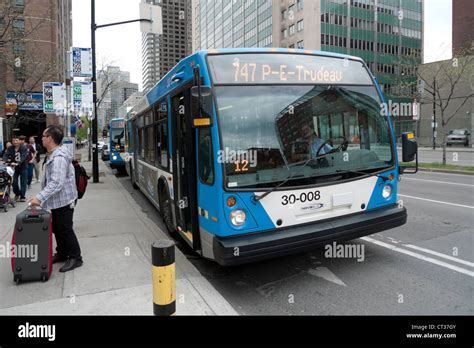
The Société de transport de Montréal (STM) operates several bus routes serving the airport. The flagship service is the 747 Montreal-Trudeau/Downtown bus, introduced on March 29, 2010. This route operates 24/7, 365 days a year, providing a direct link between the airport and key downtown locations including Lionel-Groulx metro station, Central Station (Gare Centrale), and Berri-UQAM metro station. Other STM routes include the 204 Cardinal and 209 Des Sources (daily service), and night buses 356 Lachine/YUL Aéroport/Des Sources and 378 Sauvé/YUL Aéroport. The 460 Express Métropolitaine operates during rush hours. These routes also connect to the Dorval bus terminus and train station.
Intercity Rail Connections
Via Rail, Canada’s national passenger rail service, is accessible via the Dorval Via Rail station (IATA: XAX), located approximately 2 kilometers south of the airport. A complimentary shuttle bus, operated by Indigo, transports Via Rail passengers between the airport (departures door 8) and Dorval station every 45-60 minutes during station operating hours. The journey takes about 5 minutes. Dorval station is on the busy Québec City-Windsor Corridor, offering connections to Quebec City, Ottawa, Kingston, Toronto, and other regional centers. Local service between Dorval and Montreal Central Station is not provided by Via Rail.
Intercity Bus Services
Several intercity bus services operate from YUL. KLM Royal Dutch Airlines provides a bus service to Ottawa Railway Station exclusively for Air France-KLM customers traveling to or from the Ottawa area. Air France also operates a similar service to Sainte-Foy in Quebec City for its passengers. Orléans Express offers coach services connecting the airport to Ottawa, Gatineau, Drummondville, and Quebec City.
Car Access
The airport is readily accessible by car via Autoroute 20 or Autoroute 520 (a spur from Autoroute 40 leading directly to the airport). From the east, Autoroute 20 leads to the Dorval interchange, which provides direct airport access. Côte-Vertu Boulevard, running parallel to runways 24L and 24R, provides access to airline hangars, maintenance facilities, and the Bombardier Aerospace assembly plant. Short-term pick-up and drop-off are permitted outside the terminal’s arrivals and departures areas. Significant roadwork projects, initiated in June 2009, have aimed to improve the Dorval interchange and create direct road links between the airport and Autoroutes 20 and 520, with much of the redesign of the on-site airport road network completed.
Future Connections: REM
A transformative public transit project, the Réseau express métropolitain (REM), is set to revolutionize airport access. Announced in April 2016, this automated light metro network will connect Montréal–Trudeau Airport directly to Downtown Montreal’s Central Station, as well as to the North Shore, South Shore, and West Island. Construction began in April 2018, and the airport branch is expected to be operational by 2027, offering frequent service from early morning to late night, seven days a week. The YUL–Aéroport-Montréal–Trudeau station will be integrated into the airport terminal complex.
Notable Incidents and Accidents
While generally maintaining a strong safety record, Montréal–Trudeau Airport has experienced a few notable incidents over its long history:
- November 29, 1963: Trans-Canada Air Lines Flight 831, a Douglas DC-8, crashed shortly after takeoff en route to Toronto International Airport, resulting in the tragic loss of all 118 people on board.
- June 18, 1998: Propair Flight 420, a Fairchild Metroliner, experienced dragging brakes on departure from Montreal Dorval Airport. This led to overheating and a fire in the left wing. While attempting to divert to Mirabel International Airport, the left wing suffered a structural failure due to the fire, causing the aircraft to crash, killing all 11 people on board.
- June 5, 2015: WestJet flight 588, a Boeing 737-600 arriving from Toronto Pearson, slid off the runway upon landing. There were no fatalities or injuries among passengers or crew.
- July 9, 2023: Air Canada Flight 885, a Boeing 777-300ER from Geneva, was at the gate when a water service truck positioned near the rear cargo door caught fire. The flames reached the aircraft’s fuselage, and smoke was detected in the cabin. A rapid deplanement was ordered, and all passengers safely exited into the terminal. Emergency services extinguished the fire, and no injuries were reported.
Airport Tenants and Services
Beyond passenger and airline operations, Montréal–Trudeau hosts various aviation-related tenants. Several Fixed-Base Operators (FBOs) are present at Dorval, providing services such as aircraft handling, fueling (Jet Fuel A, A-1, and 100LL), and other ground support for general and business aviation. As mentioned earlier, major MRO facilities for airlines like Air Transat and Air Inuit, as well as Bombardier’s aircraft assembly plant, contribute to the airport’s diverse economic ecosystem.
Montréal–Trudeau International Airport continues to evolve, adapting to the dynamic aviation landscape and striving to enhance its role as a premier North American and international hub. Its ongoing and future development projects underscore a commitment to growth, passenger experience, and seamless connectivity for Montreal and beyond.