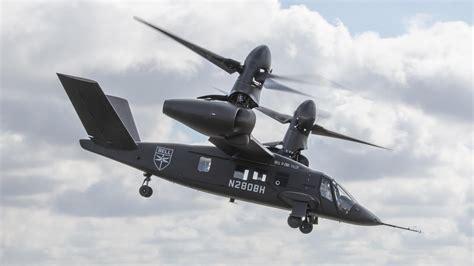
The MV-75 Future Long Range Assault Aircraft has officially entered its critical production readiness phase, marking Fiscal Year 2026 (FY26) as a milestone year for U.S. Army aviation transformation. With decades of helicopter doctrine poised for overhaul, the MV-75’s advancement signals not just the arrival of a new airframe but a new era of tactical flexibility, digital integration, and long-range battlefield mobility.
MV-75: The Dawn of a New Combat Aviation Platform
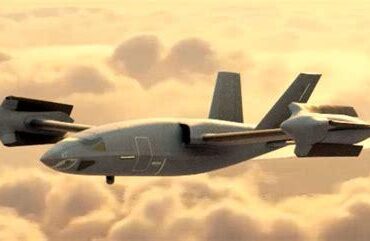
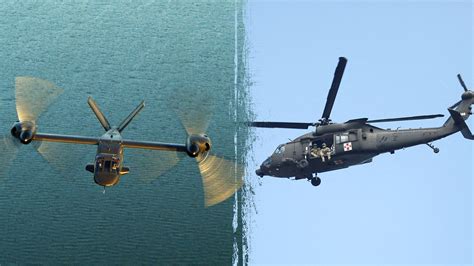
The MV-75, developed from Bell Textron’s V-280 Valor tiltrotor, stands as the linchpin of the Army’s Future Long Range Assault Aircraft (FLRAA) initiative. In its tiltrotor form, the aircraft merges helicopter-style vertical lift with the cruising speed of a fixed-wing plane, offering over 280 knots of cruise speed and a combat radius exceeding 800 nautical miles—a transformative leap from the aging UH-60 Black Hawk it is set to replace.
The selection of Bell Textron’s design in December 2022, following a multi-year FLRAA competition, affirmed its performance superiority, cost-efficiency, and digital maturity. In mid-2023, the aircraft was officially rebranded as MV-75. The “MV” prefix reflects its multi-role mission profile, while “75” conforms to the Army’s updated fleet designation structure.
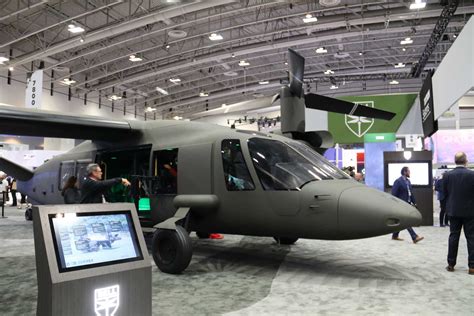
From JMR-TD to FLRAA: A Decade of Engineering Momentum
The MV-75’s development journey is deeply rooted in the Joint Multi-Role Technology Demonstrator (JMR-TD) program, initiated in 2013 under the Army’s broader Future Vertical Lift (FVL) umbrella. The program saw Bell’s V-280 Valor tested against the Sikorsky-Boeing SB-1 Defiant in a competitive technological crucible designed to minimize risk ahead of procurement.
Flight-tested since 2017, the V-280 underwent a rigorous regimen of digital simulations, mission modeling, and real-world validation. These results shaped the Army’s FLRAA requirements and culminated in the $1.3 billion Engineering and Manufacturing Development (EMD) contract awarded to Bell in 2022. That contract now anchors a program with a projected total lifecycle value exceeding $70 billion.
FY26: Transitioning from Blueprint to Battle-Tested Reality
As FY26 unfolds, the MV-75 transitions from blueprint to battlefield through a series of critical events:
- Completion of the Critical Design Review (CDR) finalizes the aircraft’s baseline.
- Flight testing of prototypes #1 through #8 simulates real-world combat and logistical missions.
- Early low-rate production planning ensures timely entry into operational service.
- Digital twin refinement and MOSA validation enable faster upgrades and mission-specific adaptations.
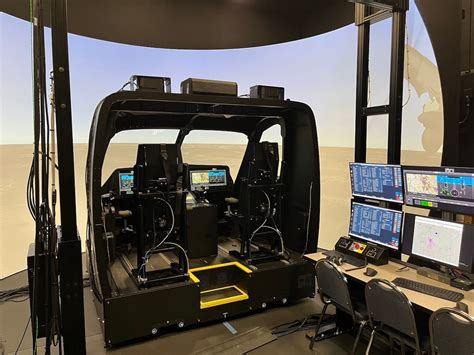
The acceptance of the first virtual prototype in July 2023 allowed the Army to simulate maintenance procedures, flight performance, and mission integration scenarios, dramatically reducing development risk and compressing production timelines.
Medical Evacuation Revolution: MEDEVAC Variant Underway
A cornerstone of FY26 planning is the parallel development of the MV-75 MEDEVAC variant. For the first time, the U.S. Army is engineering a medical evacuation aircraft in tandem with its assault counterpart. The MEDEVAC version incorporates:
- A modular cabin to accommodate multiple stretcher-bound patients.
- Advanced life support systems and in-flight patient telemetry.
- Extended evacuation range beyond 1,400 km, critical for operations across dispersed battlefields or denied terrain.
This purpose-built MEDEVAC design replaces the legacy practice of retrofitting utility helicopters, enhancing medical response time, patient survivability, and logistical autonomy.
Strategic Edge: Speed, Range, and Mission Flexibility
The MV-75’s performance specifications are unprecedented in Army rotary-wing history:
- Speed: Over 280 knots (518 km/h)
- Combat Radius: 800+ nautical miles (1,480 km)
- Payload: 12 fully armed troops
- Flight Control: Full digital fly-by-wire system
- Survivability: Infrared suppression, EW systems, and armored key components
Its tiltrotor agility allows the MV-75 to reduce time-on-target, evade anti-air threats, and support rapid response missions without the forward arming and refueling points required by older helicopters.
The Modular Digital Backbone: MOSA
At the heart of the MV-75’s long-term value is its Modular Open Systems Approach (MOSA). FY26 activities center around validating this architecture in live-flight environments. MOSA enables:
- Swift integration of new sensors, weapons, and avionics.
- Reduced dependency on original manufacturers for upgrades.
- Long-term operational relevance against evolving threat spectrums.
This modularity also sets the stage for seamless collaboration with unmanned aerial systems, AI-enabled decision aids, and joint command networks.
Industrial Base and Production Ecosystem Readiness
FY26 marks the pivot toward industrial-scale manufacturing. Funding covers:
- Supplier qualification and material readiness.
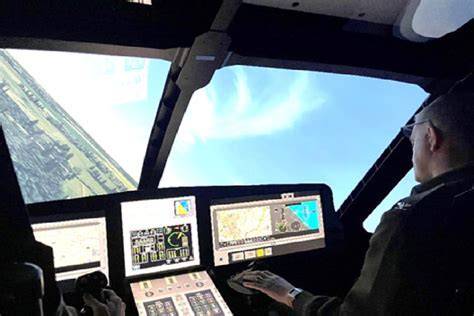
- Tooling and production line digital twinning.
- Assembly simulations across Bell Textron’s facilities.
By investing early in production infrastructure, the Army ensures that when Milestone C arrives, the MV-75 enters low-rate production with minimal delay and maximum quality control.
Tactical Implications in Indo-Pacific and European Theaters
Geostrategic planners see the MV-75 as a game-changer in both the Indo-Pacific and European theaters. In the Pacific, its range enables island-hopping missions without forward bases. In Europe, it supports distributed maneuver and reinforcement amid high-threat, near-peer environments.
Moreover, its digital architecture is being tailored for joint-force integration—providing ISR interoperability, live battlefield data sharing, and real-time mission updates across multi-domain operations.
Cost Efficiency Through Capability
At $43 to $50 million per unit, the MV-75 exceeds the UH-60M’s $20 million price tag, but delivers a quantum leap in capability. Reduced maintenance cycles through embedded diagnostics, lower fleet numbers due to enhanced reach, and multirole adaptability combine to justify the investment.
Army officials argue that this aircraft is not simply a replacement, but a redefinition of rotary-wing capability.
Road to First Unit Equipped by 2030
The Army’s acquisition roadmap targets First Unit Equipped (FUE) status by 2030. Prototypes being tested in FY26 form the foundation of:
- The Limited User Test phase, involving real operators and maintainers.
- Mission validation scenarios for assault, MEDEVAC, and logistics.
- Sustainment modeling using predictive diagnostics from flight data.
These stages will validate the aircraft’s performance envelope under combat-simulated conditions, while feeding real-time insights into future iterations.
Conclusion: A Defining Moment in Army Aviation
The MV-75’s progression into FY26 production readiness represents more than the debut of a new aircraft. It signifies a deliberate, digitally grounded transformation in how the U.S. Army conducts air mobility, casualty evacuation, and joint-force integration.
Armed with unmatched speed, range, survivability, and modularity, the MV-75 isn’t just built for today’s battlefield—it is engineered for tomorrow’s conflicts.
As it transitions from virtual simulations to real-world flight and production lines, the MV-75 takes its place at the center of Army modernization, poised to fly faster, farther, and smarter than any air assault platform before it.