Understanding the Power-Off 180 Maneuver
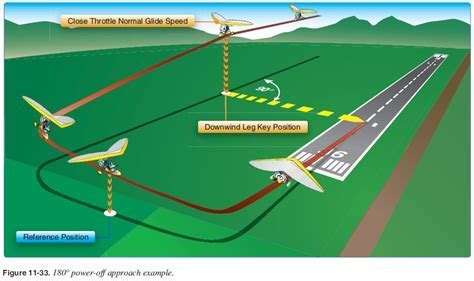
Among the many techniques pilots refine through repetitive practice, the power-off 180 landing stands out as one of the most valuable, though often overlooked, procedures. It simulates a situation where power is lost abeam a preselected aiming point on downwind—requiring the pilot to glide in and land with precision, no engine power to assist. This maneuver develops not only skill in energy management but also a deeper awareness of aerodynamic behavior, wind impact, and ground reference coordination.
Why Practice a Scenario That’s Unlikely?
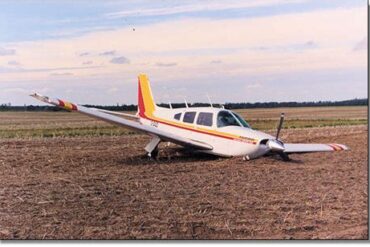
While it’s improbable that an engine failure would occur precisely at pattern altitude abeam the touchdown point, the value of the maneuver lies in its precision training. By simulating a high-stakes, no-power descent into a confined spot, pilots sharpen their ability to manage altitude, glidepath, configuration, and timing—core elements that underpin any emergency approach or energy-critical landing. In regions with obstacles such as urban zones, forests, or bodies of water, this skill becomes especially vital, as options for landing are drastically reduced.
Performance Standards and ACS Criteria
The Airman Certification Standards (ACS) outlines strict criteria for successful completion of the maneuver:
- Touchdown must occur within -0/+200 feet of a preselected point.
- The aircraft must be aligned with the centerline with no side drift.
- Minimum float and proper pitch attitude are expected.
These demands emphasize finesse, timing, and complete aircraft control without the safety net of power adjustments.
Wind Management and Pattern Adjustment
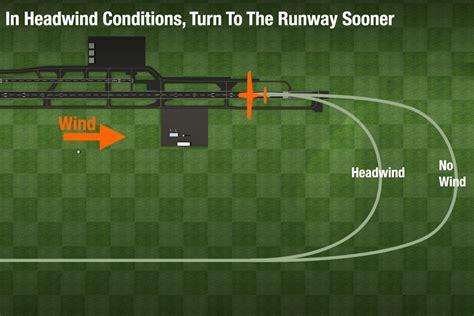
Wind is arguably the most dynamic factor in a power-off 180. The presence of tailwinds, headwinds, or crosswinds significantly alters the effective glide and demands rapid pattern adjustment. A tailwind on downwind, for instance, necessitates an earlier base turn, as you’ll fight a headwind all the way to final. Conversely, a headwind allows a longer downwind leg before the turn is initiated.
Mastering this aspect of the maneuver means reading the wind, understanding ground speed variances, and timing the base-to-final transition with near instinctual accuracy.
Using Forward Slips to Control Descent
If you find yourself too high on approach and at risk of overshooting your point, the forward slip becomes an essential tool. By crossing ailerons and rudder—usually with rudder into the wind and aileron into the low wing—you expose the aircraft fuselage to the airstream, drastically increasing drag and descent rate without changing pitch.
This technique, when used in short bursts, acts like a step-down descent mechanism. Brief slips allow for incremental altitude loss while preserving visual reference and directional control. It’s imperative that these be applied cautiously, avoiding prolonged instability on final.
S-Turns and Their Limited Application
S-turns, while effective for increasing time and descent on final approach, come with risk. They destabilize the approach path, requiring lateral corrections that detract from the primary goal—hitting a precise landing spot. They should be employed only when forward slips or flap strategies are insufficient or inapplicable due to traffic pattern geometry.
Flap Deployment: A Tool, Not a Crutch
Flaps can help steepen the approach path, but they must be used with discretion. Applying full flaps too early commits the aircraft to a high sink rate and short glide, often leading to undershooting. Instead, flaps should be introduced incrementally—partial flaps on base if high, then increased to full only when absolutely certain of reaching the runway.
Critically, never retract flaps once deployed during a no-power approach. Doing so results in a sudden sink rate, which can lead to terrain contact or loss of control, especially at low altitude.
Perfecting Ground Track Geometry
The geometry of the pattern itself plays a major role in the success of the power-off 180. While square turns are typical of standard patterns, a continuous or near-continuous turn from downwind to final results in smoother energy distribution and less altitude loss due to steep turns.
This technique—reminiscent of a glider pilot’s pattern—optimizes turning radius, airspeed control, and alignment, leading to a more predictable and controllable final segment.
Speed Control and Glide Path Maintenance
One of the most challenging aspects of the power-off 180 is maintaining the best glide speed after power is cut. This speed varies by aircraft but is typically indicated in the POH (Pilot Operating Handbook) as the speed offering the best lift-to-drag ratio.
Flying too fast increases descent and risks overshooting, while flying too slow may induce a stall or degrade glide range. A common pitfall is approaching at slightly above glide speed to avoid stalling, only to discover a prolonged float that causes the aircraft to sail beyond the intended point.
Aircraft-Specific Glide Characteristics
Each airplane handles power-off scenarios differently. A Cessna 172 will glide significantly better than a Piper Arrow, and glider-trained pilots often misjudge sink rates when transitioning to heavier, less efficient aircraft. Practicing in a variety of aircraft teaches you the unique glide properties of each—how they behave clean, dirty, and in transitional states.
Understanding this can be a life-saving advantage, especially when transitioning between aircraft types. It also enhances your ability to plan descents and energy profiles for any approach, not just emergencies.
Mental Modeling and Confidence Building
Beyond the technical, power-off 180s cultivate mental agility. Pilots learn to internalize cues—ground speed shift, aircraft behavior, descent angles, pattern geometry—and translate them into control actions without over-reliance on instruments.
Each repetition reinforces judgment, trimming reaction time in emergencies. You also gain the emotional calm that comes from confidence in your own procedures and skillset—a factor that often separates safe outcomes from tragic ones.
Conclusion: Practicing for Precision, Not Just Emergencies
The true value of the power-off 180 isn’t in perfect simulation of real-world engine failures. It lies in the layered development of judgment, timing, and coordinated control under pressure. These are the core skills behind every safe and accurate landing, engine or no engine.
Practice teaches muscle memory, yes—but more importantly, it sharpens spatial awareness, airspeed discipline, and flap timing. The exercise becomes more than an emergency drill; it evolves into a refined art of approach planning, applicable across aircraft and conditions.
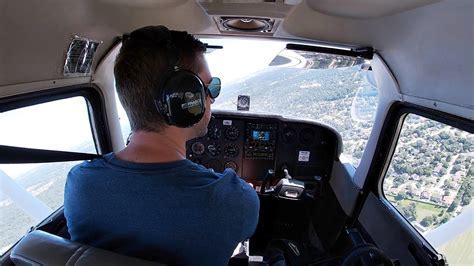
For pilots seeking deeper mastery of their aircraft—and greater readiness when something goes wrong—there is no substitute for routine, mindful power-off 180 practice.