Ryanair has formally ended its short-lived Prime membership scheme after internal financial reviews confirmed an eight-month loss of €1.6 million. The decision concludes an experiment that attempted to blend low-cost carrier efficiency with subscription-driven loyalty benefits, a hybrid model that ultimately delivered higher discount expenses than revenue gains. As the airline positions itself for continued market resilience, this cancellation signals a renewed focus on operational discipline over experimental loyalty structures.
A Subscription Model That Struggled To Justify Its Costs
The Prime program launched with the promise of annual savings for frequent travelers who were willing to pay €79—or £79 in the UK—for access to exclusive discounted fares, travel insurance, and a bundle of free seat selections each year. More than 55,000 passengers subscribed, generating over €4.4 million in sign-up revenue. Yet the ultimate cost of Prime’s fare reductions exceeded €6 million, leaving the carrier with an imbalance too large to ignore.
Marketing Chief Dara Brady acknowledged that the returns failed to justify the operational effort required to deliver Prime-only flash sales and monthly seat promotions. Despite high conversion during its launch period, the program’s economics proved unsustainable for a carrier built on precision-managed margins.
Existing Members Keep Benefits Until 2026
While new enrollments close immediately, existing subscribers will retain all Prime benefits until October 2026. This nearly year-long extension is designed to honor the original consumer agreement while allowing Ryanair a cleaner runway for rebalancing its loyalty strategy. The preserved perks include the twelve free seat selections annually and continued access to Prime-exclusive fare sales.
Though marketed as a program in which just three annual flights could recoup the subscription cost, the cumulative discount outflow proved incompatible with long-term financial targets. For a carrier that famously champions efficiency and cost control, sustaining a structure that cost more than it produced was never going to survive past its trial phase.
Historical Ambivalence Toward Loyalty Programs
Ryanair’s relationship with loyalty schemes has been uneven for more than a decade. Earlier proposals—including the higher-priced Ryanair Choice concept unveiled in 2019—suggested a recurring curiosity about subscription-based travel benefits without a long-term commitment to their development. Choice offered perks such as standard seat selections, fast track access, and extra baggage, but excluded premium seating and did not provide fare discounts. The initiative remained conceptual and never progressed to full deployment.
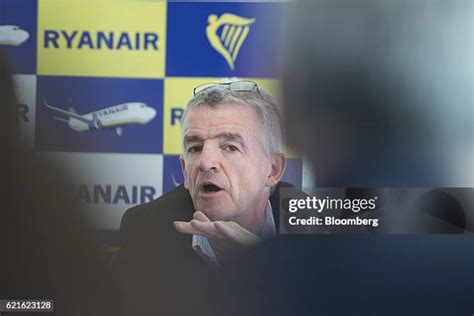
By 2020, as aviation reeled from global disruptions, CEO Michael O’Leary candidly downplayed the priority of any paid loyalty expansion. His later comments in 2024, famously advising passengers who crave loyalty perks to “get a dog,” demonstrated the company’s enduring skepticism toward traditional frequent-flyer economics. Prime emerged as a softer, discount-driven experiment, but it ultimately reflected the same ambivalence that shaped previous attempts.
Low-Cost Carriers And The Loyalty Conundrum
Unlike legacy carriers—whose business models hinge on repeat corporate travel—low-cost airlines historically avoid deep investments in loyalty structures. Their emphasis lies in simplicity, speed, and aggressive base-fare competitiveness. However, as gaps between full-service and budget carriers continue to narrow, some low-cost operators have explored new loyalty experiments, including subscription bundles and improved seat products.
Ryanair entered this movement cautiously, aligning Prime with increasing passenger appetite for customized travel savings. Yet the airline’s experiment highlights a fundamental tension: discount-heavy schemes may attract volume, but they can destabilize the delicate margin architecture that makes ultra-low-cost operations viable.
The Financial Reality Behind The Decision
Prime’s eight-month trajectory illustrates the difficulty of balancing customer-friendly incentives with strict profitability standards. Generating €4.4 million in subscription revenue appeared promising, but the €6 million value returned to customers in discounted fares produced a structural loss that contradicted Ryanair’s long-standing profit model. Revenue from ancillary services—priority boarding, seating upgrades, food sales, and baggage fees—has historically been one of Ryanair’s strongest profit pillars. A discount-driven subscription system risked diluting that strength.
Strategically, the airline is now removing a potential drag on earnings before it gains more momentum. By protecting benefits for existing members through 2026, Ryanair avoids reputational fallout while ensuring a smoother internal transition.
What Comes Next For Ryanair’s Loyalty Strategy?
With Prime discontinued, Ryanair is expected to reinforce its core efficiency-first model rather than pivot immediately to a replacement program. The airline continues to perform strongly across Europe, driven by disciplined cost bases and high aircraft utilization rates—ingredients that have historically mattered more to its competitive position than loyalty structures.
The cancellation leaves open the possibility of future experiments, but any new scheme would need to align more tightly with the carrier’s financial priorities. Subscription-based travel packages may still have a place in Ryanair’s long-term roadmap, provided they enhance revenue without undermining the carrier’s low-fare promise.
A Reminder Of Ryanair’s Strategic Identity
The end of Prime reinforces Ryanair’s identity as a performance-driven airline that avoids complexity unless the financial return is unambiguous. While subscription loyalty models may suit full-service competitors, Ryanair continues to prioritize lean operations and cost clarity. By exiting a loss-making scheme early, the carrier reasserts its risk-averse, margin-focused ethos during a period of intense competition across Europe.
This episode stands as a telling example of how even minor experiments can illuminate the structural constraints of the low-cost model. In stepping away from Prime, Ryanair affirms that its long-term success rests not on traditional loyalty mechanics, but on the consistent strength of the low fare, high reliability formula that defines its brand.