
Long-haul travel often lives or dies by the quality of a layover. A smooth, intuitive transit can make a multi-leg journey feel effortless, while a confusing airport can turn even a short connection into a frantic race. In 2026, the world’s best hub airports are no longer just transit points—they are carefully engineered ecosystems designed to move passengers quickly, clearly, and comfortably.
The airports that stand out share a handful of defining traits: logical layouts, minimal terminal fragmentation, crystal-clear signage, and amenities that actually enhance the waiting experience rather than distract from poor design. Whether you’re connecting between continents or simply hopping across regions, these hubs consistently deliver a frictionless experience.
Below is a definitive ranking of the 10 easiest airports to transit through in 2026, combining operational efficiency with thoughtful passenger design.
10. Minneapolis–Saint Paul International Airport (MSP): America’s Surprisingly Efficient Hub
In a country where airport experiences can vary wildly, Minneapolis–Saint Paul International Airport quietly excels as one of the easiest transit points in the United States. Its strength lies not in flashy architecture but in clarity and predictability.
With only two terminals—Terminal 1 handling the vast majority of full-service airlines, including Delta Air Lines, and Terminal 2 serving low-cost carriers—the airport eliminates unnecessary complexity. The free light-rail connection between terminals ensures that even inter-terminal transfers remain painless.
The design prioritizes flow. Wide concourses, logical gate sequencing, and abundant signage allow passengers to move confidently without second-guessing directions. Add to that a strong lineup of dining and retail options, and MSP becomes a rare example of an American hub that feels both efficient and traveler-friendly.
9. Tokyo Narita International Airport (NRT): Precision Meets Scale
Tokyo Narita remains a cornerstone of international connectivity in Asia, particularly for long-haul travelers flying with Japan Airlines and All Nippon Airways. Despite handling massive passenger volumes, the airport maintains a reputation for exceptional organization and service quality.
Its terminal structure is divided by airline alliances, which significantly reduces unnecessary movement for most passengers. This strategic segmentation means that, in many cases, connections happen within the same zone, minimizing walking distances.
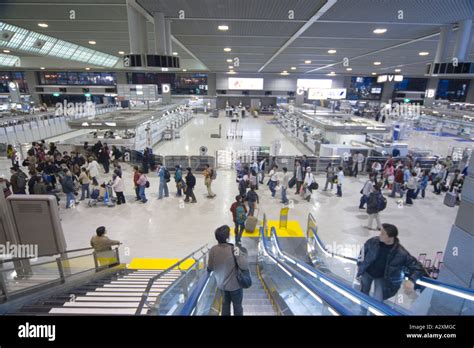
Still, Narita’s size can be its only real drawback. The airport’s expansive layout and intricate terminal design may feel overwhelming at first glance. Yet, impeccable signage, multilingual support, and highly attentive staff ensure that even first-time visitors can navigate it successfully.
8. Amsterdam Schiphol Airport (AMS): One Terminal, Infinite Simplicity
Amsterdam Schiphol flips the traditional airport model on its head. Instead of multiple terminals, it operates as a single-terminal mega-structure, where all 223 gates sit under one roof.
This unified design transforms the transit experience. Passengers don’t need to worry about terminal transfers or shuttle logistics—everything is accessible on foot. Schiphol Plaza, located at the heart of the airport, acts as a central anchor connecting departure halls and transport links.
The distances can be long, but the airport compensates with moving walkways, intuitive signage, and consistent English-language communication. The result is an airport that feels less like a maze and more like a well-organized city under glass.
7. Helsinki-Vantaa Airport (HEL): Compact, Calm, and Exceptionally Clear
If Schiphol represents scale done right, Helsinki-Vantaa Airport represents compact perfection. With around 50 gates housed in a single terminal, it offers one of the most manageable transit experiences in Europe.
The layout is refreshingly straightforward. Clear sightlines, minimal congestion, and short walking distances create an environment where passengers rarely feel rushed or disoriented. Multilingual signage—available in up to seven languages—ensures accessibility for global travelers.
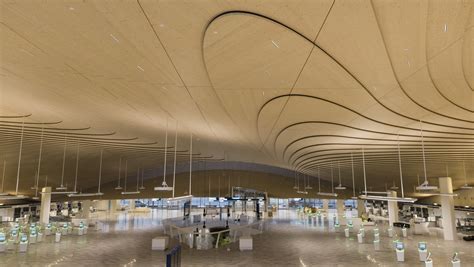
What truly sets Helsinki apart is its passenger tracking system, which helps staff anticipate and assist travelers with tight connections. This subtle but powerful feature turns what could be a stressful transfer into a surprisingly relaxed experience.
6. Hong Kong International Airport (HKG): Scale Without Chaos
Few airports balance size and usability as effectively as Hong Kong International Airport. As one of the largest passenger terminals in the world, it could easily become overwhelming—but thoughtful design keeps everything under control.
All departures currently operate from Terminal 1, simplifying navigation despite the airport’s enormous footprint. Key features like the SkyBridge and automated people movers connect distant concourses efficiently, reducing transit times.
The airport’s clean aesthetic, combined with clear English signage and logical zoning, ensures that passengers always know where they are and where they’re going. Even during peak hours, HKG maintains a sense of order that many smaller airports struggle to achieve.
5. Dubai International Airport (DXB): The Powerhouse of Global Connections
Dubai International Airport is synonymous with scale and ambition. As the primary hub for Emirates, it processes tens of millions of connecting passengers annually—and does so with remarkable efficiency.
Terminal 3, dedicated largely to Emirates operations, acts as the heart of the transit experience. Its design channels passengers through clearly defined concourses, minimizing confusion despite the sheer size of the facility.
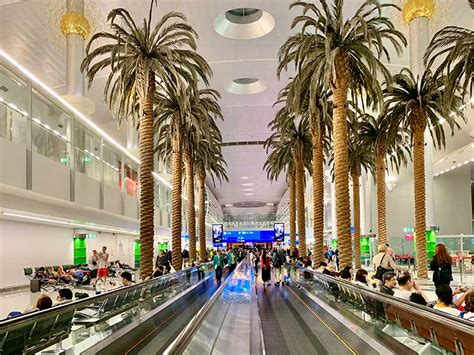
Yes, distances can be significant. But the airport offsets this with moving walkways, underground connectors, and an abundance of amenities that make long walks feel less like a burden. The result is a hub that turns high volume into a surprisingly smooth and even enjoyable journey.
4. Seoul Incheon International Airport (ICN): Speed Meets Experience
Efficiency reaches new heights at Seoul Incheon International Airport, where connections as short as 45 minutes are not just possible—they’re routine.
The airport’s two-terminal system is designed with clarity in mind. Transfer routes are clearly marked, and international passengers typically avoid immigration procedures, dramatically reducing processing time.
What elevates Incheon further is its attention to detail. Information desks are everywhere, signage is multilingual and highly visible, and staff are trained to proactively assist travelers. The airport pairs this operational excellence with unique amenities—from cultural exhibits to relaxation zones—creating a transit experience that feels both fast and enriching.
3. Abu Dhabi Zayed International Airport (AUH): Simplicity Reimagined
Abu Dhabi’s new Terminal A represents a bold rethinking of airport design. By consolidating operations into a single, cohesive structure, the airport eliminates the fragmentation that plagues many global hubs.
Four concourses radiate from a central headhouse, making navigation intuitive even for first-time visitors. The layout encourages natural movement, supported by clear signage, moving walkways, and strategically placed service points.
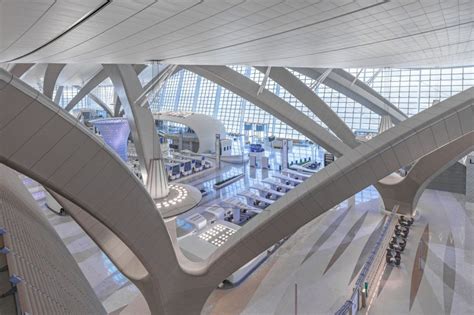
Compared to nearby Dubai, Abu Dhabi feels more manageable. It delivers the same level of global connectivity but in a more compact, less intimidating environment, making it a favorite for travelers who value simplicity.
2. Doha Hamad International Airport (DOH): Effortless Navigation with Elevated Comfort
Doha’s Hamad International Airport proves that luxury and efficiency can coexist seamlessly. Its single-terminal design ensures that passengers never need to worry about complex transfers, while internal trains connect distant concourses in minutes.
Navigation is straightforward, thanks to prominent English signage and well-trained staff. Even during busy periods, the airport maintains a sense of calm that’s rare in major hubs.
Beyond functionality, Hamad elevates the transit experience with standout features: an indoor tropical garden, world-class lounges, and curated art installations. These elements transform waiting time into something genuinely enjoyable, reinforcing its reputation as one of the world’s most passenger-friendly airports.
1. Singapore Changi Airport (SIN): The Gold Standard of Global Transit
At the very top sits Singapore Changi Airport, a name that has become synonymous with excellence. Every aspect of the airport is designed with the passenger in mind, from intuitive layouts and seamless inter-terminal connections to an unmatched range of amenities.
Three terminals are physically connected, with a complimentary SkyTrain linking all four. Navigation is effortless, supported by clear signage and attentive staff who ensure that even tight connections feel manageable.

Where Changi truly shines is in its ability to transform transit into an experience. The Jewel complex, with its iconic indoor waterfall, sits alongside movie theaters, gardens, and extensive retail options. It’s an airport where a layover doesn’t feel like lost time—it feels like a destination in its own right.
The result is a hub that excels not just in efficiency but in creating a sense of ease, wonder, and control, making it the undisputed leader for transit passengers in 2026.
What Defines an Easy Airport Transit Experience in 2026
Across all these airports, a clear pattern emerges. The easiest transit hubs are not necessarily the smallest or the most luxurious—they are the ones that respect the passenger’s time and attention.
They minimize unnecessary decisions, reduce physical strain, and provide constant reassurance through signage and staff presence. Whether through single-terminal designs, compact layouts, or intelligent transport systems, these airports remove friction at every stage of the journey.
In an era where global travel continues to grow more complex, these hubs stand out by doing something deceptively simple: making the journey feel effortless.