
Navigating Europe’s busiest airspaces in 2025 doesn’t have to be a logistical nightmare. As international travel resumes full throttle, understanding which hubs offer the smoothest transit experience can save time, reduce stress, and even improve travel efficiency. We examine the 10 easiest European airports to connect through, ranked based on terminal layout, signage clarity, airport size, modern design, and overall transfer logic. These are the continental champions of stress-free layovers.
The Hub-and-Spoke Model That Powers European Air Travel
Europe’s aviation ecosystem relies heavily on the hub-and-spoke model, where travelers from smaller cities route through major airport hubs to reach international destinations. National carriers such as Lufthansa, Turkish Airlines, Finnair, and others concentrate operations through a single dominant hub, making efficient transits essential. Selecting the right airport can drastically influence your travel experience.
Frankfurt Airport, Germany – Lufthansa’s Powerhouse Made Manageable
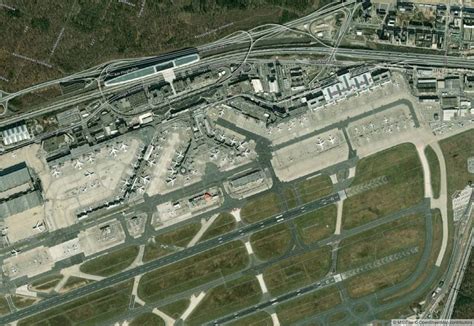
Though Frankfurt Airport is vast and complex, it edges ahead of other major hubs like Paris-CDG or Heathrow due to one vital advantage: consolidation. Lufthansa and most Star Alliance members operate out of Terminal 1, which houses concourses 1A, 1B, 1C, and 1Z. Terminal 2, with concourses 2D and 2E, serves other carriers.
The layout of Terminal 1 can be initially daunting, but clear signage, combined with minimal terminal changes for Star Alliance passengers, makes it more navigable. Despite long queues during peak periods, transfers remain smooth for intra-terminal connections. For those flying Lufthansa or its partners, Frankfurt is a strategic gateway with fewer headaches than comparable mega hubs.
Istanbul Airport, Turkey – A High-Capacity, High-Efficiency Superhub
Since its full operational launch in 2019, Istanbul Airport has revolutionized air travel in the region. Replacing Atatürk Airport, the new hub was built to match the scale and ambition of its home carrier, Turkish Airlines. The terminal is a single, massive structure divided into concourses A, B, D, F, and G, with gates C and E in the central terminal. Domestic traffic is confined to Concourse G, while the remainder handle international operations.
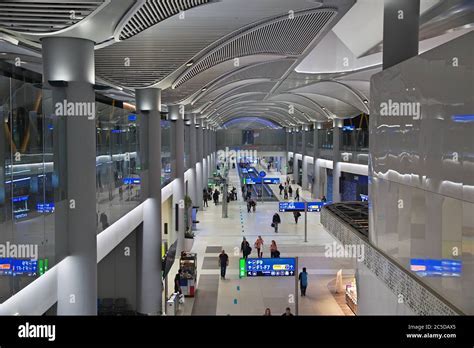
Thanks to its modern design, intuitive signage, and expansive layout, passengers benefit from streamlined transits. However, be warned: the immense size and crowds can be overwhelming for those unfamiliar with its sheer scale. Nevertheless, its one-terminal model prevents the chaos of inter-terminal transfers.
Geneva Airport, Switzerland – Compact, But Intricately Designed
As the secondary hub of SWISS, Geneva Airport punches above its weight. Most international operations funnel through Terminal 1, with seasonal Terminal 2 rarely in use. The majority of connections involve Schengen destinations, reducing passport control requirements and easing passenger flow.
Terminal 1’s non-linear layout includes piers A, C, F, B, and D. While small in footprint, the terminal’s satellite piers and underground walkways can challenge first-time visitors. Bus gates further complicate the process. Yet, the airport remains efficiently signposted, and for experienced travelers, its compactness and reduced congestion can be an asset.
Dublin Airport, Ireland – Compact Design With a Transatlantic Focus
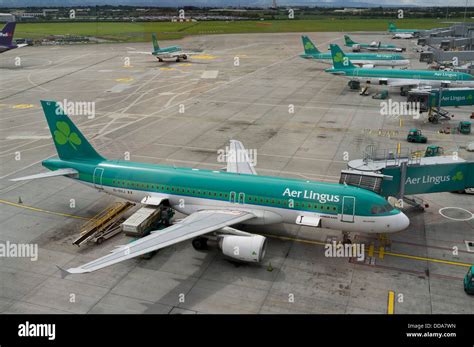
Aer Lingus’s largest hub, Dublin Airport also serves as a vital transatlantic gateway, with IAG partners, U.S. airlines, and Emirates operating from Terminal 2. This modern terminal, opened in 2010, features a sleek central building and connected Pier E, designed to streamline connections.
Walking distances can stretch slightly, particularly to remote gates. Additionally, five bus gates in a separate building can introduce minor delays. But the airport’s intuitive design, clear signage, and focused airline operations make Dublin one of the more navigable mid-sized hubs in Western Europe.
Munich Airport, Germany – Lufthansa’s Streamlined Alternative
Munich Airport acts as Lufthansa’s complementary hub to Frankfurt, offering a more refined and modern experience. Terminal 1 serves SkyTeam, oneworld, and unaffiliated carriers, while Terminal 2 is home to Lufthansa and Star Alliance partners. Its linear gate configuration ensures smooth passenger flow in both the main and satellite buildings.
The two buildings of Terminal 2 are connected via an underground people mover, ensuring connectivity despite distance. While bus gates remain a drawback, the intuitive layout, modern architecture, and efficient design give Munich the edge over its larger German sibling.
Vienna International Airport, Austria – A Hidden Gem of Simplicity
Serving as the home base of Austrian Airlines, Vienna International Airport is one of Europe’s most underrated transit hubs. Though it has two terminals, all Star Alliance operations run exclusively through Terminal 3, a newer, single-structure building that avoids the hassle of inter-terminal transfers.
Terminal 3 is cleanly organized with two curved concourses and one straight pier. It features a high number of bus gates, but low passenger volumes, short walking distances, and ample signage make Vienna exceptionally easy to navigate. Its lack of congestion sets it apart from other central European hubs.
Copenhagen Airport, Denmark – Scandinavia’s Efficient Gateway
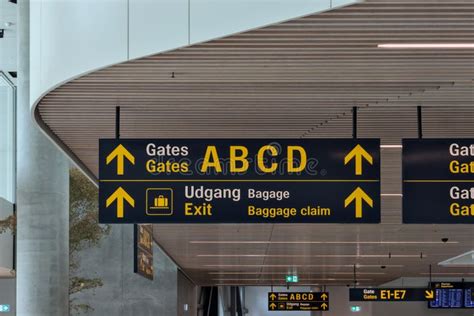
Copenhagen Airport, SAS’s main base, blends functionality with design. Terminals 2 and 3 operate as a single connected structure, serving six piers (A–F). Schengen traffic flows through Piers A, B, and D, while non-Schengen and low-cost carriers use Piers C, E, and F.
While longer walks are necessary to reach far piers, the airport compensates with clear directionality, helpful signage, and logical transitions. Copenhagen remains accessible for first-time passengers, and its compact, integrated layout minimizes confusion.
Zurich Airport, Switzerland – The Jewel of Swiss Precision
Zurich Airport serves as the primary hub for SWISS and offers an exceptionally well-organized structure. With three airside areas—A, B, and E—connected via the central Airport Centre, passengers benefit from fluid movement between gates. Terminal E, located across Runway 10/28, is accessible via an underground people mover.
While transfers involving Terminal E require more time, the centralized organization, short walking times, and pristine layout of Terminals A and B make this hub a model of Swiss efficiency. Language support, cleanliness, and signage quality elevate the experience.
Amsterdam Schiphol Airport, Netherlands – One Giant Terminal, Infinite Connections
Among Europe’s mega-hubs, Amsterdam Schiphol excels by offering all operations under a single roof. With 223 gates across three departure halls and seven piers, the airport has no terminal changes, making it a dream for connecting passengers.
Passengers can move freely between all areas, with Pier M being the only restriction due to low-cost operations. The Schiphol Plaza, which links the terminal with a train station and shopping zone, adds convenience. Despite its scale, moving walkways, intuitive signage, and English-language announcements make Schiphol stand out as the best large European hub for connections.
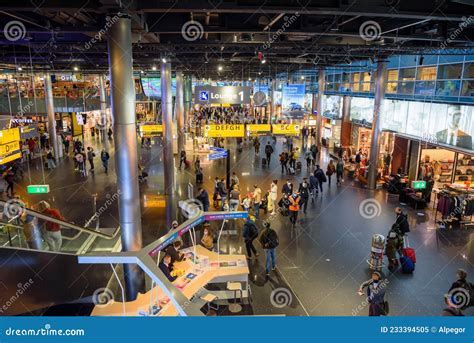
Helsinki-Vantaa Airport, Finland – Europe’s Gold Standard for Connections
Taking the crown is Helsinki-Vantaa Airport, the primary hub of Finnair, which boasts the shortest minimum connecting times among major European airports: 35 minutes for Schengen, 40 for non-Schengen, and 45 for mixed transfers. The terminal follows a straightforward rectangular C-shape, with most gates using jetbridges.
Helsinki features a high-tech passenger tracking system and signage in seven languages, making it suitable for Finnair’s heavy Asia-bound traffic. Dining and shopping options abound, and walking distances remain short. It’s the epitome of functional design and passenger-centricity.
Conclusion: What Makes a Transit Airport Truly Easy?
Effortless transit isn’t about size or passenger volume—it’s about terminal logic, clear wayfinding, and operational consolidation. The best airports in this list succeed because they prioritize connectivity without overcomplicating layout or process. For travelers eyeing smooth European connections in 2025, choosing the right airport can make all the difference.