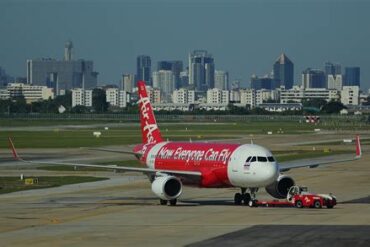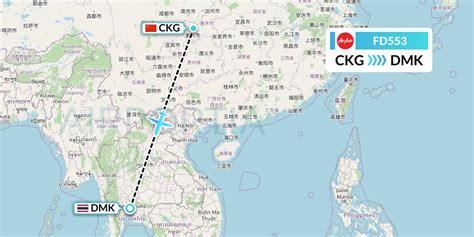
On July 17, 2025, Thai AirAsia flight FD552 from Bangkok to Chongqing faced a terrifying ordeal as it encountered a violent hailstorm while descending into Chongqing Jiangbei International Airport. The storm struck with such force that the nose cone and cockpit windshield of the Airbus A320 were severely damaged. Despite the chaos, the aircraft landed safely, underscoring the professionalism and resilience of the flight crew amid extreme meteorological adversity.
Relentless Weather Assaults Southeast Asia
The hailstorm that battered flight FD552 was only a part of a larger pattern of relentless storms affecting both Thailand and China during mid-July. A surge in monsoon intensity and a breakdown in atmospheric stability over the Indo-China region triggered back-to-back weather alerts, flight delays, and even flash floods across multiple cities. As aviation regulators scrambled to issue warnings and update safety protocols, Thai AirAsia’s chilling encounter quickly became symbolic of the escalating weather volatility disrupting regional airspace.
The Descent Into Danger: Seconds That Shook
The Airbus A320, tail number HS-BBA, departed Don Mueang International Airport under calm skies. For most of the flight, conditions were stable and uneventful. But as the plane neared Chongqing, atmospheric readings began to shift ominously. A developing cumulonimbus cloud system, coupled with sudden wind shear and thermodynamic uplift, unleashed a cascade of ice particles — hailstones the size of golf balls — directly into the flight path.
Passengers onboard described the scene in harrowing detail. As the aircraft began its descent, violent turbulence shook the fuselage. Sudden bangs echoed across the cabin as the hailstones pummeled the nose of the plane, leaving visible dents and cracks in the forward structures. Lights flickered. Tray tables rattled. Several passengers gripped armrests and prayed. Others recorded snippets of the ordeal on their phones, capturing flashes of lightning illuminating the fuselage.
Critical Damage to Nose Cone and Cockpit Windshield
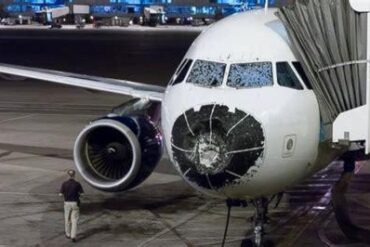
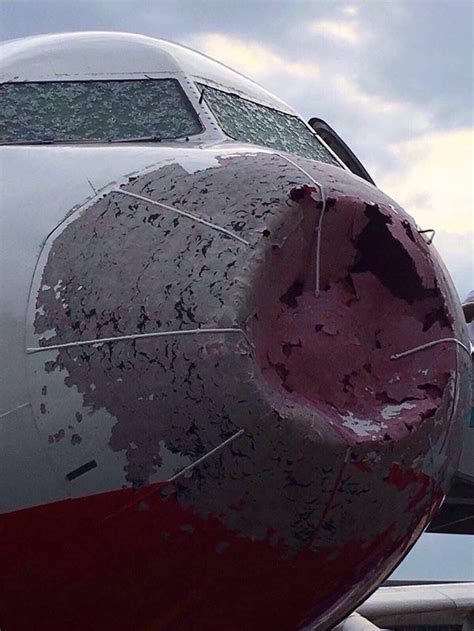
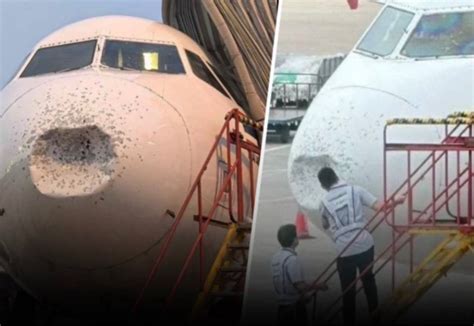
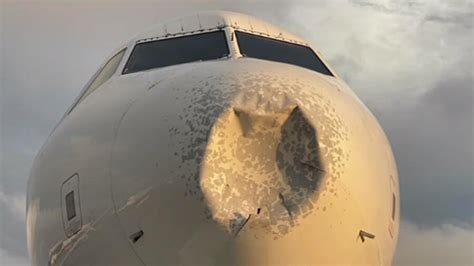
When the Airbus touched down at Chongqing Jiangbei International Airport, the extent of the damage stunned aviation engineers. The radome — the nose cone that houses vital weather radar equipment — was shattered. The cockpit windshield had taken multiple hits, with surface cracks forming a web-like pattern across the reinforced glass. Though structurally intact, both components were deemed unairworthy, and the aircraft was immediately grounded.
Thai AirAsia confirmed that no injuries occurred among the 147 passengers and crew. Quick action by the cockpit crew, following established storm navigation protocols, played a key role in ensuring a safe landing despite compromised visibility and intense pressure fluctuation in the final approach.
Ground Response and Delays
Within hours of landing, ground crews and maintenance specialists conducted a full inspection of the damaged aircraft. With the A320 no longer operable, the return flight FD553 back to Bangkok was postponed indefinitely. Thai AirAsia promptly arranged alternative accommodations for stranded passengers, including hotel stays, meals, and ground transport.
By the early hours of July 18, a replacement aircraft was dispatched, and the affected passengers were flown back to Bangkok. Although the delay extended several hours, Thai AirAsia’s rapid mobilization of resources ensured passengers reached home safely. In a public statement, the airline acknowledged the severity of the incident and reaffirmed its commitment to operational safety and passenger welfare.
Passenger Reactions: Shock, Gratitude, and Praise
Many passengers remained visibly shaken by the experience, recalling the noise of the hailstorm and the sudden plunges of turbulence. Still, the professionalism of the cabin crew was widely praised. Multiple passengers noted how flight attendants maintained calm, reassured passengers, and ensured safety protocols were followed even as the aircraft rocked in mid-air.
One passenger, a Thai national returning to Chongqing for work, remarked, “It felt like we were flying through a war zone. The hail was so loud it drowned out the engine noise. But the crew stayed calm. That gave us courage.”
A Wake-Up Call for Aviation in an Era of Climatic Extremes
This dramatic mid-air incident throws a glaring spotlight on the growing risks of flying amid climate change-induced weather volatility. Meteorologists note that hailstorm severity and frequency have increased in Asia’s temperate regions due to rising heat levels and changing jet stream behaviors. Pilots and airline operators are being urged to adopt advanced forecasting models and revisit diversion strategies when confronted with unstable cloud masses.

For airlines, this event serves as a pivotal reminder that investments in aircraft weather radars, real-time weather monitoring, and enhanced pilot training are no longer optional — they are necessities. Thai AirAsia’s incident was resolved without injury or loss of life, but the potential for future disasters looms if responses do not scale with weather threats.
Thai AirAsia’s Official Response
In its official communication, Thai AirAsia thanked passengers for their patience and commended the flight crew for their composure and technical skill. The airline stated:
“All standard operating and emergency procedures were followed precisely. The safety of our passengers and crew is our foremost priority.”
AirAsia emphasized that structural damage to the aircraft was fully documented and submitted to the Thai Civil Aviation Authority and Chinese aviation regulators for investigation. The aircraft remains under inspection in Chongqing while assessments on the radome and windshield replacement proceed.
Broader Regional Impacts: Not Just One Flight
While the FD552 incident dominated headlines, other parts of China and Thailand experienced widespread storm disruption during the same period. Northeastern Thailand, particularly Udon Thani and Khon Kaen, suffered from flash flooding and power outages. In China’s Sichuan and Yunnan provinces, lightning storms caused rail delays and minor injuries in isolated communities.
Authorities in both countries have since issued joint meteorological bulletins, urging caution for travelers and recommending delayed or diverted air routes when active thunderstorm cells are identified. Air traffic controllers in Chongqing have implemented revised storm avoidance zones following FD552’s descent path analysis.
Lessons Learned and the Road Ahead
The near-tragedy of Thai AirAsia flight FD552 is not just a story of survival, but a call to action. The aviation sector must embrace weather resilience as a strategic priority, leveraging satellite data, predictive AI, and real-time radar to outmaneuver storms before they become threats. Emergency planning, too, must evolve — not just in the cockpit but across airport logistics, passenger services, and fleet coordination.
In the words of an aviation safety analyst based in Kuala Lumpur:
“FD552 was lucky. Next time, with a few minutes’ difference in trajectory or storm strength, it could be a catastrophe. The industry must act now.”
Conclusion: Strength in the Storm
In a week defined by meteorological mayhem across Southeast Asia, the story of Thai AirAsia FD552 stands out not only for its tension and drama but also for its resolution through skill and swift crisis management. As both Thailand and China continue to grapple with the effects of climate-driven storms, airlines must adapt or risk catastrophe.
The flight crew’s courage, the airline’s responsiveness, and the passengers’ resilience transformed a near-disaster into a tale of preparedness and professionalism. While weather chaos may remain unpredictable, how airlines respond — with speed, transparency, and care — can spell the difference between peril and protection.
Air travel remains one of the safest modes of transport. But in the age of climate uncertainty, weather will be the next great frontier of aviation safety. Thai AirAsia’s response offers a blueprint — a high standard the industry must now uphold.