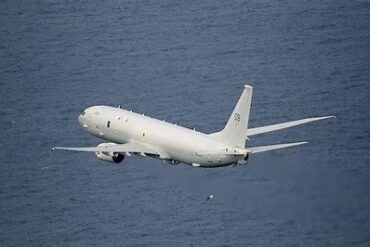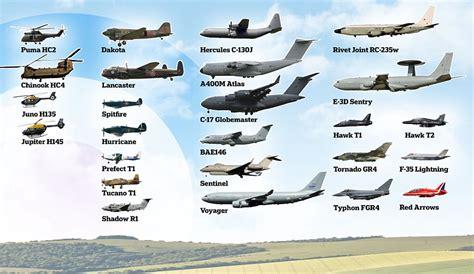
The Royal Air Force (RAF) commands a diverse and formidable fleet of aircraft, designed to fulfill roles ranging from tactical airlift and air-to-air refueling to intelligence gathering and strategic reconnaissance. Among the 556 fixed-wing aircraft in service, a few stand out not only for their mission-critical versatility but also for their sheer size. In this article, we explore the five largest aircraft in the RAF fleet, ranked by wingspan, and dive into the engineering prowess and strategic value each brings to Britain’s aerial defense capability.
Voyager KC2/KC3 – The RAF’s Largest Aircraft by Wingspan
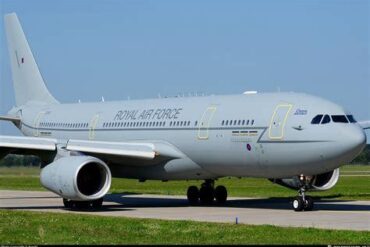
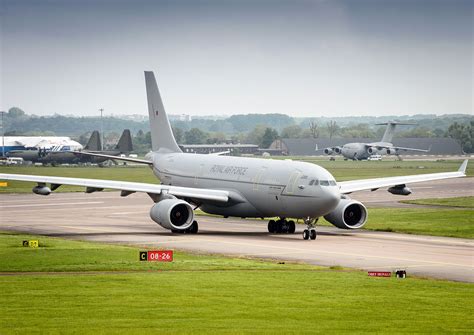
At an impressive 197 ft 10 in (60.3 m) wingspan, the Voyager is the largest aircraft in the RAF’s operational fleet. This variant of the Airbus A330 Multi-Role Tanker Transport (MRTT) serves a dual purpose—aerial refueling and strategic troop or freight transport.
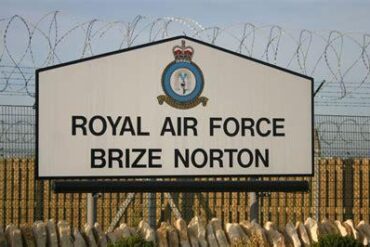
Based at RAF Brize Norton, the Voyager is flown by 10 Squadron and 101 Squadron. Two variants exist: the KC.Mk 2, equipped with underwing pods for refueling fast jets, and the KC.Mk 3, which includes an additional centerline hose capable of servicing larger aircraft.
Unlike conventional tankers, the Voyager draws from its own fuel supply without requiring separate refueling tanks. This innovation allows the main cabin to remain accessible for other functions, accommodating up to 291 passengers or a comparable cargo load.
Technical Specifications:
- Engines: Two Rolls-Royce Trent 772B turbofans (71,100 lbf each)
- Cruise Speed: Mach 0.86
- Range: 8,000 nautical miles (14,816 km)
- Combat Radius: 1,800 km with 50 tonnes of fuel for 4 hours
- Fuel Capacity: 111,000 kg (245,000 lb)
Beyond combat support, Voyager is also configured for aeromedical evacuation, supporting 40 stretchers and three critical care stations. With a defensive aids suite to resist hostile threats, Voyager has proven invaluable in NATO operations and humanitarian missions alike.
C-17A Globemaster III – The Heavyweight Workhorse
Second on the list with a wingspan of 169 ft 10 in (51.75 m), the Boeing C-17A Globemaster III is the RAF’s primary strategic airlift platform. Acquired after the retirement of the Short Belfast and a decade of reliance on commercial charters, the Globemaster was leased and later procured outright by the Ministry of Defence (MoD).
Operated by 99 Squadron, the C-17A can land in austere conditions—short, narrow, or damaged runways—with astonishing agility for a jet of its scale. With its rear-loading ramp and high wing design, the aircraft efficiently handles cargo ranging from combat vehicles and helicopters to disaster relief supplies.
Deployment Milestones:
The Globemaster has flown countless high-risk missions:
- Afghanistan & Iraq during Operation Enduring Freedom and Operation Iraqi Freedom
- Humanitarian aid after the 2010 Haiti earthquake and the 2023 Turkey-Syria earthquake
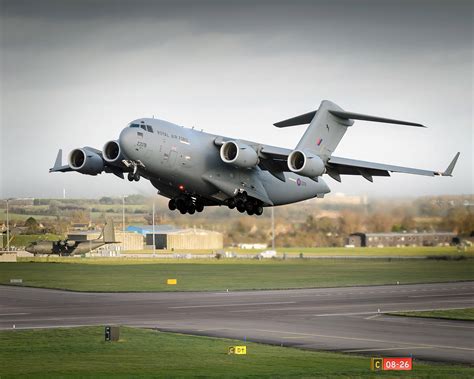
As of 2021, 99 Squadron had logged over 150,000 flight hours, ferrying everything from troops to medical teams, and even submarines and celebrities. The C-17 remains integral to the RAF’s global reach and rapid response capabilities.
Atlas C.1 (A400M) – Bridging Tactical and Strategic Lift
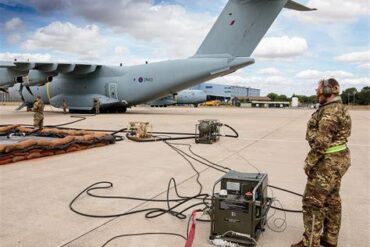
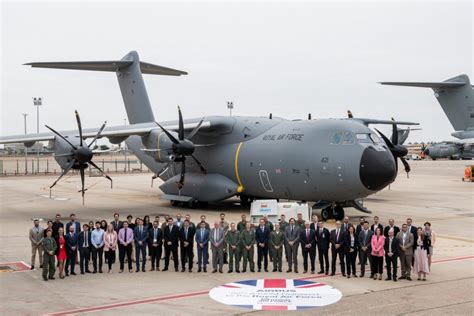
The Atlas C.1, based on the Airbus A400M, brings a wingspan of 139 ft 1¼ in (42.40 m) and fills the gap between the Hercules and the Globemaster. Entering RAF service in 2014, it offers unparalleled flexibility with both tactical and strategic lift roles.
Its four TP400-D6 turboprop engines provide the thrust needed to lift up to 37 tonnes of cargo or 116 troops, delivering them to established runways or unprepared fields with equal efficiency. Atlas can also deploy air-dropped payloads, including vehicles or personnel, using its rear ramp or side paratroop doors.
Performance Stats:
- Top Speed: 400 knots (741 km/h)
- Range: 4,100 nautical miles (7,593 km)
- Service Ceiling: 40,000 ft
The A400M has already seen active deployment for disaster relief and combat logistics, carrying payloads where traditional jet engines would be impractical. With high-tech navigation and defensive countermeasures, Atlas stands as one of the most versatile airlifters globally.
RC-135W Rivet Joint (Airseeker) – Electronic Surveillance Specialist
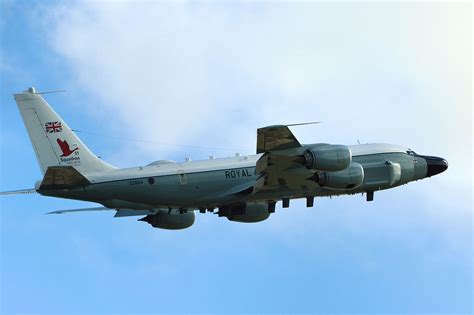
The RC-135W Rivet Joint, branded as Airseeker in RAF terminology, stretches a wingspan of 130 ft 10 in (39.88 m). Although not a traditional combat platform, its signal intelligence (SIGINT) and electronic warfare capabilities are indispensable in modern, data-centric conflict theaters.
Modified from the classic C-135 Stratolifter, this platform is packed with sensor arrays that detect, record, and analyze enemy signals across the electromagnetic spectrum. This real-time data is relayed to command teams, boosting situational awareness and aiding precision targeting.
Operational Highlights:
Airseeker is operated out of RAF Waddington by No. 51 Squadron and has played a crucial role in Operation Shader—the UK’s anti-ISIS operation initiated in 2014. The aircraft’s initial operational use occurred over the Middle East, sharing intelligence with U.S. counterparts while based at RAF Al Udeid in Qatar.
Despite the basic airframe’s vintage—dating back to 1961—the electronics onboard are constantly upgraded by L3Harris, Lockheed, and others. This ensures the Airseeker remains on par with evolving threats, making it one of the RAF’s most sophisticated reconnaissance assets.
Shadow R.Mk1 – Tactical Intelligence with Strategic Value
Though markedly smaller, with a wingspan of 57 ft 11 in (17.4 m), the Beechcraft Shadow R.Mk1 represents a vital part of the RAF’s ISTAR (Intelligence, Surveillance, Target Acquisition, and Reconnaissance) fleet.
The Shadow is a militarized variant of the King Air 350 CER, modified extensively to include electro-optical sensors, radar, and satellite communication systems. This turboprop platform is used primarily by the 5 RAF Police & Security Squadron, delivering high-resolution surveillance in real-time.
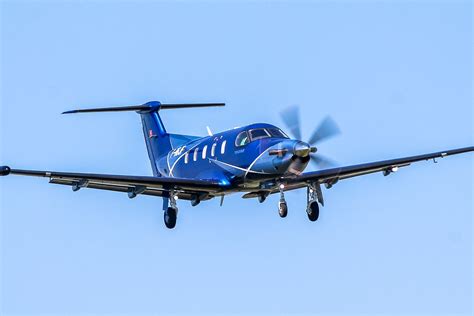
Initially procured under an Urgent Operational Requirement, the Shadow platform has since been transitioned into the core Equipment Programme, with plans to grow the fleet from six to eight aircraft under the Shadow Mk2 Upgrade Programme. New upgrades include enhanced sensors and improved flight systems, reinforcing the aircraft’s value in both counter-terrorism and border protection.
Its small size and low radar signature make it ideally suited for covert missions and deployments to remote airfields, particularly in regions like Africa and the Middle East, where mobility and discretion are key.
Conclusion: Size Meets Strategy in the RAF’s Largest Aircraft
Each of these five aircraft serves a distinct strategic function within the Royal Air Force. From the Voyager’s globe-spanning refueling operations to the Shadow R1’s pinpoint intelligence gathering, their diverse capabilities underscore the importance of platform diversity in modern air warfare. While wingspan may quantify their size, it is their mission impact, deployment versatility, and operational efficiency that define their real magnitude.
As technological demands evolve and global threats shift, the RAF continues to invest in both legacy aircraft like the C-17 and next-generation systems like the E-7 Wedgetail AEW1, ensuring Britain’s skies remain protected and its forces mobile, alert, and connected.