Sustainable Aviation Fuel (SAF) has emerged as the aviation industry’s most promising tool in the fight against climate change. As global air travel continues to grow, its environmental footprint has come under increasing scrutiny, accounting for approximately 2–3% of global CO₂ emissions. While many sectors are transitioning to renewable energy, aviation remains one of the hardest to decarbonise. Airbus, as a global aerospace leader, is leading the charge toward a sustainable future through SAF innovation, collaboration, and advocacy.
A Century of Progress: From Kerosene to Clean Skies
Since the first powered flight in 1903, aviation has been inseparable from progress. For decades, the industry has relied on kerosene-based jet fuel, praised for its high energy density and reliability. But the environmental cost of extracting and burning fossil fuels is steep. These fuels release carbon that has been locked underground for millennia, significantly contributing to global warming.
Unlike other transport sectors, aviation’s unique energy demands—especially for long-haul travel—make a direct shift to electric propulsion currently unfeasible. Battery-powered aircraft, while feasible for short distances, cannot yet support the power and weight requirements of intercontinental travel.
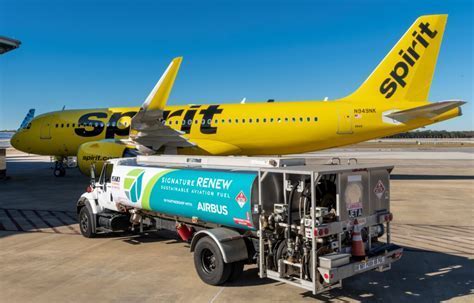
This reality has made the push for liquid fuel alternatives more urgent, positioning SAF as a critical solution in the climate equation. SAF isn’t just about using different fuel—it’s about revolutionising the entire lifecycle of aviation fuel, from feedstock to exhaust.
What Is Sustainable Aviation Fuel?
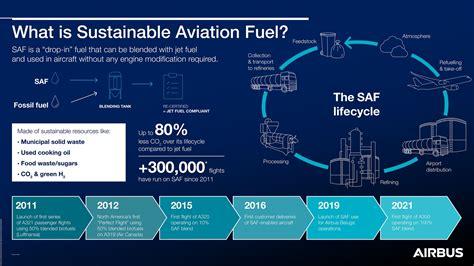
Sustainable Aviation Fuel (SAF) refers to non-fossil-derived fuels that are compatible with existing aircraft and infrastructure. SAF can be blended with traditional kerosene or used in higher concentrations, depending on certification. Most SAF today comes from biomass sources—such as used cooking oil, agricultural residues, or municipal waste.
According to Julien Manhes, Head of SAF and CO₂ Removal at Airbus, “In order to make SAF, it all starts with a CO₂ absorption.” Plants or waste materials absorb CO₂ during their lifecycle, and when processed into SAF and burned, that CO₂ is released again. This closed-loop cycle dramatically reduces net greenhouse gas emissions, with SAF offering up to 80% lifecycle CO₂ savings compared to fossil jet fuel.
What sets SAF apart is this carbon circularity, unlike fossil fuels which introduce ancient carbon into today’s atmosphere.
Airbus: Engineering the SAF Ecosystem
Airbus has embraced its role as a catalyst in the SAF ecosystem, not just as a manufacturer, but as a mobiliser of supply chains, policy frameworks, and public-private partnerships. Airbus has built extensive collaborations with producers like Neste and TotalEnergies, as well as with start-ups innovating new feedstock streams.
Julien notes, “We provide financing so that SAF producers can start their production facility. For smaller producers, it’s hard to find affordable capital. We fill that gap.”
Airbus has invested in making its entire fleet SAF-compatible, running extensive tests to certify that diverse SAF formulations meet stringent safety and performance requirements for commercial, military, and rotary-wing aircraft.
Barriers to a SAF Future
Despite the promise, SAF adoption faces formidable challenges.
Technical Challenges
While SAF is a “drop-in” fuel, not all feedstocks and processes are equal. The conversion technologies and supply logistics for newer feedstocks—like municipal waste, algae, or carbon-captured fuels—are still in early stages.
Economic Viability
Cost is the single greatest obstacle. SAF remains two to three times more expensive than conventional kerosene. This price gap makes large-scale deployment difficult without regulatory or financial support.
Policy Complexity
Policy plays a decisive role. As Julien explains, “A policy will enable a new industry to emerge.” However, inconsistent definitions of what qualifies as ‘sustainable’ from region to region—especially between the EU and the US—can slow adoption. Harmonisation is key to scaling SAF globally.
Market Imbalance
The ‘chicken-and-egg’ dilemma remains: airlines won’t invest in SAF without affordable supply, but producers won’t build facilities without demand guarantees. Airbus supports blend mandates—policies that require fuel suppliers to include SAF in their mixes—to stimulate demand.
The Fourth Revolution: Airbus’s Decarbonisation Vision
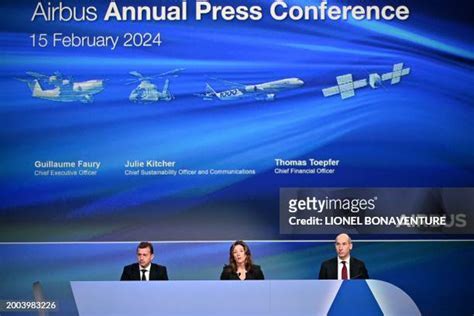
Airbus CEO Guillaume Faury frames SAF as part of aviation’s fourth revolution—after flight safety, commercial accessibility, and mass affordability. This revolution is about making flight sustainable.
Julie Kitcher, Chief Sustainability Officer at Airbus, adds, “Climate risk is a humanitarian risk, but it’s also a business and financial risk. We don’t have all the answers, but we’re committed.”
This commitment manifests in Airbus’s multi-pronged strategy: accelerating SAF adoption, advancing hydrogen-powered aircraft, and redesigning ultra-efficient airframes. But in the near-term, SAF is the linchpin.
Pioneering SAF Innovation
Airbus supports a broad innovation landscape, including startups developing:
- SAF from alcohol-to-jet (ATJ) processes
- Sewage and industrial waste feedstocks
- Carbon-captured synthetic fuels
These technologies expand SAF’s scalability and geographical reach. Airbus also sponsors academic research into novel feedstocks like desert crops and microalgae, looking for low-impact, high-yield solutions.
Innovation also extends to customer-facing platforms. One of Airbus’s most significant recent innovations is the ‘book and claim’ mechanism, enabling SAF benefits without logistical constraints.
Book and Claim: Making SAF More Accessible
Under ‘book and claim’, passengers or companies can purchase the environmental attributes of SAF, even if the fuel isn’t physically used on their specific flight. This allows broader participation in decarbonisation while SAF infrastructure scales up.
“This system decouples the sustainability benefits from the physical location of the fuel use,” says Julien. “It’s a robust framework that enables early participation and financing.”
Consumer Impact and Corporate Leadership
Passengers are beginning to see their flight as more than a ticket—but as an opportunity to support sustainable aviation. Many airlines now offer the option to purchase SAF offsets during booking.
Corporate clients are leading the trend. When Airbus staff travel with Air France, for instance, the company purchases 100% SAF carbon reductions through certified contracts.
These sustainability certificates—auditable, transparent, and traceable—signal a new era of environmentally accountable air travel.
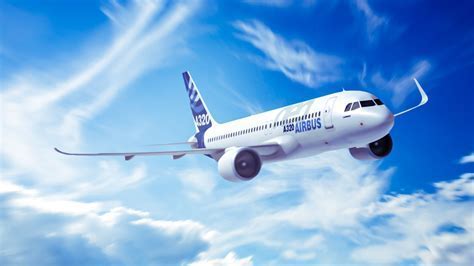
The Road Ahead: Regulation, Innovation, and Collective Will
Looking forward, Airbus calls for a balanced regulatory framework in Europe and the UK to avoid compromising competitiveness while still pushing for progress. The need for voluntary demand is equally critical—evidence that individuals and institutions are ready to act.
Julien stresses the importance of global engagement: “We want to see economies like India and China adopt SAF policies, which would send a strong signal to the rest of the world.”
SAF alone won’t solve aviation’s climate impact—but it remains the most practical, near-term tool for decarbonising long-haul flight. Its full potential will only be unlocked through collaboration, policy alignment, and financial innovation.
Conclusion: A Skyward Revolution
The shift to Sustainable Aviation Fuel is not just a technical change—it is a philosophical shift in how we power human mobility. Airbus, with its partners, is reshaping an industry by embedding sustainability at every level of its value chain.
This is a story of urgency, ingenuity, and shared ambition. As Julie Kitcher affirms, “We are pioneering sustainable aerospace for a safe and united world.”
In a world of rising climate risks, the skies are not the final frontier—they are the testing ground for our commitment to future generations. And with leaders like Airbus pushing the boundaries, the horizon has never looked more hopeful.