The Convair 990 Coronado was built around a seductive idea: if an airliner could fly faster than its rivals, airlines might be willing to accept fewer seats and higher operating costs. In the early 1960s, that proposition did not sound nearly as strange as it does today. The jet age was still young, and manufacturers were experimenting with radically different approaches to commercial aviation. Speed appeared to be one of the clearest measures of progress.
Convair pushed that philosophy further than Boeing or Douglas. Its Convair 880 had already established a reputation for speed, but American Airlines wanted something larger and more capable. The result was the Convair 990, an aircraft designed to cruise faster than the Boeing 707 and Douglas DC-8. Yet the aircraft’s most unusual feature was hidden beneath its wings: four General Electric CJ805-23B aft-fan turbofans, an engine design that placed its fan at the rear rather than the front.
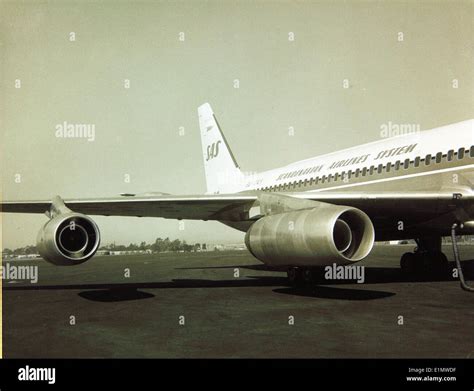
That engine was more than an engineering curiosity. It represented an attempt by General Electric to turn a military turbojet architecture into a commercially viable turbofan without completely redesigning the core. The concept was clever, relatively inexpensive and technically ambitious. It also arrived at exactly the wrong moment. Airlines were becoming increasingly interested in fuel consumption, passenger capacity and operating economics, while Convair had committed itself to speed.
The result was one of the most painful failures in early American commercial aviation. Only 37 Convair 990s were built, while roughly 900 Boeing 707s and 720s and more than 550 Douglas DC-8s entered service. Convair’s commercial ambitions effectively ended, while GE eventually transformed the lessons from the CJ805 program into one of the most successful commercial-engine businesses in aviation history.
The Convair 990 Was Designed To Be Faster
The story begins with the Convair 880, which first flew in 1959 and entered airline service with Delta Air Lines in 1960. Convair had designed the aircraft as a fast narrowbody jet, and its performance was impressive for the period. But the aircraft carried relatively few passengers and faced powerful competition from Boeing and Douglas.
American Airlines wanted a larger aircraft that could carry more passengers while improving efficiency. Convair responded with the Model 990. The aircraft first flew in 1961 and entered service in 1962, with a typical capacity of roughly 96 to 121 passengers. Its design speed was around Mach 0.91, an extraordinary target for a conventional subsonic passenger aircraft.
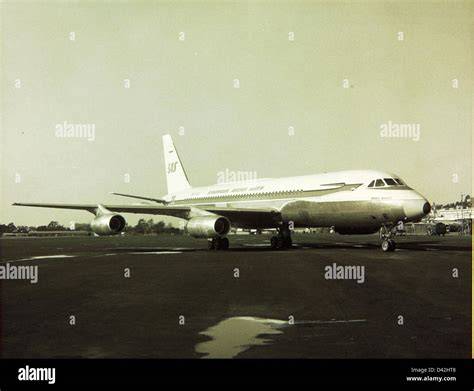
The 990 was intended to cruise approximately 25 to 35 mph faster than the Boeing 707 and Douglas DC-8. In an era when the possibility of routine supersonic passenger travel was beginning to look realistic, that extra speed had genuine commercial appeal.
But speed came at a price. The Convair 990 had fewer seats than its major competitors, and its economics were difficult to justify against aircraft that could spread operating costs across larger passenger loads. Convair was effectively betting that passengers and airlines would value speed enough to compensate for the disadvantages.
That calculation became increasingly difficult as the airline industry matured.
The 880 and 990 also arrived late. The Boeing 707 had already entered service in 1958, while the DC-8 followed in 1959. By the time Convair’s aircraft reached airlines, Boeing and Douglas had already established important customer relationships and operating experience. Airlines had little incentive to introduce another aircraft type unless it offered a compelling advantage.
The Convair 990 was supposed to provide exactly that advantage.
Instead, its headline performance was initially compromised by aerodynamics.
The Fastest Airliner Had A Serious Problem
During early testing, the Convair 990 generated more aerodynamic drag than expected. Rather than immediately achieving its planned cruise performance, the aircraft was initially limited to approximately Mach 0.84.
For an aircraft whose commercial identity was built around speed, this was a serious problem.
Convair eventually introduced aerodynamic improvements that allowed the 990 to approach its promised Mach 0.89 cruise speed, but the damage had already been done. Delays weakened customer confidence, and American Airlines significantly reduced its original order.
The aircraft could still be remarkably fast. But airlines were not buying a theoretical maximum speed. They were buying an expensive asset that needed to transport passengers profitably for thousands of hours each year.
This was where the engine became particularly important.
The Strange General Electric CJ805-23 Aft-Fan Turbofan
The GE CJ805-23 was one of the strangest commercial jet engines of the early jet age. Instead of placing a large fan at the front, General Electric installed a single-stage fan behind the turbojet core.
The idea sounds unusual because modern turbofans are dominated by enormous forward fans. Air enters the fan at the front, most of the airflow bypasses the engine core, and that bypass stream produces a large share of the thrust. The arrangement provides excellent propulsive efficiency at the speeds used by modern airliners.
The CJ805-23 approached the problem differently.
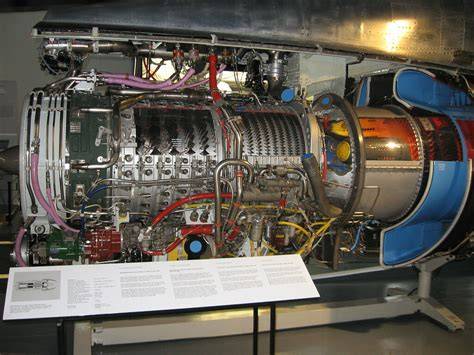
GE began with the J79, a military turbojet that powered aircraft including the F-104 Starfighter and F-4 Phantom II. The J79 used a single-spool compressor rotating at extremely high speed. That architecture worked well for a turbojet, but it presented a problem when engineers wanted to add a large conventional front fan.
A front fan requires appropriate rotational speeds and mechanical characteristics. Simply attaching a large fan to a high-speed single-spool core was not an elegant solution.
Pratt & Whitney took another path with the JT3D, using a two-spool architecture. This allowed the fan and core compressor to operate at more appropriate speeds.
GE instead sought a cheaper and more direct solution.
Rather than redesigning the entire engine around a conventional forward fan, it placed the fan at the rear.
How The Rear Fan Actually Worked
The CJ805-23 can be understood as a turbojet with an additional fan stage attached behind the core. GE’s engineers used the existing CJ805 architecture as the foundation and added the aft fan to increase the amount of air accelerated by the engine.
The approach had an obvious attraction. GE could reuse substantial portions of the existing J79-derived architecture, avoiding the expense and complexity of developing an entirely new two-spool commercial turbofan.
According to the historical description of the program, development of the aft-fan engine produced approximately a 40% increase in takeoff thrust, a 15% reduction in specific fuel consumption, and lower takeoff and landing noise compared with the turbojet configuration.
Those were meaningful improvements.
The engine therefore was not a failure because the underlying concept was absurd. Quite the opposite. It was an intelligent engineering response to a specific technological problem.
The problem was that the solution had limitations that became increasingly important as commercial aviation moved toward higher-efficiency turbofans.
The rear fan could generate vibration problems in certain operating regimes, while the mechanical arrangement created additional maintenance challenges. The engine also produced a noticeably smoky exhaust, an increasingly undesirable characteristic for a commercial aircraft.
Most importantly, its fuel economy could not match the rival Pratt & Whitney JT3D.
That difference mattered enormously.
The JT3D Changed The Commercial Engine Race
The Pratt & Whitney JT3D entered service in 1961 on the Boeing 707 and quickly demonstrated why the two-spool turbofan architecture was so attractive. Airlines wanted the lower fuel consumption of turbofans without giving up the reliability and operating characteristics required for intensive commercial service.
The JT3D gave Boeing a highly competitive powerplant for its 707, while Douglas also benefited from the broader availability of turbofan technology.
The Convair 990 did not have that flexibility.
Because Convair had designed the aircraft around the CJ805-23, switching to the JT3D was not a simple engine substitution. The aircraft’s nacelles, systems, performance assumptions and structural design were all tied to the GE engine.
This created a dangerous situation. A successful airliner normally benefits from having access to competitive engines, allowing airlines to choose between suppliers and manufacturers to adapt their products as technology evolves.
Convair had effectively locked itself into a specialized powerplant.
The aircraft’s greatest technological distinction therefore became one of its greatest commercial vulnerabilities.
Why The Convair 990 Failed
The Convair 990’s failure cannot be blamed on the aft-fan engine alone. The aircraft suffered from a much broader strategic problem.
Convair had optimized the airplane around speed rather than economics.
At first, that strategy seemed reasonable. The jet age was transforming travel, and passengers were fascinated by aircraft that could cross continents in dramatically less time. But airlines had to consider fuel bills, maintenance costs, seat capacity, aircraft utilization and revenue per flight.
The 990 offered fewer seats than its principal competitors while requiring a relatively sophisticated and specialized engine. Its speed advantage was real, but not large enough to overcome the economic disadvantages.
The numbers tell the story.
Only 65 Convair 880s were built, compared with approximately 900 Boeing 707 and 720 aircraft and more than 550 DC-8s. The 990 performed even worse, with only 37 aircraft produced.
Convair had expected the commercial market to reward its ambitious approach. Instead, airlines increasingly demonstrated that reliability and economics mattered more than squeezing another few miles per hour from a subsonic airliner.
The changing fuel environment would eventually make that lesson even harsher.
The Oil Crisis Made Efficient Engines Even More Important
When the Convair 880 and 990 were conceived, aviation existed in a world of relatively cheap and plentiful fuel. That environment encouraged manufacturers to prioritize performance.
The economics changed dramatically in the 1970s.
The oil shocks exposed the vulnerability of aircraft with poor fuel efficiency. An airplane that consumed significantly more fuel could suddenly become much more expensive to operate, even if it remained technically impressive.
The Convair 990 was therefore caught between two eras. It had been designed for a period when speed represented the future, but commercial aviation was moving toward a future defined by fuel efficiency, capacity and operating economics.
That transition ultimately favored the turbofan architectures that evolved into the engines powering later generations of Boeing and Airbus aircraft.
In that sense, the CJ805-23 was not simply a failed engine. It was a technological bridge between the turbojet age and the mature turbofan era.
GE Lost Money But Gained Something More Valuable
The Convair program was disastrous for General Dynamics. The company reportedly lost around $425 million in 1960s dollars, including an enormous $143 million loss in 1961.
The commercial-airliner business was effectively over for Convair.
General Electric’s experience was different.
GE reportedly lost around $80 million on its early commercial-engine ambitions and delivered its last CJ805 engines in 1962. The company would remain relatively marginal in commercial aviation for several more years.
Then came the CF6.

GE’s eventual breakthrough arrived in 1968 when the company developed the CF6, which entered service in 1971. The CF6 became one of the defining engines of the widebody era, powering aircraft such as the McDonnell Douglas DC-10 and Airbus A300, among others.
The irony is remarkable.
The rear-fan engine that helped make the Convair 990 commercially uncompetitive gave GE valuable experience in commercial engine development. The company learned from the challenges of fuel efficiency, vibration, maintenance and commercial airline requirements.
The CJ805-23 disappeared.
The engineering knowledge did not.
The Convair 990 Was A Victim Of Bad Timing
The story of the Convair 990 is ultimately less about a bizarre engine than about timing.
Convair entered the jet age with an aggressive belief that airlines would reward superior speed. General Electric simultaneously attempted to leap from military turbojet technology into commercial turbofan propulsion using an unusual aft-fan architecture.
Both companies were making reasonable decisions based on the information available at the time.
The trouble was that the market moved faster than their assumptions.
The Boeing 707 and Douglas DC-8 had already established themselves. Pratt & Whitney’s JT3D demonstrated the commercial advantages of a more conventional turbofan architecture. Convair’s aircraft struggled with its promised performance, and airlines became increasingly sensitive to operating economics.
The rear fan was therefore not the sole reason the world’s fastest airliner disappeared.
It was part of a much larger chain of decisions that made the Convair 990 difficult to sell.
From World’s Fastest Airliner To Aviation Footnote
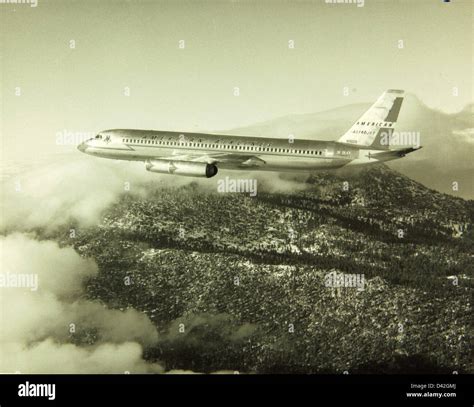
When the Convair 990 entered service, it represented the cutting edge of commercial aviation. Its Mach 0.89 cruise capability, sleek fuselage and four unusual engines made it one of the fastest conventional passenger aircraft of its generation.
But technological leadership does not automatically create commercial success.
The later arrival of the Concorde and Tupolev Tu-144 would push passenger speed into the supersonic realm, making the 990’s subsonic speed advantage less extraordinary. Meanwhile, conventional airliners became increasingly focused on reducing fuel consumption and carrying more passengers efficiently.
That left the Convair 990 stranded between competing visions of aviation’s future.
Its aft-fan GE CJ805-23 was clever, compact and technically inventive. Yet its unusual architecture could not deliver the same economic advantages as the emerging generation of conventional turbofans. Convair’s decision to build its fastest airliner around that engine amplified the risk.
The aircraft was fast enough to become famous, but not economical enough to become successful.
And that may be the most important lesson from the strange rear-fan engine that powered it: aviation history is rarely decided by the most spectacular technology. It is decided by the technology that works well enough, costs little enough and arrives at exactly the right moment.