In a bold declaration of intent, Airbus has unveiled a revolutionary concept for the first class cabin aboard its flagship long-haul aircraft, the A350-1000. This vision transcends the familiar confines of upgraded airline seating and ventures into the realm of ultra-private, residential-style air travel, reshaping the premium flying experience for the next generation of global travelers.
At the core of this concept is the belief that space is the ultimate luxury. Unlike traditional premium cabin configurations that merely optimize around existing aircraft architecture, Airbus has gone further—reimagining the very structure and function of the forward fuselage. This shift allows carriers to deliver an experience closer to a five-star suite than a reclinable chair, placing the passenger at the center of a personalized and expansive domain.
A Platform for Premium Differentiation: The A350-1000 as Canvas
The Airbus A350-1000 is already a titan of long-haul aviation, boasting impressive performance and operational efficiency. Yet, Airbus is now positioning it as a premium hospitality platform, capable of offering the most refined commercial cabins the world has seen.
What sets this new vision apart is the space-first philosophy. First class is no longer about inches and angles—it’s about movement, flow, and atmosphere. Visual openness, privacy, and multi-zone environments now take precedence. Airbus proposes that the A350-1000 should support a shift away from seat-focused design toward whole-space experiences, bringing the airframe’s full potential to bear in a high-stakes, high-yield segment.
This evolution is not just about pampering. It is a strategic play that acknowledges first class as a differentiator for airline brands—a crown jewel that signifies innovation, affluence, and prestige. As more carriers retreat from first class, Airbus leans in, offering a tangible way to command attention and earn loyalty among the world’s most discerning travelers.
The Master Suite: Redefining Luxury at 30,000 Feet
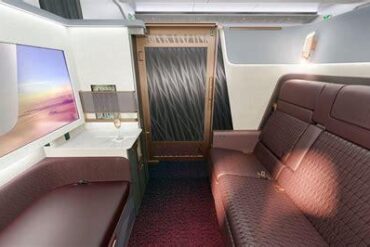
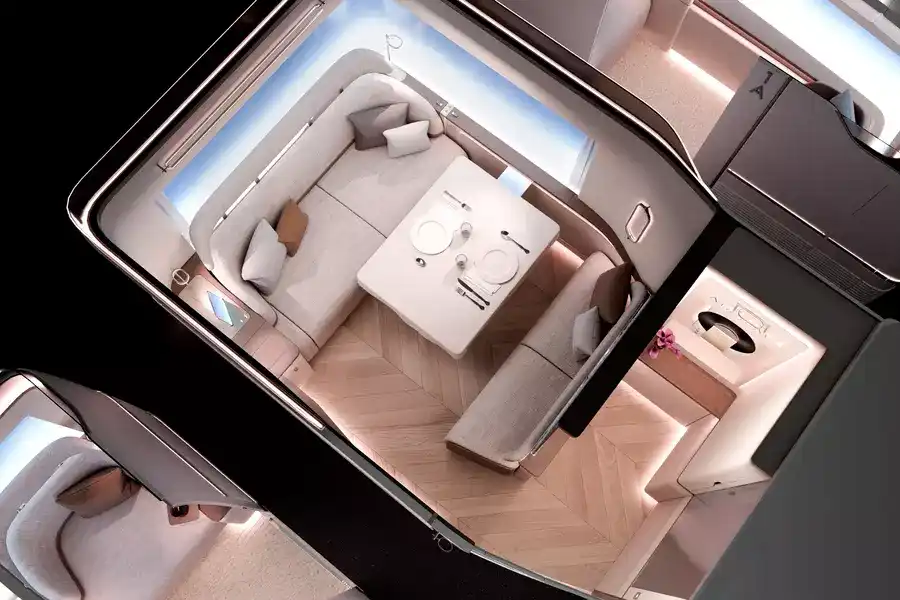
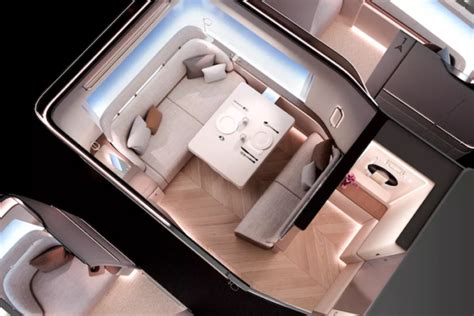
The showpiece of this vision is the First Class Master Suite, a fully enclosed living area that transcends the seat. Airbus envisions this space not as a recliner with add-ons, but as a multi-functional zone where passengers can dine, work, relax, and sleep—in privacy and style.
This is not an aspirational sketch. The suite offers:
- A double bed configuration, an ultra-rare feature in commercial aviation, designed for couples traveling together.
- Dedicated changing areas that respect personal boundaries and elevate comfort during ultra-long-haul flights.
- Thoughtful storage integration that minimizes clutter while enhancing utility.
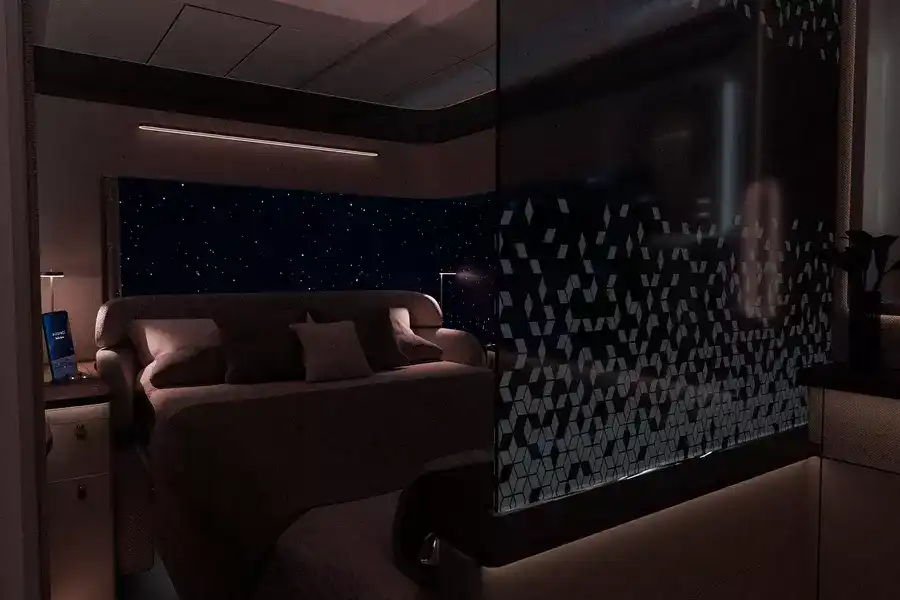
The Master Suite is designed to allow seamless transition between activities, much like one might find in an upscale hotel. This mirrors a rising trend in aviation where space utility and emotional comfort outweigh simply luxurious finishes. Airbus’s design removes psychological constraints from the flying experience, letting passengers feel genuinely at home in the sky.
Structural Optimization: 1-1-1 Layout With Architectural Precision
To bring this concept to life, Airbus proposes a 1-1-1 layout that stretches across the generous fuselage of the A350-1000. This structure delivers not only ample personal space, but a sense of architectural coherence rare in aircraft cabins.
Lavatories, storage, and crew access points are moved to a centralized, modular service zone, leaving the seating area uninterrupted. This yields several advantages:
- Increased privacy through spatial separation.
- Improved passenger flow, free from unnecessary cross-traffic.
- Optimized crew service efficiency without compromising ambiance.
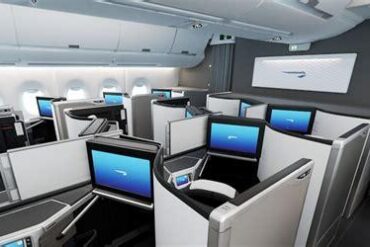
Several premium carriers have dabbled in this configuration—Japan Airlines and Lufthansa, for example, both use 1-1-1 layouts on the A350. But Airbus elevates the concept to new heights by radically expanding suite dimensions and integrating true multi-zone functionality, turning what was once a cabin into a series of refined, private living quarters.
Visual Silence and Movement Harmony: Creating a Calm, Private Atmosphere
Privacy is paramount. High suite walls and complete enclosures allow passengers to enter a sanctuary of quiet luxury, isolated from surrounding activity. By separating crew corridors from passenger areas, Airbus ensures that sound and motion disruptions are minimized, contributing to a tranquil atmosphere.
Everything from circulation design to lighting cues is engineered to soothe. With reduced foot traffic and no overhead bins disrupting the suite ceiling lines, passengers experience a continuous visual flow that mirrors the calm of a boutique hotel.
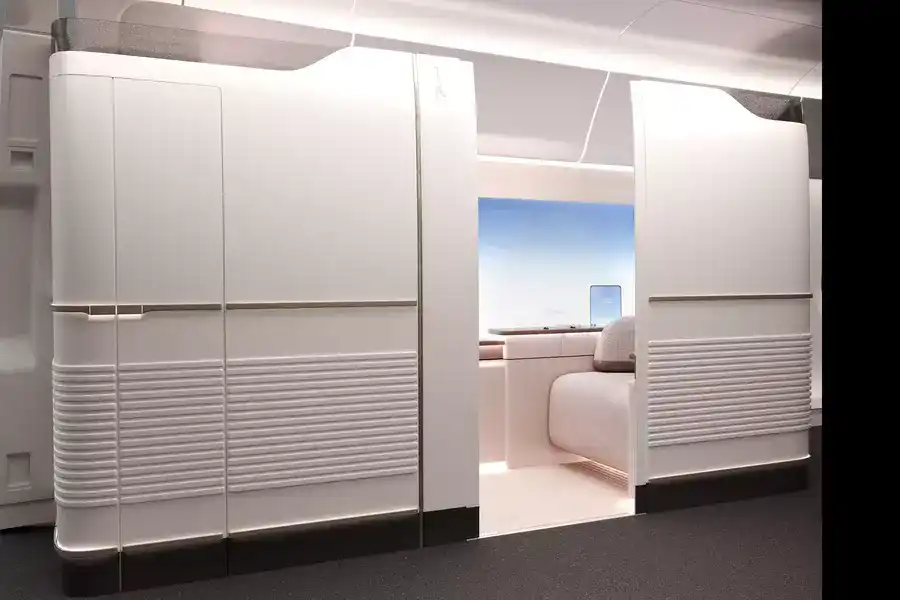
These design cues are about more than aesthetics. They cater to a passenger’s circadian rhythm, psychological comfort, and cognitive clarity—qualities that matter immensely on ultra-long-haul flights spanning 15 to 18 hours.
The Engineering Behind the Elegance: A350-1000 Specifications
The A350-1000 offers the perfect canvas for this transformation. Its wide-body dimensions, composite fuselage, and impressive range create both the technical and operational freedom needed to deploy spacious, luxurious suites.
Here are some standout specifications:
- Maximum range: 9,000 nautical miles (16,700 km)
- Cruising speed: Mach 0.85
- Cabin length: 190 feet 3 inches (58.03 m)
- Fuselage width: 19 feet 6 inches (5.96 m)
- Maximum cabin width: 18 feet 5 inches (5.61 m)
- Typical 3-class seating: 375–400 passengers
These dimensions provide the physical flexibility to configure fewer but much larger suites, ensuring that the quality of experience trumps quantity.
Sculpted Interiors, Ambient Lighting: Luxury Hospitality at Altitude
Airbus’s design doesn’t just appeal to spatial logic—it speaks to the heart of luxury design language.
The interiors feature:
- Sculpted ceilings that amplify vertical space.
- Contoured walls with flowing lines to enhance the feeling of openness.
- Minimalist design cues, favoring refined finishes and muted palettes.
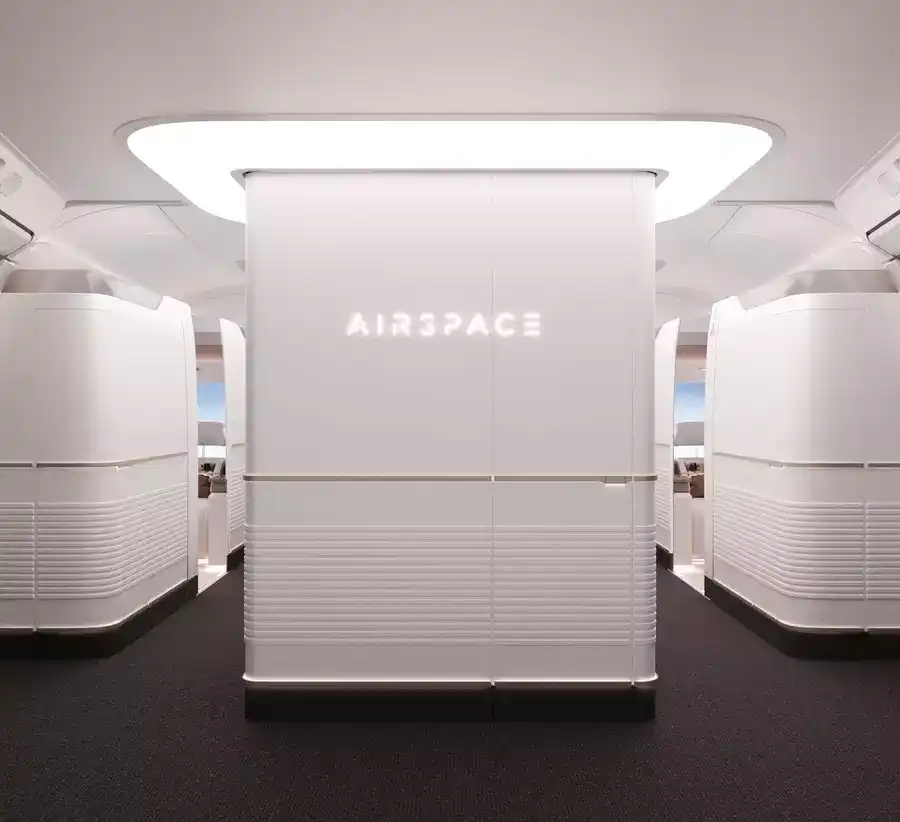
Perhaps most importantly, Airbus integrates advanced ambient lighting to simulate natural circadian rhythms. These lighting systems shift in hue and intensity based on the flight’s stage and timezone transitions, helping to:
- Reduce jet lag.
- Support restful sleep.
- Promote a balanced, calm state.
This, paired with material choices reminiscent of luxury hotel rooms, creates an onboard environment that feels both bespoke and timeless.
Airline Strategy and Brand Positioning: The Commercial Power of Prestige
Though still a concept, the A350-1000 first class suite offers tremendous strategic value for airlines seeking to differentiate at the highest end of the market.
Instead of presenting a fixed seat product, Airbus gives airlines a flexible design framework. Carriers can customize the suite’s materials, layout, lighting, and service touches to align with their unique brand values—blending identity with indulgence.
Even for travelers in lower cabins, the perception of a world-class first class cabin influences how they view the airline. A visually arresting and experientially superior front cabin becomes a halo product—a mark of overall excellence and commitment to innovation.
In an era where many airlines are trimming first class in favor of business class hybrids, Airbus’s concept reaffirms that first class still matters. Not for mass revenue generation, but as a strategic asset that defines prestige, sets tone, and shapes passenger loyalty.
The Future of First Class: Experience Over Density
As ultra-long-haul travel becomes more prevalent—especially in point-to-point intercontinental journeys—the value of comfort, privacy, and emotional well-being at 35,000 feet grows exponentially. Airbus’s design philosophy anticipates this shift.
Rather than cramming seats into square footage, the new concept prioritizes:
- Exclusivity over capacity.
- Experience over metrics.
- Individualization over uniformity.
This marks a profound evolution in premium travel thinking. Airlines that embrace it position themselves not just as carriers, but as curators of unforgettable, refined journeys.
Airbus has not simply designed a first class seat—it has engineered a statement of intent. A testament to what’s possible when airlines and manufacturers collaborate to elevate commercial air travel to something deeply personal, luxurious, and transcendent.