The Boeing 737 is often described as a modern aircraft wearing a vintage skeleton, and that description is not poetic exaggeration. Beneath the glass cockpits, advanced avionics, and fuel-efficient engines lies a physical design decision made in the 1960s that has never fundamentally changed. While most airliners are periodically reborn through clean-sheet redesigns, the 737 has evolved through continuity. At the center of that continuity is a single, defining feature: its original fuselage cross-section, inherited from Boeing’s earliest jetliners and preserved across nearly six decades of production.
This frozen geometry is not an accident, nor is it nostalgia. It is the foundation of the 737’s identity, shaping everything from cabin width and landing gear height to engine placement and pilot training philosophy. Understanding why this feature remains unchanged reveals why the 737 became the most produced jetliner in history—and why it now sits at the edge of its own physical limits.
A Jetliner Built on Borrowed Bones
When Boeing began work on the 737 in the mid-1960s, it was not intended to be revolutionary. It was meant to be practical. Boeing already had the 707 and 727 in service, and engineers were under pressure to deliver a short-haul aircraft quickly and cheaply. The solution was bold in its restraint: reuse as much of the existing airframe architecture as possible.
The most consequential choice was to retain the same upper fuselage tooling and nose section geometry—known internally as Section 41—from the 707 and 727. This decision locked the 737 into a fuselage width of 148 inches, a dimension that has never changed, not through the Classic series, not through the Next Generation family, and not even on the latest 737 MAX aircraft rolling out of factories today.
This single measurement determined the aircraft’s entire physical character. It allowed six-abreast seating at a time when competitors struggled to offer comfort in narrow cabins, and it gave the 737 a sense of familiarity for crews transitioning from larger Boeing jets. More importantly, it avoided the immense cost and regulatory complexity of certifying a brand-new fuselage.
Why Boeing Never Redrew the Circle
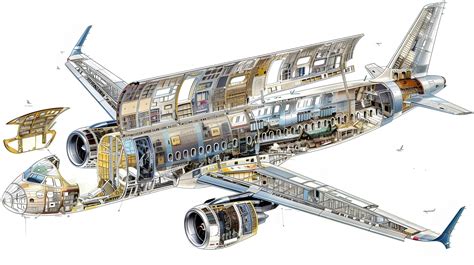
Redesigning a fuselage is one of the most expensive and time-consuming endeavors in aerospace engineering. A new cross-section changes aerodynamics, structural loads, evacuation certification, pressurization behavior, and manufacturing processes all at once. For Boeing, the original 148-inch fuselage became an anchor of stability.
By keeping the cross-section unchanged, Boeing enabled continuous certification rather than starting over with a new type certificate. This meant that every new 737 variant was legally considered an evolution of the original 1967 aircraft. For airlines, this translated into enormous operational advantages: pilots could transition between generations with minimal retraining, maintenance crews could rely on familiar structures, and spare parts logistics remained streamlined.
The fuselage also preserved subtle design elements that most passengers never consciously notice. The curvature of the cockpit windows, the underlying structural frame beneath the dashboard, and even the placement of internal frames trace their lineage directly back to the 1960s. Although the eyebrow windows were sealed in the early 2000s to reduce noise and maintenance costs, the structure that once supported them remains embedded in the aircraft’s DNA.
Cabin Comfort: A Design That Shows Its Age
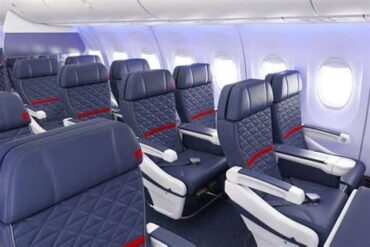
From a passenger’s perspective, the unchanged fuselage cross-section is a double-edged sword. On one hand, it allowed Boeing to deliver six-abreast seating decades before competitors normalized it. On the other, it limits how spacious the cabin can feel compared to newer designs.
The Airbus A320, introduced twenty years later, was built around a wider 155.5-inch fuselage, giving passengers slightly broader seats and aisles. That extra width is often cited as a reason travelers perceive the A320 cabin as more comfortable, even when seat pitch and amenities are similar.
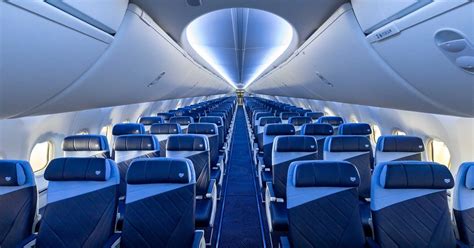
The 737’s narrower diameter also constrains overhead bin volume and aisle width, forcing creative interior solutions to meet modern expectations. Boeing’s Sky Interior, introduced with sculpted sidewalls and redesigned lighting, is an aesthetic triumph layered onto an unchanged physical shell. The illusion of space improves, but the underlying geometry remains immutable.
The Low-Slung Aircraft That Changed Everything
The fuselage width does not exist in isolation. It is directly tied to another unmistakable 737 trait: its low ground clearance. Because the aircraft was designed for small airports with limited ground equipment, the landing gear was kept deliberately short. This allowed baggage handlers and mechanics to work without specialized loaders and made the 737 ideal for underserved routes in the 1960s.
That short landing gear geometry has never fundamentally changed, and it interacts inseparably with the fuselage cross-section. Together, they keep the aircraft sitting closer to the tarmac than almost any other modern jetliner.
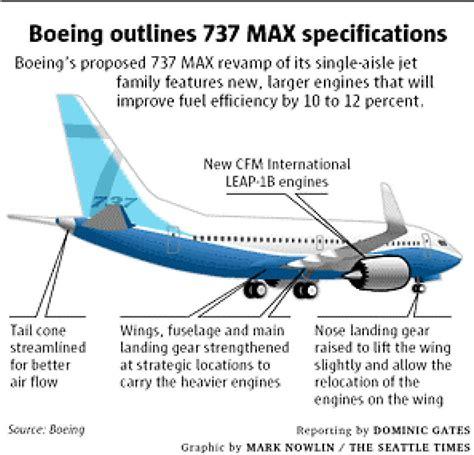
This design choice became increasingly problematic as engine technology advanced. Early turbojets and low-bypass turbofans were small enough to fit neatly under the wing. Modern high-bypass engines are not. To accommodate them without redesigning the fuselage or landing gear, Boeing engineers resorted to creative compromises that reshaped the 737’s silhouette.
Engines Bent Around a 1967 Constraint
The famous flattened engine nacelles on later 737 variants are not stylistic quirks. They are physical evidence of a design pushed against its limits. Because the fuselage sits low and the wing is close to the ground, newer engines had to be mounted higher and further forward, with their lower edges flattened to avoid runway strikes.
This engine repositioning altered airflow around the wing and nacelle, subtly changing the aircraft’s pitching characteristics. These changes, in turn, required increasingly complex aerodynamic tuning and flight control augmentation to preserve the handling qualities pilots expected from earlier 737s.
None of this would have been necessary if Boeing had redesigned the fuselage cross-section and landing gear together. But doing so would have broken the chain of commonality that made the 737 commercially unbeatable for decades.

Mechanical Flight Controls in a Digital Age
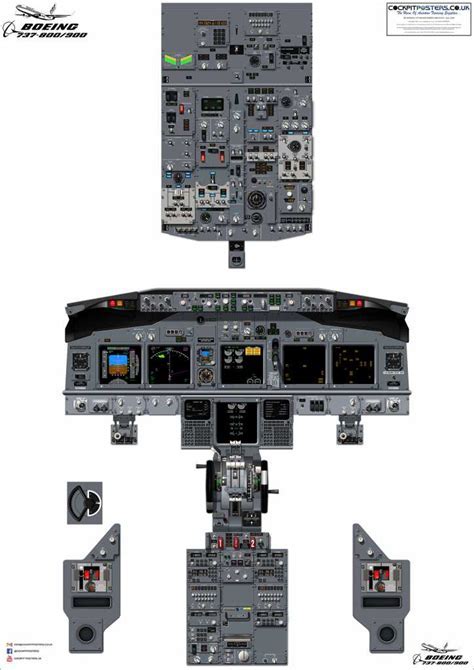
The fuselage cross-section also supports another unchanged feature: the mechanical flight control architecture. Unlike fly-by-wire aircraft, the 737 still uses steel cables and pulleys connecting the cockpit controls to hydraulic actuators. When a pilot moves the yoke, they are physically commanding the aircraft through mechanical linkages—a philosophy that dates directly back to the 737’s inception.
This system fits neatly within the original fuselage geometry and control routing paths established in the 1960s. Replacing it with full fly-by-wire would require significant internal redesign, new redundancy architectures, and a fresh certification basis. Boeing chose continuity instead.
Pilots often describe this setup as providing a tangible, almost visceral connection to the aircraft. Control forces, trim changes, and aerodynamic feedback are felt directly rather than interpreted through software. In an era dominated by digital flight envelopes and automated protections, the 737 remains an outlier.
The Trim Wheel: A Living Fossil
Perhaps no feature better symbolizes the 737’s unchanged design philosophy than the manual trim wheel. Mounted beside the pilots’ knees, it is mechanically linked to the horizontal stabilizer and spins visibly during trim adjustments. Its operation is fundamentally the same today as it was in 1967.
The wheel serves as both a control device and a communication tool. Its motion provides immediate visual and auditory feedback, alerting pilots to trim changes without relying on electronic indicators. In abnormal scenarios, it offers a purely mechanical backup capable of overriding electric trim systems.
Operating the trim wheel can require significant physical effort under extreme aerodynamic loads, a reminder that this is a system born in an era when muscle and mechanics were integral to flight control. It is not an anachronism by accident; it is a deliberate safeguard rooted in the aircraft’s original design philosophy.
Commonality as a Business Weapon
The unchanged fuselage cross-section is not merely an engineering artifact. It is a strategic asset. Airlines like Southwest Airlines built entire business models around the promise that a pilot trained on one 737 could fly nearly any other with minimal additional instruction. This commonality reduced training costs, simplified crew scheduling, and increased operational flexibility on a global scale.
Maintenance crews benefited in the same way. Structural familiarity meant faster troubleshooting and fewer surprises, even as avionics and systems evolved. Parts inventories could be standardized across fleets spanning decades of production.
This ecosystem effect is why Boeing resisted redesigning the fuselage even as competitors introduced cleaner, wider designs. The short-term cost savings of continuity compounded into long-term market dominance.
The Price of Never Starting Over
Yet continuity has a cost. Each new generation of the 737 requires increasingly complex engineering solutions to reconcile modern performance demands with a fixed physical envelope. Weight margins shrink. Integration challenges multiply. Regulatory scrutiny intensifies as legacy designs are asked to meet contemporary safety expectations.
The fuselage cross-section, once a source of flexibility, has become a limiting factor. It constrains cabin innovation, engine growth, and aerodynamic optimization. There is only so much refinement possible when the foundational geometry cannot change.
This tension reached its peak in the 737 MAX era, where software and hardware were pushed to preserve the aircraft’s handling characteristics without altering its underlying shape. The lesson was not that the fuselage design was flawed, but that it had finally reached the outer edge of its evolutionary potential.
A Time Capsule Still in Service
Every Boeing 737 flying today carries within it the physical decisions of the 1960s. The fuselage cross-section, unchanged since the first 737-100, is the thread that connects all variants across nearly sixty years of aviation history. It is the reason the aircraft feels familiar to generations of pilots, the reason airlines embraced it so completely, and the reason engineers continue to wrestle with its constraints.
Future Boeing narrow-body aircraft will almost certainly abandon this geometry in favor of wider cabins, taller landing gear, and full fly-by-wire systems. When that happens, the 737’s design lineage will finally come to a close.
Until then, each takeoff is a quiet contradiction: a modern jet climbing into the sky on the bones of a 1967 design. The unchanged fuselage cross-section is not a relic—it is a testament to how far thoughtful engineering, disciplined evolution, and strategic restraint can carry a single idea.