A Superjumbo Canvas: Why Painting The Airbus A380 Is Unlike Any Other Aircraft
Painting a commercial aircraft is never a casual maintenance task, but when the subject is the Airbus A380 — the world’s largest passenger jet — the process transforms into a full-scale industrial campaign. The aircraft’s sheer physical magnitude turns what would normally be routine branding work into a multimillion-dollar logistical ecosystem involving chemistry, engineering, aerodynamics, and brand strategy.
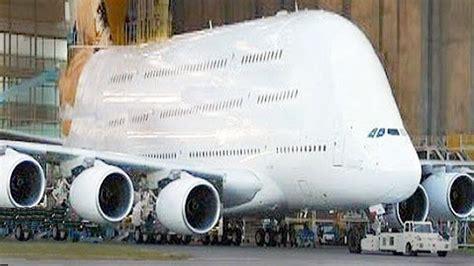
With a wingspan stretching 261 feet and a height comparable to a seven-story building, the A380 presents roughly 3,500 square meters of exterior surface area. That is an airborne skyscraper wrapped in aluminum alloys and composite panels. Every square meter must be stripped, treated, primed, painted, cured, inspected, and certified before the aircraft can safely return to service.
Airlines do not repaint these giants merely for aesthetics. The paint layer functions as environmental armor, shielding the fuselage from ultraviolet radiation, humidity, salt exposure, and temperature extremes encountered at cruising altitudes above 35,000 feet. A fresh coat is as much about structural preservation as it is about brand identity.
The True Cost Of Painting The World’s Largest Passenger Aircraft
The financial scale mirrors the physical scale. While repainting a narrowbody like a Boeing 737 might cost around $50,000, applying a full livery to an Airbus A380 typically ranges between $200,000 and $300,000.
That figure represents the baseline for a standard airline paint scheme — usually a predominantly white fuselage with branding concentrated on the tail and forward section. The price escalates rapidly when airlines pursue commemorative liveries, promotional designs, or anniversary artwork.
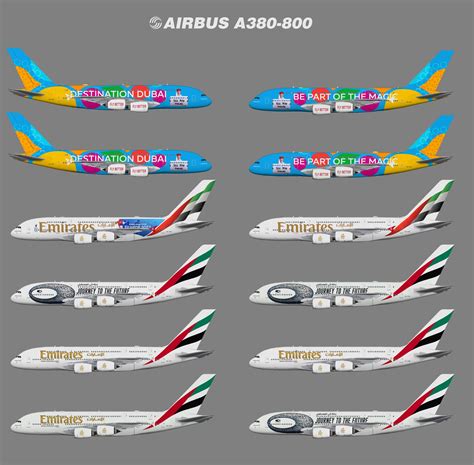
Special liveries such as Emirates’ Expo 2020 or national celebration schemes demand intricate gradients, metallic finishes, and multi-stage masking processes. In such cases, repainting costs can surge well beyond $400,000, particularly when additional curing time and stencil fabrication are required.
The expense reflects three converging realities: the size of the aircraft, the sophistication of aerospace coatings, and the scarcity of facilities capable of housing the double-decker giant.
Specialized Facilities: Hangars Built For Giants
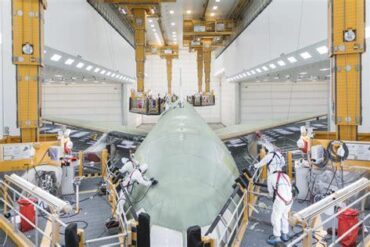
Not every maintenance hangar on Earth can accommodate an A380. The aircraft’s height and wingspan require cathedral-like paint bays equipped with advanced ventilation, docking gantries, and climate control systems capable of maintaining stable curing temperatures.
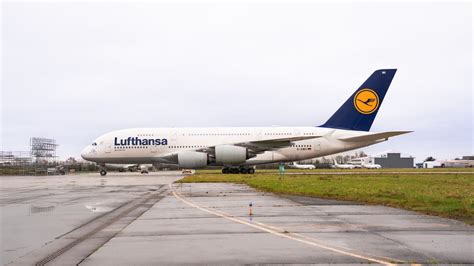
As a result, airlines often ferry their aircraft thousands of miles to specialized painting centers. Lufthansa, for example, has transported A380s to Shannon, Ireland, where facilities such as International Aerospace Coatings (IAC) Hangar 7 are purpose-built for superjumbo maintenance.
Ferrying an aircraft without passengers may seem inefficient, yet the economics favor specialization. A facility designed for smaller jets simply cannot deliver the environmental control or safety clearance required for an A380 repaint.
Time Is Money: Revenue Lost On The Ground
An aircraft generates revenue only when airborne. Parking a high-capacity A380 inside a paint hangar for 10 to 15 days represents a significant opportunity cost.
These jets typically operate dense long-haul routes linking global megahubs — London, Dubai, Singapore, Los Angeles. Each day offline can mean hundreds of thousands of dollars in unrealized ticket revenue.
Painting therefore becomes a balancing act between maintenance necessity and operational disruption. Airlines often schedule repainting alongside heavy maintenance checks to consolidate downtime.
From a financial physics standpoint, the repaint cost includes not just labor and materials, but also the invisible revenue vacuum created while the aircraft is grounded.
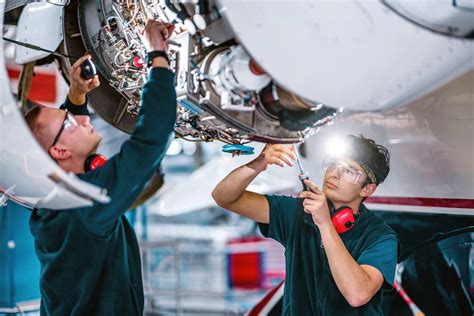
Stripping, Priming, Painting: The Multi-Stage Technical Process
Before new paint touches the fuselage, technicians must remove the old coating entirely. This is neither quick nor gentle work.
Chemical stripping agents — sometimes hundreds of gallons — dissolve existing layers. Increasing environmental regulations have phased out older, more toxic solvents, forcing facilities to adopt biodegradable alternatives or mechanical stripping techniques such as plastic-media blasting.
Once stripped, the aircraft undergoes:
- Surface inspection for corrosion or microfractures
- Composite panel integrity checks
- Application of anti-corrosion primer
- Base coat layering
- Color livery masking
- Clear protective topcoat sealing
Each stage requires controlled humidity and temperature conditions to ensure adhesion and aerodynamic smoothness.
How Much Paint Does An A380 Actually Use?
The material requirements alone are staggering. A full repaint consumes roughly 175 to 250 gallons of aerospace-grade paint.
This is not hardware-store pigment. Aircraft coatings are engineered polymers designed to resist:
- UV radiation
- Hydraulic fluid exposure
- Temperature swings from 40°C to −55°C
- High-speed particulate erosion
After curing, the dried paint adds approximately 1,100 kilograms (2,425 lbs) to the aircraft’s empty weight.
That added mass is permanent — and in aviation, weight equals fuel burn.
The Aerodynamic Consequences Of Paint Weight
A curious paradox emerges. Paint protects the aircraft yet also makes it heavier.
Even a few thousand pounds increase lifetime fuel consumption. Airlines therefore obsess over coating thickness, viscosity, and smoothness.
If paint is applied too thickly or cures with microscopic texture — often described as an “orange peel” effect — it increases skin friction drag. Over years of operation, that drag translates into measurable fuel penalties costing airlines tens of thousands of dollars.
Thus, repainting is not simply cosmetic maintenance. It is an aerodynamic optimization exercise conducted at industrial scale.
Design Complexity: Where Costs Explode
The simplest airline liveries follow the “Eurowhite” model: white fuselage, colored tail, minimal graphics. These are cost-efficient because they require fewer paint layers and stencils.
Complex murals, however, transform the aircraft into airborne art installations.
A famous example is All Nippon Airways’ “Flying Honu” A380 fleet, featuring sea turtle imagery spanning the fuselage. The design required:
- 16 distinct colors
- Over 930 stencils
- A crew exceeding 120 specialists
- Roughly 21 days of hangar time
This level of detail likely pushed repaint costs beyond $400,000 to $500,000 per aircraft.
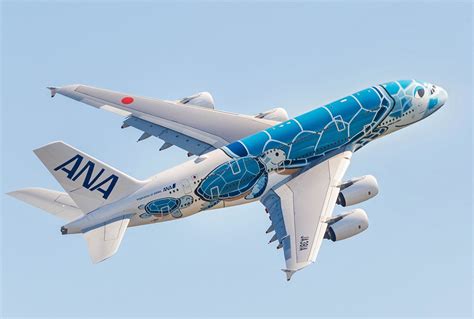
Each stencil must align perfectly across curved fuselage geometry. A millimeter deviation can distort the artwork — or worse, disrupt airflow patterns.
Environmental And Regulatory Pressures
Modern aircraft painting operates under tightening environmental oversight.
Legacy chemical strippers such as methylene chloride have been restricted due to toxicity risks. Replacement methods are safer but more expensive and time-intensive.
Paint facilities must also manage:
- Volatile organic compound (VOC) emissions
- Hazardous waste disposal
- Worker respiratory safety systems
Advanced ventilation and filtration systems add operational cost, which ultimately feeds back into airline repaint pricing.
The ecological footprint of repainting a superjumbo is substantial, driving research into greener coatings and lower-emission processes.
The Airbus A380 As A Flying Billboard
From a marketing perspective, an A380 is not merely transportation — it is a flying billboard visible to millions.
Industry analysts note that flagship aircraft often carry brand prestige disproportionate to their fleet size. A fresh, high-gloss livery signals financial health, operational vitality, and brand confidence.
This symbolism became especially relevant as many A380s returned to service following pandemic-era storage. Repainting served as a visual declaration: the giant had not retired — it had been reborn.
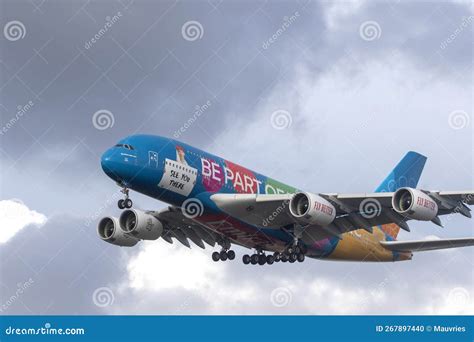
Special liveries generate social media buzz, aviation photography coverage, and passenger excitement. Airlines factor this promotional value into repaint ROI calculations.
Why Vinyl Wrapping Doesn’t Work On The A380
In automotive culture, vinyl wraps offer cheaper, faster alternatives to repainting. The concept has been explored in aviation — but scaling it to an A380 presents severe engineering hazards.
At cruising altitude, aircraft skin experiences violent thermal cycling, expanding and contracting across temperature ranges exceeding 90°C.
A full vinyl wrap would face risks such as:
- Adhesive failure in extreme cold
- Material brittleness at altitude
- High-speed peel hazards at 500+ mph
A detached vinyl sheet could damage control surfaces or be ingested into engines — a catastrophic safety threat.
Small decals remain viable for temporary promotions, but full-body wraps are impractical for superjumbos.
Composite Materials Demand Protective Paint
Unlike classic aluminum airliners, the A380 incorporates roughly 22% composite materials, including carbon-fiber-reinforced plastic.
These composites cannot be polished into bare-metal finishes like those historically used by American Airlines. They require sealed paint layers to prevent:
- UV degradation
- Moisture ingress
- Structural delamination
Paint also protects embedded metallic mesh used for lightning strike dissipation. If exposed, this mesh can corrode, compromising electrical safety systems.
Thus, painting is structurally mandatory — not optional.
Case Study: Lufthansa’s Centennial Livery Investment
In early 2026, Lufthansa ferried an A380 to Shannon, Ireland, for a commemorative 100 Years anniversary livery.
Flying a near-empty quad-engine jet across Europe purely for paint may appear extravagant. Yet the airline viewed the project as a strategic brand investment.
Anniversary liveries generate global media coverage, reinforce heritage narratives, and elevate passenger perception. For legacy carriers, history itself becomes part of the product.
The repaint cost, though substantial, is amortized across marketing value, brand reinforcement, and aircraft preservation.
Rising Asset Values And The A380 Revival
After a period of uncertainty, second-hand A380 airframe values have rebounded toward $30 million as of 2026.
As asset values rise, airlines become more willing to invest in cosmetic and structural upgrades, including repainting. Protecting the fuselage extends service life and supports resale or leasing prospects.
Fresh paint also signals long-term fleet commitment — reassuring investors and passengers alike that the superjumbo remains operationally relevant.
Maintenance Hubs: Where Giants Receive Makeovers
Only a handful of global facilities can repaint an A380. Key hubs include:
- Shannon, Ireland
- Dubai, UAE
- Singapore
- Hamburg, Germany
These sites combine heavy maintenance, structural inspection, and painting services within integrated aviation campuses.
Spotters and aviation enthusiasts often track newly repainted aircraft emerging from these hubs, their glossy liveries gleaming like freshly minted coins.
Future Innovations: The Next Evolution Of Aircraft Paint
The next frontier in superjumbo painting lies in thermal-reflective and sustainable coatings.
Engineers are developing “cool paint” technologies capable of reflecting greater solar radiation. Benefits may include:
- Reduced cabin cooling loads on hot tarmacs
- Lower auxiliary power unit usage
- Improved passenger boarding comfort
Research also targets lighter coatings that reduce weight without sacrificing durability — a direct fuel-efficiency gain.
Biodegradable stripping agents and low-VOC paints are gradually reshaping environmental compliance across the industry.
Is The Cost Worth It? The Long-Term Economic Logic
At first glance, spending up to half a million dollars on paint appears extravagant. Yet neglecting repainting can trigger far costlier consequences.
Without protective coatings, aircraft risk:
- Corrosion damage
- Composite degradation
- Lightning mesh exposure
- Increased aerodynamic drag
Repairing structural corrosion can cost millions — far exceeding repaint expenses.
Viewed through lifecycle economics, repainting is preventive medicine for a billion-dollar fleet asset.
The Monumental Reality Behind A Simple Coat Of Paint
Painting the world’s largest commercial aircraft is a fusion of engineering precision, financial calculus, environmental science, and brand storytelling.
A standard Airbus A380 repaint costs $200,000 to $300,000, while intricate liveries can exceed $500,000. The investment covers specialized labor, massive material volumes, lost operational revenue, and the technical infrastructure required to handle an aircraft of unprecedented scale.
Yet the result is more than cosmetic. It preserves structural integrity, optimizes aerodynamics, reinforces brand identity, and extends the service life of one of humanity’s most ambitious flying machines.
As long as the A380 continues to roam intercontinental skies, its gleaming fuselage will stand as proof that even in aviation — where function reigns supreme — appearance still carries extraordinary weight.