A wind tunnel is an essential piece of engineering equipment used to simulate and analyze the effects of air movement on various models and structures. From aircraft design to automotive testing, wind tunnels have proven to be invaluable in advancing technology across many industries. The controlled air stream generated in these tunnels is crucial for understanding how wind interacts with different materials, shapes, and surfaces, helping engineers optimize designs for safety, performance, and efficiency.
What is a Wind Tunnel?
A wind tunnel is a closed or open structure that generates a controlled airflow, which can be manipulated to simulate a range of wind conditions. By subjecting models or full-scale prototypes to these controlled conditions, engineers and researchers can study the aerodynamic forces that act upon objects like aircraft, automobiles, and even buildings. Wind tunnels are indispensable for testing and refining these designs in ways that real-world testing would be too expensive, dangerous, or impractical to carry out.
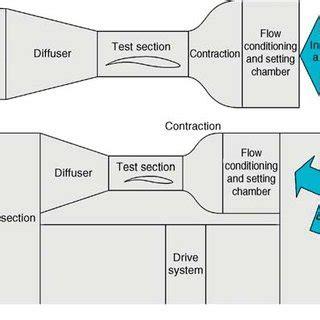
Wind tunnels operate by moving air over or through a test model, and this airflow is regulated by a powerful fan or compressor. The test section of the wind tunnel, where models are positioned, allows the air to pass at the desired speed, pressure, and turbulence conditions. This airflow can be adjusted from light breezes to hypersonic speeds, depending on the specific requirements of the test.
The History and Evolution of Wind Tunnels
The history of wind tunnels dates back to the 19th century when pioneers like Isaac Newton and Benjamin Robins first conceptualized aerodynamic testing methods. However, it wasn’t until 1871 that Francis Herbert Wenham, an English engineer, created the first enclosed wind tunnel. His invention marked a turning point in aerodynamic testing, as it allowed researchers to perform experiments in a controlled environment rather than relying on natural wind conditions.
During the 20th century, especially during World War II and the Cold War, the development of wind tunnels accelerated. With the need to design faster and more efficient aircraft, the demand for more powerful and larger wind tunnels grew significantly. Advancements in computational fluid dynamics (CFD) began to complement wind tunnel testing, but physical testing in wind tunnels remains critical for ensuring real-world accuracy and safety.
How Wind Tunnels Work
The fundamental concept behind wind tunnel operation is quite simple: create a controlled airflow over or around an object to simulate real-world aerodynamic conditions. The basic components of a wind tunnel include the fan, which circulates the air, the test section, where the models are placed, and the measurement devices that collect data during the experiment.
The air is drawn into the tunnel by the fan, which is typically located at one end. Once inside, the air moves through a series of diffusers, which help to straighten the flow and minimize turbulence. The flow then enters the test section, where the object is placed for testing. Depending on the wind tunnel, different types of measurement equipment can be used to record data on pressure, velocity, and other aerodynamic forces that act on the object.
Some advanced wind tunnels also use visualization techniques, such as smoke or dye injection, to help visualize airflow patterns around the test model. This can provide valuable insights into the way air interacts with the object at different speeds and angles.
Types of Wind Tunnels
Wind tunnels come in various sizes and configurations to meet the specific needs of different industries. Broadly speaking, they can be classified by speed, orientation, and purpose. Below are some of the main types of wind tunnels:
- Low-Speed Wind Tunnels: These tunnels simulate the airflow conditions typically found at lower speeds, such as those encountered by automobiles or aircraft during takeoff and landing. These wind tunnels are commonly used for automotive testing and aerodynamic research for subsonic speeds.
- High-Speed Wind Tunnels: Designed to simulate the conditions found at high speeds, such as supersonic and hypersonic flows, these wind tunnels are used for testing high-performance aircraft, missiles, and spacecraft.
- Transonic Wind Tunnels: Operating at speeds close to the speed of sound, these tunnels are essential for testing aircraft at the transonic regime, where both subsonic and supersonic flow exist in different parts of the flow field.
- Automotive Wind Tunnels: These specialized tunnels are tailored to test the aerodynamics of vehicles, helping manufacturers design cars with optimal fuel efficiency, reduced drag, and improved handling.
- Environmental Wind Tunnels: Used for testing the effects of wind on structures, such as buildings and bridges, these wind tunnels simulate real-world environmental conditions to study how wind forces affect structural integrity.
Applications of Wind Tunnels
Wind tunnels have far-reaching applications across various industries, making them indispensable tools for engineers and researchers. Some of the primary fields where wind tunnels are used include:
- Aerospace and Aviation: Wind tunnels are crucial in the development of aircraft, spacecraft, and missiles. They allow engineers to test the aerodynamic properties of different designs, refine shapes for reduced drag, and assess how structures behave at different flight speeds.
- Automotive Industry: Automobile manufacturers use wind tunnels to improve vehicle aerodynamics, optimizing designs for better fuel efficiency, reduced drag, and improved handling at high speeds.
- Civil Engineering: Wind tunnels are also used to study the effects of wind on large structures like skyscrapers, bridges, and wind turbines. Testing the structural integrity and performance of buildings under high wind conditions helps engineers design safer, more resilient infrastructure.
- Environmental Research: Environmental wind tunnels are used to simulate airflow patterns around cities and industrial areas. This research helps predict pollution dispersion and study the impact of wind on local climates.
Wind Tunnel Testing and Data Analysis
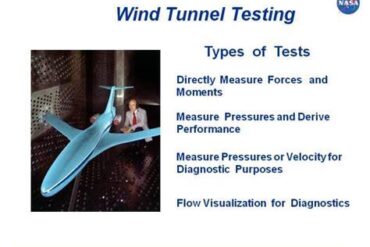
Wind tunnel testing involves various methods of collecting and analyzing data to measure the aerodynamic forces acting on an object. These methods include:
- Pressure Distribution: Pressure taps or sensors are placed on the surface of the model to measure the pressure at different points. This data is used to analyze lift, drag, and moment forces.
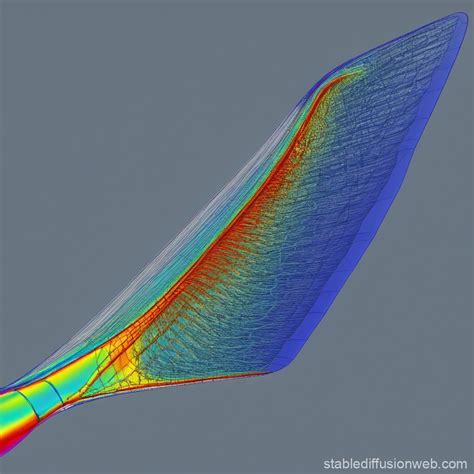
- Flow Visualization: Techniques like smoke streams, tufts, or laser lights are used to visualize airflow around the model. This helps engineers identify areas of turbulence or boundary layer separation that could lead to performance issues.
- Force Balances: These devices measure the aerodynamic forces acting on a model, including drag, lift, and side forces. These forces are essential for optimizing designs and ensuring that prototypes meet performance requirements.
The Future of Wind Tunnel Technology
While wind tunnel technology has advanced significantly over the past century, future developments will likely focus on improving accuracy, efficiency, and the integration of computational tools like CFD. With increasing demands for more sustainable and energy-efficient designs, wind tunnels will continue to play a critical role in developing innovations across various industries.
Researchers are also exploring ways to enhance the speed and range of wind tunnels, particularly in the context of hypersonic speeds. As technologies evolve, wind tunnels will remain integral in shaping the next generation of aerospace and automotive designs, as well as building more resilient structures.
In conclusion, wind tunnels remain an indispensable tool in the fields of engineering and research. Whether for testing aircraft, vehicles, or structures, they provide valuable insights that help optimize designs for performance, safety, and efficiency. As technology continues to evolve, wind tunnels will remain at the forefront of scientific and engineering advancements, helping to shape the future of various industries.