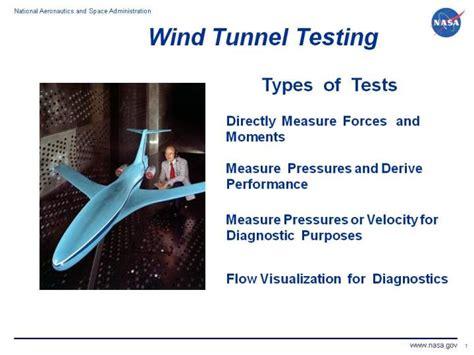
Wind tunnel testing is a cornerstone of aerodynamic engineering, playing a critical role in the development of everything from aircraft and spacecraft to automobiles, sportswear, and even architecture. By simulating how air moves around a static object, engineers are able to collect essential data on forces such as lift, drag, and aerodynamic stability, ultimately allowing for safer, more efficient, and more innovative designs.
Understanding Wind Tunnels: The Engineered Flow of Air
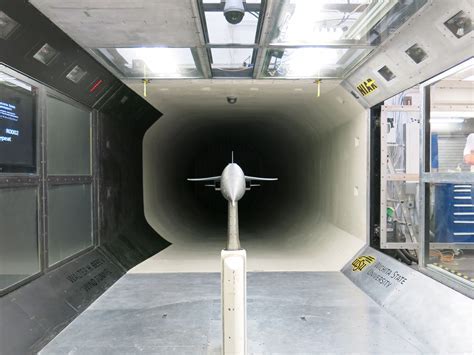
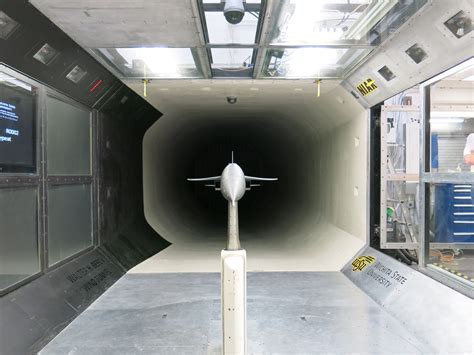
A wind tunnel is a controlled environment designed to replicate airflow around an object. It consists of a duct or passage through which air is forced—usually by electric-powered fans—over a stationary model. This setup reverses real-world conditions by holding the object still and moving the air instead, enabling precise analysis of aerodynamic behavior.
Wind tunnels vary widely in size and capability. They are categorized primarily by their speed regimes:
- Subsonic (below Mach 0.8)
- Transonic (Mach 0.8 to 1.2)
- Supersonic (above Mach 1.2)
- Hypersonic (above Mach 5, in advanced facilities)
These distinctions are vital because airflow characteristics change drastically with speed, especially around the speed of sound.
Historical Origins of Wind Tunnel Testing
The idea of controlling airflow for testing dates back centuries. Early researchers relied on whirling arms and nature’s wind to study flight dynamics. However, it wasn’t until Frank Wenham, a British engineer, introduced the idea of blowing air over a stationary object in 1871 that modern wind tunnel design truly began. Wenham’s approach provided the foundation for testing aircraft wings, eventually evolving into the advanced systems used today.
The Anatomy of a Wind Tunnel
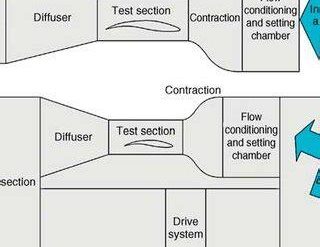
Wind tunnels typically include the following components:
- Settling Chamber: Where air is smoothed and conditioned before entry
- Contraction Cone: Speeds up airflow as it moves toward the test section
- Test Section: The heart of the tunnel where the model is mounted and data is gathered
- Diffuser and Exhaust: Reduce velocity and expel air after testing
Advanced tunnels also incorporate:
- Flow visualization tools such as smoke or oil to make airflow visible
- High-precision balances to measure lift, drag, and side forces
- Instrumentation for pressure and acoustic data
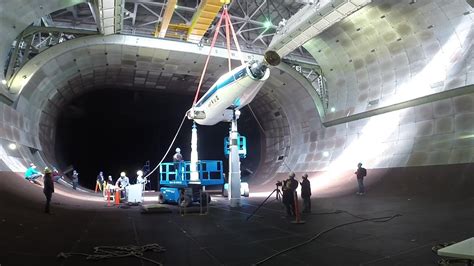
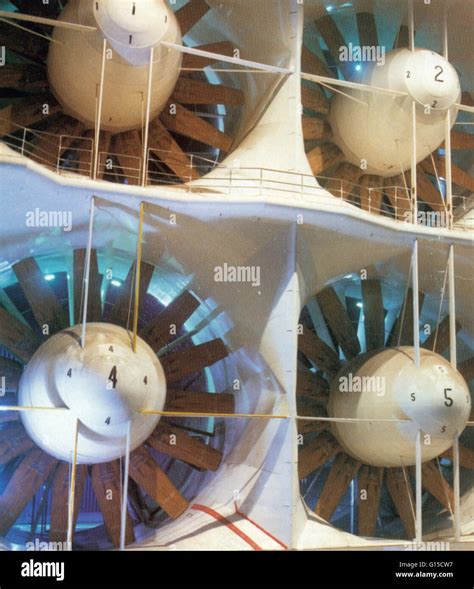
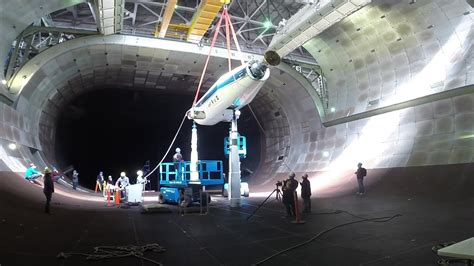
The NASA Ames Research Center in California hosts one of the world’s largest wind tunnels, featuring test sections measuring up to 80×120 feet. This facility can test full-scale aircraft components with fans 40 feet in diameter.
Applications of Wind Tunnel Testing Across Industries
Wind tunnel testing extends far beyond aerospace. Its uses include:
- Automotive: Improving fuel efficiency and reducing drag on vehicles
- Architecture: Ensuring skyscraper stability and pedestrian-level comfort
- Renewable Energy: Optimizing the design of wind turbine blades
- Sports: Enhancing performance by refining the aerodynamic posture of athletes
- Maritime: Testing rotor blades for shipboard helicopters and sail configurations
In fact, elite athletes such as cyclists, speed skaters, and skiers undergo wind tunnel trials to reduce air resistance and maximize speed.
Modern Wind Tunnels and High-Speed Capabilities
Facilities like the Arnold Engineering Development Complex in Tennessee feature three high-powered tunnels: the 16-foot transonic (16T), 16-foot supersonic (16S), and 4-foot transonic (4T). These allow for full-spectrum aerodynamic assessments in environments resembling real-world flight.
The scale and power of these facilities are immense. The supersonic tunnels contain electric motors weighing multiple tons and generating pressures high enough to simulate high-speed aircraft or missile flight.
Benefits of Wind Tunnel Testing for Aerospace Design
In the aerospace sector, wind tunnels are indispensable for:
- Validating theoretical and computational models
- Measuring aerodynamic forces with great precision
- Optimizing configurations for stability, control, and efficiency
Before computational fluid dynamics (CFD) became widespread, engineers had to rely heavily on physical prototypes. Today, wind tunnels complement CFD by confirming only the most promising designs, reducing development time and cost.
For instance, during the development of Boom Supersonic’s Overture, engineers planned five separate wind tunnel campaigns across Europe and the U.S. These included low-speed airframe acoustics and high-speed aerodynamic tests—each critical for achieving commercial supersonic flight.
How Wind Tunnel Testing Works
The test object is mounted on a support rig in the test section, where air flows over it at precisely controlled speeds. Engineers use:
- Force balances to measure lift, drag, and moments
- Pressure taps for surface flow mapping
- Flow visualization using tufts, smoke, or oil film
- Laser-based tools (e.g., Particle Image Velocimetry) to analyze flow fields
The object’s geometry may also include embedded sensors to capture internal flow behavior, especially for engine nacelles or intakes. Cameras often record the airflow patterns and deformation during dynamic testing.
Acoustic and Aeroacoustic Testing
In modern aerospace design, sound is nearly as critical as flight dynamics. Acoustic wind tunnels are designed with special anechoic chambers and instrumentation to study the noise signatures of jets, rotorcraft, and commercial airliners.
These tunnels enable engineers to:
- Reduce cabin and external noise
- Comply with environmental regulations
- Enhance passenger comfort
Verification and Iteration in the Design Cycle
Wind tunnel testing offers the ultimate feedback loop. After CFD simulations predict performance, physical tests either confirm or contradict the model, revealing:
- Unexpected vortex patterns
- Flow separations
- Instabilities in transition zones
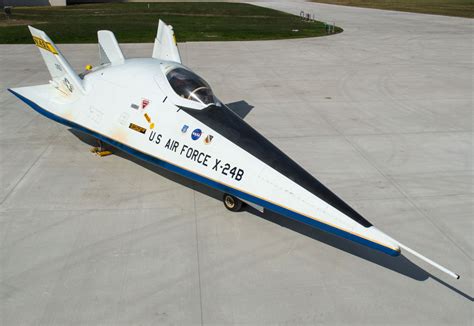
Engineers use this data to modify the design before full-scale production or flight testing. For example, NASA’s testing of the X-24B lifting body helped validate flight data against predictions, ultimately contributing to reusable spacecraft research.
The Future of Wind Tunnel Testing
As aerospace and automotive industries move toward sustainability and speed, hybrid testing strategies combining CFD, AI-driven design, and wind tunnels are emerging. Advances include:
- Digital twin technology: Virtual replicas that continuously update from physical testing
- Reconfigurable tunnels: Adjustable geometries for multi-purpose testing
- Smart sensors and wireless telemetry: For real-time feedback on airflow
These innovations ensure wind tunnels remain not just relevant but central to innovation in a world that demands faster, quieter, and cleaner technology.
Conclusion
Wind tunnel testing is far more than an experimental procedure; it is an essential engineering discipline that underpins the advancement of virtually every aerodynamic system. From its early beginnings in Victorian Britain to today’s high-speed, AI-enhanced laboratories, the wind tunnel remains a powerful symbol of human ingenuity—a controlled chaos of air that brings clarity, safety, and efficiency to our most ambitious designs.