The turn and slip indicator (T/S) is one of the most crucial flight instruments found in aircraft, serving a dual purpose that ensures smooth and safe flight operations. This instrument not only indicates the rate of turn but also provides information on whether the aircraft is in coordinated flight. Understanding how the T/S functions is essential for pilots to maintain control and avoid hazardous situations, such as skidding or slipping during a turn. In this comprehensive guide, we will delve deep into the workings of the turn and slip indicator, its variations, and its significance in modern aviation.
What is the Turn and Slip Indicator?
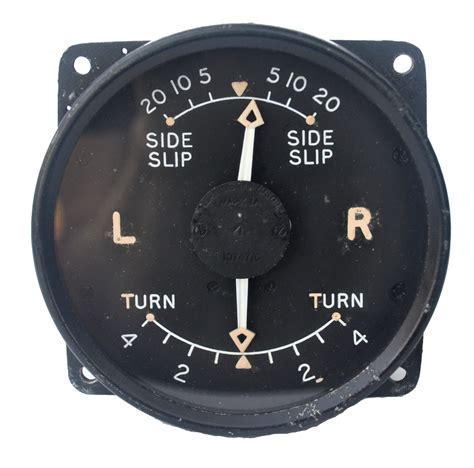
The turn and slip indicator is designed to monitor two primary factors during flight: the rate at which the aircraft turns and the coordination of that turn. It consists of two components: the turn indicator and the slip indicator. While these components work together to provide valuable flight data, they each play distinct roles in ensuring a safe and efficient flying experience.
- The turn indicator measures the aircraft’s rate of turn. This is typically displayed in degrees per second or minutes per turn, allowing pilots to gauge how quickly the aircraft is rotating around its vertical axis.
- The slip indicator (also known as the inclinometer) helps the pilot determine whether the aircraft is in a coordinated flight, meaning that the forces of yaw and roll are in balance. If the aircraft is not properly coordinated, it could be skidding or slipping, leading to a loss of control.
While the turn and slip indicator is a standard feature on most aircraft, its role has evolved with advancements in aviation technology. Despite this, the instrument remains an essential tool for ensuring precise and coordinated flight, especially in situations where external references like the horizon are not visible.
How Does the Turn and Slip Indicator Work?
The inner workings of the turn and slip indicator are based on principles of gyroscopic precession and the effects of centripetal acceleration on the aircraft. These forces are used to drive the indicators that display the rate of turn and the slip condition.
Turn Indicator: The Gyroscopic Mechanism
The turn indicator is typically a gyroscopic device that relies on the principle of precession. The gyro is mounted in a gimbal, with its rotational axis aligned with the aircraft’s lateral (pitch) axis. The gimbal allows the gyro to respond to forces applied around the aircraft’s vertical axis (yaw). When the aircraft yawns, the gyro experiences a torque force that causes it to precess around the roll axis. This precession moves the gyro in a manner directly related to the rate of turn, which in turn moves the needle on the display.
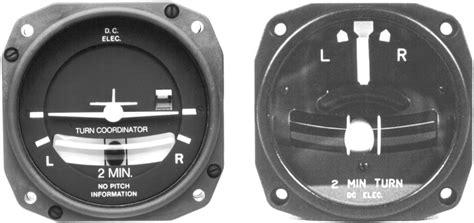
In the turn coordinator (TC), a variation of the T/S, the gimbal is tilted 30 degrees from the horizontal, allowing the instrument to respond not only to yaw but also to roll. This design enables the TC to provide quicker responses to the initiation of turns, giving the pilot a more immediate indication of the aircraft’s motion.
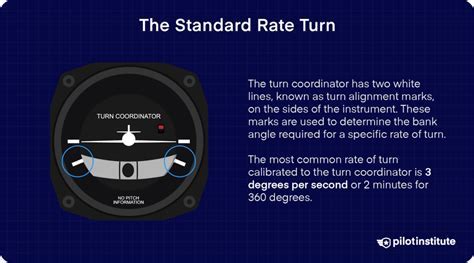
- Standard rate turns are typically represented by a needle that lines up with specific hash marks on the indicator. In a standard rate turn, the aircraft should be rotating at 3 degrees per second (also known as “rate one”), or completing a full 360-degree turn in 2 minutes.
- Faster aircraft, such as military jets or the supersonic Concorde, may use a 4-minute turn indicator that shows half the standard rate of turn, meaning a complete turn would take 4 minutes.
These indicators are essential in helping pilots perform timed turns during flight, ensuring they adhere to air traffic control regulations and maintain the correct flight path.
Slip Indicator: Coordinated Flight Monitoring
The slip indicator, often referred to as the “ball in a tube,” is an inclinometer that visually indicates the coordination of the aircraft’s flight. It consists of a ball suspended in a curved glass tube, filled with a liquid that acts as a damping medium. When the aircraft turns, the ball moves in response to the centripetal acceleration created by the turn.
- If the ball is centered in the tube, the aircraft is in coordinated flight, meaning the forces acting on the aircraft are balanced.
- If the ball moves toward the inside of the turn (the low side), the aircraft is slipping.
- If the ball moves toward the outside of the turn (the high side), the aircraft is skidding.
Skidding and slipping during a turn can cause discomfort for both the pilot and passengers, as well as reduce the efficiency of the aircraft’s flight. However, it is important to note that slipping can sometimes be intentionally used for specific maneuvers, such as during a forward slip or a sideslip in landing situations.
The Evolution of the Turn and Slip Indicator: The Turn Coordinator
The turn coordinator (TC) is a modern evolution of the turn and slip indicator. It serves the same basic purpose but offers additional functionality. As mentioned, the gimbal in the TC is mounted at a 30-degree angle to the aircraft’s horizontal plane, allowing the instrument to react more quickly to roll and yaw.
This quicker response is particularly useful during aircraft maneuvers, such as standard rate turns, where the pilot needs to maintain a precise and coordinated turn. The TC display typically features a miniature airplane symbol that serves as a reference, guiding the pilot during a turn. It’s crucial to note that the TC does not provide pitch information, which is instead obtained from the attitude indicator.
While the TC offers enhanced responsiveness, it is still used in conjunction with the turn and slip indicator in many aircraft, especially when performing partial panel operations. In the event that the attitude indicator fails, the TC can provide valuable information on the aircraft’s roll and turn rates, although it requires careful understanding from the pilot.
The Practical Implications of Skipping or Skidding During a Turn
A coordinated turn is crucial not only for passenger comfort but also for the safety and efficiency of the aircraft. When an aircraft is in coordinated flight, the forces acting on the passengers are aligned with their seats, causing minimal discomfort. In contrast, a skidding or slipping turn results in forces that push the passengers in unnatural directions, leading to discomfort and potential safety concerns.
Skidding occurs when the aircraft is turning too quickly for the amount of bank being applied, causing the aircraft to slide toward the outside of the turn. This can be particularly dangerous at low altitudes or speeds.
Slipping, on the other hand, happens when the aircraft is turning too slowly, causing the aircraft to drift toward the inside of the turn. This condition can be used intentionally for specific maneuvers, such as during crosswind landings, where the pilot deliberately slips the aircraft to maintain control during landing.
The FAA’s Stance on the Turn and Slip Indicator
Despite the usefulness of the turn and slip indicator in traditional aviation, the Federal Aviation Administration (FAA) has recently updated its stance on the instrument. In Advisory Circular No. 91-75 (June 25, 2003), the FAA stated that the turn and slip indicator and turn coordinator are obsolete for modern flight operations. The circular cites that in the current air traffic control system, there is less need for precise rate-of-turn measurements and timed turns.
Instead, the FAA now permits the replacement of the T/S and TC instruments with additional attitude indicators, which provide both horizontal and vertical attitude information. This change offers greater safety redundancy in case one of the systems fails, and it provides a more comprehensive view of the aircraft’s orientation.
While the T/S and TC instruments are no longer mandatory, the slip indicator remains required. In many modern aircraft, the slip indicator is integrated into the attitude indicator, allowing pilots to continue monitoring the coordination of their flight during turns.
Conclusion: The Turn and Slip Indicator’s Legacy
Although the turn and slip indicator has been largely superseded by newer technology in many aircraft, its legacy remains significant. The T/S and its variations, such as the turn coordinator, played an essential role in flight safety by helping pilots maintain precise, coordinated turns during their flights. While modern aircraft systems now provide more advanced information, the principles behind the turn and slip indicator are still crucial for pilots, particularly in situations where primary flight displays are unavailable.
As aviation technology continues to evolve, the turn and slip indicator will remain a valuable tool for understanding the dynamics of flight. By offering critical information about the rate of turn and the coordination of that turn, it ensures pilots maintain control over their aircraft, delivering safe and comfortable flights for passengers.