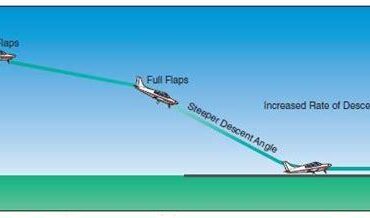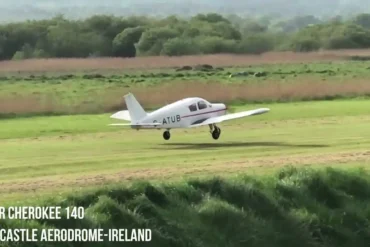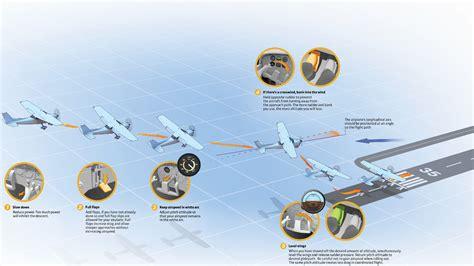
In general aviation, few maneuvers offer as much utility and control during a non-standard approach as the forward slip. When configured and executed correctly, slipping an aircraft becomes an essential technique to rapidly lose altitude without increasing airspeed, especially during a high approach on final. This is particularly useful when a go-around is undesirable or terrain or airspace constraints prevent a wide pattern. While slips may appear dramatic, they are highly effective—when understood and practiced within safe margins.
To fully grasp the function and value of this maneuver, we must dissect its aerodynamic underpinnings, the differences between slip types, and how a forward slip can be used not only to adjust approach profiles, but to enhance landing precision under real-world conditions.
Understanding Aircraft Slips: Forward vs. Side Slip
Slipping refers to intentionally cross-controlling the aircraft, combining opposite inputs of rudder and aileron. Two distinct types of slips exist, each with a unique purpose:
- A side slip is commonly used to correct for lateral drift caused by crosswinds during landing. By banking into the wind and applying opposite rudder to maintain runway alignment, the pilot maintains a straight ground track.
- A forward slip, by contrast, is used to lose altitude quickly without accelerating. It involves banking the aircraft while simultaneously applying opposite rudder to prevent a turn. This exposes a greater surface area of the fuselage to the relative wind, increasing drag and steepening the descent angle.
It is critical to remember that while both involve crossed controls, they differ in application and effect. A side slip is for directional correction, while a forward slip is for vertical descent control.
How the Forward Slip Works: Physics and Control Input
The forward slip is a maneuver rooted in aerodynamic drag manipulation. When an aircraft banks and the pilot applies opposite rudder, the nose remains off-center relative to the flight path. This orientation increases the aircraft’s drag profile substantially. Because the thrust vector no longer opposes the flight path directly, vertical speed increases even as indicated airspeed stays near constant or drops slightly—though caution is warranted.
To execute a forward slip:
- Lower one wing using aileron input
- Simultaneously apply full or significant opposite rudder to keep the nose pointed toward the runway or desired heading
- Keep the nose down below the horizon to avoid an inadvertent stall
The result is a steep, controlled descent that does not rely on power changes or flap deployment, making it ideal when drag needs to be increased quickly without compromising speed or trajectory.
Executing the Forward Slip: Best Practices and Cautions
Executing a forward slip is not inherently dangerous, but doing it poorly—especially close to the ground—can be. One of the critical points to consider is that during a slip, the aircraft’s airspeed indicator may become unreliable. This is due to the static ports and pitot tube receiving airflow from distorted angles. As such, pilots should fly the attitude and use a known margin above stall speed to maintain a safety buffer.
Other key safety principles include:
- Avoid stalling at low altitude. With crossed controls, the aircraft is closer to a critical angle of attack, particularly on the higher wing. A stall during a slip can be unrecoverable close to the ground.
- Maintain extra airspeed margin. Because descent is rapid and recovery needs energy, an added safety buffer helps ensure stability upon transitioning to final.
- Use the maneuver within POH limitations. Some aircraft—especially high-wing models or those with certain flap configurations—may prohibit slips with full flaps. Always consult the Pilot’s Operating Handbook (POH).
Left or Right Slip: Does It Matter?
In calm wind conditions, it does not matter which wing is low during a forward slip. The pilot can choose the direction that offers better visibility or ergonomic comfort. Some pilots prefer slipping with the left wing down (left aileron, right rudder) as it allows better view of the runway from the left seat. Others prefer right slips due to control harmony or sightline preference.
However, in the presence of crosswind, the direction matters more. You should drop the wing into the crosswind direction during the forward slip. This allows for a smooth transition into a side slip just prior to touchdown, maintaining directional control through the landing roll.
This makes slips both versatile and dynamic—they can serve multiple roles during an approach if flown with foresight.
Recovering from the Slip: Aligning for Touchdown
Recovery from a forward slip should occur early enough to allow the aircraft to stabilize in a normal approach configuration before reaching the runway threshold. The recovery sequence involves:
- Reducing rudder input incrementally (not all at once)
- Leveling the wings using coordinated aileron inputs
- Neutralizing rudder once the aircraft is aligned with the runway and coordinated flight is restored
The descent rate will rapidly decrease once the slip is exited, and the aircraft may need a slight power or pitch adjustment to transition smoothly into the landing flare. Practice is critical—particularly in transitioning between slip and final glide, as timing and coordination are essential.
When and Why to Slip: Application Scenarios
Slips are valuable in a number of real-world flying situations:
- Overshooting final with no room for a go-around
- Landing at high-altitude airports where float risk increases due to thinner air
- Short-field landings where steep descents help avoid obstacles or terrain
- Landing without flaps, whether due to malfunction or POH recommendation
Pilots must understand that slipping is not a replacement for planning. A slip should not be your primary descent strategy, but rather a tool for fine-tuning altitude when the pattern or terrain doesn’t allow for standard descent profiles.
Training and Proficiency: The Key to Safe Slips
Like many manual techniques in aviation, slips require practice and proficiency. A good exercise during training is to execute slips from various altitudes and wind conditions while noting descent rates, airspeed changes, and control response. One should also practice transitioning from forward slip to stabilized landing configuration with precision.
During dual instruction, instructors often simulate landing without flaps, forcing the student to use slips to manage descent. This helps build instinctive control input timing and teaches respect for the maneuver’s limitations.
It is especially useful to practice in both directions to ensure comfort with left and right slips. Some pilots may find one side less intuitive than the other depending on physical posture, hand dominance, or visibility from the cockpit.
Conclusion: Mastery in the Slip Is Mastery in Precision Flying
The forward slip remains one of the most effective, manual descent techniques available to general aviation pilots. When executed with knowledge, discipline, and coordination, it enables precise, controlled altitude loss without relying on powered or high-drag configurations. From short-field landings to unexpectedly high final approaches, the slip can make the difference between a go-around and a smooth touchdown.
To use slips proficiently is to understand the aerodynamics of drag, energy management, and aircraft attitude. It demands situational awareness, but rewards the pilot with flexibility, control, and confidence in marginal approach environments. Like all advanced maneuvers, slips must be learned methodically and executed with practiced familiarity. Only then can pilots fully appreciate—and safely apply—the full utility of slipping to lose altitude.