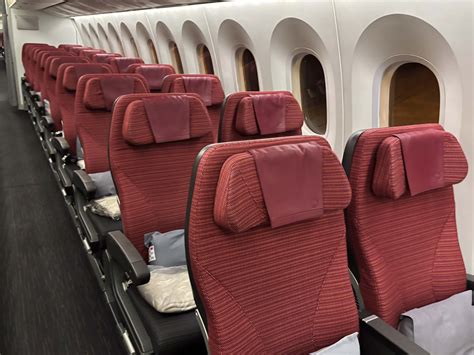
Travelers in 2025 are navigating an aviation landscape shaped by denser cabin layouts, tighter legroom, and increasingly compact seating. Yet one carrier refuses to follow the crowd. Japan Airlines (JAL) has built a reputation for elevating the economy-class experience into a category of its own, ultimately earning the title of World’s Best Economy Class Seat at the prestigious SKYTRAX World Airline Awards. In a global environment where comfort has been traded for capacity, JAL has steered the conversation back toward spaciousness, thoughtful design, and passenger well-being.
Its recognition comes not as a one-off triumph but as part of a consistent pattern. JAL has claimed variations of this economy-class accolade multiple times, cementing its place among the most passenger-centric airlines in the world. The brand’s approach goes beyond marketing. It is rooted in cabin engineering, seating architecture, hospitality, and the gentle precision for which Japan is famous.
Why Japan Airlines Leads the Comfort Race
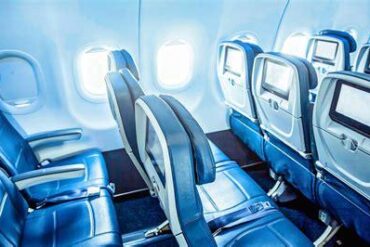
The core reason behind JAL’s dominance lies in the physical attributes of its JAL Sky Wider design philosophy. At a time when many airlines are reducing pitch and squeezing seating rows to accommodate more passengers, JAL is moving in the opposite direction. Its economy-class spaces feel more like a respectful invitation rather than a compromise.
The seats feature a 33–34-inch pitch, noticeably more generous than the 29–31 inches commonly seen on long-haul competitors, according to industry data. These dimensions are not merely numerical bragging rights; they dramatically impact how travelers physically experience long-haul flying. Stretching legs without intrusion, adjusting posture comfortably, and avoiding the dreaded “knees-to-seatback” crunch all contribute to the sense of ease that JAL passengers consistently report.
This comfort is amplified by a 2-4-2 layout on Boeing 787s and 777s, replacing the more constricting nine-across configuration other airlines use. The layout frees approximately 5 cm of extra width per seat, an astonishing difference in an industry where even 1 cm is argued over passionately in engineering meetings.
What makes the JAL Sky Wider seat distinctive is not simply its dimensions but its engineering logic. Slimmer, sculpted seatbacks create more real-world legroom without sacrificing structural integrity. The slight recline angle built into the fixed seatback mitigates the discomfort of someone reclining fully in front of you — because no one reclines onto you at all.
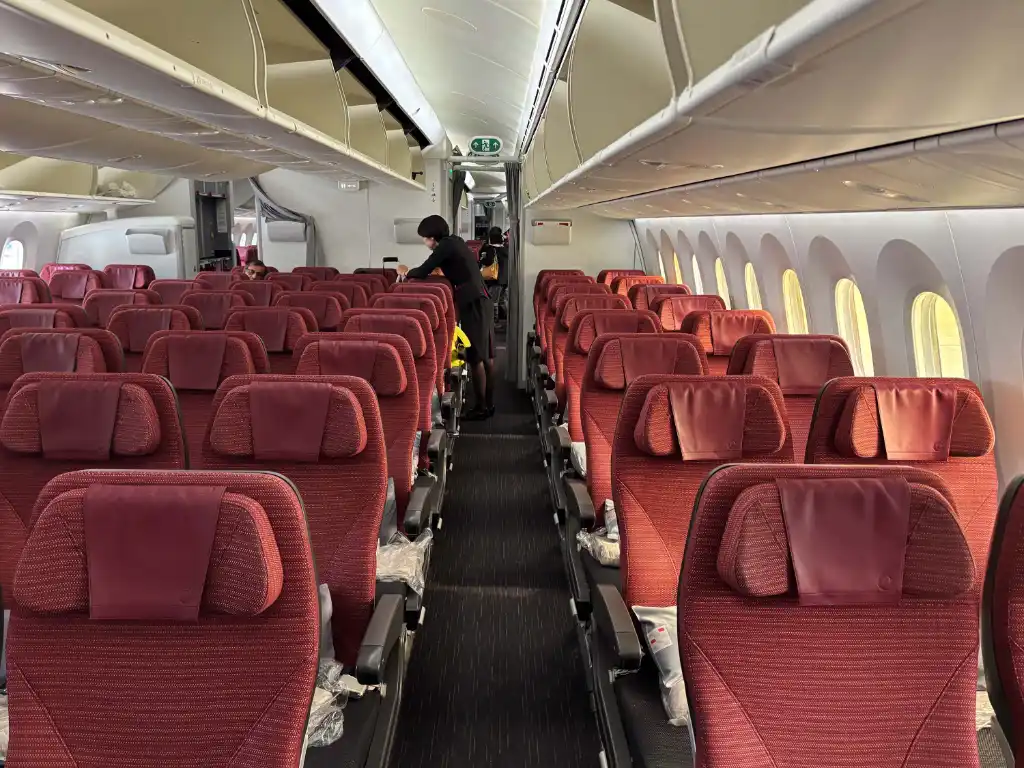
A Cabin Designed for Real Travelers
Passengers board to find seatback storage spaces, a water bottle holder, and both USB and universal power outlets. Rather than a cluttered arrangement, these details are positioned in a streamlined, intuitive layout that minimizes fumbling and maximizes convenience.
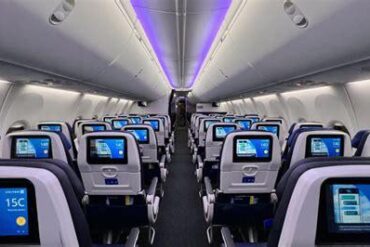
A 10.6-inch touchscreen anchors each seat, powered by the well-curated MAGIC in-flight entertainment system, a sweeping library of films, audiobooks, games, and TV — including Japanese cultural programming not easily found elsewhere. Passengers also receive one hour of complimentary Wi-Fi, a rarity in economy cabins worldwide.
What stands out in real-world use is how the details work together. The touches that seem small from a distance — like an accessories pouch for cables or space to store a book — prevent the gradual irritation that accumulates on a long flight. JAL’s design anticipates human behavior rather than forcing travelers into rigid ergonomics.
Variants That Enhance the Experience on Different Aircraft
JAL’s fleet diversity means not all economy seats are identical. Some are enhanced by unique design partnerships and next-generation cabin concepts.
Several Boeing 787-8s and Boeing 737-800s feature seating developed with RECARO, a company known for merging automotive racing ergonomics with aviation comfort. These seats include hammock-style headrests, adjustable for travelers seeking neck stability during long-haul rest. The configuration remains 2-4-2 with a generous 45 cm width, making even the smallest JAL long-haul jets more comfortable than many competitors’ flagships.
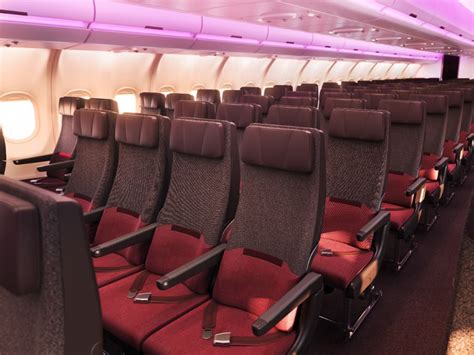
A standout is the next-generation Airbus A350-1000, which introduces a seat architecture built to reduce muscle fatigue, increase lumbar support, and expand personal space. These seats consistently win SKYTRAX’s “Best Economy Class Airline Seats” — an award JAL has held for six consecutive years.
Travelers immediately notice the thicker yet more supportive cushioning, enhanced headrests with multi-directional movement, and the wider tray table engineered for both dining and laptop use. Depending on the row, passengers are greeted with either a 13-inch 4K display or a 12-inch HD screen, both brighter and sharper than standard industry offerings.
Understanding Seat Specifications Across the Fleet
The JAL fleet delivers comfort as a unified philosophy but with traits tailored to each aircraft model. These generous seat widths and pitches show how the airline consistently prioritizes passenger space:
- Airbus A350-1000: 46 cm width, 84–86 cm pitch, 3-3-3 layout
- Boeing 767 (Sky Suite): 45 cm width, 84–86 cm pitch, 2-3-2 layout
- Boeing 777 (Sky Suite): 47 cm width, 84–86 cm pitch, 3-3-3 layout
- Boeing 787-9 (Sky Suite): up to 48 cm width, 84 cm pitch, 2-4-2 layout
- Boeing 787-8: 45 cm width, 79 cm pitch, 2-4-2 layout
Bulkhead, exit-row, and front-row seats can be pre-booked for added legroom. Across all aircraft types, JAL seats remain wider than the global average—sometimes by a surprising margin.
A Thoughtful Approach to Economy Amenities
Japan Airlines doesn’t stop at seating. The in-cabin dining and amenity experience reinforces its core idea: even economy passengers deserve hospitality that feels intentional.
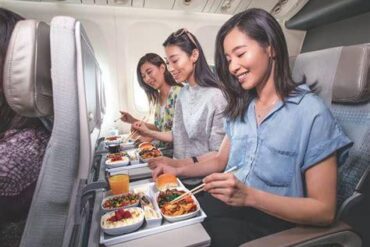
Menus rotate through Japanese-inspired dishes curated by renowned brands and regional culinary teams. A flight attendant presents a dedicated menu card that includes Western and Japanese selections, embracing both international tastes and Japan’s food culture. The airline famously serves Häagen-Dazs ice cream in exclusive flavors and maintains a Sky Oasis snack corner stocked with treats.
Long-haul travelers can request special meals, explore the Sky Wellness Kitchen, and follow provided stretching guides designed to reduce stiffness on ultra-long journeys.
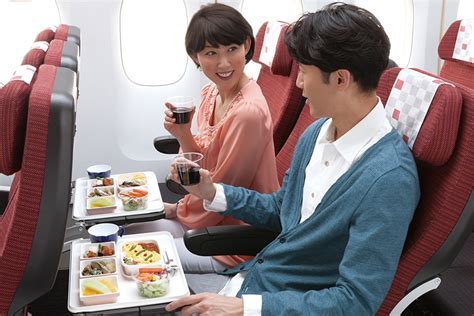
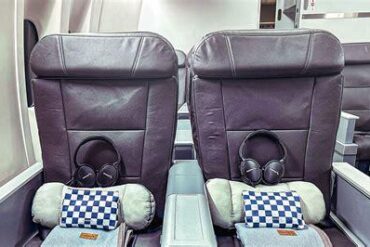
Passengers receive comfortable blankets, supportive pillows, and adequate-quality headphones. Lavatories are larger than typical economy lavatories and equipped with a bidet washlet function, a uniquely Japanese touch rarely seen outside premium cabins. Accessories such as slippers and medical items are available, and long-haul flyers receive an amenity kit stocked with essentials like earplugs, eye masks, and toothbrush sets.
Premium Economy: A Different Dimension of Space
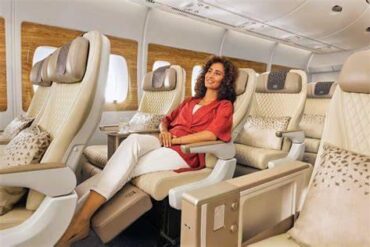
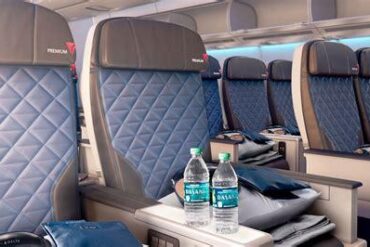
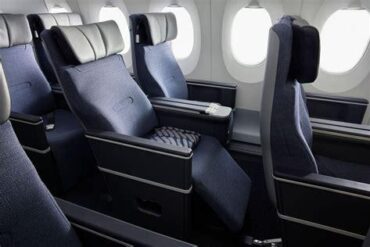
JAL’s premium economy doesn’t merely build on the economy seat; it creates a category that elevates personal space and privacy significantly. The JAL Sky Premium design ensures the front seat does not recline backward, preserving personal space at all times.
Travelers enjoy a structural upgrade with three-step footrests, a fixed privacy divider, and a more extensive work-friendly tray table. The screens expand to 12.1 inches, noise-canceling headphones are standard, and the amenity kits include premium touches such as moisture masks.
Premium economy passengers also benefit from Sakura Lounge access at select airports. The experience feels like a hybrid between economy and business: Champagne becomes available, and the airline’s signature Udon De Sky noodles add a cultural highlight.
Japan Airlines as a Global Flag Carrier
Although JAL is technically Japan’s second-largest airline, many still consider it an unofficial flag carrier due to its deep cultural heritage and international profile. Its hubs at Tokyo Narita (NRT), Tokyo Haneda (HND), and Osaka Kansai (KIX) enable extensive connectivity, including 220 destinations in 35 countries.
In September 2025, the airline achieved a remarkable 98.79% operational completion rate, operating nearly 25,000 domestic and 4,691 international flights within the month.
North American travelers benefit from routes across major cities, including: Boston, New York, Chicago, Dallas, Houston, Seattle, San Diego, Los Angeles, San Jose, San Francisco, and Vancouver.
A Consistent Legacy of Awards and Excellence
Japan Airlines consistently earns international recognition for its hospitality, service quality, and cabin innovation. SKYTRAX and APEX have repeatedly honored its economy and premium economy products. In 2025, JAL secured APEX World Class Status certification for the fourth consecutive year.
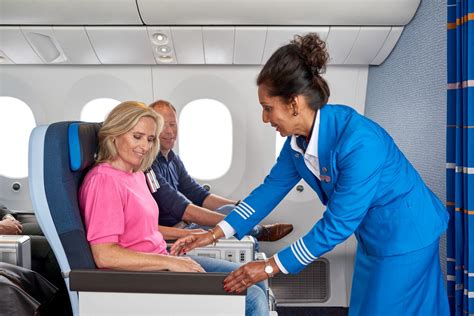
The airline’s philosophy extends beyond comfort into sustainability, safety, and cultural authenticity. Many travelers note how the smallest gestures from flight attendants contribute meaningfully to the flight — water refilled without being asked, meals served with warmth, and attention to detail reflecting classic Japanese manners.
The Broader Meaning of ‘Comfort’ in Modern Air Travel
What makes JAL’s economy class truly exceptional is its commitment to coherence. The spacious seats, amenity touches, exceptional food program, and dedicated service form a unified experience built around respect for the traveler’s body and mind.
While many global airlines chase profitability through densification, Japan Airlines positions comfort as a competitive advantage. Its investment is strategic and passenger-centric, proving that operational efficiency does not require sacrificing humanity.
For those traveling to or through Japan, selecting JAL is more than a booking choice; it is an invitation to start the journey with hospitality and ease. Even passengers who typically prefer premium cabins often praise JAL’s economy as standing above the industry average.
JAL deserves its title as the airline with the world’s most comfortable economy class seat in 2025, not just for its engineering excellence but for its holistic vision of passenger well-being. This is the standard by which future economy cabins will likely be judged.