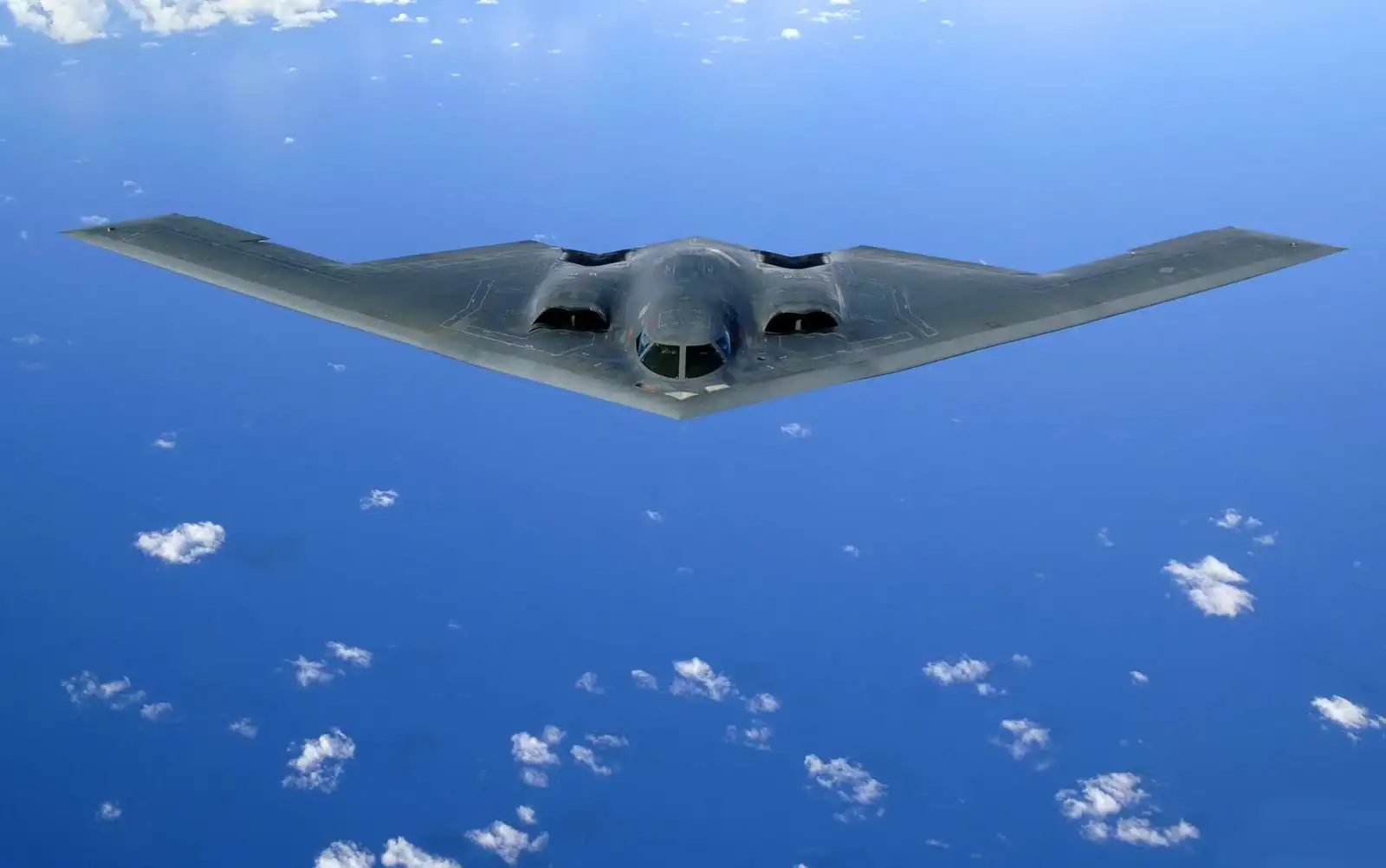
On February 20, 2026, Sierra Nevada Corporation confirmed a pivotal milestone in the modernization of America’s premier stealth bomber: the successful first flight of its Adaptable Communications Suite 4.0 aboard the Northrop B-2 Spirit. The airborne validation marks the transition from laboratory and ground-based integration into operational flight conditions, a decisive step in ensuring that the B-2 remains digitally relevant in an era defined by networked warfare.
The significance of this upgrade lies not in aerodynamic changes or new weapon types, but in the invisible architecture that now links the bomber to the broader battlespace. Modern global strike missions demand more than stealth and payload; they require resilient, encrypted, real-time connectivity across joint and combined command networks. ACS 4.0 is engineered precisely for that purpose—delivering a secure, open mission-system computing environment capable of integrating with evolving military data links and command structures.
Developed in partnership with Northrop Grumman, the system aligns the B-2 with the U.S. Department of Defense’s Combined Joint All-Domain Command and Control (CJADC2) framework. In practical terms, that means enabling seamless digital communication between air, land, sea, space, and cyber forces during long-range strike operations. In a contested electromagnetic spectrum—where jamming, spoofing, and cyber intrusion are constant threats—secure interoperability becomes as vital as radar evasion.
The Strategic Logic Behind ACS 4.0 Integration
The Adaptable Communications Suite 4.0 represents a structural shift in how legacy platforms evolve. Rather than functioning as an external bolt-on upgrade, ACS 4.0 is integrated directly into the B-2’s mission-system backbone. This internal integration allows the aircraft’s computing core to communicate securely with multiple military systems while preserving the bomber’s low observable characteristics.
Its architecture is built on an open mission systems concept—a modular framework that allows software and hardware modules to be added, replaced, or upgraded without redesigning the airframe. Open architecture reduces integration timelines, lowers long-term sustainment risk, and ensures compatibility with emerging digital standards. For an aircraft expected to serve into the early 2030s, this adaptability is not optional; it is foundational.
The first-flight milestone confirms that the communications and computing environment can operate reliably under airborne conditions. That includes vibration, thermal variation, electromagnetic interference, and operational workload stress. Flight validation moves the program from theoretical compatibility to demonstrable operational capability, clearing the path for further testing and incremental fleet-wide deployment.
The B-2 Spirit: Stealth Legacy Meets Digital Evolution
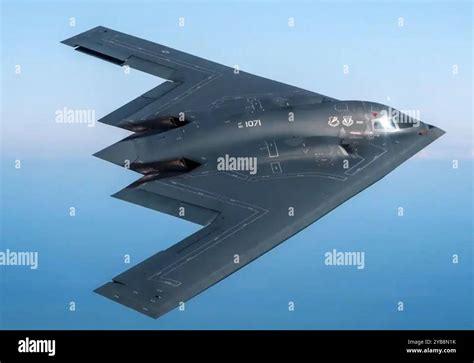
The B-2 Spirit entered operational service on January 1, 1997, following its maiden flight on July 17, 1989. Conceived under the Advanced Technology Bomber program in 1979, the aircraft embodied a radical departure from traditional bomber design. Its flying wing configuration eliminates vertical stabilizers, dramatically reducing radar cross-section and enabling penetration of heavily defended airspace.
Only 21 aircraft were produced between 1989 and 2000, far fewer than the originally planned 132, following post–Cold War procurement reductions. Nineteen remain in active inventory today after one crash in 2008 and the retirement of another aircraft in 2022. The fleet is primarily based at Whiteman Air Force Base, Missouri, under the 509th Bomb Wing within Air Force Global Strike Command.
Measuring 21 meters in length with a 52.4-meter wingspan, the B-2 has a maximum takeoff weight of 170,600 kilograms. Four General Electric F118-GE-100 turbofan engines, each producing 77 kilonewtons of thrust, are embedded within the wing to minimize radar and infrared signatures. The aircraft cruises at high subsonic speeds near 1,010 kilometers per hour and operates at a service ceiling of 15,200 meters. Its unrefueled range exceeds 11,000 kilometers and can surpass 19,000 kilometers with aerial refueling, enabling true intercontinental strike capability.
Global Strike Missions in Practice
Since entering service, the B-2 has conducted operational missions in Kosovo in 1999, Afghanistan and Iraq throughout the 2000s, Libya in 2011, Yemen in 2024, and strikes against Iranian nuclear facilities in 2025. These missions illustrate the bomber’s role as both a conventional and nuclear-capable strategic asset.
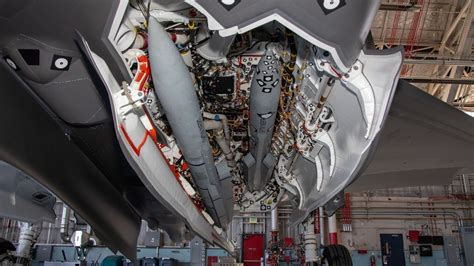
The aircraft carries weapons internally in two bays to preserve stealth performance. Official internal payload capacity stands at 18,000 kilograms, though operational configurations have reached 27,000 kilograms. The B-2 can deploy up to 80 GBU-38 500-pound Joint Direct Attack Munitions or 16 GBU-31 2,000-pound bombs. It is also certified to carry two 13,600-kilogram GBU-57 Massive Ordnance Penetrators for hardened underground targets, as well as AGM-158 Joint Air-to-Surface Standoff Missiles and B61 or B83 nuclear bombs.
What distinguishes the ACS 4.0 upgrade is its focus on the connective tissue of these missions. Precision weapons are only as effective as the intelligence and targeting data that guide them. Secure digital links enable real-time updates, dynamic retasking, and synchronized multi-domain operations. In future conflicts, the tempo of decision-making will compress dramatically; aircraft that cannot communicate securely risk strategic isolation.
Cost, Sustainment, and Modernization Imperatives
The B-2 program’s procurement cost averaged $929 million per aircraft in 1997 dollars, while total program cost—including research, development, facilities, and support—reached approximately $2.13 billion per aircraft. Overall expenditure amounted to $44.75 billion in 1997 dollars. Such investment underscores why sustaining operational relevance through modernization is economically rational.
Operating the B-2 has always required specialized infrastructure. Climate-controlled hangars preserve radar-absorbent coatings, and maintenance demands remain intensive compared to legacy bombers. Over the decades, the fleet has undergone avionics upgrades, radar modifications, computing architecture refreshes, and weapons integration enhancements. ACS 4.0 now adds a communications and secure computing layer that ensures compatibility with next-generation command networks.
The immediate focus of ACS 4.0 is not aerodynamic improvement but digital survivability. In contested environments, adversaries increasingly target networks rather than platforms. Cyber intrusion, signal disruption, and data manipulation can degrade operational effectiveness without firing a shot. A hardened, modular communications suite strengthens the aircraft’s resilience against such threats while preserving flexibility for future capability growth.
Bridging to the B-21 Era
The B-2 is scheduled for retirement no later than 2032 as the B-21 Raider enters service. Yet until that transition is complete, the Spirit remains a critical pillar of U.S. strategic deterrence. Integrating ACS 4.0 ensures that the aircraft can operate within modern joint frameworks during this bridging period.
The modernization path reflects a broader doctrinal shift. Strategic bombers are no longer solitary penetrators relying solely on stealth; they are nodes within a distributed, data-rich combat ecosystem. The ability to exchange secure information across domains—air, sea, land, space, and cyber—multiplies the effectiveness of each sortie.
The successful first flight of ACS 4.0 aboard the B-2 Spirit signals more than a technical milestone. It represents the continuation of a strategic philosophy: preserving stealth advantage while embedding the platform within the digital nervous system of modern warfare. As adversaries refine integrated air defenses and electronic attack capabilities, survivability will depend not only on reduced radar signatures but also on encrypted, adaptable, and resilient connectivity.
In that sense, the B-2’s latest upgrade is not merely a communications enhancement. It is a reaffirmation that even the most iconic stealth platform must evolve continuously to remain decisive in an increasingly networked battlespace.