American Airlines entered the final quarter of 2025 with momentum, demand strength, and a network operating near full throttle. What it did not plan for was a prolonged U.S. government shutdown that rippled through the aviation system and abruptly constrained operations. When the Fort Worth–based carrier closed its books, the impact was stark: approximately $325 million in lost fourth-quarter revenue, a figure that underlines how deeply federal disruptions can penetrate even the most resilient airline balance sheets.
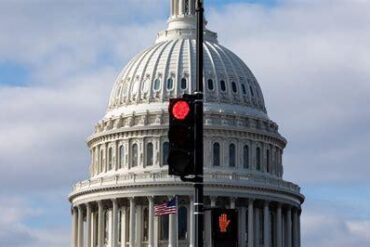
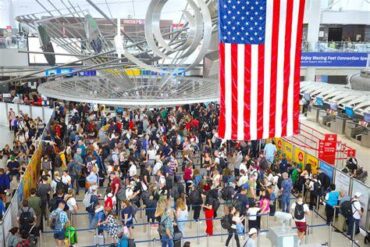
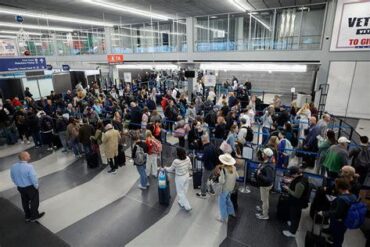
The shutdown, which stretched for 43 days and ended in mid-November, affected air traffic control staffing, regulatory oversight, and multiple support functions that rely on federal employees. The result was a wave of cancellations, schedule disruptions, and suppressed capacity during what is typically a strong late-year travel period. Yet the story is not simply one of loss. Against this headwind, American Airlines still delivered its highest-ever Q4 and full-year revenues, a rare duality of operational stress and financial strength.
The numbers reveal an airline absorbing systemic shocks while still pushing forward, a theme that now defines American’s position as it heads into its centenary year in 2026.
Record-Breaking Revenue Masked by Extraordinary Disruption
In full-year terms, American Airlines generated $54.6 billion in revenue in 2025, the highest annual figure in its history. Operating costs reached $53.2 billion, leaving a pre-tax profit of $352 million. After accounting for $115 million in income tax provision, the airline posted net income of $237 million, excluding special items.
These results matter because they were achieved in an environment that was anything but stable. Inflationary pressures, elevated fuel prices, and labor cost escalation all weighed on margins. Even so, American managed to hold the line, illustrating the scale advantages and network depth that define the U.S. legacy carriers.
Salaries, wages, and benefits remained the airline’s single largest expense category at $17.6 billion, reflecting both contractual labor increases and a fully staffed operation. Fuel and fuel-related taxes followed closely at $10.7 billion, reinforcing how sensitive airline profitability remains to energy markets.
Just as significant was balance sheet progress. American Airlines reduced total debt by $2.1 billion during the year, strengthening financial flexibility at a time when external shocks are becoming more frequent rather than less predictable.
How the Government Shutdown Translated Into a $325M Hit
The fourth quarter itself was shaping up to be historic. American Airlines reported Q4 revenue of $14.0 billion, an all-time high for the period. But beneath that headline figure sits the estimated $325 million revenue shortfall directly attributed to the government shutdown.
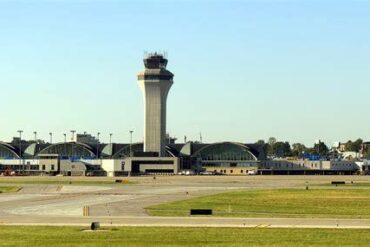
Aviation depends on federal infrastructure in ways passengers rarely see. Air traffic controllers, safety inspectors, and regulatory personnel are integral to daily flight operations. When staffing levels drop or uncertainty creeps into the system, airlines respond conservatively, trimming schedules and canceling flights to preserve safety and compliance.
For American, this meant lost ticket sales, disrupted connectivity across its hub-and-spoke network, and weaker utilization of aircraft during a season that typically benefits from holiday travel demand. The impact was not isolated. Delta Air Lines, another U.S. legacy carrier, separately projected a $200 million loss from the same shutdown, underscoring the systemic nature of the disruption.
Despite this, American still delivered a GAAP net income of $99 million in Q4, equivalent to $0.15 per diluted share. That outcome speaks to cost discipline, pricing power in key markets, and the cushioning effect of diversified revenue streams, including loyalty and premium products.
Leadership Perspective and Strategic Resilience
Chief Executive Officer Robert Isom, who has led American Airlines since March 2022, framed the results as evidence of long-term strategy paying off under pressure. Investments in customer experience, fleet renewal, partnerships, and the AAdvantage loyalty program have collectively increased revenue durability, allowing the airline to absorb shocks without slipping into loss.
This resilience is increasingly valuable in a world where operational disruptions now come from multiple directions: political gridlock, extreme weather, supply-chain fragility, and geopolitical uncertainty. The government shutdown was not a failure of airline execution; it was an external constraint imposed on an industry tightly interwoven with federal systems.
Weather Compounds Risk as 2026 Begins
No sooner had the shutdown faded than another disruption emerged. Winter Storm Fern swept across the Eastern United States, grounding flights at an unprecedented scale. American Airlines described the event as the largest weather-related operational disruption in its history, with more than 9,000 cancellations over a single weekend.
The financial implications are immediate. American revised its first-quarter guidance, implementing a 1.5% capacity reduction that is expected to cost $150 million to $200 million in lost revenue. While weather events are nothing new to aviation, the increasing intensity and frequency of such storms amplify earnings volatility.
Centenary Year Outlook: Cautious Optimism Anchored in Scale
Even with these challenges, American Airlines enters 2026 from a position of strength. Few airlines can claim record revenues, debt reduction, and positive net income in a year marked by both political and meteorological disruption. The centenary milestone is more than symbolic; it reflects a century of adaptation to forces far beyond the airline’s control.
The $325 million government shutdown impact will stand as a case study in how policy decisions reverberate through commercial aviation. Yet it also highlights the durability of a carrier that, even when constrained, continues to generate cash, serve millions of passengers, and invest in its future.
In an industry where margins are thin and risks are expanding, American Airlines’ 2025 performance sends a clear message: systemic shocks may bend the balance sheet, but they did not break it.