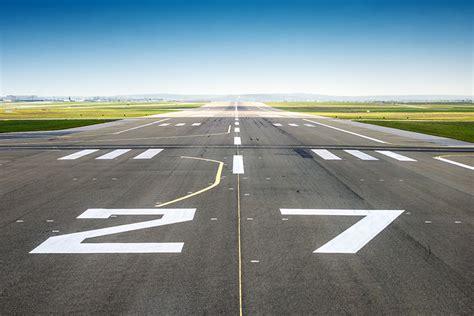
When pilots line up on a runway, those bold white numbers ahead of them are more than just paint—they’re precise aeronautical references grounded in magnetic navigation. Runway numbers represent an ingenious yet logical system to ensure every takeoff and landing aligns with safety, efficiency, and geography. Let’s unpack this highly specific system to understand what runway numbers reveal about orientation, magnetic heading, and flight operations.
What Do Runway Numbers Mean?
Runway numbers are derived from the magnetic azimuth (or compass bearing) of the runway’s alignment, rounded to the nearest 10 degrees and shortened by removing the final zero. For instance, if a runway aligns to 087°, it is rounded to 090°, and the number becomes “09”. Conversely, if the runway points to 134°, it is rounded to 130°, and the number becomes “13”.
This means each runway number essentially correlates to the magnetic compass reading a pilot would see when aligned on that runway centerline.
Why Magnetic Heading Is Used
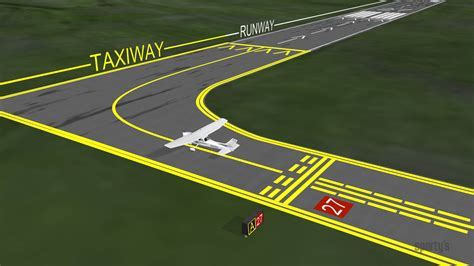
The primary reason for using magnetic headings instead of true headings lies in practicality. Aircraft compasses are influenced by Earth’s magnetic field, not the geographic North Pole. Therefore, aligning the numbers to magnetic north simplifies operations, allowing pilots to cross-check instruments with actual runway orientation during approach, takeoff, and landing.
This is particularly vital in visual and instrument meteorological conditions (IMC), where visual references may be minimal, and flight instruments are relied upon for alignment and safety.
How Runway Orientation Is Chosen
Designing a runway isn’t arbitrary. Several environmental and operational factors influence its alignment:
-
Prevailing wind directions: Aircraft take off and land into the wind to maximize lift.
-
Terrain considerations: Avoiding mountainous areas or obstacles.
-
Noise abatement: Minimizing sound impact on surrounding residential zones.
-
Airspace structure: Integrating with existing controlled zones and approach paths.
-
Historical wind data: Typically, at least a decade’s worth of wind information is studied before finalizing orientation.
The ideal outcome is a runway that offers the highest usability percentage—allowing aircraft to operate into headwinds the majority of the year.
Reciprocal Runways Explained
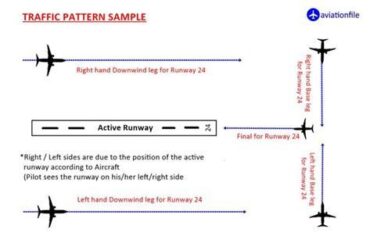
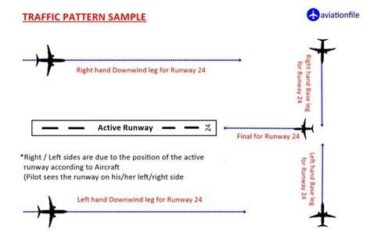
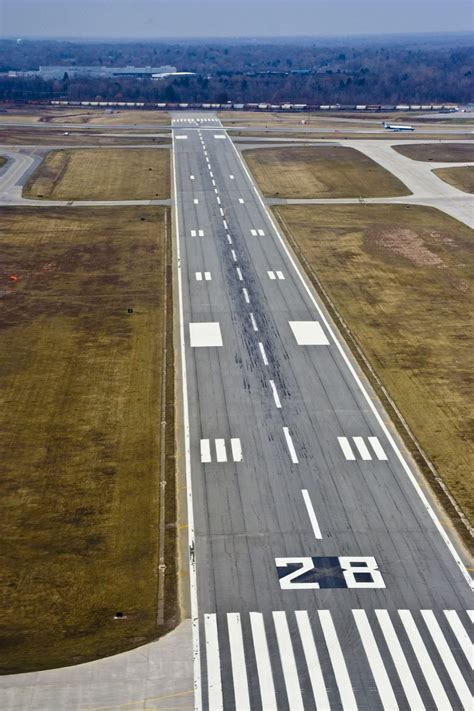
Every runway can be used in both directions. Therefore, each end of a runway has a different number, exactly 180 degrees apart. This is why a runway marked 09 on one end will be marked 27 on the other—90° + 180° = 270°.
This concept is essential when determining landing direction based on wind, visibility, and air traffic control guidance.
Why There’s No Runway “00”
Even though a compass starts at 0°, there is no runway labeled “00.” Runways aligned directly north are labeled 36, representing 360°. This is consistent with aviation heading conventions, where north is referred to as three-six-zero rather than zero-zero-zero.
When Runways Change Numbers
Earth’s magnetic poles drift over time. This movement, called magnetic variation, gradually alters compass readings. If this shift is significant enough, a runway’s magnetic alignment may shift past a 10-degree threshold, requiring the runway number to be updated.
Such changes are rare but not insignificant. Airports must repaint numbers, update documentation, and revise aeronautical charts accordingly.
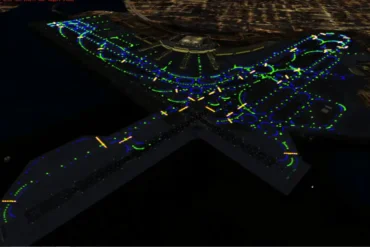
Parallel Runways and the Use of Letters
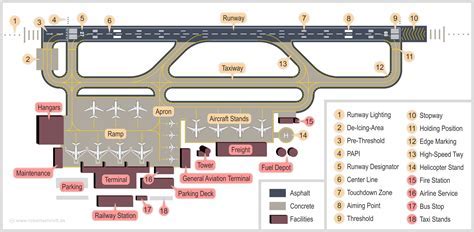
Major airports often have multiple runways pointing in the same direction. To differentiate between them, alphabetical suffixes are used:
-
L for Left
-
C for Center
-
R for Right
So, two parallel runways aligned on 090° may be marked 09L and 09R. If a third exists, it becomes 09C. At airports with more than three parallel runways, the heading may be altered slightly—e.g., 090° becomes 091° or 092°, allowing for designations like 09L, 09R, and 10L.
True North vs. Magnetic North
While magnetic heading is the standard, exceptions exist. In high-latitude regions such as Northern Canada, Greenland, or parts of Antarctica, magnetic variation is extreme and volatile. To maintain operational consistency, some airports adopt true north for runway designation.
Military and research airfields may also use true heading, especially for precision operations requiring consistent reference points unaffected by magnetic drift.
Speaking Runway Numbers Correctly
Runway numbers are pronounced digit by digit to avoid miscommunication. For example:
-
Runway 36 = “Runway three-six”
-
Runway 04L = “Runway zero-four left”
-
Runway 27R = “Runway two-seven right”
Note that in American aviation, the leading zero in single-digit runways is often omitted verbally (“Runway four” instead of “zero-four”), whereas in European operations, it is typically retained.
Crosswind Considerations and Heading Accuracy
Runway headings are magnetic, but weather data (e.g., METARs and TAFs) usually report wind in true degrees. This can create confusion in calculating crosswind components.
For example, suppose the METAR reports wind from 060° true, and you’re landing on Runway 09 (090° magnetic). If magnetic variation at your airport is 15°E, then 090° magnetic equals 075° true. Now, your actual crosswind is 15° off, and the resulting headwind/crosswind split is critical in performance calculations.
How to Quickly Determine Opposite Runways
To find the reciprocal of any runway number, simply add or subtract 18. For example:
-
Runway 04 ↔ Runway 22
-
Runway 15 ↔ Runway 33
If you’re using compass bearings, add 180° to the magnetic heading. If the sum exceeds 360°, subtract 360°. So, for Runway 22 (220°), the reciprocal is:
220° + 180° = 400° → 400° – 360° = 040° → Runway 04.
Keeping Charts Updated
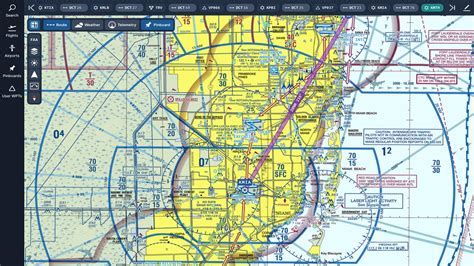
Because runway numbers can change due to shifting magnetic variation, aviation charts and databases must be kept current. Outdated sectional charts or GPS databases could lead to runway identification errors, especially at complex airports with multiple parallel or intersecting runways.
Professional pilots, dispatchers, and flight schools routinely cross-check NOTAMs, Jeppesen charts, and FAA updates for the most recent runway configurations.
Common Misunderstandings to Avoid
Even though runway numbers seem intuitive, several pitfalls exist:
-
Confusing true vs. magnetic headings when calculating crosswinds.
-
Assuming runway numbers never change.
-
Believing reciprocal runways always differ by “18”—this only applies after the last zero is removed.
-
Mispronouncing runway identifiers during ATC communications.
-
Forgetting about magnetic anomalies in high-latitude regions.
Conclusion
Runway numbers are a masterclass in efficient aviation design. They provide essential orientation data in just two or three characters, bridging the gap between geography, meteorology, and pilot instrumentation. When we consider the system behind these numbers—magnetic alignment, crosswind considerations, reciprocal direction, and redundancy via letters—it becomes clear that these white digits are the result of precision engineering rooted in safety and logic.
Understanding this system empowers pilots, students, and enthusiasts to read airport layouts with deeper insight and navigate the skies with informed confidence.
FAQs
Why do some airports change their runway numbers?
Runway numbers change when the Earth’s magnetic variation shifts enough to alter the rounded magnetic heading of the runway. This ensures the runway number still accurately reflects its magnetic alignment.
Are runway numbers the same worldwide?
While the runway numbering system is globally standardized, there are exceptions in areas with extreme magnetic variation, such as parts of Canada and Greenland, where true north may be used instead.
How do I know which runway to use?
Air traffic control (ATC) assigns runways based on wind direction, traffic, and local procedures. Pilots can also request preferred runways depending on aircraft performance or operational needs.