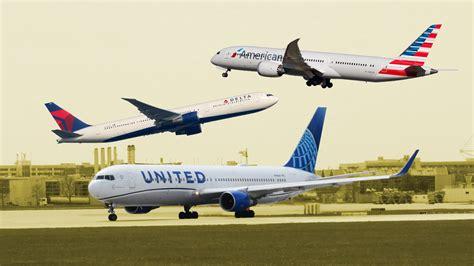
The race to dominate the skies in 2026 is not about slogans or brand perception—it is about who can deploy the most flights, most efficiently, across the most valuable markets. United Airlines, American Airlines, and Delta Air Lines all sit at the top of the US aviation pyramid, yet their schedules reveal sharply different philosophies. Flight counts are not just numbers; they are the visible output of fleet strategy, labor stability, airport constraints, and how each carrier interprets future demand.
At first glance, identifying which airline will operate the most flights in 2026 looks straightforward. Dig deeper, and it becomes a story about frequency versus distance, network breadth versus yield protection, and short-haul density versus long-haul reach. Each of these airlines is placing a calculated bet on what kind of travel will dominate the second half of the decade.
Legacy airline schedules function like a living organism. They adjust constantly, responding to economic signals, aircraft availability, and competitive pressure. By 2026, these three carriers will not simply be flying more—they will be flying differently, and those differences explain why one airline is set to lead in raw departures while another dominates in distance flown and premium revenue generation.
The US airline market rewards scale, but not all scale is created equal. Some carriers pursue overwhelming domestic presence, others emphasize global connectivity, and a few attempt to balance both while minimizing operational risk. Understanding which airline will have the most flights in 2026 means understanding how each carrier defines success.
The Strategic Role of the Big Three US Airlines
United, American, and Delta collectively form the structural backbone of US commercial aviation. They connect small and mid-sized cities to global markets through fortress hubs, complex banking structures, and massive loyalty ecosystems. While low-cost carriers excel at point-to-point pricing, these legacy airlines win by offering schedule depth, multiple daily departures, and network reliability that business and premium travelers depend on.
American Airlines historically leans hardest into frequency-driven dominance, especially within the continental United States. Delta Air Lines prioritizes operational consistency, premium cabin density, and yield stability, often choosing fewer flights with larger aircraft. United Airlines positions itself as the global connector, using its international breadth to justify longer stage lengths and fewer total departures.
In 2026, these roles become even more defined. Premium demand remains structurally stronger than pre-2020 levels, corporate contracts increasingly favor network breadth, and regional partners continue to play a critical role in sustaining high-frequency schedules. Flight count leadership is not just symbolic—it reflects which airline is willing to accept the operational complexity that comes with running the densest schedule.
Which Airline Will Operate the Most Flights in 2026?
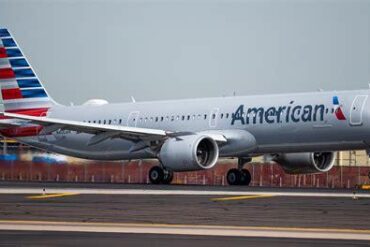
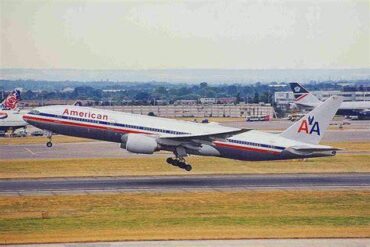
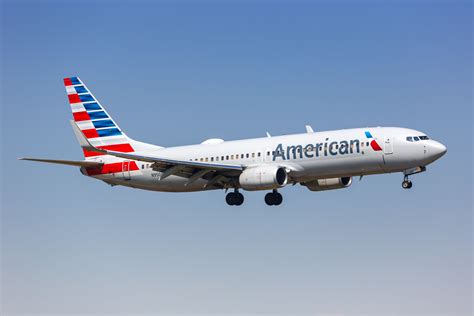
When measured purely by total departures, American Airlines emerges as the clear leader. Current scheduling data points to American operating more than 2.2 million flights in 2026—approximately 40% of all departures among the three largest US carriers. This scale is unmatched and reflects a deliberate strategy centered on domestic saturation.
American’s network emphasizes shorter average flight lengths, allowing the airline to push frequency without dramatically increasing aircraft size. While American also leads in total seats offered—roughly 270 million—it trails in total available seat miles (ASMs), confirming that its dominance comes from how often it flies, not how far.
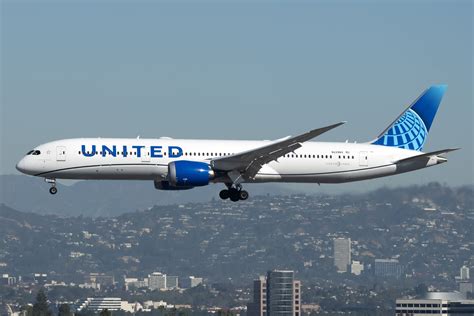
United Airlines tells the opposite story. With roughly 1.7 million flights planned, United will operate significantly fewer departures, yet it generates the highest ASM output of the trio. Longer routes, heavier widebody utilization, and aggressive international expansion inflate distance flown without inflating flight counts.
Delta Air Lines occupies the middle ground. Also operating around 1.7 million flights, Delta offers approximately 237 million seats, producing ASMs close to American’s total but with larger aircraft and higher average seats per departure. This balance reflects Delta’s preference for controlled growth over raw volume.
Why American Airlines Wins on Pure Flight Volume
American Airlines’ 2026 schedule reveals a network engineered for sheer density. The airline’s hubs are designed to maximize connecting opportunities through frequent departures rather than relying on fewer, larger aircraft. This approach increases complexity but also strengthens American’s grip on corporate and connecting traffic.
Dallas/Fort Worth International Airport (DFW) remains the centerpiece of this strategy. From DFW, American operates some of the highest-frequency routes in the country, particularly within Texas. Markets like Dallas–Austin and Dallas–San Antonio exceed 4,000 flights per direction annually, creating near shuttle-like service patterns that feed the broader network.
These short-haul routes do more than move passengers—they stabilize hub banks, allow precise connection timing, and support premium business travel with flexible scheduling. Beyond Texas, American reinforces its dominance on thick domestic trunk routes to Los Angeles, Phoenix, Miami, and Chicago, all of which combine strong origin-and-destination demand with massive connecting flows.
Aircraft gauge varies by mission. Short sectors rely heavily on regional jets and narrowbodies, while longer domestic routes deploy larger aircraft to protect yields. This flexibility allows American to scale flight counts aggressively without overcommitting capacity on any single route.
Delta Air Lines and the Power of a Single Megahub
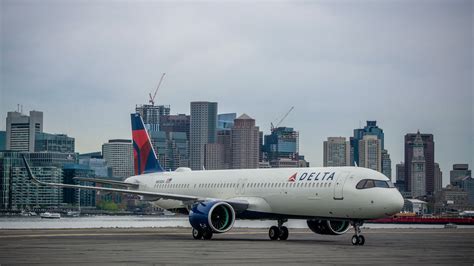
Delta’s 2026 schedule reads like a case study in hub-centric efficiency, with Hartsfield-Jackson Atlanta International Airport (ATL) serving as the gravitational center of the network. No other US airline concentrates so much power into a single airport, and no airport in the world supports such sustained volume.
From Atlanta, Delta operates an extraordinary number of high-frequency trunk routes spanning the entire country. These flights are not built around experimentation—they are year-round, demand-proven services designed to maximize aircraft utilization and maintain reliability.
Routes linking Atlanta to the Northeast stand out, particularly Atlanta–LaGuardia, which exceeds 4,500 flights annually. Slot constraints at LGA make frequency a strategic asset, and Delta uses optimized fleet mixes to maintain dominance without sacrificing on-time performance.
Delta’s transcontinental routes further reveal its priorities. Services from Atlanta and New York JFK to Los Angeles operate with high-gauge aircraft, reflecting sustained premium demand. Rather than chasing flight count leadership, Delta focuses on revenue per departure, ensuring that each flight carries maximum economic value.
United Airlines and the Long-Haul Connectivity Advantage
United Airlines’ schedule highlights a fundamentally different philosophy: network leverage over numerical dominance. Rather than relying on a single megahub, United distributes its flying across multiple strategically placed hubs, each designed to feed long-haul international routes.
Chicago O’Hare (ORD) and Denver (DEN) anchor United’s domestic shuttle network. High-frequency business routes between these hubs appear prominently in the 2026 schedule, often operated with smaller aircraft optimized for quick turnarounds and consistent connectivity.
What distinguishes United is how these domestic flights function as feeders for global operations. Short-haul frequency exists not for its own sake, but to support transatlantic and transpacific departures. This structure allows United to generate the highest ASMs among US carriers despite operating fewer total flights.
Long domestic trunk routes, including coast-to-coast services, also play a critical role. These flights carry strong premium demand and support United’s positioning as the airline of choice for internationally minded travelers.
Regional Partners and Their Hidden Influence on Flight Counts
One often overlooked factor in flight volume is the role of regional airlines. American Airlines benefits disproportionately here, relying heavily on partners to operate short-haul routes that inflate total departure counts without requiring mainline aircraft.
Delta and United also utilize regional fleets, but with tighter constraints. Delta in particular has reduced its reliance on very small regional jets, preferring larger aircraft that improve customer experience and reduce operational fragility.
In 2026, regional flying remains a decisive advantage for American. It enables the airline to maintain presence in smaller markets while sustaining hub frequency levels that competitors struggle to match.
Sensitivity to Aircraft Deliveries and Operational Risk
Flight count leadership is inherently fragile. Delays in aircraft deliveries, unexpected retirements, or labor disruptions can quickly reshape schedules. American’s high-frequency model is more exposed to these risks, as even minor disruptions cascade across tightly banked hubs.
Delta’s model absorbs shocks more effectively. Larger aircraft and fewer daily departures per route provide flexibility when aircraft or crews become constrained. United’s reliance on widebody growth introduces different risks, particularly tied to global supply chains and international demand volatility.
Despite these variables, current data suggests that American Airlines remains structurally positioned to operate the most flights in 2026, even if absolute numbers fluctuate.
Final Verdict: Frequency Versus Reach in the 2026 Airline Landscape
In raw numerical terms, American Airlines will operate the most flights in 2026, solidifying its status as the frequency king of the US airline industry. This leadership reflects a deliberate commitment to domestic saturation, regional connectivity, and schedule dominance.
Delta Air Lines continues to prove that fewer flights can still mean stronger margins, leveraging premium demand and operational excellence to extract maximum value from each departure. United Airlines, meanwhile, reinforces its global ambitions, using domestic connectivity as a tool to fuel international expansion rather than chasing flight counts.
These three airlines are not racing toward the same finish line. They are competing on different dimensions of scale, each carving out a defensible lane in an industry where efficiency matters more than ego. In 2026, the airline with the most flights will be American—but the airline with the most strategic flexibility may well be its rivals.