The transatlantic airspace is witnessing a notable expansion in 2026, with new nonstop ultra-long-haul flights redefining connectivity between the United States and Europe. As demand for direct access to secondary and capital cities across the Atlantic surges, carriers are pushing the limits of endurance and reach. The newest list of the top 10 longest nonstop US to Europe flights now features routes extending up to 14 hours and 5 minutes, driven by strong international hubs and strategic seasonal scheduling.
A Transatlantic Surge Driven by Capacity and Competition
According to Cirium Diio data, 2026 will see an average of 530 daily passenger flights between the US and Europe, a 3% increase from the previous year. This growth equates to 15 additional daily services, fueled by both legacy and emerging carriers entering the long-haul market. Nearly 40 airlines are active on transatlantic routes, showcasing increased competition, especially on high-density, high-demand city pairs.
Among the lesser-known entrants, HiSky doubles its long-haul network this year, adding a Bucharest-Chicago route. While not among the longest in duration, such additions reflect the expanding reach of boutique airlines targeting underserved markets.
Istanbul: The Geopolitical and Aviation Bridge
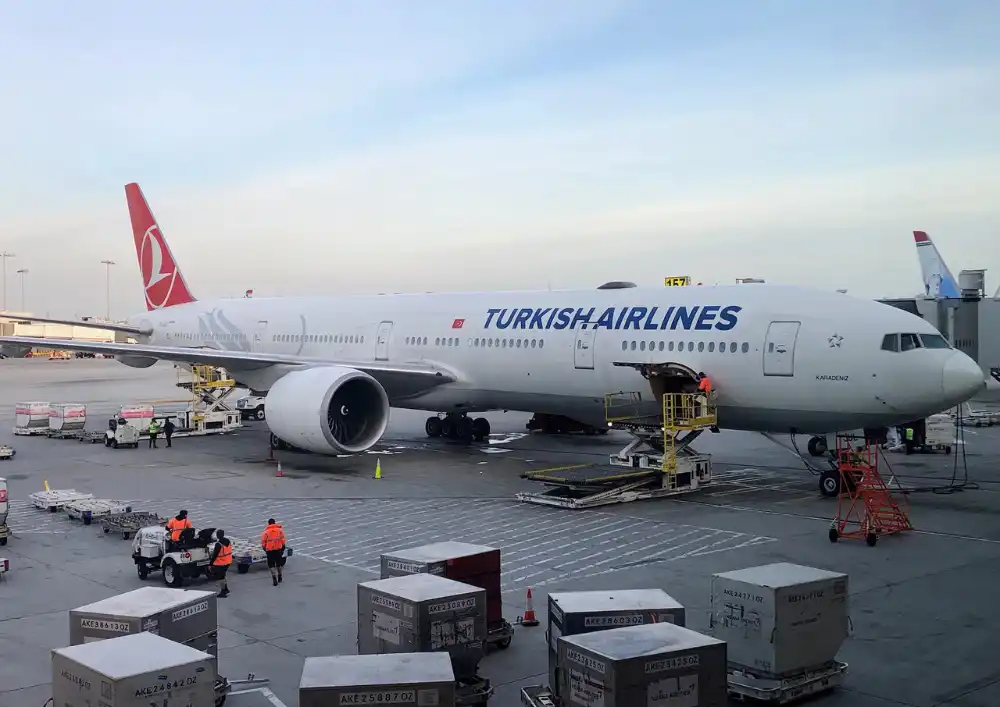
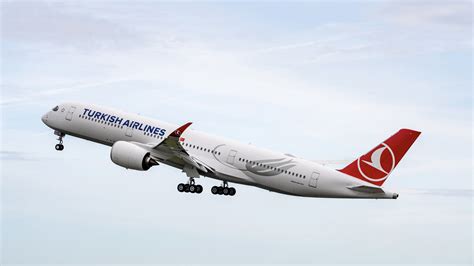
No city features more prominently on the 2026 list than Istanbul, which alone accounts for five of the top 10 longest routes. Positioned strategically at the intersection of Europe and Asia, Istanbul Airport (IST) serves as Turkish Airlines’ primary hub and Europe’s easternmost long-haul gateway. Though situated on the European side of the Bosphorus, its routes deeply penetrate North America, making it a key node for ultralong-haul operations.
- Istanbul to Los Angeles tops the chart with a maximum block time of 14 hours and 5 minutes. Turkish Airlines plans up to 17 weekly flights, utilizing a mix of Boeing 777-300ER, 787-9, and Airbus A350-900 aircraft.
- Istanbul to San Francisco follows closely at 14 hours flat, supported by 9–12 weekly services.
- Other extended Turkish Airlines routes include Istanbul to Dallas/Fort Worth (13h 15m), Houston Intercontinental (13h 10m), and Miami (13h).
Turkish Airlines’ expansive US network has enabled it to cater to diverse diasporas and emerging markets. For instance, 72% of LAX passengers connect through Istanbul to secondary cities like Tehran, Cairo, Beirut, Amman, and increasingly, Yerevan, reflecting regional and ethnic demand.
American Airlines Enters the Ultra-Long-Haul Arena
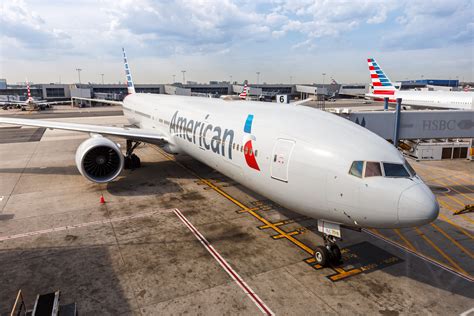
A significant newcomer to the long-haul ranks is American Airlines, launching its first-ever nonstop flight from Dallas/Fort Worth to Athens in May 2026. Timed for the lucrative summer season, the service operates with a Boeing 777-200ER, and spans 13 hours and 25 minutes in its longest configuration.
This route represents a strategic push to capture premium leisure and connecting traffic to the Eastern Mediterranean. It adds to American’s growing Athens portfolio, now comprising five distinct US routes with up to five daily departures during peak months.
Italy and Spain Extend Their Reach to the US West Coast
Two key Mediterranean destinations—Rome and Barcelona—also make the 2026 list with expanded service to the US West Coast. These routes signal growing demand from Southern Europe’s tourism and VFR (visiting friends and relatives) markets.
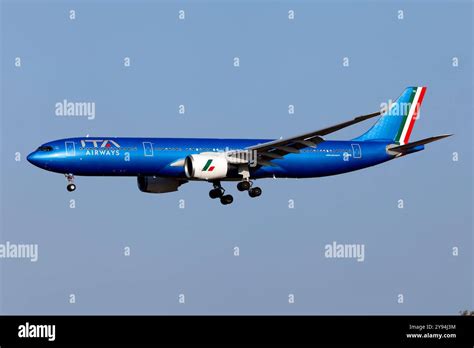
- Rome Fiumicino to Los Angeles (13h 20m) is served by both ITA Airways and Norse Atlantic Airways. The route blends legacy and low-cost transatlantic models, using A330-900s, A350-900s, and 787-9s.
- Rome to San Francisco (13h 05m) is a joint effort by ITA and United Airlines, offering seasonal capacity with multiple weekly flights.
- Barcelona to Los Angeles and San Francisco (13h 10m and 13h) sees Level and United Airlines dividing the load, with Level leveraging A330-200s and United deploying 777-200ERs.
Los Angeles: The Most Connected US City to Europe’s Edge
Unsurprisingly, Los Angeles (LAX) emerges as a dominant US endpoint for these extended European connections. With its vast ethnic diversity and strong VFR traffic, LAX is a natural choice for airlines seeking profitable long-haul operations.
Turkish Airlines alone is expanding to three daily LAX departures, strategically spread throughout the day:
- 11:40 am arrival / 12:30 am departure (787-9)
- 6:15 pm arrival / 8:10 pm departure (777-300ER)
- 10:45 pm arrival / 1:25 pm departure (787-9)
This intricate schedule enables maximum interline connectivity and caters to both business and leisure travelers.
Between January and September 2025, Turkish Airlines carried 316,000 round-trip passengers on the Istanbul-Los Angeles sector. The average seat load factor held steady at 82%, a respectable figure considering a 9% increase in seat capacity year-over-year.
Seasonal vs. Year-Round Service: A Tactical Balancing Act
Seasonality plays a crucial role in transatlantic planning. Carriers carefully tailor operations to peak demand windows, optimizing yields and aircraft utilization.
- The new Dallas-Athens route is seasonal, targeting the high-yield summer months.
- Norse Atlantic’s former Los Angeles-Athens link in 2025 lasted only four months, achieving 88% load factors yet facing profitability challenges, leading to discontinuation.
- Similarly, Rome to San Francisco service is limited in the early year, with only four departures through January 8, resuming fully in March.
This tactical use of seasonal deployment allows airlines to capture demand surges while avoiding underperformance during shoulder seasons.
Connectivity Beyond Europe: Istanbul’s Global Advantage
What distinguishes Istanbul’s performance is not just its geographic location, but its function as a hyper-connected megahub. Turkish Airlines’ strategic use of IST allows passengers seamless one-stop access to destinations well beyond Europe.
From Los Angeles, popular final destinations via Istanbul include:
- Tehran – driven by the large Iranian diaspora
- Cairo and Beirut – serving Levantine communities
- Athens and Amman – for business and family connections
- Delhi, Mumbai, and Dubai – tapping into South Asian and Gulf region demand
- Moscow and Yerevan – offering options for travelers in politically complex corridors
With twice-daily service to Yerevan launching in March, expect an uptick in Armenian American travel via Istanbul in 2026.
Looking Ahead: Sustainability, Fleet, and Future Winners
As airlines continue to launch or expand ultralong-haul services, the next battleground will be fleet optimization and sustainability. Carriers are phasing out older aircraft like the A340 and aging 777-200ERs in favor of fuel-efficient models such as the A350-900, 787-9, and A330neo.
Environmental considerations will increasingly shape route viability. With pressure mounting from both regulators and eco-conscious travelers, we anticipate:
- More frequent deployment of next-gen aircraft on long sectors
- Enhanced investment in sustainable aviation fuel (SAF)
- Potential trimming of less-efficient routes despite high demand
However, with strong passenger numbers, expanding diaspora connections, and robust summer tourism flows, the US-Europe long-haul market is poised for another strong year. Airlines willing to adapt rapidly and align networks with demand patterns will remain ahead.
Final Thoughts
The 2026 landscape for nonstop US-Europe flights marks a new era of endurance and opportunity. As carriers stretch the bounds of nonstop service, from Istanbul to Los Angeles or Dallas to Athens, the competition will hinge on not just speed or comfort—but efficiency, timing, and connectivity. The winners will be those who balance ambition with data, and who understand that the future of transatlantic aviation is long, strategic, and deeply connected.