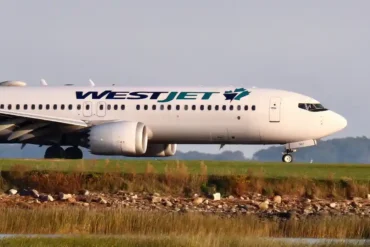
WestJet is quietly rewriting its long-haul playbook, and the changes are bigger than a single new route announcement. With flights now stretching past the 13-hour mark, the Canadian carrier is signaling a deeper strategic shift toward ultra-long-haul flying, Calgary’s emergence as a true intercontinental hub, and a more confident challenge to legacy competitors. These new nonstop services are not just about distance; they reflect how aircraft capability, market timing, and network logic are converging in WestJet’s favor.
For years, WestJet was viewed primarily as a North American and leisure-focused airline. That perception is now outdated. The unveiling of its ten longest nonstop routes for 2026 shows an airline willing to commit premium widebody assets to demanding intercontinental sectors, many of them pushing the operational limits of block time, crew planning, and aircraft utilization.
By examining these flights closely, a clear story emerges: WestJet is stretching itself—deliberately, methodically, and with surprising ambition.
A New Benchmark: Why Block Time Matters More Than Distance
When airlines talk about their “longest flights,” the headline number often focuses on great-circle distance. In operational reality, block time—the duration from chocks-off at departure to chocks-on at arrival—is what truly defines complexity. Wind patterns, airspace restrictions, seasonal weather, and congestion can add hours to a flight that looks shorter on a map.
WestJet’s longest routes are ranked by maximum published block time in 2026, even if that extreme duration occurs only once during the year. This approach highlights worst-case operational scenarios, the moments when fleet capability and scheduling discipline are tested most severely. The results are revealing.
The tenth-longest entry already exceeds eight hours, a threshold that traditionally separated medium-haul flying from true long-haul operations. From there, durations climb rapidly, culminating in a route that pushes well beyond 13 and a half hours—uncharted territory for WestJet.
Calgary’s Transformation Into a Long-Haul Powerhouse
Calgary dominates WestJet’s longest-route list, and that is no accident. The airline has systematically built the Alberta hub into its long-haul backbone, leveraging geographic positioning, lower congestion than Toronto, and strong westbound connectivity.
Routes from Calgary to Seoul, Tokyo, Rome, Barcelona, Paris, London, Dublin, and Edinburgh now define the airline’s intercontinental identity. Nearly all are operated by the Boeing 787-9 Dreamliner, an aircraft whose range, fuel efficiency, and cabin economics make these missions viable year-round.
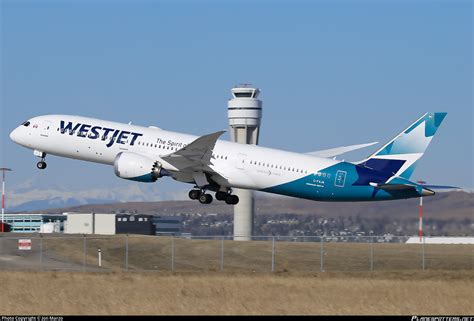
What stands out is consistency. Many of these services operate daily or close to it, suggesting confidence in sustained demand rather than seasonal experimentation. WestJet is no longer dabbling in long-haul flying; it is institutionalizing it.
WestJet’s Ten Longest Nonstop Routes in 2026
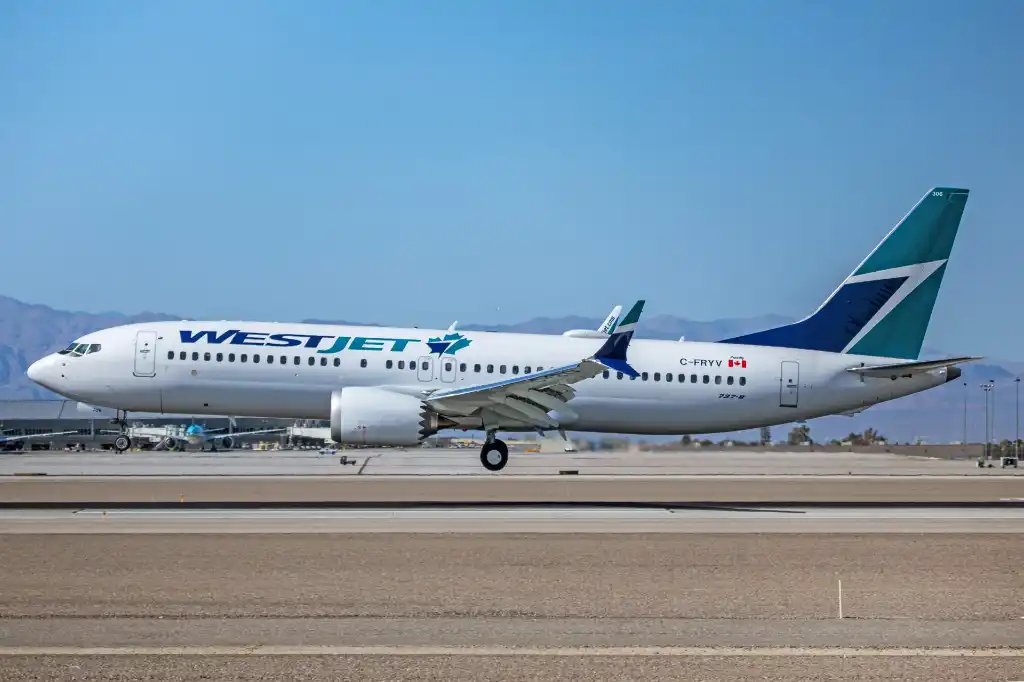
While each route tells its own story, the collective picture is striking. The top nine longest services all involve Calgary and the 787-9, underscoring a focused fleet-and-hub strategy. Only one route breaks this pattern: Edmonton to Punta Cana, operated by a 737 MAX 8 and blocked at just over eight hours. Its inclusion highlights how narrowbody aircraft are quietly expanding the definition of long-haul flying, even if widebodies still dominate the extreme end.
From Europe to East Asia, WestJet’s network now spans three continents with block times that rival those of far larger global carriers. This is not incremental growth; it is structural change.
The Headline Route: Calgary to São Paulo Breaks New Ground
Everything converges with WestJet’s newest and longest nonstop flight: Calgary to São Paulo–Guarulhos. Launching on November 8, this service becomes the airline’s longest-ever commercial route, clocking in at a maximum block time of 13 hours and 35 minutes on the return sector.
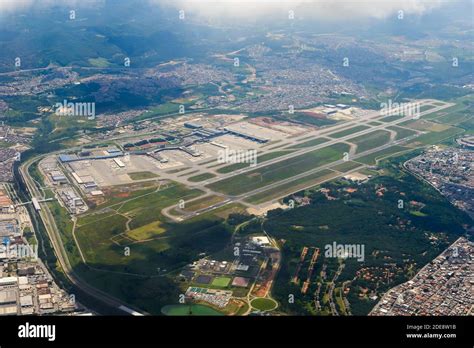
This flight is historic on multiple levels. It marks Calgary’s first-ever nonstop passenger service to South America and establishes São Paulo as WestJet’s 100th destination from the hub in a single year. Timing the launch for northern winter and southern summer is a calculated move, aligning peak demand, higher yields, and holiday travel flows.
Initially operating three times weekly on the 787-9, the route balances ambition with caution. The local Calgary–São Paulo market is small, with just over 10,000 annual round-trip passengers, but that figure understates the opportunity. Connectivity is the real prize.
Connectivity, Codeshares, and the LATAM Effect
WestJet’s partnership with LATAM transforms São Paulo from a niche endpoint into a continental gateway. Passengers gain access to onward connections across Brazil and South America, while inbound traffic from cities like Lima, Bogotá, and beyond can flow efficiently through Calgary into Canada and select U.S. destinations.
The geometry is compelling. While schedules are not perfectly aligned for seamless Asia–South America transfers, routes like Tokyo–Calgary–São Paulo are surprisingly close to the shortest possible path between Japan and Brazil. With nearly 120,000 passengers annually in that market, even marginal connectivity improvements could unlock meaningful traffic.
This is how long-haul routes succeed today: not through local demand alone, but through carefully engineered network effects.
How WestJet Stacks Up Against Air Canada
Despite the milestone, WestJet’s longest flight still sits well below Canada’s absolute extremes. Air Canada operates more than 20 nonstop routes longer than 13 hours, including Toronto–Delhi, which stretches beyond 17 hours due to Russian airspace avoidance.
Yet comparisons miss the point. WestJet is not trying to match Air Canada route-for-route. Instead, it is carving out a focused long-haul niche, using a smaller widebody fleet with high utilization and disciplined scheduling. For an airline of its size, operating a 13.5-hour nonstop flight is not a footnote; it is a statement.
What These Flights Signal About WestJet’s Future
Ultra-long-haul routes expose every weakness in an airline’s operation. Crew fatigue rules tighten, maintenance margins shrink, and recovery options disappear when something goes wrong. WestJet’s willingness to operate ten such routes in 2026 suggests growing operational maturity and confidence in its systems.
More importantly, it signals intent. WestJet is no longer content to feed others’ long-haul networks. It wants to own them—selectively, strategically, and profitably. These flights are not just long; they are foundational, redefining what the airline is and where it belongs in the global aviation landscape.