On July 3, 2025, the United States Army took a major leap forward in modern battlefield readiness by awarding a historic $26 million contract to MyDefence, a Danish defense technology firm. This strategic move aims to equip American soldiers worldwide with wearable counter-drone systems, marking a transformative shift in how the military counters the ever-growing threat posed by unmanned aerial systems (UAS).
The deal underscores the Pentagon’s recognition of the urgent need to modernize force protection capabilities amid a surge in both commercial and militarized drone usage across theaters of operation, from Eastern Europe to the Indo-Pacific. As drone swarms and weaponized UAVs increasingly dominate asymmetric warfare, the U.S. Army is adopting technology that aligns with the demands of agile, decentralized conflict.
Modular Technology for a Modern Threat Landscape
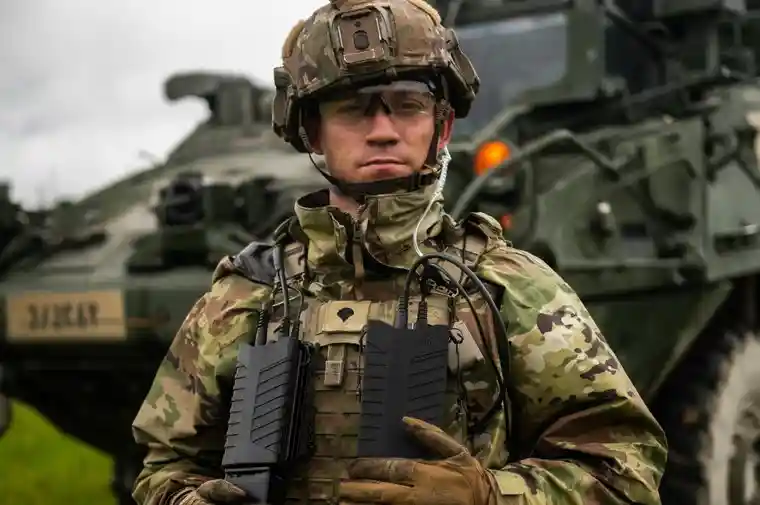
At the core of this game-changing procurement lies the MyDefence Soldier-Kit, a lightweight, modular counter-UAS system designed for tactical edge deployment. The Soldier-Kit comprises two primary components: the “Wingman” drone detector and the “Pitbull” jammer. Together, they form a discreet, 1.3-kilogram wearable platform that can be seamlessly integrated into existing soldier gear without impeding mobility or mission performance.
This level of integration is crucial. In today’s operational environments—urban terrain, mountainous regions, and contested zones—the ability to detect and neutralize drones without fixed infrastructure is indispensable. Unlike traditional vehicle-mounted or base-centric counter-drone systems, MyDefence’s wearable approach allows for real-time situational awareness and direct soldier engagement with aerial threats.
Field-Tested Performance in Joint Exercises
The system’s effectiveness has already been validated in joint field trials led by the U.S. European Command (EUCOM), particularly during multinational exercises in Germany. These tests demonstrated the Soldier-Kit’s capacity to detect and disrupt a wide range of UAVs, from modified commercial drones to militarized platforms, all without compromising troop mobility or creating electronic noise that would interfere with other tactical systems.
MyDefence’s development journey for the Soldier-Kit reflects years of iterative refinement informed by lessons learned in Iraq and Afghanistan, where early-generation C-UAS platforms were often cumbersome and restricted to static deployments. By contrast, the Danish system is frequency-agile, meaning it can counter evolving drone communication protocols with high precision. This reflects a doctrinal shift—where air defense is no longer the sole domain of vehicle-mounted launchers or command centers but can now be delivered at the squad level.
Countering Drone Swarms and Electronic Warfare
The need for wearable counter-drone gear is not theoretical. Drone swarms, GPS spoofing, and autonomous UAV tactics are already redefining the rules of engagement. State and non-state actors alike are experimenting with AI-driven drone coordination, enabling simultaneous multi-vector attacks that overwhelm traditional radar and jamming systems. In this context, scalable, soldier-level systems like the Soldier-Kit are becoming mission-critical.
Unlike Israeli and American legacy systems, which focus heavily on stationary defense or require large-scale deployment logistics, MyDefence’s solution delivers unparalleled portability without sacrificing detection range or jamming effectiveness. This technological edge positions Denmark’s MyDefence as a key NATO-aligned innovator in the global counter-drone arena.
Strategic and Geopolitical Implications
The implications of this contract extend beyond equipment delivery. By integrating Danish technology into U.S. Army operations, the deal represents a deepening of transatlantic defense cooperation, especially critical at a time of escalating geopolitical tensions. With threats emerging from Russia’s drone tactics in Ukraine to Chinese UAS proliferation in the Pacific, interoperable C-UAS capabilities are increasingly seen as essential for joint-force readiness.
Moreover, wearable C-UAS units reflect a doctrinal pivot within the Pentagon. The focus is shifting from centralized air defense to distributed drone mitigation, which allows squads, platoons, and special forces to operate independently under aerial threat without waiting for air support or centralized jamming clearance.
This tactical decentralization aligns with broader military modernization efforts such as Joint All-Domain Command and Control (JADC2) and the Army Futures Command’s modernization priorities. In essence, the Soldier-Kit is not just a tool—it’s a symbol of adaptive warfighting.
Contract Scope and Industrial Impact
The $26 million awarded to MyDefence covers an initial order of 485 Soldier-Kit systems, many of which have already entered deployment in EUCOM’s area of responsibility. This marks the largest single contract in the Danish company’s history and serves as a validation of its modular technology platform.
The deal is expected to open further opportunities for collaboration between MyDefence and U.S. defense integrators, particularly as the Army explores expanding the wearable C-UAS framework to additional combat units, including the 82nd Airborne Division, 75th Ranger Regiment, and Special Operations Command (SOCOM). Moreover, it offers a strong competitive counterpoint to other NATO-aligned suppliers, creating an ecosystem of interoperable yet independently advanced counter-drone systems.
From Contract to Combat: Future of Soldier-Level C-UAS
Looking ahead, the global proliferation of drones—commercial and militarized—is unlikely to slow. Cheap, GPS-guided UAVs are becoming a staple in both state conflict and insurgent operations. In response, the Pentagon is planning to scale modular counter-drone solutions across divisions and integrate these into multi-domain operations (MDO) strategies.
This broader adoption will likely include enhancements such as:
- AI-driven threat classification, allowing real-time prioritization of drone types based on threat level.
- Integration with heads-up displays (HUDs), so that drone detections are visually flagged within soldier optics.
- Expanded frequency databases, enabling defense against next-gen UAVs with encrypted or proprietary signals.
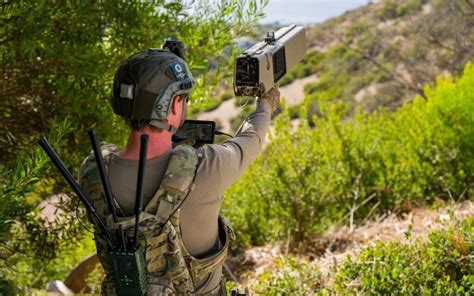
The success of the Soldier-Kit will be measured not just by how many units are fielded, but how effectively they change the engagement dynamics in drone-contested zones. When soldiers can jam or disable a hostile UAV within seconds of detection—without calling in support or repositioning—it redefines close-quarters force protection.
Conclusion: Equipping the Soldier for the Skies Above
This strategic shift in U.S. Army policy—moving toward individualized, wearable counter-drone capabilities—underscores the military’s increasing focus on adaptive technologies that scale with threats. The MyDefence Soldier-Kit exemplifies a new era of man-portable electronic warfare, one that does not just respond to the drone age but is purpose-built for it.
With initial deployments underway and further integration into larger defense networks on the horizon, this landmark contract is more than just a procurement story. It’s a preview of future combat, where the battlefield extends vertically, and the soldier’s survival may depend not only on what’s in their hands—but what’s watching from the skies above.