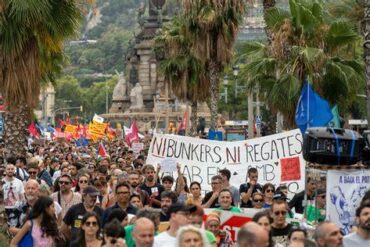
In the heart of Venice, a city renowned for its romantic allure and artistic heritage, the upcoming wedding of billionaire Jeff Bezos and journalist Lauren Sanchez has ignited a fervent protest among local residents. On a scorching Friday afternoon in June, a group of young Venetians, who identify as “precarious” or underemployed, gathered near the iconic Rialto Bridge, voicing their opposition to what they see as the encroachment of wealth and privilege upon their beloved city. With a banner reading “No Space for Bezos,” emblazoned with an image of Bezos’ infamous phallic-shaped Blue Origin rocket, the protesters encapsulated their growing frustration with the increasing influence of ultra-wealthy individuals in Venice.
As the crowd swelled to around 300, many casually sipping spritzes from takeaway tumblers, the atmosphere grew electric with passion. Speakers took to the makeshift podium, articulating the broader implications of Bezos’ wedding beyond mere celebrity spectacle. For them, this event symbolizes not just an extravagant celebration but the ongoing struggle against gentrification and the commodification of Venice.

Rumored to cost upwards of $10 million, details about the wedding remain tightly under wraps, though speculations suggest venues like San Giorgio Maggiore, known for its breathtaking views, and the historic Misericordia, a 14th-century site that has been transformed into an exclusive events space. Federica Toninello, one of the protest organizers, passionately declared, “Bezos will never get to the Misericordia. We will block the canals, line the streets with our bodies, and obstruct the waterways with inflatables and boats.” Her words resonated deeply, eliciting raucous applause from the crowd. Fellow speaker Na Haby Stella Faye further emphasized the significance of the protest, stating, “Let’s ensure that Venice is remembered not just as a postcard venue for billionaires but as a city that stood firm against oligarchs.”
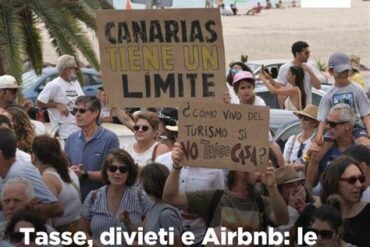
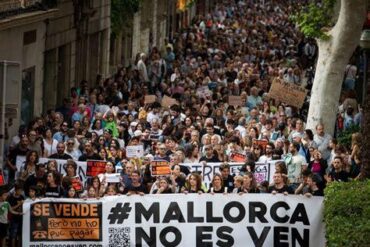
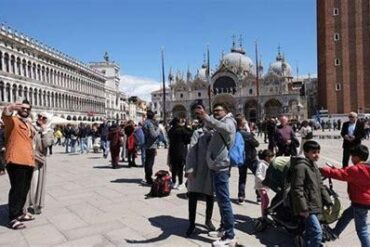
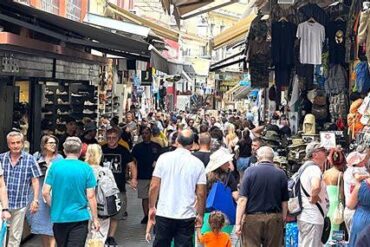
The growing divide between luxury weddings and local struggles in Venice reveals a larger narrative of tension surrounding tourism in the city. As Bezos’ $500 million superyacht, the Koru, docks in the city, concerns over overtourism and gentrification become increasingly pronounced. Many locals lament that while such high-profile events provide temporary work opportunities, they fail to address critical issues plaguing the community, including a lack of affordable housing and long-term employment prospects.
Indeed, the wedding of Bezos, often viewed as a pinnacle of excess, epitomizes the crisis facing Venice. The city has long grappled with the repercussions of overtourism, which has transformed daily life for its residents. Recent measures, including the introduction of a 10-euro daytripper entrance fee for tourists during peak periods, highlight the desperate attempts to manage the influx of visitors. However, these efforts have proven insufficient in alleviating deeper-rooted problems, such as a dwindling local population and inadequate public services.
The irony of protesting a billionaire’s wedding in a city historically associated with love adds another layer of complexity to the situation. Observers like Jake Springer, a tourist from New Orleans, reflected on the paradox, acknowledging the peaceful nature of the protests while questioning the protesters’ own consumption habits. “You’re telling me none of these people shop on Amazon?” he remarked, underscoring the multifaceted nature of the issue at hand.
Historically, Venice has seen successful protests, such as the “No Grandi Navi” campaign, which successfully banned large cruise ships from the city center, prompting significant changes in cruise itineraries. Additionally, local resistance against short-term rental platforms like Airbnb has resulted in restrictions aimed at curbing the gentrification of Venice’s housing market. However, the challenge of protesting a high-profile wedding presents a unique scenario.
Local leaders have expressed mixed feelings regarding the protests. Luca Zaia, president of the Veneto region, criticized the demonstrations, stating that it is disgraceful to protest against individuals who bring wealth and visibility to the region. Mayor Luigi Brugnaro echoed these sentiments, expressing hope that Bezos would still choose to come to Venice despite the protests. This division within the local community reflects the broader identity crisis Venice faces today.
On one hand, there is a push to preserve the city’s cultural heritage, maintaining its historical identity as a hub of commerce and cultural exchange. Conversely, the rise of luxury tourism has transformed Venice into a venue for extravagant events, raising questions about what the city represents. Travel writer Gillian Longworth McGuire encapsulated this dilemma, noting that Venice lacks a clear sense of its identity, oscillating between being a magical place built by merchants and fishermen or merely a backdrop for high-end events.
The impact of overtourism cannot be overstated. While tourism has historically been a boon for Venice, contributing millions of euros to its economy, it has also strained the city’s infrastructure and eroded the quality of life for its residents. As essential services dwindle and housing becomes increasingly unaffordable, many Venetians feel alienated in their own city, which has morphed into a playground for the wealthy.
The protests against Bezos’ wedding serve as a poignant reminder of the growing frustration among residents. This opposition is not solely about one billionaire’s lavish celebration; it encapsulates a broader struggle for the soul of Venice. As the city stands at a crossroads, it faces the daunting challenge of preserving its rich history and culture while grappling with the relentless demands of global wealth and tourism. The decisions made in the coming years will undoubtedly shape Venice’s identity and future for generations to come.