Air travel at the very front of the aircraft is marketed as a sanctuary of calm: polished service, refined dining, and discreet attentiveness at 35,000 feet. Yet on a recent American Airlines transatlantic flight from New York (JFK) to London (LHR), that promise reportedly unraveled for former Vogue editor Gabriella Karefa-Johnson. Rather than endure what she described as “substandard service and persistent micro-aggression,” she made a striking decision—she gave up her first class seat and moved herself to business class.
The incident, shared publicly on social media, has ignited debate not only about service standards in premium cabins but also about the intersection of race, perception, and power dynamics in luxury travel. In a cabin designed for exclusivity and comfort, the most telling detail may not have been the seat at all—but the atmosphere.
A Transatlantic Upgrade That Became a Downgrade
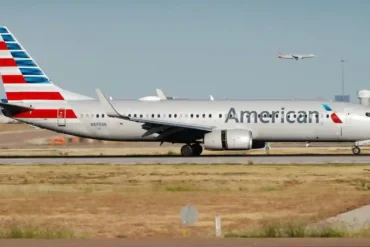
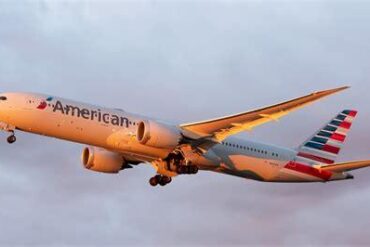
Karefa-Johnson had deliberately booked a routing that would allow her to fly American’s flagship first class product. While her ultimate destination was Milan (MXP), she chose to fly from JFK to London on a Boeing 777-300ER—one of the few aircraft in American’s fleet offering an international first class cabin—before connecting onward to Italy. The Milan route itself typically features the 777-200ER, which does not offer first class.
As a Concierge Key member—American Airlines’ invitation-only elite tier—she is no stranger to premium cabins. This was not a rare indulgence but a familiar environment. That context makes the account more striking. According to her description, she was one of six passengers in the first class cabin. Five were middle-aged white men. She was the only Black woman in her thirties.
She alleges that from the moment she sat down, a male flight attendant treated her with dismissiveness and subtle hostility. The phrase “persistent micro-aggression” carries weight. It implies not overt confrontation, but a pattern of small, cumulative slights—tone, body language, attentiveness—that signal exclusion rather than hospitality.
In her own words, she chose to “sacrifice physical comfort to protect emotional and mental well being.” The downgrade was voluntary.
The Symbolism of Leaving First Class
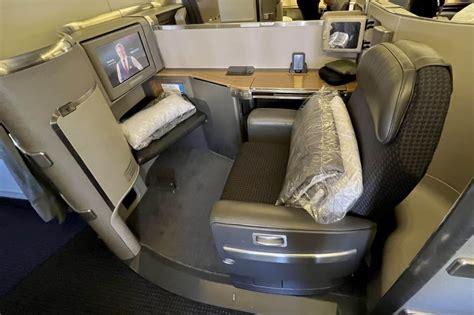
Voluntarily leaving first class mid-boarding is not a trivial act. In the modern airline ecosystem, cabins are rigidly stratified. First class is the apex—spacious suites, elevated catering, prestige. Business class, while still premium, is a step down in hierarchy.
To switch cabins requires coordination. On a full transatlantic flight, business class is often near capacity. A seat swap would likely have required another passenger’s agreement to move forward into first class. It also means relinquishing any fare difference, since airlines do not typically refund passengers who choose to move themselves.
The act, therefore, was not merely logistical. It was symbolic. In luxury environments, presence is currency. Walking away from the most exclusive seat on the plane communicates that dignity outweighed comfort.
This tension—between physical luxury and emotional security—is central to the episode. First class promises space and indulgence. Yet if the interpersonal environment feels hostile, the leather seat becomes irrelevant.
Service Culture at JFK: Reputation and Reality
Frequent flyers have long debated service variability among U.S. carriers. American Airlines’ long-haul operations out of JFK, in particular, have drawn mixed reviews. Some travelers describe polished crews and efficient professionalism. Others recount abrupt or indifferent interactions.
One previously shared account involved a boarding experience in which a crew member allegedly responded to an elderly passenger with visible impatience, insisting curtly on seeing a boarding pass and urging him to “speed this up,” despite an uncrowded gate area. While anecdotal, such stories contribute to a broader narrative about uneven service consistency.
It is critical to separate systemic issues from individual accusations. A single flight attendant’s demeanor does not define an airline’s entire culture. At the same time, patterns of similar complaints—particularly in premium cabins—raise questions about training, accountability, and expectations in elite service environments.
Luxury service is not merely about champagne refills. It is about subtle cues: eye contact, tone modulation, anticipatory gestures. When those signals falter, the illusion of exclusivity fractures quickly.
Race, Perception, and the Premium Cabin
Karefa-Johnson suggested that being the only non-white passenger in the cabin may have influenced her treatment. That claim cannot be independently verified from public accounts alone. Yet it highlights an enduring conversation in the travel industry.
Microaggressions are, by definition, difficult to document. They are rarely explicit. They exist in pattern and perception: delayed service, clipped responses, assumptions about entitlement or legitimacy. Research in hospitality and customer experience fields has shown that unconscious bias can influence service interactions, even when staff members are unaware of it.
It is also plausible that the flight attendant’s demeanor was broadly indifferent, affecting all passengers equally. Without broader testimony, definitive conclusions remain elusive. But the perception of differential treatment can be just as impactful as intent.
In an ultra-premium cabin, passengers expect not just comfort but affirmation. The promise is not only a larger seat; it is belonging.
The Elite Status “Hamster Wheel”
Another layer to the story lies in the routing itself. To access first class, Karefa-Johnson chose a connecting itinerary via London rather than flying nonstop to Milan. This reflects a common phenomenon among frequent flyers: optimizing routes to experience specific aircraft or cabins.
Airline loyalty programs incentivize this behavior. Elite tiers like Concierge Key confer prestige, priority, and upgrades. Yet the pursuit can create a cycle where convenience is sacrificed for cabin quality.
The irony here is sharp. A carefully selected first class segment became undesirable enough to abandon mid-flight. The very product pursued for its exclusivity proved emotionally costly.
Such episodes raise broader questions about what premium travel truly delivers. Is it the hard product—the seat, the caviar service, the amenity kit? Or is it the human experience layered atop those amenities?
American Airlines and the Expectations of Flagship First
American’s Flagship First class has long positioned itself as a boutique experience within a largely business-class-dominated industry. With only a handful of seats per aircraft, it is designed to feel intimate. Dedicated check-in areas, premium lounges, and curated menus reinforce that positioning.
In such a setting, service consistency becomes magnified. A cabin of six passengers leaves little room for anonymity. Each interaction carries more weight. A perceived slight is not diluted by crowd dynamics.
Airlines face increasing scrutiny in the social media era. Premium passengers often have platforms—and the willingness to use them. For brands built on perception, a single viral narrative can ripple far beyond one transatlantic crossing.
Emotional Well-Being at 35,000 Feet
The most resonant line from the account may be the emphasis on emotional and mental well-being. In a world where travel can already be stressful—tight schedules, time zone shifts, public scrutiny—passengers seek refuge in premium cabins.
Choosing to step down physically to step up psychologically reframes the concept of value. Comfort is multidimensional. A lie-flat seat loses appeal if it feels isolating or adversarial.
This episode underscores a larger truth about modern luxury: it is as much about emotional intelligence as material indulgence. Airlines can invest millions in hardware, but the decisive factor remains human interaction.
Industry Implications and Passenger Agency
Whether the service lapse was targeted, generalized, or misunderstood, the decision to self-downgrade reflects a new era of passenger agency. Travelers—especially high-profile ones—are increasingly vocal about service standards. Loyalty is no longer unconditional.
For airlines, the lesson is straightforward yet challenging. Premium cabins demand premium conduct. Training must address not only procedural efficiency but cultural sensitivity and interpersonal nuance.
As the aviation industry continues to recalibrate post-pandemic service models, stories like this resonate beyond one flight. They challenge carriers to examine not just what they serve on porcelain plates, but how they serve the people seated before them.
In the end, a first class ticket is a contract of expectation. When that expectation fractures, even the most exclusive seat in the sky can feel surprisingly small.