In the vast and intricate web of global aviation, a curious anomaly sits quietly in the windswept northern reaches of Scotland. The shortest scheduled airplane flight in the world links two small islands in the Orkney archipelago — Westray and Papa Westray — via a route that lasts barely a minute. Operated by regional airline Loganair, this historic and almost whimsical journey is a testament to the functional, cultural, and symbolic power of air travel, even at its most abbreviated.
A Flight Measured in Moments, Not Hours
At a staggering distance of just 1.7 miles (2.7 kilometers), the route between Westray and Papa Westray is often completed in under 90 seconds, depending on wind conditions. It is not an experimental service nor a novelty for thrill-seekers — it’s a real, scheduled commercial flight that forms part of the Orkney Inter-Isles Air Service, connecting remote island communities scattered across the Scottish coast.
Tickets for the flight start at around £8 ($10.78 USD) under the airline’s Excursion pricing — provided passengers stay at least one night — and typically cost around £18.50 ($25) for a standard economy seat. Remarkably, passengers receive an official certificate of completion recognizing their participation in the world’s shortest flight, making it not only a practical choice but also a quirky badge of honor for aviation enthusiasts.
The Aircraft: A Hardy Workhorse for Island Hops
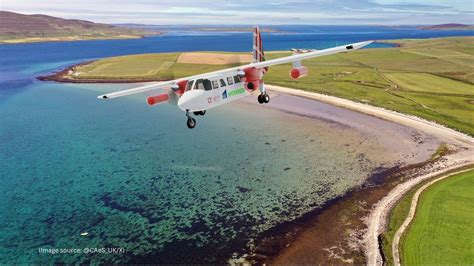
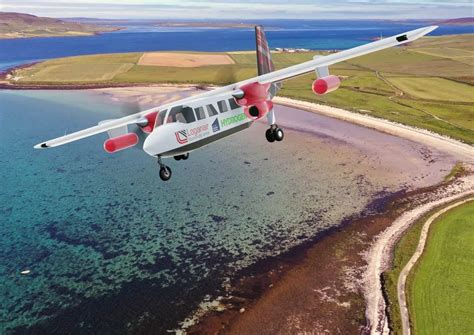
Unlike the long-haul, wide-body jets that dominate international airspace, the aircraft of choice for this micro-voyage is the Britten-Norman BN-2 Islander, a rugged twin-prop plane designed for short takeoffs and landings on minimal infrastructure. Loganair’s Islander accommodates just eight to ten passengers, offering a cozy and scenic ride just a few hundred feet above the North Sea.
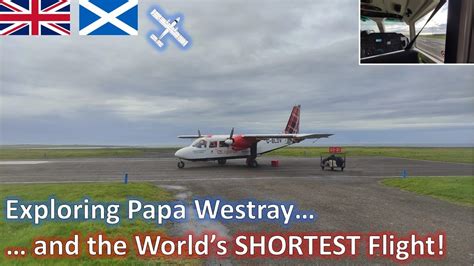
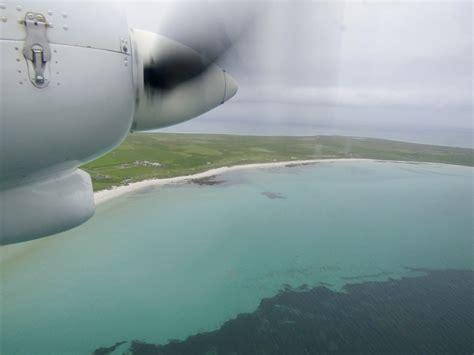
The island’s humble landing strips, flanked by windswept fields and sea cliffs, are equipped to handle the Islander’s modest footprint, making it an ideal fit for such regional hops. Despite its short duration, the flight provides breathtaking aerial views of turquoise bays, rocky headlands, and prehistoric ruins, compressing the best of Scottish coastal beauty into a blink-and-you’ll-miss-it adventure.
Why the Route Exists: Utility Over Novelty
This flight is not an indulgence or publicity stunt — it’s a lifeline for the communities that rely on dependable, year-round transport. Papa Westray, with a population of just under 90 residents, has limited ferry access, particularly in rough weather. Air travel ensures the movement of schoolteachers, healthcare workers, government officials, and even emergency services across the Orkney Islands in a timely and efficient manner.
Though a ferry service — operated by Orkney Ferries — is also available, taking roughly 20 to 25 minutes, the flight provides unmatched convenience. It allows same-day return trips for those with time-sensitive responsibilities, minimizing disruptions to daily life in a region where connections can be tenuous.
A Journey Through the Skies and Through Time
Taking this flight is as much an experience in heritage as it is transportation. Orkney is rich in Neolithic history, home to ancient sites like Knap of Howar, which predates the Pyramids, and the Ring of Brodgar, a UNESCO World Heritage Site. Papa Westray itself boasts archaeological treasures and wild landscapes that rival more famous destinations in majesty and solitude.
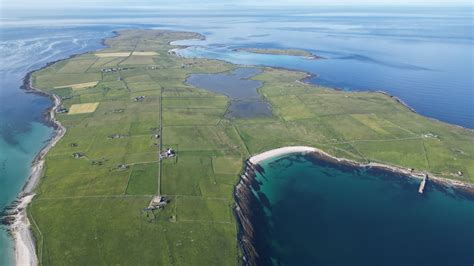
Visitors flying in can explore St. Boniface Kirk, a 12th-century church, or embark on birdwatching expeditions to see rare species like the Arctic tern and great skua. These experiences, while tied to the ground, begin with the airborne marvel that connects them to the rest of the archipelago.
Setting Global Benchmarks in Aviation Extremes
To fully grasp the brevity of the Westray–Papa Westray flight, it helps to contrast it with global aviation outliers. At the opposite end of the spectrum is the current longest commercial flight — Singapore Airlines’ route between Singapore Changi and New York JFK, covering up to 10,720 miles in 18 hours and 40 minutes.
Meanwhile, other notably short flights include the 15-mile hop between Kinshasa (Democratic Republic of Congo) and Brazzaville (Republic of Congo), where the route crosses the Congo River. But even that trip dwarfs the Westray–Papa Westray journey.
What makes the Scottish route so remarkable is not just its length, but its operational regularity and continued necessity. It isn’t a luxury or convenience — it’s embedded in the infrastructure of island life. It’s one of the few air routes in the world where the taxiing time on a major airport runway might exceed the entire flight duration here.
The Role of Loganair in Remote Connectivity
Loganair, Scotland’s longest-established airline, is more than a transportation provider — it is a cultural institution. Founded in 1962, the airline has carved a niche for itself by serving rural and island communities often neglected by larger carriers. It plays a vital role in the Scottish Highlands and Islands, not just moving people but ensuring access to education, commerce, and critical healthcare.
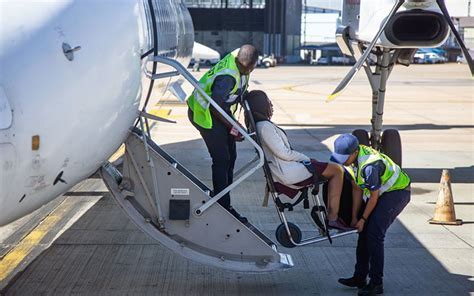
The Orkney Inter-Isles network is among Loganair’s most iconic operations, and the Westray–Papa Westray route has become symbolic of the company’s commitment to micro-regional aviation. These routes are often funded in part by public service obligations (PSOs) — government subsidies that support air connectivity in regions where profitability alone wouldn’t justify service.
Aviation’s Human Side: Passengers and Stories
For locals, the flight is part of daily life. For travelers, it becomes an unforgettable experience. Pilots often know passengers by name. Children sometimes take the flight just for fun, and islanders will fly to Papa Westray for a church service, a community meeting, or even a football match.
Anecdotes from frequent flyers include birthday parties in midair, surprise certificate handouts, and mid-flight jokes about whether it’s worth fastening seatbelts at all. The intimacy of the experience — the low roar of propellers, the absence of cabin crew, the view from the cockpit — makes the trip deeply personal and memorable, unlike any other air journey in the world.
Environmental and Operational Considerations
Critics might question the environmental sustainability of such short flights. Yet, in these cases, alternatives like electric aircraft or hybrid propulsion systems are increasingly being considered for ultra-short regional routes. Aircraft manufacturers and operators are exploring battery-powered solutions that could make these flights even greener, potentially pioneering net-zero aviation for the first time in regular commercial service.
Moreover, the carbon footprint of these flights is mitigated by the extremely low altitude, light aircraft weight, and the fact that they substitute much longer overland or maritime routes in bad weather. For now, this micro-flight represents efficiency and necessity, not extravagance.
An Aviation Marvel With Global Appeal
Whether viewed as a logistical solution, a tourism curiosity, or a feather in Scotland’s aviation cap, the Westray–Papa Westray flight remains a world record-holder that captures the imagination. It challenges conventional perceptions of what flight is for and proves that in aviation, size doesn’t always equate to significance.
In an age of ever-expanding airports, hyperloops, and high-speed rail, this tiny hop across a Scottish seascape reminds us that sometimes the shortest journeys are the most meaningful — and that the sky, no matter how brief the ascent, still holds wonder.