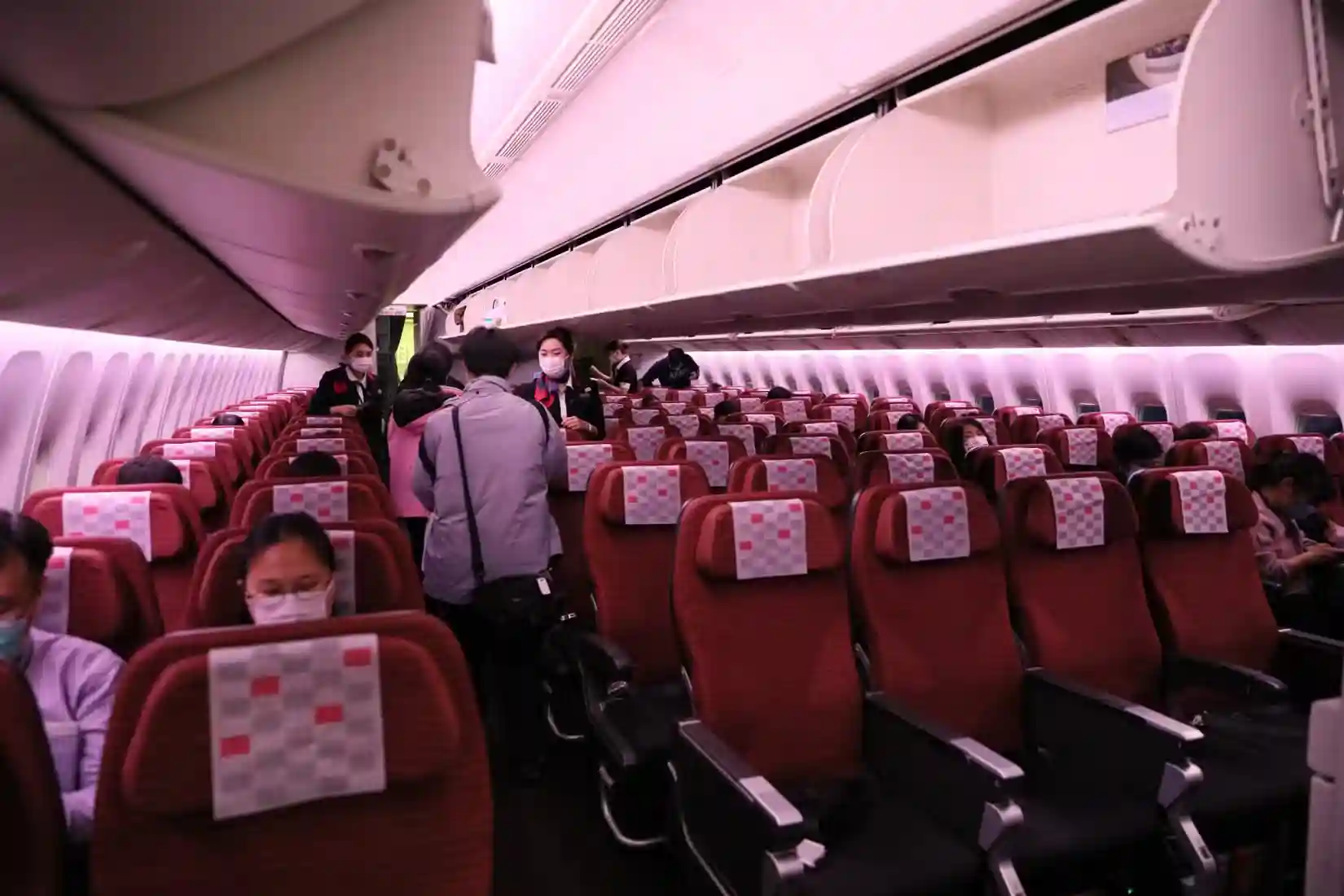
For decades, airline passengers have watched economy-class cabins become progressively tighter. Seat widths have narrowed, legroom has shrunk, and aircraft manufacturers have worked alongside airlines to maximize passenger capacity wherever possible. Against this backdrop, one carrier has taken a remarkably different path. In 2026, Japan Airlines (JAL) stands apart from much of the industry by offering what is widely regarded as the world’s most spacious economy-class experience.
Rather than focusing solely on squeezing additional seats into its aircraft, JAL has built its economy product around a philosophy that many travelers thought had largely disappeared from modern aviation: comfort. Through its acclaimed Sky Wider seating concept, generous cabin layouts, intelligent engineering, and meticulous attention to passenger experience, the Japanese flag carrier has transformed economy travel into something that feels noticeably less restrictive, especially on long-haul routes.
This approach has not gone unnoticed. Frequent flyers, aviation experts, and industry awards have repeatedly recognized JAL for delivering one of the finest economy-class products available anywhere in the world. While premium cabins continue to dominate headlines, JAL’s economy cabin demonstrates that meaningful innovation can still occur at the back of the aircraft.
The Growing Importance of Space in Modern Economy Class
The modern airline industry operates within a highly competitive environment where cost efficiency often drives cabin design decisions. Airlines continuously search for ways to increase revenue, and one of the simplest methods is to add more seats. Every additional row or extra seat per row can generate substantial long-term returns.
For passengers, however, these efficiency gains often come at a price. Long-haul travel becomes increasingly uncomfortable when personal space is reduced. On flights lasting ten, twelve, or even fifteen hours, a few centimeters of additional room can dramatically change the onboard experience.
Two measurements largely determine how comfortable an economy seat feels. The first is seat pitch, which measures the distance between a seat and the one directly in front of it. The second is seat width, which determines shoulder room and personal space throughout the journey.
Most travelers immediately notice both factors. Limited pitch can leave knees pressed against seatbacks, while narrow seats create constant competition for armrest space. These issues become especially frustrating during overnight flights when passengers attempt to sleep.
Japan Airlines recognized that despite the growing popularity of premium economy and business class, the overwhelming majority of travelers still fly economy. Improving their comfort could create a powerful competitive advantage.
The result is an economy product designed not merely to transport passengers efficiently, but to make long-distance travel genuinely more pleasant.
The Sky Wider Concept That Changed Economy Travel
At the center of JAL’s economy-class strategy is its highly regarded Sky Wider seat.
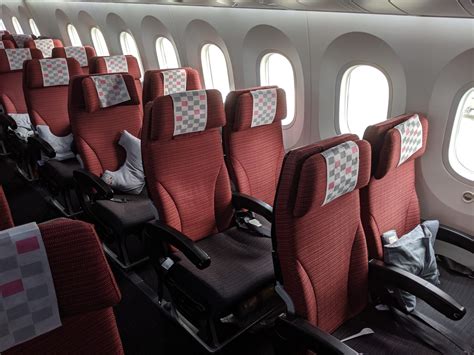
Unlike many airline marketing initiatives that rely heavily on branding, Sky Wider delivers measurable physical improvements that passengers can immediately feel upon boarding. The seats provide significantly more room than industry norms, offering an environment that feels open rather than compressed.
On key long-haul aircraft, passengers enjoy seat pitches ranging from 33 to 34 inches, exceeding what many competing airlines provide. While a difference of only two or three inches may appear insignificant on paper, it creates a noticeable improvement in real-world comfort.
Passengers gain additional freedom to stretch their legs, adjust their seating position, use laptops more comfortably, and move throughout the flight without feeling trapped in a confined space.
Seat width is equally impressive. On certain aircraft, JAL offers seats approaching 19 inches in width, among the widest available in standard economy cabins globally. This extra shoulder room significantly reduces the cramped feeling often associated with long-haul travel.
The Sky Wider concept proves that thoughtful design does not require transforming economy into a premium cabin. Instead, it enhances the fundamentals that passengers value most.
Why JAL Refused the Industry Trend Toward Higher-Density Cabins
Perhaps the most significant decision underpinning JAL’s spacious economy experience involves aircraft configuration.
Many airlines operating the Boeing 787 Dreamliner have adopted a nine-abreast seating arrangement. While this allows carriers to transport more passengers, it substantially reduces seat width and personal space.
Japan Airlines chose a different strategy.
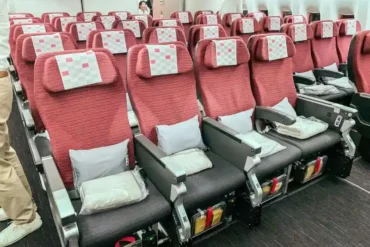
On many of its Boeing 787 aircraft, the airline maintains an eight-abreast 2-4-2 configuration, sacrificing potential revenue seats in exchange for superior passenger comfort.
This decision immediately creates one of the most spacious economy environments available on any modern widebody aircraft.
The difference becomes especially apparent on long-haul services connecting Japan with North America, Europe, and other distant destinations. Passengers benefit from noticeably wider seats, larger personal zones, and a cabin atmosphere that feels less crowded.
For couples and families, the window-side pairs of seats are particularly attractive. Rather than sharing a row with three or four strangers, travelers can enjoy a more private arrangement that resembles aspects of premium economy seating.
This layout has become one of the defining characteristics of the JAL economy experience and remains a key reason why aviation enthusiasts frequently recommend the airline.
Economy Seat Dimensions That Lead the Industry
The numbers behind JAL’s economy cabin reveal why the airline consistently receives praise for passenger comfort.
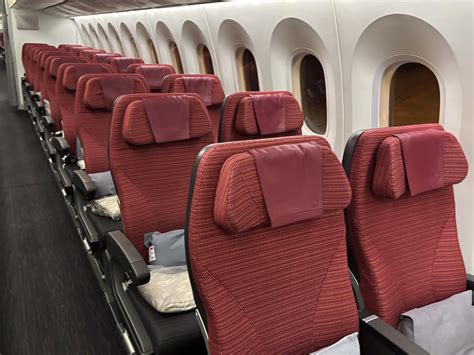
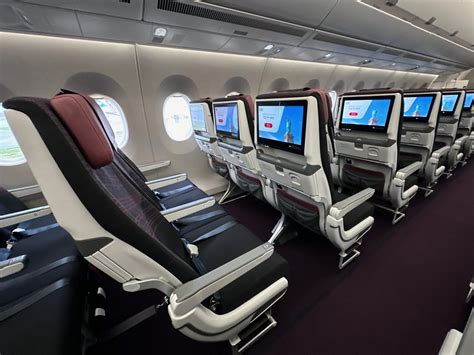
On the Boeing 787 Dreamliner, economy seats typically offer approximately 19 inches of width and 33 inches of pitch. The Boeing 777-300ER expands pitch further to around 34 inches, while maintaining generous seat dimensions.
The airline’s flagship Airbus A350-1000 also delivers a highly competitive economy experience, featuring approximately 18 inches of width alongside a spacious 34-inch pitch.
These measurements may appear technical, but their impact becomes immediately apparent during extended flights.
Compared with competitors offering widths closer to 17 inches and pitches near 31 inches, JAL provides a noticeably more accommodating environment. Travelers experience less shoulder contact, improved posture options, and greater overall freedom of movement.
When multiplied across a flight lasting twelve hours or longer, these differences become substantial contributors to passenger satisfaction.
Industry awards repeatedly recognize this advantage. Skytrax honored JAL with the World’s Best Economy Class Airline Seat distinction, highlighting the carrier’s commitment to seat geometry and comfort-focused design.
Intelligent Cabin Engineering Creates More Usable Space
JAL’s success is not solely the result of larger measurements. The airline also employs sophisticated cabin engineering to maximize the usefulness of every available inch.
Modern aircraft cabins contain countless components competing for limited space. Entertainment systems, wiring, structural elements, tray tables, and storage compartments all influence passenger comfort.
Rather than accepting conventional compromises, JAL worked closely with seat manufacturers to redesign numerous cabin elements.
Seatbacks were slimmed without sacrificing cushioning. Entertainment hardware was relocated away from passengers’ leg areas. Literature pockets were redesigned to minimize intrusion into knee space.
The result is a cabin that feels larger than raw measurements alone would suggest.
Passengers frequently comment that JAL aircraft feel unusually open despite operating within the same fuselage dimensions as competitors. This perception stems from careful design choices that prioritize practical usability over simple seat counts.
Even the placement of recline mechanisms and storage features has been optimized to eliminate pressure points that can become uncomfortable during long journeys.
A Passenger Experience Built Around Long-Haul Comfort
Physical space forms the foundation of JAL’s economy product, but the airline complements that advantage with a range of thoughtful passenger-focused features.
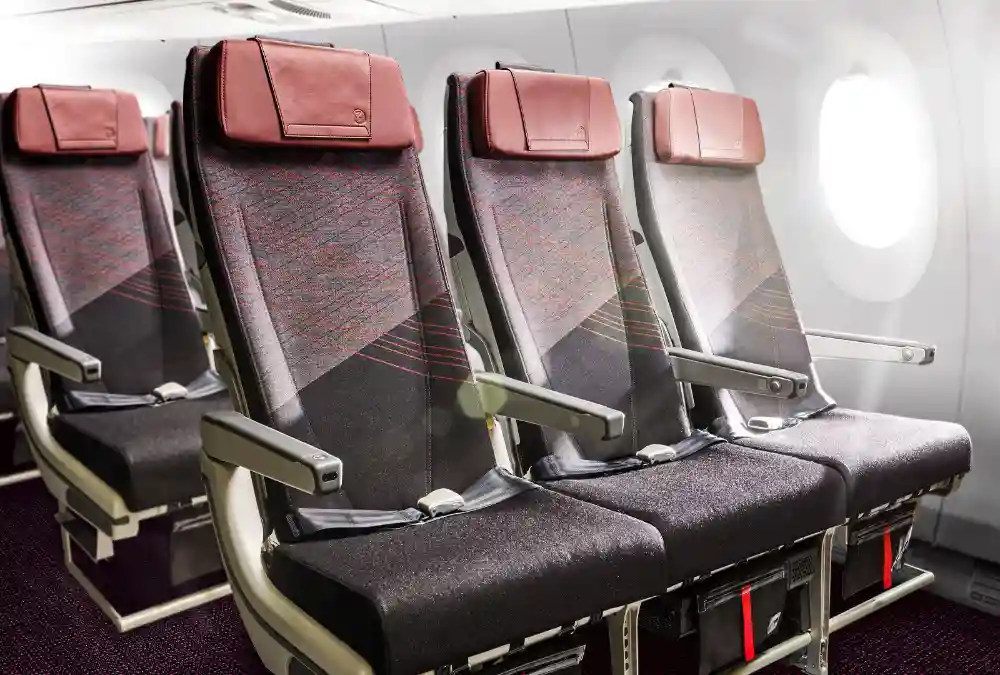
Adjustable headrests provide support during overnight flights. Seat cushions maintain comfort over extended periods. Recline mechanisms offer practical movement without excessively intruding on neighboring passengers.
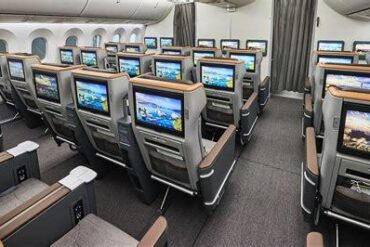
Entertainment systems feature high-definition displays with extensive content libraries that include both Japanese and international programming.
USB charging ports and in-seat power outlets allow travelers to keep devices operational throughout lengthy journeys. Large tray tables accommodate laptops, meals, and personal items without feeling cramped.
Many aircraft also incorporate dedicated smartphone holders, reflecting changing passenger habits and reducing the need to awkwardly balance devices during entertainment viewing.
Cabin cleanliness represents another area where JAL consistently earns praise. The airline’s attention to detail extends throughout the passenger experience, reinforcing perceptions of quality and professionalism.
Combined with attentive service and carefully presented meals, these elements create a travel experience that feels significantly more refined than traditional economy expectations.
How Japan Airlines Compares Against Global Competitors
The global competition for economy-class excellence remains intense.
Airlines such as Singapore Airlines, Qatar Airways, Cathay Pacific, and EVA Air regularly receive recognition for service quality, catering, and overall passenger experience.
However, Japan Airlines occupies a distinctive niche.
While some competitors excel in hospitality or inflight dining, JAL’s strongest advantage lies in physical comfort. The airline has made a deliberate choice to prioritize both seat width and seat pitch simultaneously.
Many carriers perform well in one category but less impressively in another. Some offer generous legroom while sacrificing shoulder space. Others provide wider seats but more limited pitch.
JAL’s balanced approach delivers a combination that remains relatively rare in the modern airline industry.
This balance explains why aviation reviewers frequently rank JAL among the best choices for long-haul economy travel. Passengers are not forced to choose between legroom and width; they receive meaningful improvements in both areas.
The Business Logic Behind Spacious Economy Seating
At first glance, sacrificing seats may appear financially disadvantageous. Yet JAL’s strategy delivers several important business benefits.
A more comfortable economy product strengthens customer loyalty. Travelers who experience a noticeably superior flight are more likely to choose the same airline for future journeys, even when ticket prices are slightly higher.
The airline also gains pricing power on competitive routes. Many passengers willingly pay a modest premium when they know they will receive additional comfort during a ten-hour or twelve-hour flight.
Corporate travelers represent another valuable segment. Individuals who alternate between business travel and personal travel often experience multiple cabin classes. Delivering an excellent economy product can reinforce positive perceptions of the airline across all travel categories.
Moreover, strong passenger satisfaction generates valuable word-of-mouth recommendations, online reviews, and social media exposure.
In a marketplace where many airlines compete aggressively on price, differentiation through comfort creates a meaningful competitive advantage.
Why Japan Airlines Sets the Economy-Class Standard in 2026
Japan Airlines has achieved something increasingly rare in commercial aviation. Rather than treating economy passengers as a volume-based revenue source, the airline has invested in creating an experience that genuinely prioritizes comfort.
Through wider seats, greater pitch, intelligent cabin engineering, thoughtful amenities, and a deliberate rejection of excessive cabin densification, JAL has established itself as the benchmark for spacious economy travel.
Its Sky Wider concept demonstrates that economy class does not have to feel cramped, even on the world’s longest flights. The airline’s commitment to passenger comfort continues to distinguish it from competitors that prioritize seat count above all else.
In 2026, travelers searching for the most spacious economy-class cabin in the sky will find a compelling answer aboard Japan Airlines, where every extra inch has been carefully designed to make long-haul travel more comfortable, more relaxing, and significantly more enjoyable.