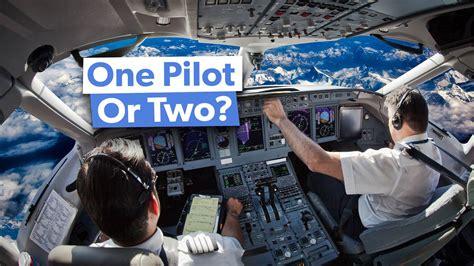
Commercial aviation has spent decades pursuing greater automation, with every new generation of aircraft introducing smarter avionics, increasingly capable flight management systems, and sophisticated autopilot functions. These technologies have steadily reduced pilot workload while improving operational precision and fuel efficiency. Yet one objective remained controversial throughout that evolution: reducing the number of pilots in the cockpit. For years, Airbus and several industry partners explored whether advanced automation could eventually make single-pilot commercial operations a practical reality. That vision has now encountered its biggest obstacle.
A federal law signed in the United States in February 2026 fundamentally changes the regulatory landscape by legally requiring every commercial passenger flight to operate with two qualified and fully rested pilots on the flight deck throughout the flight. What had previously existed primarily as regulatory practice has now become binding legislation. The change does far more than preserve current operating procedures. It effectively blocks every certification pathway that could have allowed reduced-crew or single-pilot airline operations in the United States.
The significance reaches far beyond American airlines. The United States remains one of the world’s most influential aviation markets, and certification decisions made there often shape aircraft development across the global industry. Combined with Europe’s increasingly cautious regulatory stance, the new law effectively resets expectations for cockpit design, automation priorities, and airline staffing strategies for many years to come.
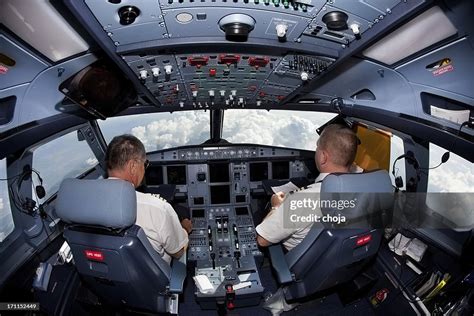
How Single-Pilot Commercial Aviation Became a Serious Industry Goal
The concept of reducing cockpit crews did not emerge because manufacturers wanted to replace pilots with machines overnight. Instead, it developed as airlines searched for practical solutions to long-term economic and operational pressures. Global passenger demand continued growing while airlines struggled to recruit sufficient numbers of pilots. Training pipelines required years to produce experienced flight crews, retirement rates accelerated in many regions, and operating costs continued increasing.
Against this backdrop, Airbus, research organizations, and several major airlines began examining whether technology could safely reduce cockpit staffing without compromising safety. Rather than proposing immediate single-pilot flights, researchers introduced the concept of Extended Minimum Crew Operations (eMCO). Under this model, both pilots would still begin the flight together, but during long cruise segments one pilot could rest while sophisticated automation systems, enhanced cockpit technology, and potential ground support monitored aircraft operations until both pilots were again required for more demanding phases of flight.
This intermediate concept gradually evolved into broader discussions surrounding Single-Pilot Operations (SiPO). In this longer-term vision, one pilot would manage the aircraft during every phase of flight while advanced automation, artificial intelligence, remote operational support, and highly automated decision-assistance systems provided additional redundancy.
The proposal represented one of the most ambitious transformations in commercial cockpit design since jet airliners first entered service.
Why Airbus Invested Heavily in Reduced-Crew Research
Airbus became one of the industry’s most active supporters of next-generation cockpit automation. Rather than viewing automation as merely an aid to pilots, the manufacturer explored how increasingly intelligent systems could fundamentally reshape cockpit responsibilities.
Programs such as Project Connect, developed alongside Cathay Pacific, examined how automation, communication technologies, and ground support could distribute cockpit workload more efficiently during extended flights. Engineers studied human-machine interaction, pilot fatigue, automated monitoring, and methods of maintaining situational awareness even when only one pilot remained actively at the controls during cruise.
The company was not alone. Lufthansa participated in feasibility studies evaluating operational procedures, while broader European research initiatives—including the ACROSS program—investigated whether future certification standards might eventually accommodate reduced-crew commercial operations.
These initiatives reflected an industry-wide belief that automation was approaching a level where cockpit staffing could eventually evolve without sacrificing safety.
Technology Advanced Faster Than Regulation
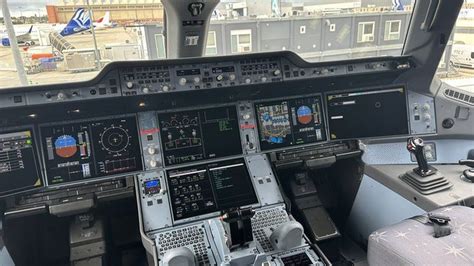
Modern airliners already perform much of a routine flight automatically. Flight management computers calculate efficient routes, autopilot systems maintain precise altitudes and headings, auto-throttle systems continuously optimize engine performance, and sophisticated navigation systems integrate satellite positioning with inertial reference units.
These capabilities naturally prompted questions about whether humans were still required in the same numbers throughout every phase of flight.
However, aviation regulators consistently emphasized an important distinction. Automation excels at handling predictable situations. Airline operations rarely remain entirely predictable.
Unexpected weather deviations, system malfunctions, air traffic conflicts, runway changes, onboard medical emergencies, bird strikes, smoke warnings, equipment failures, or rapidly evolving operational decisions often require complex human judgment that extends beyond executing programmed procedures.
Even the most capable automated systems remain tools designed to support pilots rather than independently replace collaborative decision-making between two experienced professionals.
The Human Redundancy That Automation Cannot Yet Replace
One of the strongest arguments supporting two-pilot operations involves redundancy—not simply mechanical redundancy but human redundancy.
Commercial aviation has always relied upon overlapping layers of protection. Aircraft contain duplicate hydraulic systems, multiple electrical generators, redundant flight computers, backup navigation equipment, and independent communication systems. Cockpit crews follow the same philosophy.
Each pilot continuously monitors the other’s actions. Flight plans are independently verified. Checklists require verbal confirmation. Decisions during abnormal situations benefit from discussion rather than individual judgment.
This collaborative environment dramatically reduces the likelihood that a single mistake escalates into a serious incident.
Medical emergencies further reinforce the value of cockpit redundancy. European aviation safety monitoring recorded hundreds of pilot incapacitation events between 2019 and 2024. Although most incidents concluded safely, they demonstrated that cockpit medical emergencies occur regularly rather than existing as hypothetical possibilities.
With two pilots available, responsibilities immediately transfer to the healthy crewmember while cabin crew and air traffic controllers provide additional assistance. Under a single-pilot model, the same event could rapidly become far more challenging despite automated support.
What the February 2026 US Law Actually Requires
The legislation enacted in February 2026 removes virtually all regulatory ambiguity surrounding commercial cockpit staffing in the United States.
Instead of allowing future certification standards to evolve through FAA rulemaking alone, Congress established a statutory requirement that commercial passenger aircraft must operate with a minimum of two qualified, fully rested pilots on the flight deck throughout flight operations.
This distinction is critically important.
Regulations can often be modified as technology advances and agencies develop new certification frameworks. Federal law requires legislative action before significant changes become possible.
Consequently, the pathway that manufacturers hoped might eventually allow certification of reduced-crew operations has effectively disappeared within the American commercial aviation system.
Even concepts that retained two pilots onboard—but allowed one pilot to leave the cockpit during cruise under enhanced automation—no longer fit within the legal framework established by the new statute.
Why Intermediate Automation Concepts Were Also Blocked
The legislation affects far more than fully autonomous airline operations.
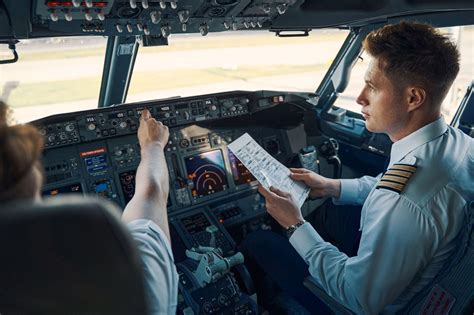
Extended Minimum Crew Operations represented a transitional concept that many researchers believed could gradually introduce airlines to increasingly automated cockpits without immediately eliminating the second pilot. During lengthy cruise phases lasting several hours, one pilot would rest while the remaining pilot, assisted by sophisticated automation and potentially ground-based operational monitoring, supervised the aircraft.
This approach sought to improve crew fatigue management while potentially reducing staffing requirements on certain long-haul operations.
The new American law effectively eliminates that pathway as well. Continuous dual-pilot presence now remains mandatory throughout the flight rather than only during takeoff and landing.
As a result, several years of research aimed at validating intermediate reduced-crew concepts now lack an achievable certification destination within the United States.
Europe Reached Similar Safety Conclusions
The American decision did not emerge in isolation.
Before the legislation was enacted, the European Union Aviation Safety Agency had already completed extensive evaluations examining whether emerging automation technologies could provide safety equivalent to conventional two-pilot operations.
Following years of technical assessment covering system reliability, human factors, pilot workload, automation failure scenarios, cybersecurity, communication reliability, and medical incapacitation risks, European regulators concluded during 2025 that existing technology could not yet demonstrate equivalent safety.
Consequently, EASA paused further development of certification pathways for single-pilot commercial operations.
This convergence between the world’s two largest aviation regulatory systems significantly changes the industry’s direction. Instead of differing philosophies creating opportunities for regional certification, both major regulatory authorities now support maintaining traditional two-pilot airline operations.
Programs Facing the Greatest Impact
Several high-profile industry initiatives now confront an uncertain future.
Airbus’ collaboration with Cathay Pacific under Project Connect depended upon the possibility that regulators would eventually permit reduced active cockpit staffing during portions of flight. Without an attainable certification framework in one of aviation’s largest markets, commercial incentives for continuing similar development become substantially weaker.
Lufthansa-related feasibility studies examining automation-supported workload reduction face similar challenges. Although much of the technology remains valuable for pilot assistance, its original objective of enabling reduced-crew operations has become considerably more difficult to justify commercially.
The European ACROSS research initiative also loses significant momentum because international certification harmonization becomes far less likely when the United States legally requires continuous two-pilot operations.
Rather than isolated experiments, these projects represented coordinated efforts involving aircraft manufacturers, airlines, universities, engineers, regulators, and technology developers pursuing a shared long-term vision.
Why Airlines Initially Supported Reduced-Crew Concepts
Airline interest extended well beyond labor cost savings.
Pilot shortages have become a growing concern across multiple regions as experienced captains retire faster than training organizations can replace them. Rapid fleet expansion, especially throughout Asia and the Middle East, further increased demand for qualified flight crews.
Long-haul operations also require additional relief pilots on ultra-long-range flights exceeding regulatory duty limits, increasing staffing complexity and operational expenses.
Automation offered the possibility of addressing multiple challenges simultaneously by improving scheduling flexibility, reducing long-term staffing pressure, and optimizing crew utilization.
Nevertheless, economic efficiency alone has never been sufficient to overcome aviation’s exceptionally high safety standards.
Public Confidence Remains a Critical Factor
Commercial aviation depends upon passenger confidence as much as engineering excellence.
Surveys consistently indicated strong public support for maintaining two pilots on commercial flights. Many travelers viewed cockpit redundancy as an essential safeguard regardless of technological progress.
Even if regulators had eventually approved reduced-crew operations, airlines would still have faced the challenge of convincing millions of passengers that one pilot supported by automation offered equivalent reassurance to two highly trained professionals working together.
Perception often influences commercial acceptance almost as strongly as technical capability.
Automation Will Continue to Advance—Just Along a Different Path
Although the legislation effectively closes the door on single-pilot airline certification in the United States, it does not represent a rejection of cockpit automation.
Quite the opposite.
Aircraft manufacturers continue investing heavily in technologies that reduce workload, improve situational awareness, enhance predictive maintenance, optimize fuel consumption, automate checklist management, detect hazards earlier, and assist pilots during complex decision-making.
Artificial intelligence will likely become increasingly integrated into future flight decks, but primarily as a sophisticated assistant rather than an operational replacement.
Instead of removing pilots, future systems will probably make two-pilot crews even more effective by filtering information, highlighting risks earlier, reducing repetitive tasks, and supporting faster responses during abnormal situations.
The Future Cockpit Will Be Built Around Human-Automation Collaboration
The long-term direction of commercial aviation now appears considerably clearer.
Future cockpit design will prioritize cooperation between highly capable automation and two professional pilots rather than replacing one crewmember altogether. Human expertise remains indispensable during rapidly evolving operational scenarios where judgment, communication, adaptability, and collaborative decision-making determine successful outcomes.
Manufacturers will continue introducing increasingly intelligent avionics, predictive analytics, machine learning algorithms, enhanced vision technologies, digital assistants, and integrated operational support networks. These innovations promise measurable gains in efficiency and safety without fundamentally altering the cockpit’s human composition.
Rather than pursuing crew elimination, the industry’s next chapter focuses on strengthening human performance through technology.
A Defining Moment for Commercial Aviation Policy
The February 2026 legislation represents far more than a staffing requirement. It establishes a long-term regulatory philosophy that defines how automation should serve commercial aviation.
Instead of viewing artificial intelligence and autonomous systems as replacements for airline pilots, lawmakers and regulators have clearly positioned them as complementary technologies that enhance human performance while preserving cockpit redundancy.
For Airbus and other manufacturers, this marks a profound strategic shift. Investments once directed toward reducing cockpit crews will increasingly support technologies that improve decision quality, reduce fatigue, strengthen situational awareness, and help two pilots perform even more effectively together.
The result is not the end of cockpit innovation but the beginning of a different era. Automation will continue transforming commercial aviation, yet its success will now be measured less by how many pilots it can replace and more by how effectively it enables two highly trained professionals to operate the world’s safest transportation system.