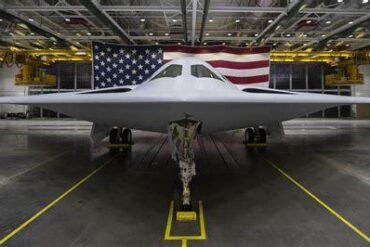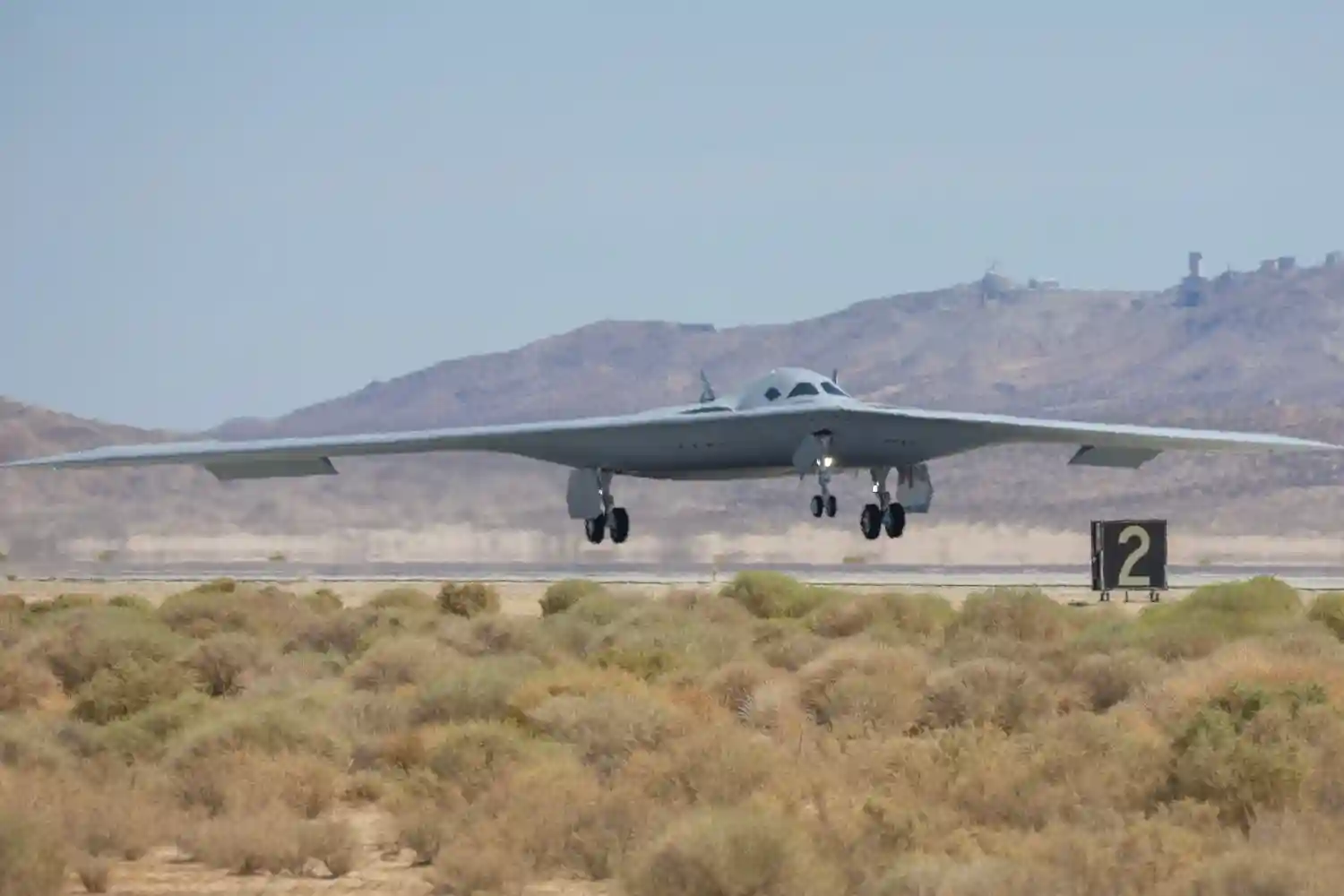
The Pentagon has made a bet that few procurement programs in modern American history would dare to make. While the final size of the B-21 Raider fleet remains undecided — somewhere between 100 and 200 airframes — the US Air Force has already committed money to expand the Northrop Grumman production line by 25 percent. That funding is not a hedge. It is an admission that the aircraft’s strategic value has outrun the bureaucratic machinery designed to count it. With the service’s total inventory slipping below 5,000 aircraft for the first time since World War II, and with adversaries on two fronts sharpening very different kinds of threats, the Air Force has decided that waiting for a formal program-of-record decision would cost more than building the capacity early.
What Is Driving the Urgency Behind the B-21 Production Increase
The arithmetic of the modern bomber force explains the haste better than any strategy document. Air Force Global Strike Command operates roughly 140 strategic bombers, a sliver of the total fleet yet a platform whose influence has shaped nearly every major American air campaign since the Cold War. The B-21 is designed to inherit that outsized role and multiply it. Each Raider is built to deliver a disproportionate share of strike effects in a campaign, carrying the same lopsided tactical value that made the B-2 Spirit so feared and so rarely risked. The difference is that the Raider is engineered to be used, not merely displayed.
The pressure arrives from two directions at once. In the Middle East, the strategic problem is not a sophisticated stealth fighter; it is an unsustainable cost-to-kill ratio. Adversaries launch thousands of one-way attack drones costing between $20,000 and $50,000, exemplified by the Iranian-designed Shahed-136, while defending forces expend multi-million-dollar Patriot or THAAD interceptors to bring them down. That exchange drains advanced missile stockpiles faster than industry can replenish them. The B-21 will not chase individual drones with cannons. Instead, it will punch through enemy jamming, coordinate electronic attack, and direct strikes at launch sites and command nodes — attacking the problem at its source rather than at its endpoint.
In the Western Pacific, the threat is the opposite: not cheap and plentiful, but expensive, scarce, and lethal. China’s People’s Liberation Army Air Force fields a growing fleet of Chengdu J-20 stealth fighters, backed by early-warning radar networks and long-range hypersonic anti-ship missiles such as the DF-21. That layered anti-access/area-denial architecture is designed to keep American carriers and non-stealth aircraft at arm’s length, and it is the single most demanding environment the Raider was built to enter. The opening hours of a high-end Pacific conflict would see the B-21 flying directly into the teeth of those defenses to dismantle them systematically.
6,000 Miles of Reach: How the B-21 Raider Solves the Pacific Range Problem
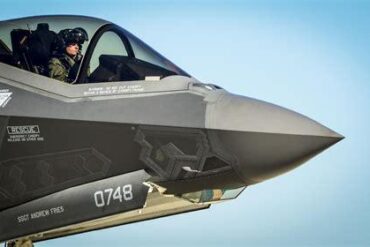
Range is the quiet crisis of American airpower in the Indo-Pacific. Standard fighters cannot cross the vast distances of the First and Second Island Chains without heavy reliance on non-stealth aerial tankers, and those tankers are precisely what Chinese planners intend to hunt and destroy first. The Lockheed F-35A Lightning II manages an unrefueled range of about 1,380 miles and a combat radius near 680 miles. The F-22 Raptor reaches roughly 1,840 miles with external tanks but sees its combat radius fall to between 515 and 610 miles. Both carry a maximum payload of around 18,000 pounds. In a large-scale aerial battle, their magazine depth runs dry long before their fuel does.
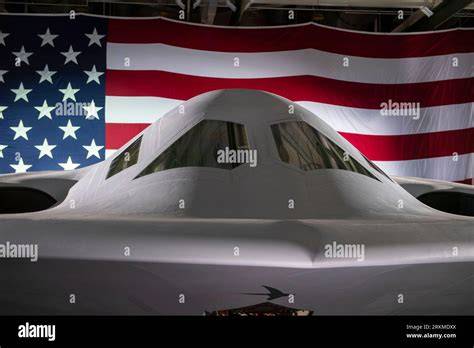
The Raider operates in an entirely different category. Estimates place its unrefueled range near 6,000 miles, with a combat radius around 3,000 miles and a payload of 20,000 to 30,000 pounds. That means the B-21 can cross an ocean or a continent, strike deep behind enemy lines, and return without a single tanker in the package. It reduces the dependency that makes conventional strike packages fragile, and it does so while remaining undetected by even the most advanced integrated air defense system. The Air Force’s long-term fighter force structure studies have explicitly examined assigning air-to-air missions to bombers, a doctrinal shift that only makes sense when a platform can loiter inside contested airspace with missiles still in its bays.
Inside the Raider’s Arsenal: Long-Range Missiles and Loyal Wingman Drones
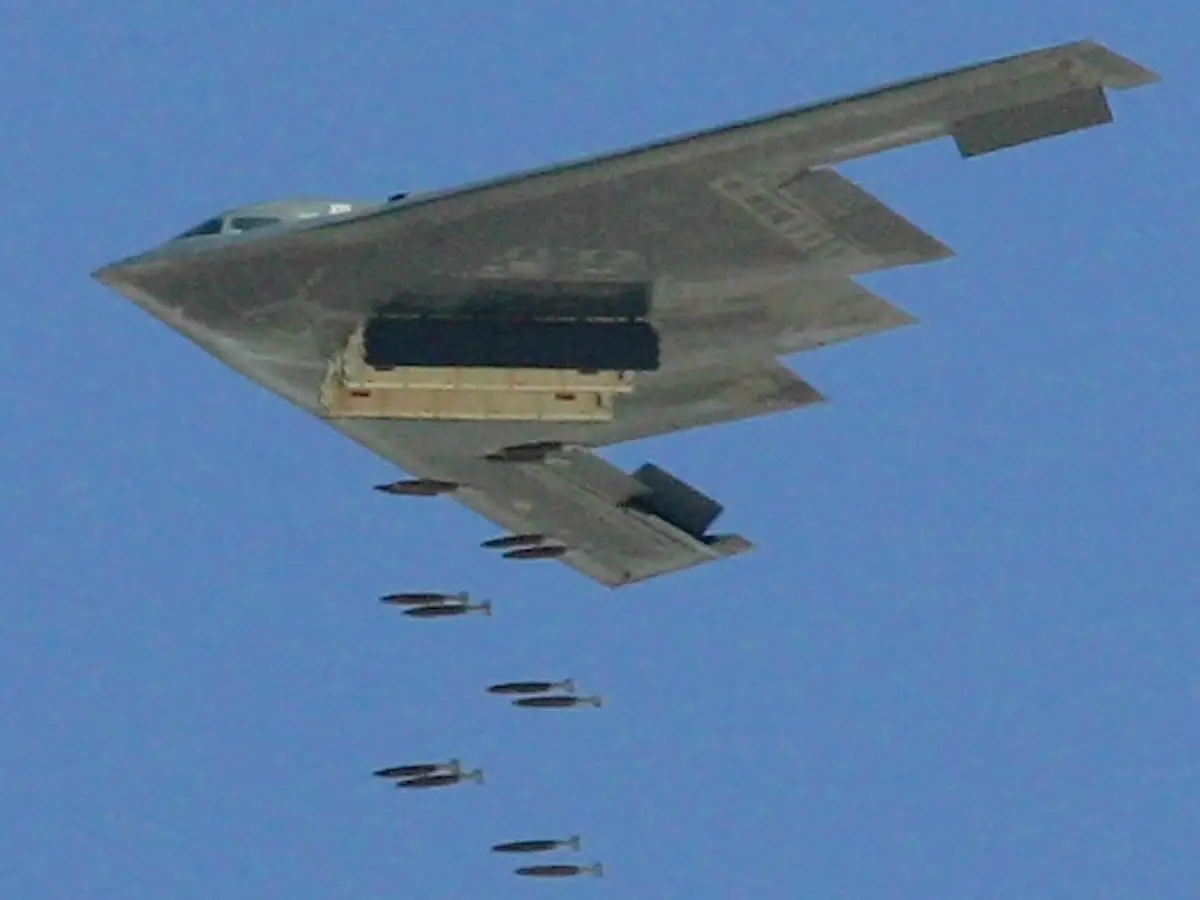
In a shooting fight, the B-21 becomes a giant, low-observable airborne arsenal. Positioned safely inside contested airspace, it can carry deep inventories of ultra-long-range air-to-air missiles such as the AIM-174B. Frontline fighters or collaborative combat aircraft push forward, detect J-20s or enemy command-and-control aircraft, and pass target data across the combat cloud back to the Raider. The B-21 then fires from its internal bays without ever activating its own radar or exposing a friendly aircraft. The B-2 Spirit carried no air-to-air weapons at all. The Raider’s expected loadout adds long-range interceptors, the AGM-158 JASSM-ER, LRASM, the AGM-181 Long Range Stand-Off, the HACM hypersonic missile, optimized penetrators, advanced sea mines, and full CCA drone control, turning the bomber into an uncrewed mothership as much as a strike platform.
That drone integration matters most against swarms. While the Raider hunts underground command bunkers, manufacturing plants, and mobile launch platforms, its crew can direct collaborative combat aircraft to counter incoming enemy drones. Each loyal wingman carries its own missiles and can engage multiple targets, or, if necessary, collide with a hostile drone as a sacrificial shield. The Arsenal ship concept that once described surface vessels now describes a flying wing with a crew of two.
Agile Combat Employment and the B-2 Spirit Comparison That Matters
The Raider’s true operational breakthrough in the Pacific is not stealth alone. It is sustainability. Legacy stealth bombers such as the B-2 Spirit are logistical anchors, demanding specialized, climate-controlled hangars and delicate radar-absorbent coatings that degrade in humidity. The B-21 is roughly 10 to 20 percent smaller than the B-2 and is engineered with ruggedized, next-generation stealth coatings that tolerate austere, humid environments. Because it can be sustained at any airfield built for Cold War fighter jets, the Air Force can disperse Raiders across a wide web of small bases rather than concentrating them at a handful of vulnerable megabases. It also consumes a fraction of the fuel required by older heavy bombers or short-range fighter packages, sharply reducing reliance on the aerial refueling tankers that adversaries most want to kill.
Who Wants 145 B-21 Bombers — and Why Nobody Has Approved It
The numbers are no longer hypothetical. Admiral Charles Richard’s successor at US Strategic Command, along with a succession of senior leaders, has endorsed a fleet of 145 airframes. The Mitchell Institute and Admiral Samuel Paparo, commander of US Indo-Pacific Command, have argued for as many as 200 Raiders. Combine a 145-aircraft B-21 fleet with the Boeing B-52J Stratofortress upgrade and the total inventory reaches the long-sought requirement of 220 bombers — a number that defense planners have circled for years.
Yet no one has formally approved it. To change the program of record, the Air Force must secure validation from the Joint Requirements Oversight Council, and the service expects to present a revised force structure plan during the Fiscal Year 2028 budget cycle, anticipated in spring 2027. Northrop Grumman CEO Kathy Warden has said the company is working through analysis with the Air Force to accommodate a larger fleet. The funded 25 percent capacity increase is precisely what makes that option executable on short notice, and it accelerates delivery of early aircraft to Ellsworth Air Force Base next year. Congress, which sees the program as a rare model of on-time, on-budget defense procurement, is unlikely to object.
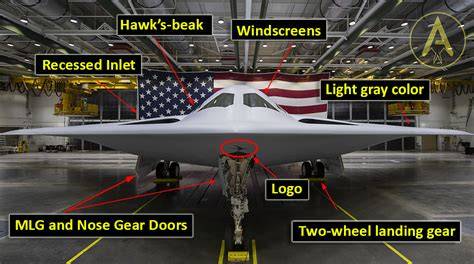
The logic is difficult to argue with. Capacity is the one variable that takes years to create and cannot be conjured once a fleet decision is finally made. By paying for a fifth more production before the count is settled, the Air Force is buying optionality at the cheapest moment it will ever be available — and signaling that the number of Raiders, whatever it turns out to be, will be limited by decisions rather than by factory floors.