On November 22, 1963, the motorcade route in Dallas became one of the most heavily scrutinized and debated trajectories in American history. The route, which took President John F. Kennedy through Dealey Plaza, has triggered decades of speculation, official investigations, and conspiracy theories. The key question that still haunts historians, investigators, and citizens alike is: Why was the motorcade route in Dallas changed?
The Original Route and Protocol
According to Secret Service protocol, presidential motorcade routes were supposed to follow the most direct, shortest, and safest path between two destinations. For Kennedy’s visit to Dallas, the original plan was for the motorcade to proceed straight along Main Street to Industrial Boulevard (now Riverfront Boulevard), a relatively open road that led directly to the Trade Mart, where the President was scheduled to deliver a speech.
Main Street offered a clear, wide path with limited overhead structures, thereby minimizing potential security threats from buildings. Furthermore, this path avoided unnecessary turns, another protocol priority, as turns inherently slow down a motorcade and expose it to risk from elevated positions.
The Published Change and Its Timing
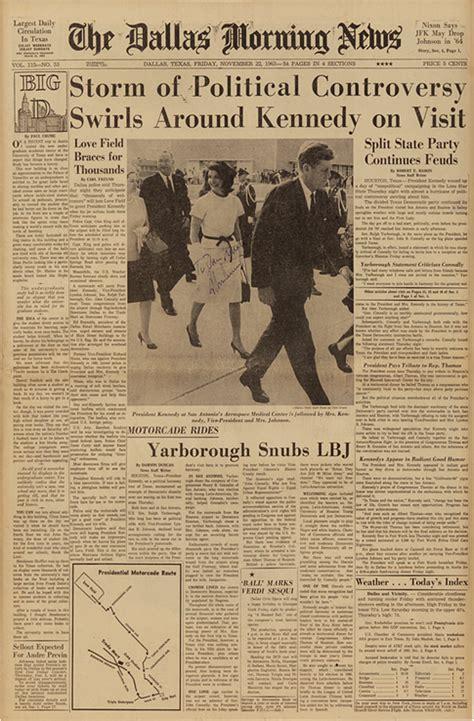
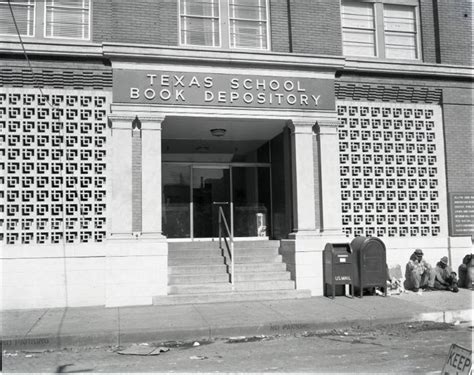
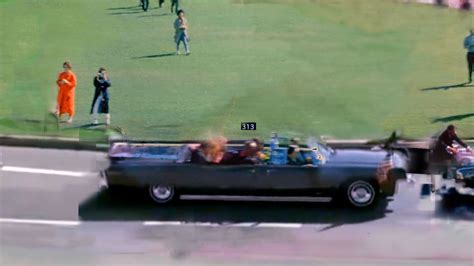
However, a revised route was published in Dallas newspapers just a day before the assassination—Thursday, November 21st, 1963. This new path diverged from Main Street and instead took a sharp right turn onto Houston Street, followed by a tight left turn onto Elm Street—a turn that directed the limousine right past the Texas School Book Depository (TSBD).
This newly introduced turn into Elm Street was against recommended Secret Service standards. Elm Street was flanked by tall buildings, had trees and signposts obstructing lines of sight, and—crucially—funneled the motorcade into a confined, slow-moving curve directly in front of sniper-friendly windows. The logic for this deviation has been described as based on logistical necessity: some sources claim that Main Street lacked a proper freeway entrance that could lead efficiently to the Trade Mart. But critics contest this. Industrial Boulevard provided a clear, flat route to the venue, and the Main Street-to-Industrial path was not only usable but also safer and shorter.
A Last-Minute Reversal and Conflicting Accounts
Eyewitness and historical accounts suggest a more complex decision-making process than the official story implies. According to composer Izraul Hidashi, a notable revision occurred on Friday morning, mere hours before the assassination. This last-minute correction reportedly attempted to revert the motorcade back to the original, safer route. However, when the caravan departed, it still turned down Houston and then Elm—into what some describe as the “kill zone.”
Key figures like Sheriff Bill Decker and Captain Will Fritz were in the lead car of the motorcade and ultimately directed the vehicles into Dealey Plaza. Whether they were unaware of the revised route or chose to ignore it remains unclear. But their role in leading the President’s car into this trajectory raises disturbing questions.
Was It Truly a Change or a Mischaracterization?
Some argue there was no change at all. Historians like Robert Haggerty flatly state that the route was set well in advance and adhered to without deviation. According to this perspective, the controversy is entirely the result of conspiratorial misinterpretation.
Yet, if we examine the Dallas Morning News and other local papers from November 21st and 22nd, they show differing versions of the route. These inconsistencies—combined with Secret Service irregularities—are at the heart of suspicions. The sudden visibility of the route in Thursday’s paper also plays a significant role in these theories: if Lee Harvey Oswald saw the updated route only the day before, how could he have prepared such a well-positioned attack with no time to rehearse or plan adequately?
The Dealey Plaza Topography and Tactical Exposure
Dealey Plaza was far from an ideal location from a security perspective. The area contained multiple multi-story buildings, overpasses, elevated knolls, and dense foliage—all providing excellent sniper vantage points and concealment opportunities. The tight left turn from Houston onto Elm forced the limousine to slow to approximately 11 mph, making President Kennedy a sitting target.
Moreover, there was a lack of adequate rooftop security. No agents were stationed on surrounding buildings, and the number of local police deployed for overwatch was severely limited. These lapses were particularly puzzling given the animosity toward Kennedy in Dallas at the time, and the fact that Dallas was known as a “City of Hate” in the political climate of 1963.
Multiple Shooter Theory and Ballistic Forensics
The number of shots fired has long been a point of contention. Eyewitnesses reported hearing three to six gunshots, and ballistic evidence from inside the presidential limousine revealed multiple bullet strikes. Notably, Governor John Connally, who was seated in front of Kennedy, sustained wounds in the chest, wrist, and thigh, with bullet fragments still lodged in his body when he died.
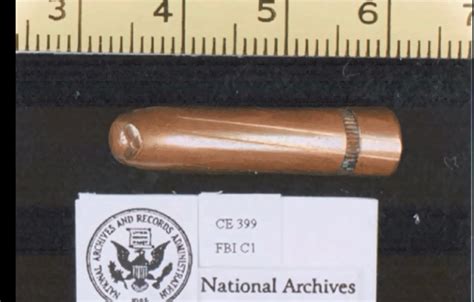
Forensics experts question the plausibility of the “single bullet theory”, which claims that one bullet (CE399) caused seven wounds to two men, emerged nearly intact, and was later found on a stretcher at Parkland Hospital. Critics argue that more bullets were recovered than the official story can account for.
Complicating matters further, Robert Hughes’ amateur film of the assassination—less publicized than the Zapruder film—shows no shooter in the sixth-floor window of the Book Depository as the limousine turns onto Elm. This footage lends weight to suspicions that Oswald was not in the window at the moment of the shooting, challenging the lone gunman narrative.
The Role of Local Law Enforcement and Intelligence
Why the Secret Service allowed such a vulnerable route is unclear, but some speculate cooperation with local authorities played a role. Sheriff Decker, Captain Fritz, and even Dallas Police Chief Jesse Curry may have had direct or indirect involvement in the decisions that exposed the President to harm.
Their vehicle’s position at the front of the motorcade gave them control over the physical path taken. If a last-minute rerouting occurred, they would have had to either authorize or ignore it. No official record or testimony provides a definitive answer, leaving open the possibility of negligence—or worse.
Conclusion: An Unsolved Variable in a National Tragedy
The change in JFK’s Dallas motorcade route remains one of the most pivotal anomalies in the broader narrative of his assassination. While defenders of the official explanation claim no change occurred, or that it was inconsequential, the evidence suggests otherwise: the route was altered at least once, published publicly, contested internally, and finally executed in a way that maximized vulnerability.
Why this happened—whether due to logistical confusion, deliberate sabotage, or a confluence of tragic errors—is still a matter of public debate. But what is irrefutable is that the turn onto Elm Street, past the Texas School Book Depository, was a deadly detour that set in motion a national trauma still unresolved more than six decades later.
Frequently Asked Questions (FAQs)
Was the motorcade route in Dallas officially changed?
Yes, the route was altered from the safer Main Street trajectory to one that included turns onto Houston and Elm Streets, which exposed the President to greater danger.
Who approved the final motorcade route?
Though final sign-off is ambiguous, coordination between the Secret Service, Dallas Police, and local officials determined the actual route taken.
Could Oswald have prepared based on the published route?
The revised route appeared in newspapers on November 21, giving Oswald less than 24 hours to plan. Critics argue this timeline undermines the lone gunman theory.
Did the original route have an exit to the freeway?
Yes. Contrary to some claims, Industrial Boulevard and Main Street both offered suitable exits to reach the Trade Mart.
Is there evidence the route change was intentional to set up a kill zone?
Several accounts suggest that the turn into Elm, against Secret Service guidelines, placed Kennedy in a position ideal for an ambush, feeding into conspiracy theories of premeditation or coordination.