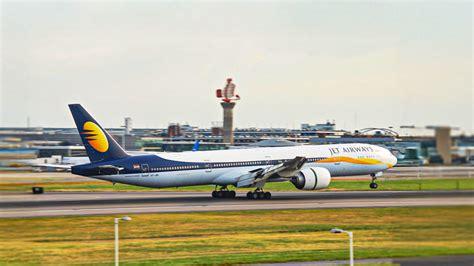
Jet Airways once operated one of India’s largest long-haul fleets, with its Boeing 777-300ERs forming the backbone of an international network that reached destinations across Europe and North America. Today, those same aircraft are at the center of a very different story. Five of the airline’s former 777-300ERs have been sold during the liquidation of Jet Airways, with one changing hands for just $12.5 million despite being a widebody aircraft that still has significant commercial potential.
At first glance, that price seems remarkably low for a Boeing 777-300ER. These aircraft are among the largest and most capable twin-engine widebodies ever produced, and passenger examples can still command substantial values when they have useful maintenance lives remaining. But the $12.5 million figure does not tell the complete story. The aircraft was not a ready-to-fly 777 waiting for a new airline. It had been grounded for roughly seven years, exposed to the challenges of long-term storage and inactivity.
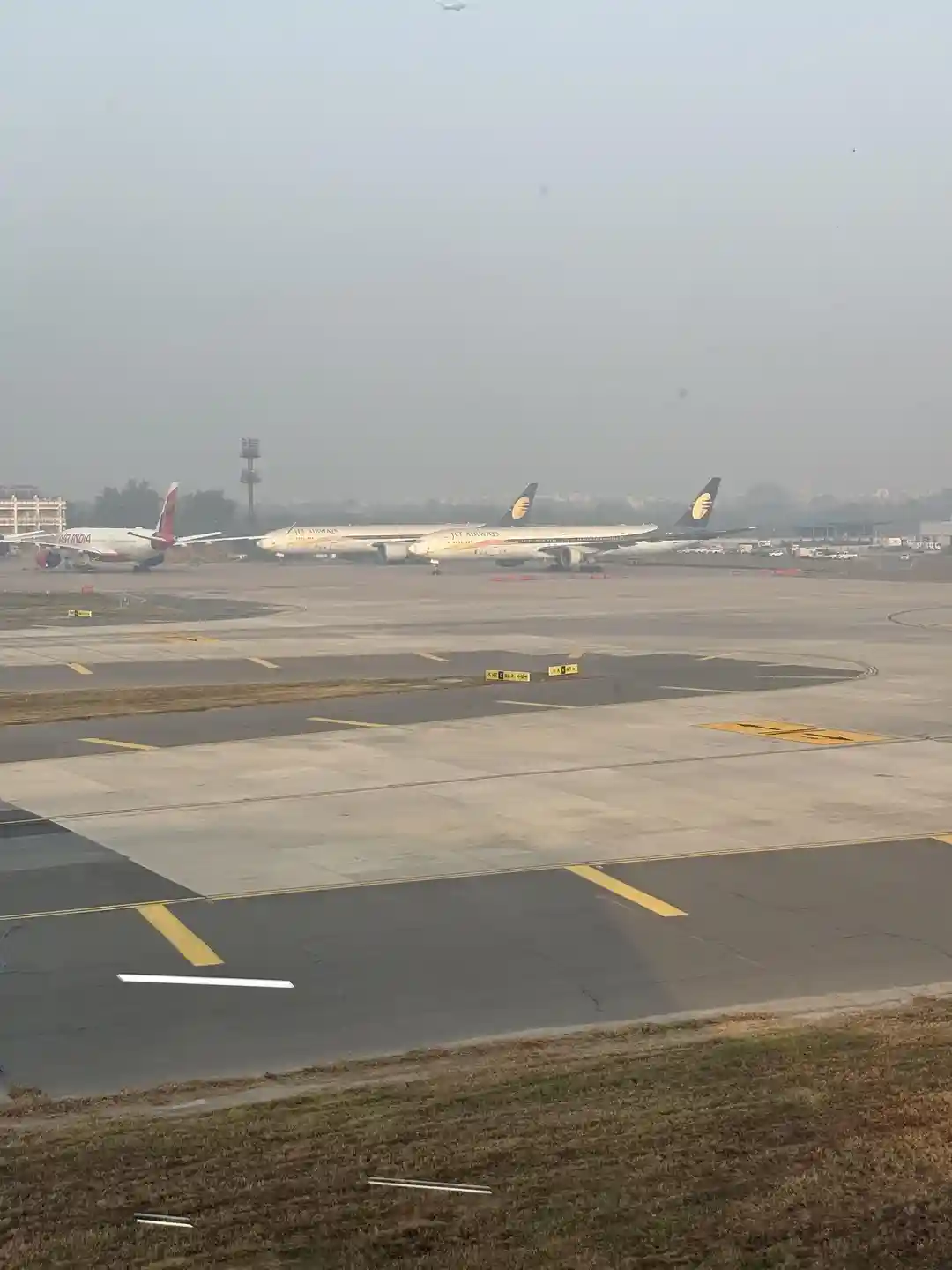
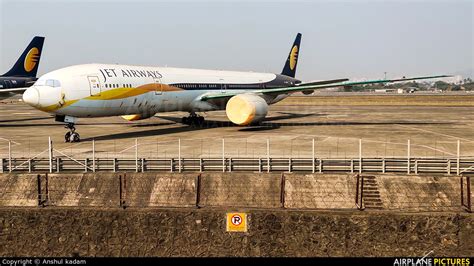
The aircraft in question was VT-JEV, carrying Boeing airframe serial number 35158. It was one of three Jet Airways 777-300ERs that had remained at Mumbai’s Chhatrapati Shivaji Maharaj International Airport after the airline suspended operations on April 17, 2019. Its eventual sale formed part of a much larger liquidation process that has taken years to resolve, involving creditors, airport operators, courts, prospective investors and aircraft buyers.
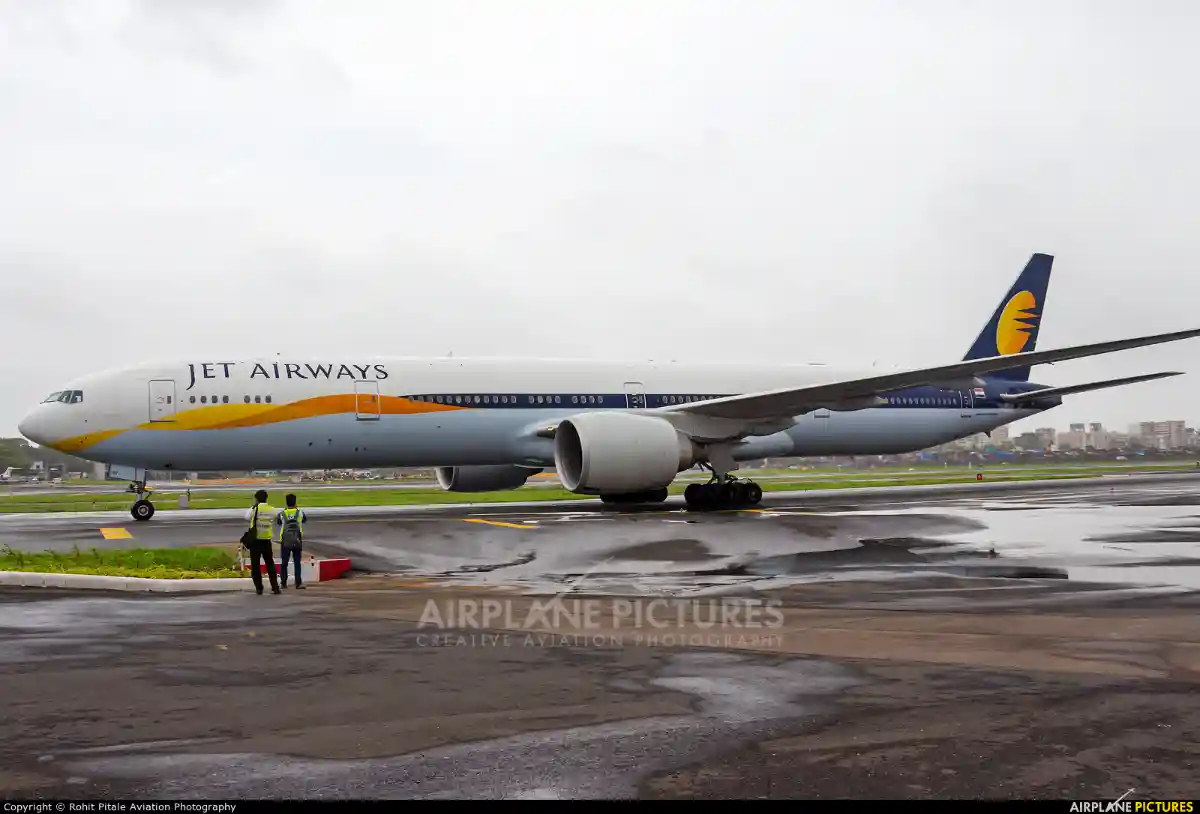
Jet Airways Boeing 777-300ER Fleet Became Trapped After 2019 Shutdown
Jet Airways’ collapse was not a simple case of an airline closing its doors and disposing of its fleet. The carrier had accumulated more than $1.2 billion in debt, while more than 80% of its aircraft were leased. As payments went unpaid, lessors were able to reclaim many aircraft, leaving the airline with relatively few assets that it actually owned.
Among those remaining assets were five Boeing 777-300ERs and several Airbus A330s. Because the 777s were owned outright, they became valuable assets within the insolvency proceedings. The problem was that their value could not easily be realized while the legal process surrounding Jet Airways remained unresolved.
VT-JEV and its two Mumbai-based sister aircraft, VT-JES and VT-JEM, remained at the airport for years. The three aircraft were eventually sold to Malta-based Ace Aviation, a subsidiary of Challenge Group, for a combined $46 million. VT-JES sold for $16 million, VT-JEV for $12.5 million, and VT-JEM for $17.5 million.
The different prices are important because they demonstrate that the $12.5 million figure was not necessarily a simple valuation of the aircraft itself. Every airframe had its own maintenance status, technical history, remaining life and commercial circumstances. Buyers were also acquiring aircraft that had been immobilized for years rather than machines that could immediately return to an airline schedule.
Why Did the Boeing 777-300ER Sell for Only $12.5 Million?
The central reason is simple: VT-JEV was not actually airworthy when it was sold.
An aircraft that has spent seven years parked is fundamentally different from an aircraft that has continued flying and receiving regular maintenance. Commercial aircraft are designed around continuous inspection and maintenance programs. Components have scheduled inspection intervals, engines require maintenance based on cycles and operating hours, systems must be tested, and aircraft must remain compliant with regulatory requirements.
Long-term grounding interrupts that normal maintenance cycle. Before an aircraft can legally and safely return to flight, its new owner has to determine exactly what work is required and demonstrate to the regulator that the aircraft satisfies all applicable airworthiness requirements.
For VT-JEV, that meant the $12.5 million purchase price represented only the beginning of the financial commitment. The buyer was not purchasing an immediately deployable passenger aircraft. It was purchasing an airframe with the potential to become a valuable freighter after a substantial technical and structural rehabilitation program.
The other four Jet Airways 777-300ERs illustrate the same point. VT-JET, with MSN 35157, sold for approximately $33 million, while VT-JEU, MSN 35160, sold for approximately $27 million. Together, those two Delhi-based aircraft fetched about $61.4 million at auction, substantially above their combined reserve price of around $38 million.
Jet Airways Liquidation Finally Released the Five 777s
The sale of the aircraft was delayed by more than technical considerations. It was deeply connected to the long-running legal battle over Jet Airways itself.
Ace Aviation had originally won a conditional auction for the three Mumbai-based 777s in October 2022. The company paid a $4.6 million earnest deposit and signed a Letter of Intent. However, the transaction was challenged by the Jalan-Kalrock Consortium, which had attempted to revive Jet Airways as a passenger carrier.
Mumbai International Airport Limited also refused to release the aircraft because of substantial unpaid parking charges. MIAL claimed approximately $104.35 million in outstanding charges accumulated during the years the aircraft remained at the airport. The insolvency tribunal ultimately admitted only about $53.23 million of that claim.
The legal situation changed decisively in November 2024, when India’s Supreme Court ordered Jet Airways into liquidation. The decision ended the attempt to revive the airline and directed that its assets be sold to recover money for creditors.
On February 11, 2026, Jet Airways announced that formal Sale and Purchase Agreements had been finalized with Ace Aviation for the three Mumbai-based 777-300ERs.
The two remaining 777s were parked at Delhi’s Indira Gandhi International Airport and followed a different route to sale. After liquidation began, the court-appointed liquidator offered them through BAANKNET, India’s e-auction platform for insolvency assets. Ace Aviation ultimately acquired both, with VT-JET selling for approximately $33 million and VT-JEU for approximately $27 million.
The Five Boeing 777s Are Becoming Freighters
There is another major reason why the $12.5 million Boeing 777-300ER should not be viewed as a bargain-priced passenger aircraft. Ace Aviation does not intend to return these aircraft to passenger service.
Instead, all five former Jet Airways 777-300ERs are planned for conversion into dedicated freighters through the Boeing 777-300ERSF program operated by Israel Aerospace Industries.
That strategy changes the economics completely. Rather than investing heavily in restoring an aging passenger aircraft and placing it into an increasingly competitive passenger market, Challenge Group can use the aircraft as the foundation for a long-range cargo fleet.
The 777-300ERSF is particularly attractive because it combines the 777-300ER’s large fuselage with the economics and range needed for international cargo operations. The conversion involves substantial structural work, including installation of a large cargo door, reinforcement of the main deck floor, changes to the aircraft interior and modifications to systems and avionics.
Challenge Group launched its 777-300ERSF program as part of a broader fleet expansion strategy and plans to add ten converted aircraft by the end of the decade. The five former Jet Airways aircraft therefore represent a significant portion of that planned fleet.
Seven Years of Grounding Creates a Huge Return-to-Service Bill
Before any of the former Jet Airways 777s can reach IAI’s conversion facility in Tel Aviv, they must first become airworthy enough to fly out of India.
That process begins with a return-to-service program. The aircraft’s original equipment manufacturers can provide technical requirements covering inspections, component replacement and overhaul work. The process may involve the engines, APU, landing gear, flight controls, avionics, electrical systems, software and numerous other components.
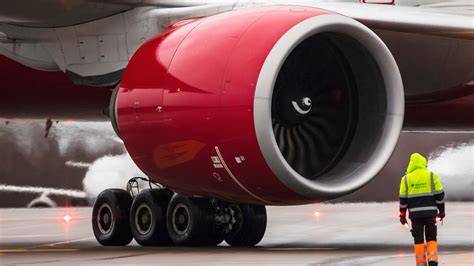
According to estimates cited by The STAT Trade Times, a return-to-service inspection program can cost between $500,000 and $2 million per aircraft. Engine maintenance can become vastly more expensive, potentially reaching $10 million to $15 million per engine depending on condition, operating hours and required work.
Additional modifications and preparation can add another $2 million to $5 million per aircraft. In broad terms, approximately $10 million to $15 million per aircraft could be required simply to restore the former Jet Airways 777s sufficiently for their ferry flights.
That is a striking figure when compared with VT-JEV’s $12.5 million purchase price. The buyer could potentially spend almost as much restoring the aircraft to a condition in which it can leave India as it spent acquiring the airframe in the first place.
The $12.5 Million Purchase Price Is Only the First Bill
Once the aircraft are airworthy, another major expense remains: the conversion itself.
The 777-300ERSF program is not a cosmetic refurbishment. Turning a passenger 777-300ER into a cargo aircraft requires major structural changes and certification work. A large cargo door must be incorporated into the fuselage, the floor structure must be strengthened for freight loads, and passenger-related equipment must be removed or replaced.
The aircraft also needs appropriate cargo systems and modifications to its avionics and other systems. Certification must then demonstrate that the converted aircraft complies with the applicable requirements for its new role.
The conversion is expected to cost roughly $35 million to $40 million per aircraft. When that amount is combined with the purchase price and return-to-service work, the total investment becomes dramatically different from the headline auction figure.
Ace Aviation spent approximately $107.4 million acquiring all five aircraft, or around $21.5 million per aircraft on average. Adding perhaps $10 million for return-to-service work and another $35 million to $40 million for conversion produces a potential total investment of approximately $66.5 million to $71.5 million per aircraft before entering commercial cargo service.
The $12.5 million aircraft is therefore not really a $12.5 million freighter. It is the starting point for a much larger industrial project.
VT-JEM Has Already Begun Its New Life
The transformation is no longer theoretical. One of the three Mumbai-based aircraft, VT-JEM, has already started the journey toward becoming a freighter.
Earlier in August 2026, the aircraft departed Mumbai for Tel Aviv, where it is scheduled to undergo conversion. Before making the journey, it was re-registered as 2-TJEM on Guernsey’s aircraft register.
Its departure is significant because it demonstrates how an aircraft that spent years apparently abandoned on an airport apron can eventually return to the aviation system in an entirely different role.
The remaining four aircraft are expected to follow the same general path. They will need their own technical restoration, regulatory clearance and ferry arrangements before reaching the IAI conversion facility.
The Rest of Jet Airways’ Fleet Is Still Being Liquidated
The five 777-300ERs are only part of Jet Airways’ unfinished liquidation story. As of July 2026, three Boeing 737s and three Airbus A330s were still included in the airline’s remaining asset portfolio.
The three 737s were located at airports in Mumbai, Hyderabad and Delhi and were offered for auction in late July. Two Boeing 737-800s carried reserve prices of approximately $8.5 million each, while a 737-900 had a dramatically lower reserve of around $590,000.
The difference was largely explained by the condition of that particular aircraft. The 737-900 was missing its right engine and auxiliary power unit, making it a fundamentally different asset from a complete aircraft that could potentially be restored and returned to service.
The three remaining A330s were also expected to be auctioned, with their sale scheduled for September 2026. Like the 777s, these aircraft demonstrate how the remnants of a collapsed airline can retain considerable value even years after operations end.
A $12.5 Million Boeing 777 Tells a Bigger Story
The sale of VT-JEV for $12.5 million looks extraordinary only if the number is viewed without context. A Boeing 777-300ER may be a valuable commercial asset, but its value depends heavily on maintenance status, remaining useful life, engine condition, regulatory status and the cost required to return it to productive service.
Seven years of inactivity fundamentally changed the economics of the former Jet Airways aircraft. The buyer acquired an airframe with substantial potential, but also inherited the technical and financial burden of bringing that potential back to life.
For Ace Aviation and Challenge Group, the calculation appears to be based on what the aircraft can become rather than what it is today. A former passenger 777 that cannot currently fly has limited immediate utility. A restored and converted 777-300ERSF, however, can become a long-range cargo aircraft capable of generating revenue for years.
That is why the $12.5 million figure can be misleading. The aircraft was not a fully operational Boeing 777-300ER available for $12.5 million. It was a seven-year-grounded asset acquired at the beginning of a much larger restoration and conversion program.
The eventual bill could approach $70 million per aircraft once acquisition, return-to-service work and freighter conversion are included. In that light, VT-JEV’s low sale price is less a sign that Boeing 777-300ERs have suddenly become inexpensive and more a reflection of the enormous cost of bringing a long-grounded widebody back to useful commercial life.
The story of these five aircraft is ultimately about transformation. They began as Jet Airways passenger aircraft, spent years trapped by an airline’s financial collapse and legal proceedings, and are now being prepared for another career carrying freight around the world. For a 777 that has spent seven years on the ground, the $12.5 million sale is not the end of the story. It is the price of admission to the next one.