Delta Air Lines is ending one of its newest U.S. transcontinental routes after only about six and a half months, bringing an unexpectedly short run to an end at Seattle-Tacoma International Airport. The airline will stop its daily nonstop service between Seattle and Philadelphia International Airport on November 29, 2026, less than seven months after the route began on May 7.
The 2,371-mile (3,816-kilometer) Seattle–Philadelphia route was introduced with high expectations. Delta announced it in October 2025, describing the service as one of the most requested connections from its Seattle-based corporate customers. Yet the route entered a market where two established competitors already had substantial network advantages, making it difficult for Delta to build a large share with only one flight each day.
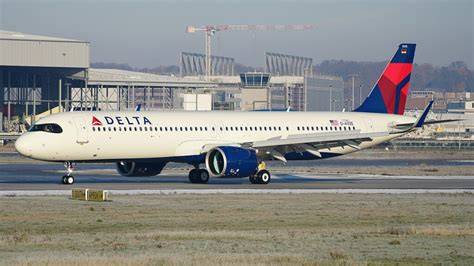
Delta Seattle–Philadelphia Flights End November 29
Delta currently operates the route once daily using its Airbus A321neo, an aircraft configured to carry as many as 194 passengers. The cabin includes 20 First Class seats, 42 Delta Comfort+ seats, and 132 Main Cabin seats. The final published schedule has DL1114 leaving Seattle at 9:30 p.m. and arriving in Philadelphia at 5:50 a.m. the following day. The return, DL2092, departs Philadelphia at 7:05 a.m. and reaches Seattle at 9:56 a.m. Both flights currently operate daily.
Delta’s decision is notable because the route did not launch into a shrinking market. During the first two months of operation, the airline recorded an average load factor of approximately 76%. That figure indicates that the aircraft was attracting a meaningful number of passengers, although passenger loads alone do not determine whether a route is financially sustainable.
American And Alaska Already Dominated The Market
The central challenge was competition. Seattle–Philadelphia is a well-established transcontinental market, and U.S. Department of Transportation data show that 297,687 passengers traveled between the two cities in both directions from July 2025 through June 2026. That worked out to roughly 816 passengers per day and represented a 3% increase from the previous 12-month period.
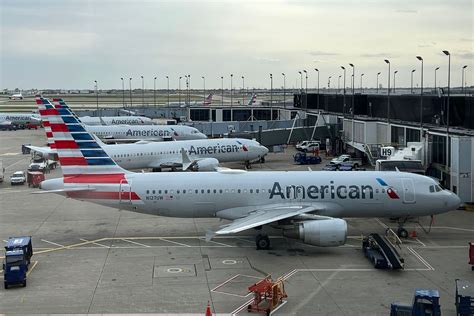
American Airlines and Alaska Airlines already had strong positions because Philadelphia is a major base for American while Seattle is a key hub for Alaska. For the 12 months ending June 2026, American carried about 46% of passengers, Alaska handled 41%, and Delta accounted for only 8%.
Delta also offered the least schedule flexibility. Its single daily overnight flight competed with as many as three daily American departures and two Alaska flights. Delta was additionally the only carrier on the market without a daytime eastbound option, a disadvantage for travelers who value departure-time choice.
Average fares on the route fell by about 4% after Delta entered the market, adding another layer to the competitive pressure. After Delta leaves, travelers will continue to have nonstop service from American and Alaska. The route’s short lifespan also highlights how difficult it can be for a new entrant to establish itself when incumbents already offer multiple daily departures and strong local customer bases locally.
Delta Is Not Abandoning Philadelphia
The cancellation does not represent Delta’s withdrawal from Philadelphia. The airline will continue serving Philadelphia from Atlanta, Boston, Detroit, Minneapolis-St. Paul, and Salt Lake City. Delta is also preparing to add a new nonstop Philadelphia connection from Los Angeles next summer.
That adjustment comes shortly after Delta announced its largest-ever schedule at Los Angeles International Airport, suggesting that the airline is continuing to reshape its domestic network rather than simply reducing its presence in major markets.
Delta is also ending its New York JFK–Dallas/Fort Worth service on January 3, 2027.
Seattle Remains A Major Delta Gateway
Despite the Philadelphia cancellation, Seattle remains strategically important to Delta. The airline describes itself as the airport’s largest international operator, with more than 160 peak daily departures to over 60 destinations and 28 new markets launched there over the past decade.
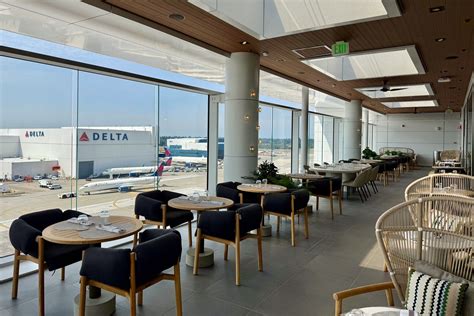
Delta has continued investing in Seattle, including a new 24,000-square-foot lounge complex featuring a Delta One Lounge and Delta Sky Club. Its international network is also expanding. On March 27, 2027, Delta plans to return to Tokyo Narita, which would become its fifth daily Seattle–Tokyo rotation when combined with existing service to Tokyo Haneda.
Seattle is becoming increasingly competitive as a long-haul gateway. Alaska Airlines is expanding internationally from the airport as well, with services to Rome, London Heathrow, and Reykjavík already launched, while Athens and Paris are scheduled to follow in May 2027.
For Delta, the end of Seattle–Philadelphia therefore looks less like a retreat from Seattle and more like a targeted network adjustment. The route will disappear after November 29, but the airline continues to place significant emphasis on Seattle’s larger domestic and international role.